
The first show car under Philipp Römers
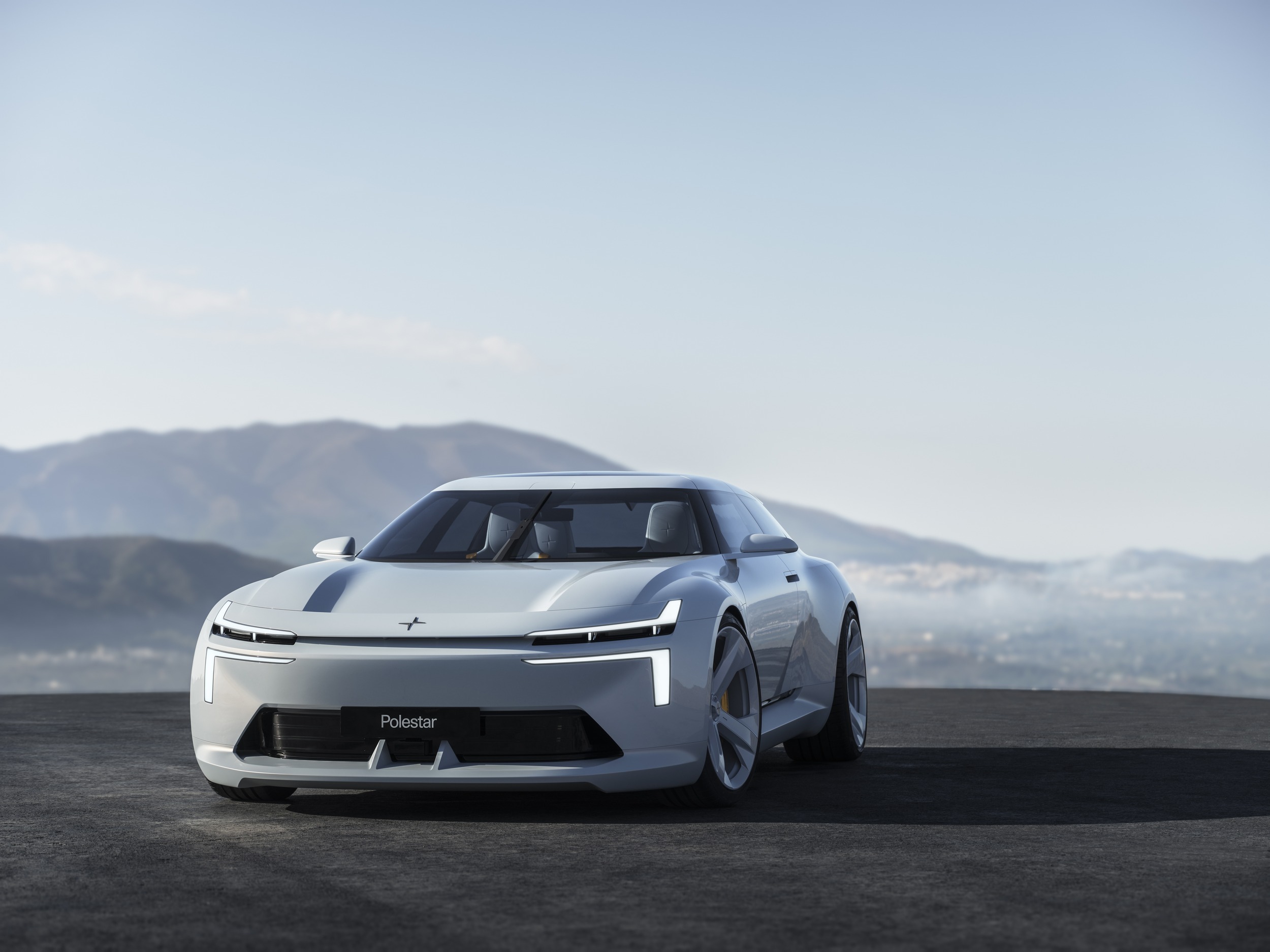
On 10 November 2026, Polestar officially presents the Formula 2030 concept in Gothenburg. The car is the physical expression of the brand's Formula 2030 strategy and the first show car created under head of design Philipp Römers.1 Römers joined Polestar from Audi in 2024.2 The concept celebrates its world premiere during the international media drive of the Polestar 4 SUV, a model whose form language it draws on.1
Polestar frames the concept as a bold evolution of the design DNA that has shaped the brand since its beginnings. It builds on the original Polestar formula of removing the superfluous, improving what exists and avoiding compromise, and expresses the brand values of design, performance and sustainability.1 Römers describes it as a physical embodiment of how Polestar applies these core values "to the next production cars".2
From teaser to unveiling
The concept did not arrive unannounced. In February 2026 Polestar's strategy update set out a bold evolution of its design under Römers, with the successor to the Polestar 2 as the first production car to carry it.3 In September Polestar released a single front image of the Formula 2030 and showed the car to investors, retailers and a select group of customers at The Cube, its headquarters in Gothenburg.4,5 The November presentation is the full public reveal.2
Source: Polestar Youtube
What stays
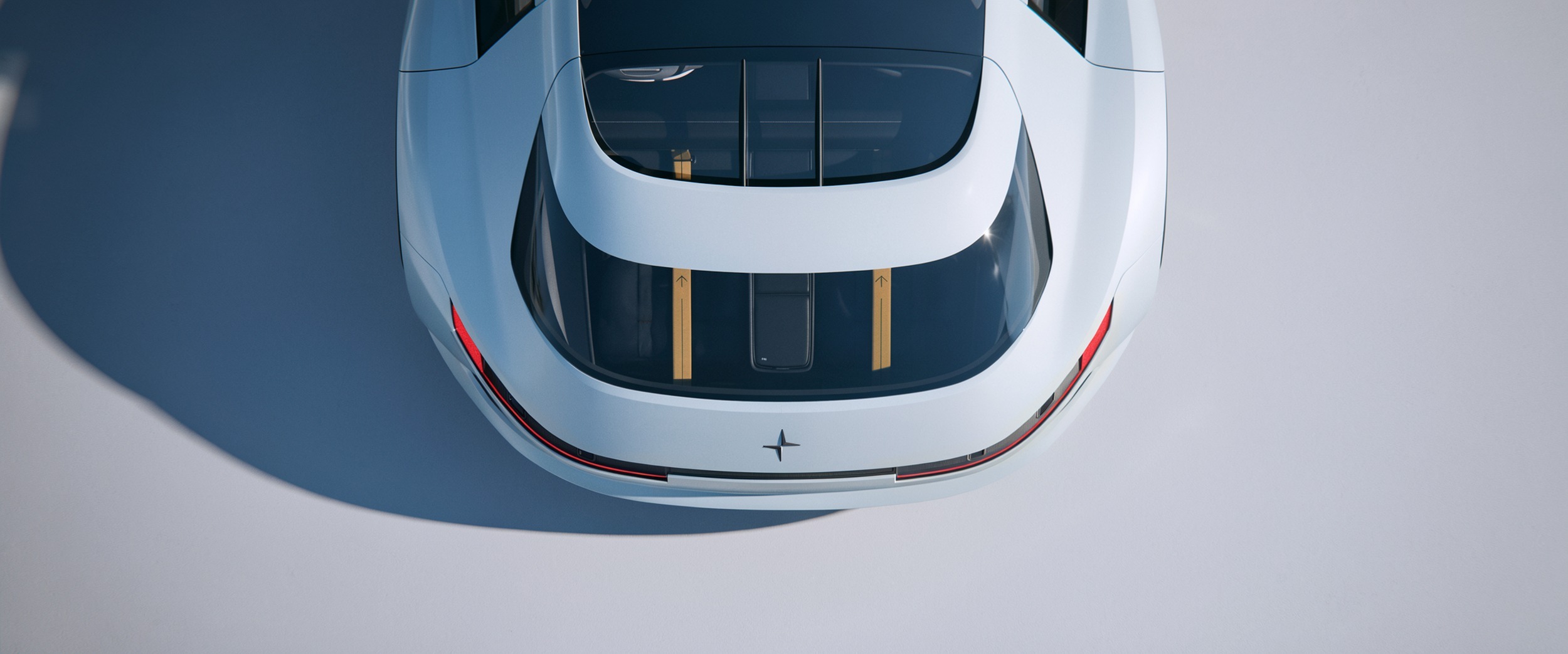
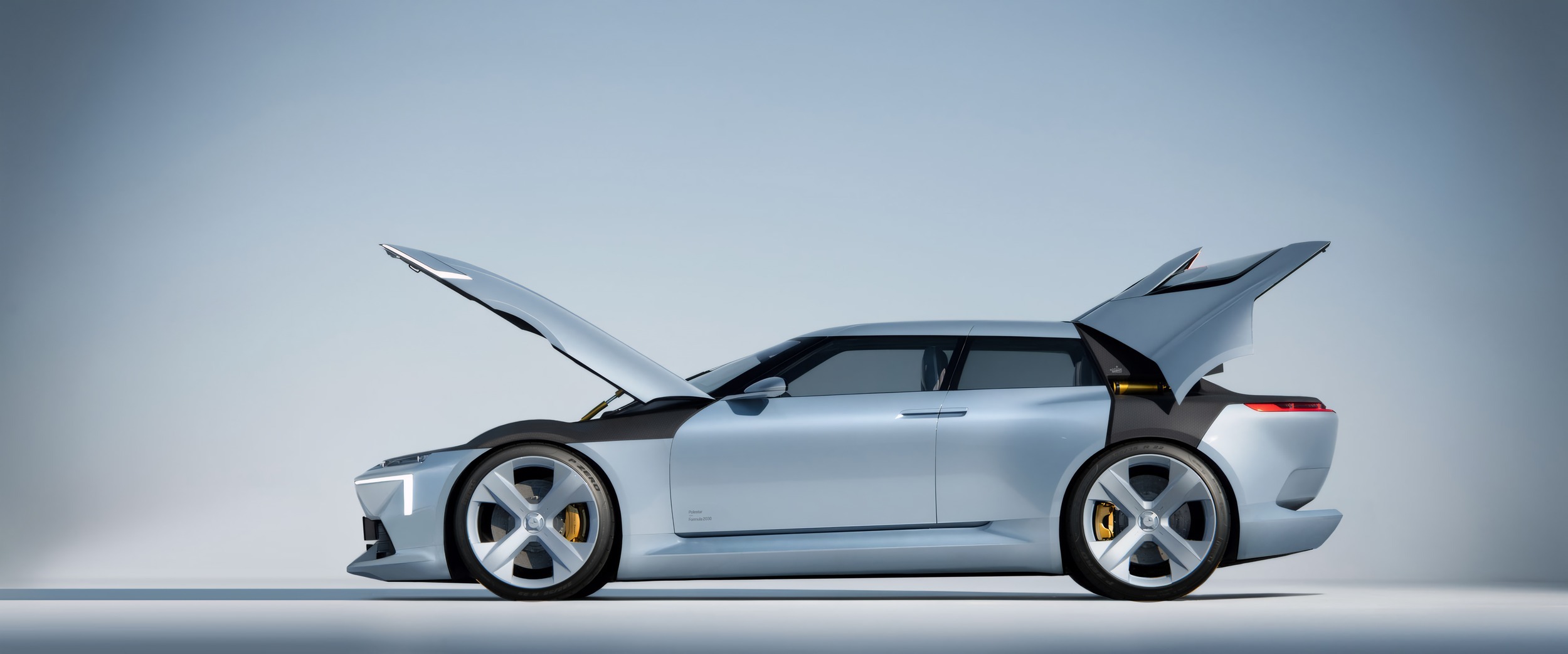
The concept retains the elements that already make a Polestar recognisable. The Dual Blade headlights give the car immediate Polestar character and preview the face of the next Polestar 2, planned for 2027. Inspired by the Polestar 3, the light units sit within an aerodynamic front wing.1 A wraparound, visor-like windscreen is a reference to the first-generation Polestar 2, and the Polestar star is projected into the panoramic glass roof.1
The proportions follow the same continuity. The four-door sports car measures 4,680 mm in length, 2,021 mm in width and only 1,350 mm in height, lower than the Polestar 5 Grand Tourer, with a wheelbase of 2,780 mm.1 It sits between the coming Polestar 2 and the Polestar 7 in size, and picks up the low, practical silhouette of the Polestar 4 SUV.1
What changes
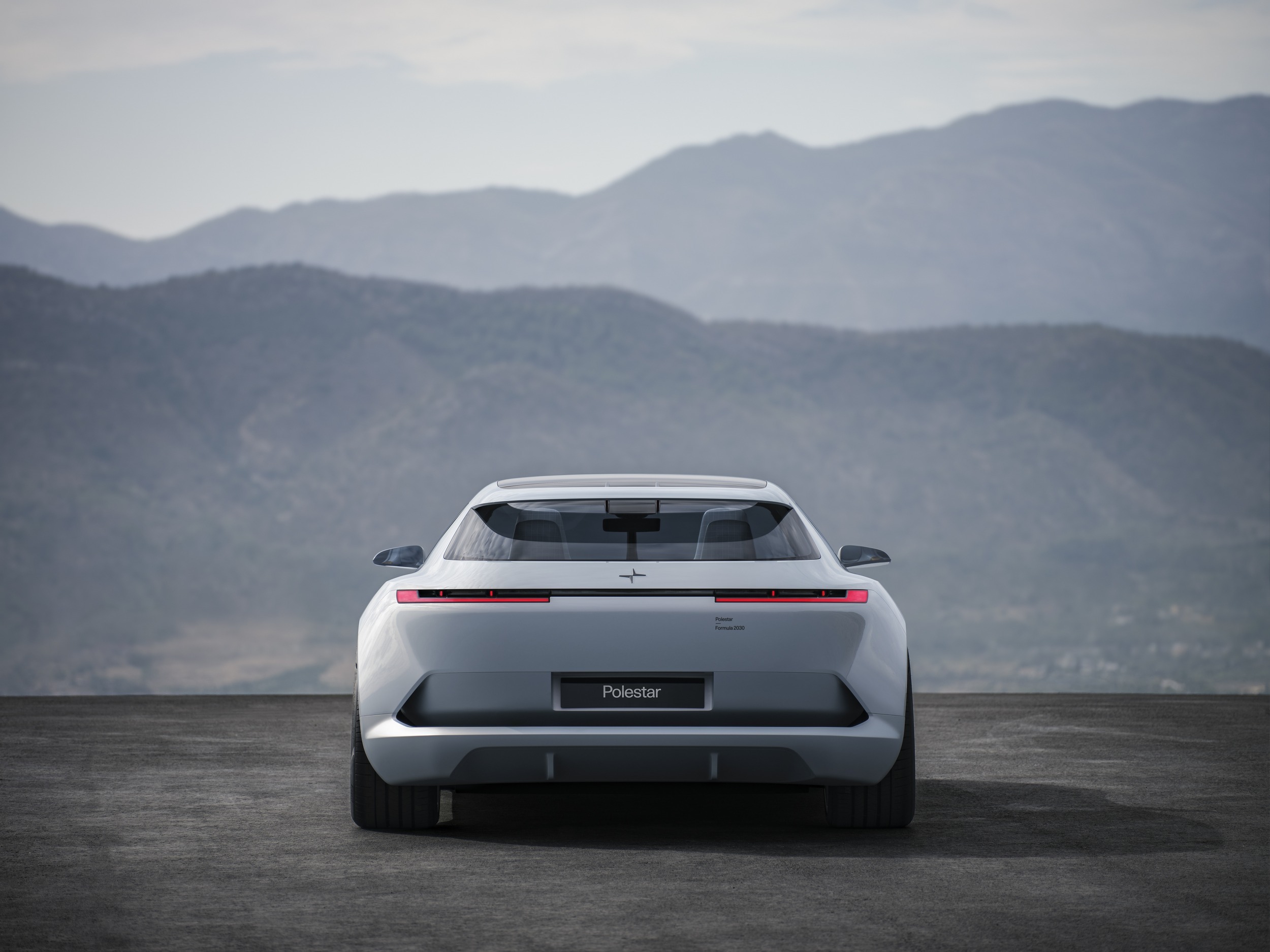
The most visible break is at the rear. The continuous light bar that has marked Polestar's recent models is dropped in favour of new Single Blade tail lights, which the brand intends to use in future production cars. The new graphic develops the geometric shapes and sharp lines of earlier models.1
The front gains a pronounced "shark nose" with a central spine and a deep front splitter. A single vertically mounted wiper runs along the spine, inspired by historic and modern racing cars, and a LiDAR unit stays hidden under an aerodynamic cover until the autonomous driving functions are in use.1 In profile, a modern take on the classic cab-backward silhouette, a long bonnet, short overhangs and 22-inch wheels underline the performance focus.
Nahum Escobedo, Head of Exterior Design at Polestar, describes the balance: "We wanted to evolve the core design values of our previous models while respecting them. With the Formula 2030 we have achieved that." The Dual Blade headlights, the visor-like windscreen and the powerful shoulders remain, he says, while the brand shifts expectations "through a new form language, an even stronger focus on performance and details such as the new Single Blade rear lights".1
Colour and gold
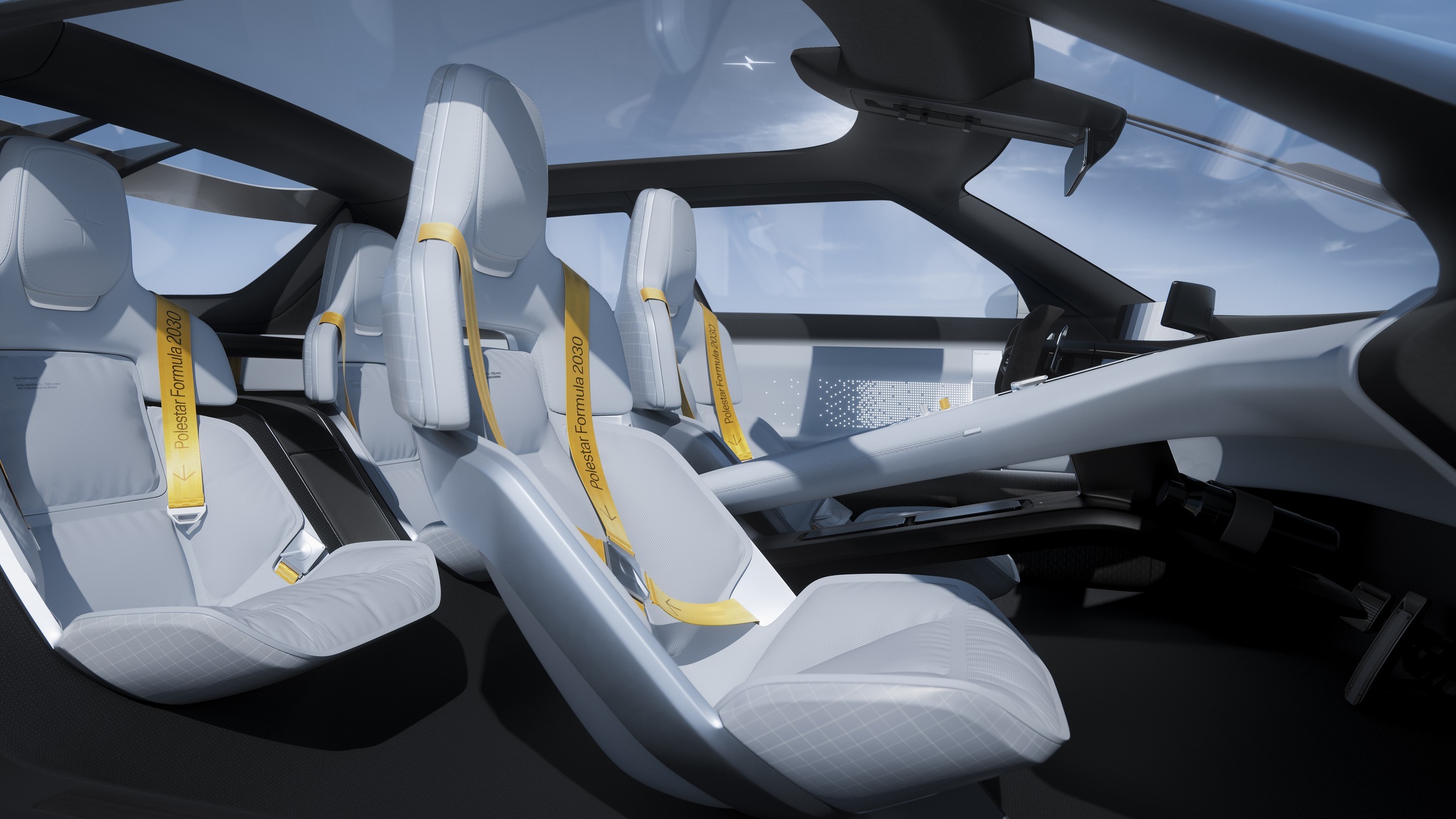
The concept introduces a new exterior colour, Nitrogen, developed specifically for the car and reacting dynamically to natural light. It covers the body, the 22-inch wheels, the side panels, the front splitter and the rear diffuser in a Scandinavian-inspired tone-on-tone look, with gloss, matt and satin finishes adding depth.1 Swedish Gold, Polestar's performance signature, reappears as an accent on the Brembo brake calipers, valve caps, interior elements and seat belts.1
Inside: the driver at the centre
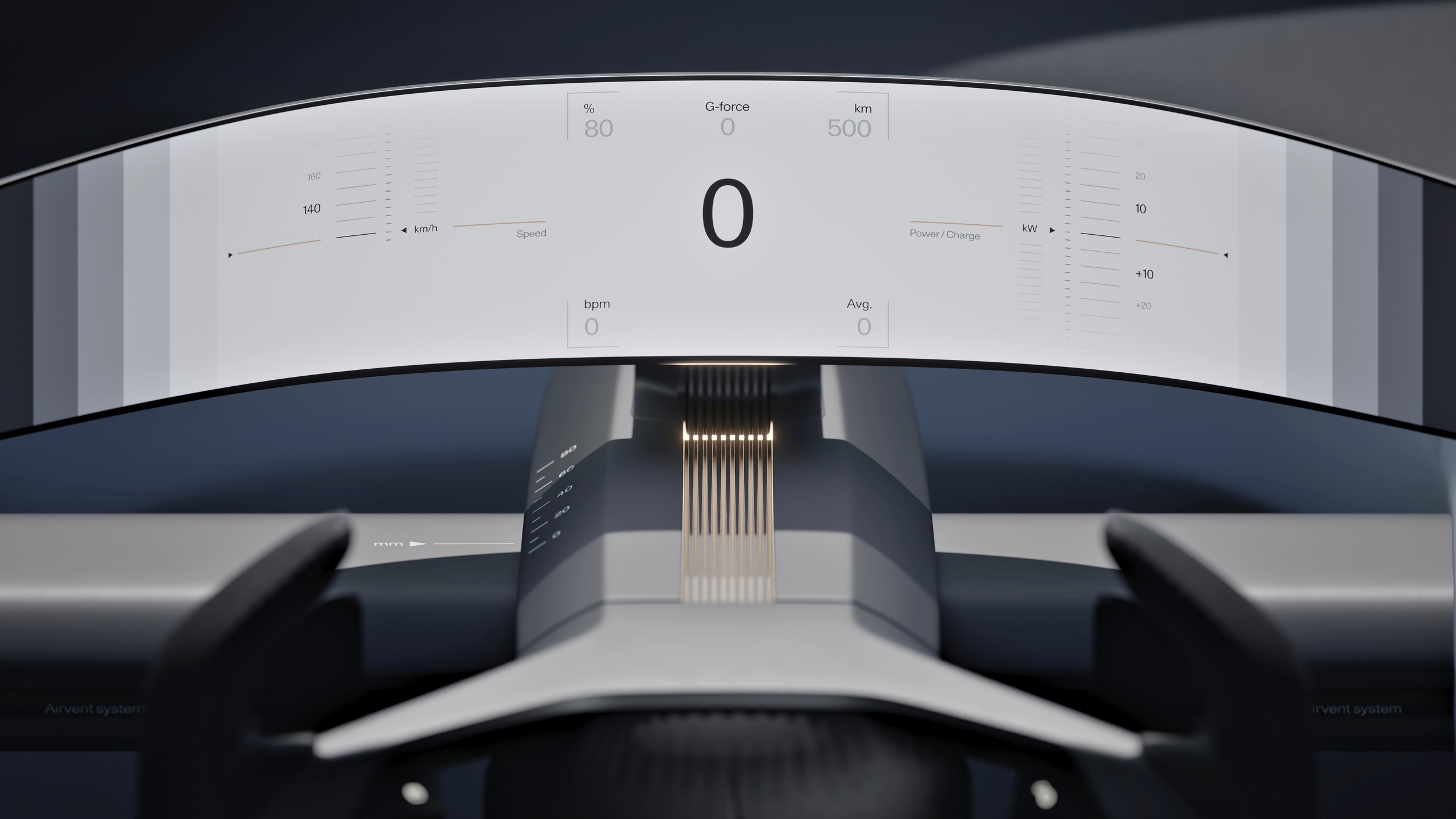
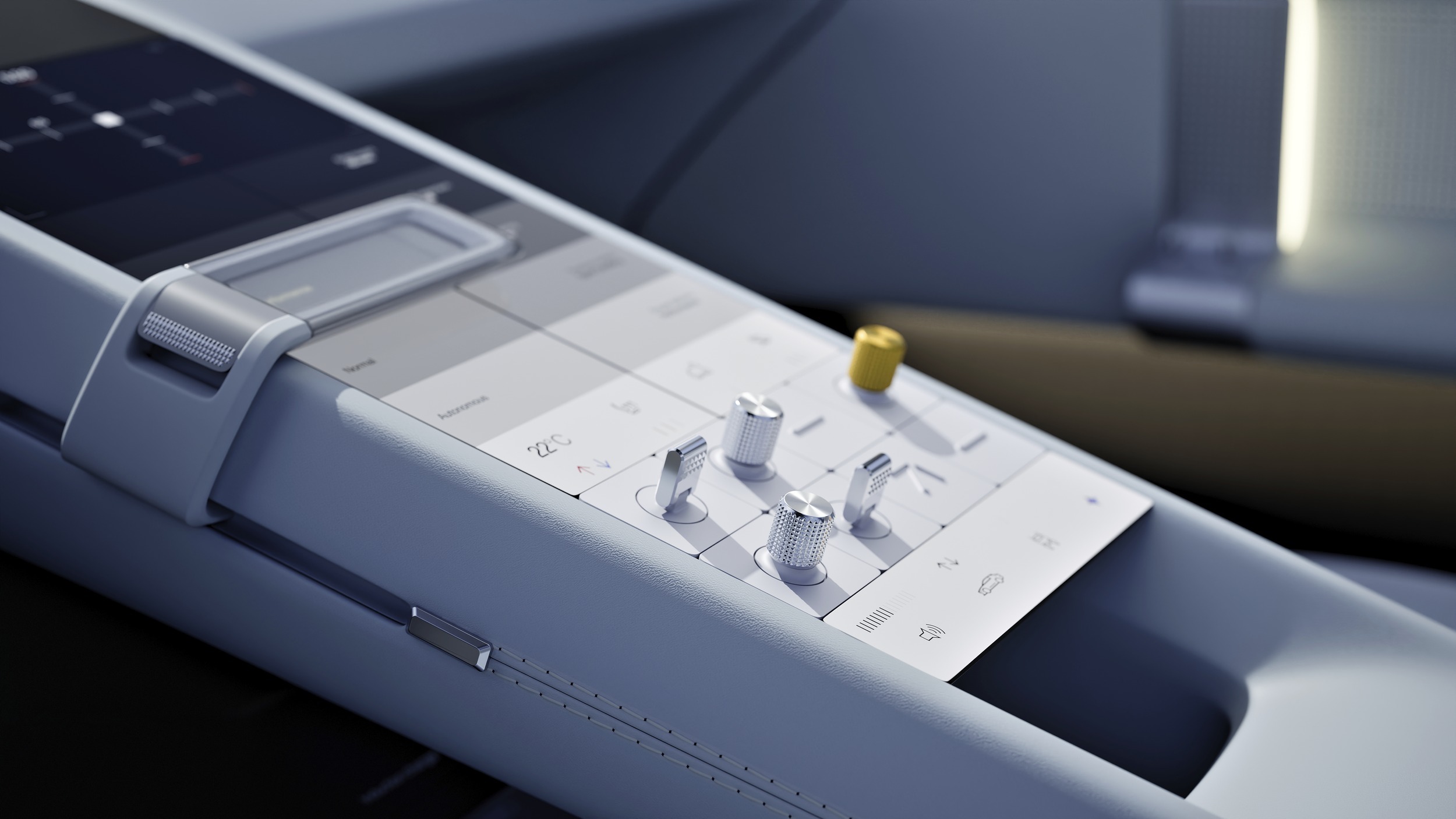
The interior continues the evolution with a driver-focused cockpit. A 20-inch display called HyperDIM is mounted directly on the steering column, and a 12.2-inch centre screen is integrated into the rising centre console.1 A slider selects the drive modes Performance, Normal and Autonomous; depending on the mode, the screen, seat and steering wheel change position.1 Below the screen, eight physical switches or dials give quick access to frequently used functions and can be assigned individually.1
Juan Pablo Bernal, Head of Interior Design, links the controls to the brand's positioning: "As a performance brand, we see a renewed focus on the driver, and so we re-balance the digital and physical."2
Source: Polestar Youtube
Materials as part of the DNA
Sustainability, the third brand value, is expressed through material choices. A mono-material strategy makes components such as the door panels fully recyclable, and visible structural parts such as seat frames and cross members are made of low-emission galvanised steel based on recycled raw materials and renewable energy.1 The seat backs use a bio-based composite of European flax and bio-based polypropylene. Natural fibre composites by Bcomp and racing-inspired Öhlins dampers are exposed when the tailgate opens.1
Several design features of the Formula 2030 are to reach production in the next generation of the Polestar 2 and in the coming Polestar 7.1 The concept thus serves as a reference for the brand's next models: a familiar face and silhouette, a new rear signature, and a renewed balance between screens and buttons.
Written with AI assistance, edited by a human. Find out more about our Use of AI.
1. Polestar, "Polestar gibt mit Konzeptfahrzeug Formula 2030 einen Ausblick auf die Designzukunft der Marke", press release (German), Gothenburg, 10 November 2026, for the presentation, the strategy link, the first show car under Philipp Römers, the world premiere at the Polestar 4 SUV media drive, the Polestar formula and brand values, all exterior, interior, colour and material details, the Polestar 2 (2027) and Polestar 7, and the quotation from Nahum Escobedo, Head of Exterior Design, translated; original: „Wir wollten die zentralen Designwerte unserer bisherigen Modelle weiterentwickeln und gleichzeitig respektieren. Mit dem Formula 2030 ist uns das gelungen. Charakteristische Polestar Merkmale wie die Dual-Blade-Scheinwerfer, die umlaufende visierartige Windschutzscheibe und die kraftvollen Fahrzeugschultern bleiben erhalten. Gleichzeitig verschieben wir Erwartungen durch eine neue Formensprache, einen noch stärkeren Fokus auf Performance und Details wie die neuen Single-Blade-Rückleuchten.“ https://media.polestar.com/releases/1013
2. Fred Lambert, Electrek, "Polestar Formula 2030 concept unveiled, previewing the next Polestar 2", 10 November 2026, for Römers joining from Audi in 2024, the full unveiling after the private showing in September, and the English quotations from Philipp Römers, Head of Design, and Juan Pablo Bernal, Head of Interior Design. https://electrek.co/2026/11/10/polestar-formula-2030-concept-unveiled-next-polestar-2/
3. Polestar, "Polestar starts largest model offensive in its history: four new cars in three years", press release, Gothenburg, 18 February 2026, for the strategy update and the Polestar 2 successor. https://investors.polestar.com/news-releases/news-release-details/polestar-starts-largest-model-offensive-its-history-four-new
4. Jet Sanchez, Driven Car Guide, "Polestar Formula 2030 previews the brand's next design era", 10 September 2026, for the single front image released in September. https://www.drivencarguide.co.nz/news/2026-09-08-polestar-formula-2030/
5. The EV Report, "Polestar Formula 2030 concept car", 7 September 2026, for the showing at The Cube in Gothenburg to investors, retailers and a select group of customers. https://theevreport.com/polestar-formula-2030-concept-car