
Chapter 05Part 2: The craft
Brand purpose
Every strong brand rests on a reason to exist. Whether that reason is a belief or the solution to a problem is one of the great debates in branding.

Why a brand needs a purpose
Everything about a brand that people later see, from its name to its design and tone, rests on something they never see directly. Before a brand can be expressed, it has to know why it exists and what it stands for. This reason is its purpose, and together with its values it forms the brand essence, the core that everything else grows from. Without it, a brand drifts.
With a clear purpose, every later decision has a reference point. The authors who have written about brand purpose agree on its importance. They disagree, however, on where it should begin: with a belief, or with a problem that needs solving.
Start with why
Simon Sinek, author of Start with Why, gives the best known answer. People do not buy what you do, he writes, they buy why you do it.1 His model arranges an organisation in three circles. On the outside is the what, which every organisation knows. In the middle is the how, the values and principles by which it acts. At the core is the why, the purpose or belief that only a few can name clearly.2
Successful organisations communicate from the inside out. The why provides the reason to buy, the what provides the proof.3 Knowing the why is not the only way to success, Sinek admits, but it is the only way to sustain it over the long term.4 His best known example is Apple, which in his reading first communicates that it challenges the status quo, and only then mentions that it also makes great computers.5 Few ideas have shaped branding in recent years as much as this one. It has also met with clear opposition.
Purpose or problem?
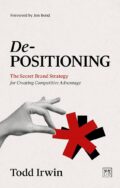
Todd Irwin, brand strategist and author of De-Positioning, gives the opposite answer. Sinek's book, he writes, inspired agencies to centre their storytelling on purpose. Yet although purpose plays a large role in leadership, it is not the main reason people buy.6
Purpose may add value, but when people are in a buying mood, they mainly want to solve a problem.7 A brand's impact depends less on purpose or differentiation than is often claimed.8 Irwin also cites Apple, with the opposite reading. Apple's advertising is not about Apple, but about how the iPhone protects privacy, the Watch looks after health and the ecosystem makes everyday life smoother.9 The same brand serves as proof for two opposing theses. Perhaps that is the real lesson: successful brands solve a problem and stand for something, and which side people see depends on where they look.
A sound purpose is enough
Between belief and problem lies a more modest position. Not every brand needs to change the world to have a strong purpose. Donald Miller, who developed the StoryBrand framework, starts with the problem but ends with meaning. A product, he writes, should solve an external, an internal and a philosophical problem.
The philosophical problem is about why something matters in the bigger picture.10 Andreas Freitag, a German brand consultant, warns against the grand gesture. Some brands, he writes, would do better to embrace their perfectly sound purpose than to invent a lofty one.11 A purpose does not have to be heroic. It has to be true, and it has to hold up in everyday decisions.
Key takeaways
-
01
A brand needs a clear purpose before it can be expressed.
-
02
Sinek argues that people buy why a brand does something, Irwin that they buy the solution to a problem.
-
03
A purpose does not have to be heroic, but it has to be true.
Frequently asked questions
Brand purpose describes why a brand exists, what it stands for and whom it serves. Together with core values and a clear stance, it forms the brand essence, the core that everything else grows from. Everything about a brand that people later see, from its name to its design and tone, should follow from it, so that the brand stays recognisable even when campaigns and products change.
Brand purpose is the reason a brand exists, the why behind what it does. Brand essence is the core of the brand as a whole, often summed up in a single sentence or word. It includes the purpose as well as the values and character of the brand. Put simply, the purpose explains why a brand exists, while the essence describes what it fundamentally is.
The Golden Circle is a model by Simon Sinek. It arranges an organisation in three rings: what it does, how it does it and why it does it. Sinek argues that inspiring organisations communicate from the inside out, starting with their purpose. Critics reply that most customers buy to solve a problem, not because they share a belief.
Every brand needs a reason to exist, but it does not have to be grand. Some experts argue that a brand should simply embrace its sound, everyday purpose instead of inventing a lofty mission. What matters most is that the purpose is true, guides real decisions and matches what customers experience.
Books on this topic





Sources
1. Simon Sinek: Frag immer erst: warum. Wie Top-Firmen und Führungskräfte zum Erfolg inspirieren. München, Redline, 2014, p. 43.
2. Ibid., p. 40.
3. Ibid., p. 43.
4. Ibid., p. 50.
5. Ibid., p. 42.
6. Todd Irwin: De-Positioning. The Secret Brand Strategy for Creating Competitive Advantage. London, LID Publishing, 2025, p. 22.
7. Ibid.
8. Ibid., p. 76.
9. Ibid., p. 30.
10. Donald Miller: StoryBrand 2.0. Wie Sie mit starken Geschichten Ihre Kunden überzeugen. München, Vahlen, 2025, p. 98.
11. Andreas Freitag: Von Marken und Menschen. Arbeit, Führung und das Gute Leben. Mainz, Verlag Hermann Schmidt, 2015, p. 80.