
Chapter 08Part 2: The craft
Brand expression
Name, design, price, channels and words turn a strategy into something people can see, use and remember. When these signals fit together, a brand is recognised in a second.

From strategy to something visible
A position only exists on paper until people can see, hear and use it. Brand expression is the moment a strategy enters the world: through a name, a design, a price, the channels a brand chooses and the way it speaks. Each of these elements sends a signal. Taken together, they decide whether people recognise a brand in a second or overlook it. When they contradict each other, even the best strategy gets lost. The first signal most people encounter is also the hardest to change later: the name.
The name
The need for good names starts with the customer, writes Marty Neumeier, brand strategist and author of The Brand Gap. People always look for easy ways to recognise brands, remember them, talk about them and compare them. The right name can be a brand's most valuable asset, the wrong one can cost millions over its lifetime.1
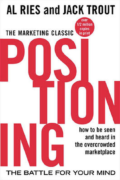
Neumeier names seven criteria: distinctiveness, brevity, appropriateness, easy spelling and pronunciation, likability, extendibility and protectability.2 Al Ries and Jack Trout, the advertising strategists who made positioning famous, judge a name by the position it supports. It should not come from company history, but should hint at what makes the product special.3
They also warn against initials. Abbreviations only work once a company is already very successful and everyone knows what they stand for. A mediocre company does not become famous through initials.4
Design as distinction
In many categories, product quality hardly differs any more. Design, by contrast, often still offers unused room to stand apart. Oliver Errichiello, a German brand sociologist, describes distinction as an act of interpretation. A brand interprets one facet of the world in its own way, and only this independent act makes it recognisable.5 It is rarely about groundbreaking inventions and usually about the decisive detail. Emotional value can only arise, however, once the product delivers on its basic promise.6
Richard Shear, author of A History of Brands, looks back to the early days of brand design. Peter Behrens understood at the beginning of the twentieth century that design is more than a striking appearance. It has to embody the past, present and future of an organisation.7
Distinctive brand assets
Some elements of a brand's design become so familiar that they work on their own. The marketing scientist Jenni Romaniuk calls them distinctive brand assets: colours, shapes, logos, characters, sounds or slogans that people link to one brand and to no other. Think of the red of Coca-Cola, the three stripes of Adidas or the swoosh of Nike. Such assets help people notice and recognise a brand in a split second, often without reading its name.
Their value depends on two things: how many people connect the asset with the brand, and how clearly it points to that brand alone. Building them takes years of consistency. That is why changing them lightly can throw away much of what a brand has built up.
Price as a signal
Price is not only a number. It tells people what to expect, and it shapes how they see a brand before they have tried it. Seth Godin, one of the most widely read marketing authors of our time, puts it in one sentence: marketing changes pricing, and pricing changes marketing. Because people attach assumptions to a price, a brand has to position itself clearly, and its price should match the extremes it claims for itself.8 A high price can itself be the message.9
Neumeier adds the strategic side. The leader of a category can charge a premium, while number three may have to compete on price.10 Price, in other words, follows position.
Key takeaways
-
01
Brand expression is the moment a strategy enters the world.
-
02
A good name is distinctive, short, fitting and easy to say, and should hint at what makes the product special.
-
03
Design and price are signals that people read before they try a product.
Frequently asked questions
A good brand name stands out clearly from others, is short, fits the business, is easy to spell and pronounce, sounds pleasant, leaves room for creative use and can be legally protected. Positioning experts add that it should hint at what makes the product special. Initials and abbreviations usually only work for companies that are already very well known.
Price is a signal. People draw assumptions about quality and status from it before they have tried a product. A brand therefore has to set prices that match its position. A category leader can often charge a premium, while challengers may have to compete on price. In some cases, a high price is itself the core of the message.
Less than many assume. Business buyers are people too, and they want to look good in front of their superiors. Their decisions often involve more risk and feel more personal, which makes trust especially important. Strong business brands therefore offer more than a low price: a story about safety, status, belonging or insight.
Books on this topic






Sources
1. Marty Neumeier: The Brand Gap. Wie sich die Lücke zwischen Design und Unternehmensstrategie schließen lässt. Pearson, 2022, p. 72.
2. Ibid., p. 73.
3. Al Ries, Jack Trout: Positioning. Wie Marken und Unternehmen in übersättigten Märkten überleben. München, Vahlen, 2012, p. 92.
4. Ibid., p. 111.
5. Oliver Errichiello: Philosophie und kleine Geschichte der Marke. Marken als individuelle und kollektive Sinnstifter. Wiesbaden, Springer Gabler, 2017, p. 85.
6. Ibid., p. 103.
7. Richard Shear: A History of Brands. Origins of Consumer Markets. Beverly, Rockport Publishers, 2025, p. 143.
8. Seth Godin: Das ist Marketing! So wird man wirklich sichtbar. München, Redline, 2019, p. 203.
9. Ibid., p. 204.
10. Neumeier 2022, p. 37.