
Brand leadership
The last stage decides whether the others survive contact with time. A brand concept can be flawless on launch day and eroded within three years by a hundred small inconsistencies. Brand leadership is the discipline of protecting the centre while letting the edges adapt, and of treating the brand as a long term asset rather than a campaign.
Coherence
Coherence means the brand works as a whole. Storytelling, design, product, support and even internal processes all point at one clear idea, and the moment a brand becomes incoherent anywhere, people start to lose interest.1 Coherence is not sameness, it is the absence of contradiction. Every part can be different in form as long as none of it fights the core.
Integration
Integration goes a step further than coherence. It aligns strategy, culture and execution so that every action reinforces the position, not only the marketing.1 In practice that means communication is managed as one connected whole rather than as separate channels pulling in slightly different directions.2 A brand led in silos will contradict itself even when each silo does good work.
Agile brand management
Coherence and integration have to hold in a moving market, which calls for agility, a response that is appropriate, targeted and fast. That depends on market intelligence, a continuous read of brand, customer and competitor, turned into decisions rather than left in a report.3 The aim is a brand that stays recognisably itself while adapting how it shows up.
Leading from the core
Behind all of this sits ownership. The people who own a brand carry the responsibility to define its unshakable core and keep it energised, and a brand only holds together when its owners, the agents who represent it and the outsiders who talk about it all share the same picture of it.4 Leadership is the work of keeping that shared picture intact as everything around it changes.5
In practice
How to lead a real brand over time.
Run a coherence audit across every touchpoint and, just as important, across internal processes, listing anywhere the brand contradicts itself. Decide explicitly what may adapt and what must not, so the team knows where the freedom is and where the line is. Build a simple market-intelligence loop, a regular read of brand, customer and competitor that feeds actual decisions, and keep the three groups aligned by making sure owners, staff and audience would describe the brand the same way.
Questions to ask: where does our brand currently contradict itself, what is genuinely fixed and what is free to move, and do our owners, our people and our audience still share one picture of us.
Recommended reading
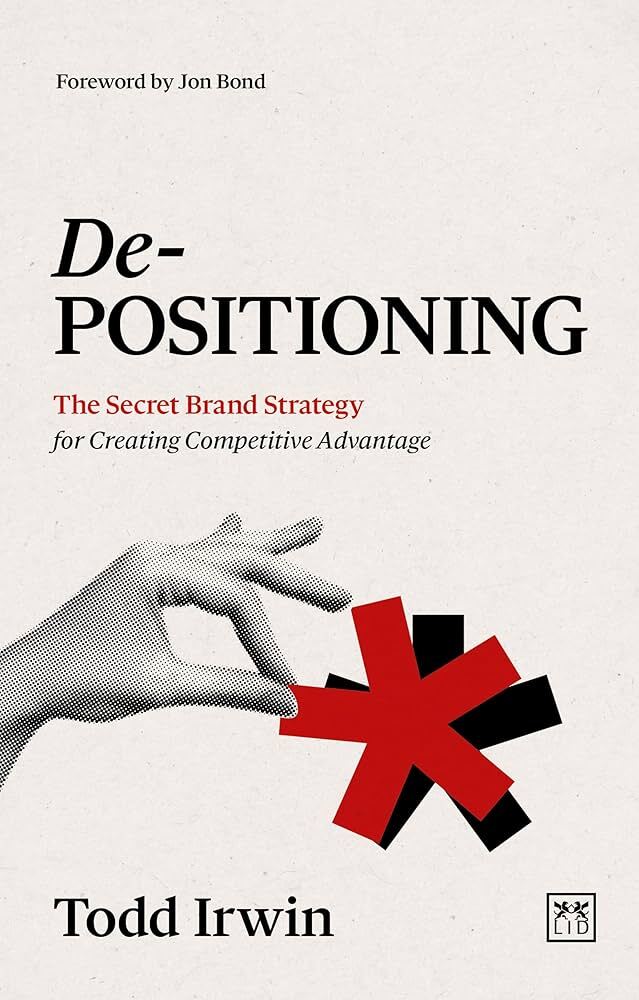


1 Irwin, T. De-Positioning. (Coherence or die; integration aligns strategy, culture and execution.)
2 Casanova, M. (2005). "Public Relations als strategisches Führungsinstrument." VS Verlag. (Integrated, holistic communication management.)
3 Bruce, A. Brand-Market Connector. (Agile brand management and market intelligence.)
4 Freitag, A. Von Marken und Menschen. (Ownership responsibility; owners, agents and outsiders sharing one picture of the brand.)
5 Schmidt, D. & Vest, P. (2010). Die Energie der Marke. Gabler.