Why the jump is this big
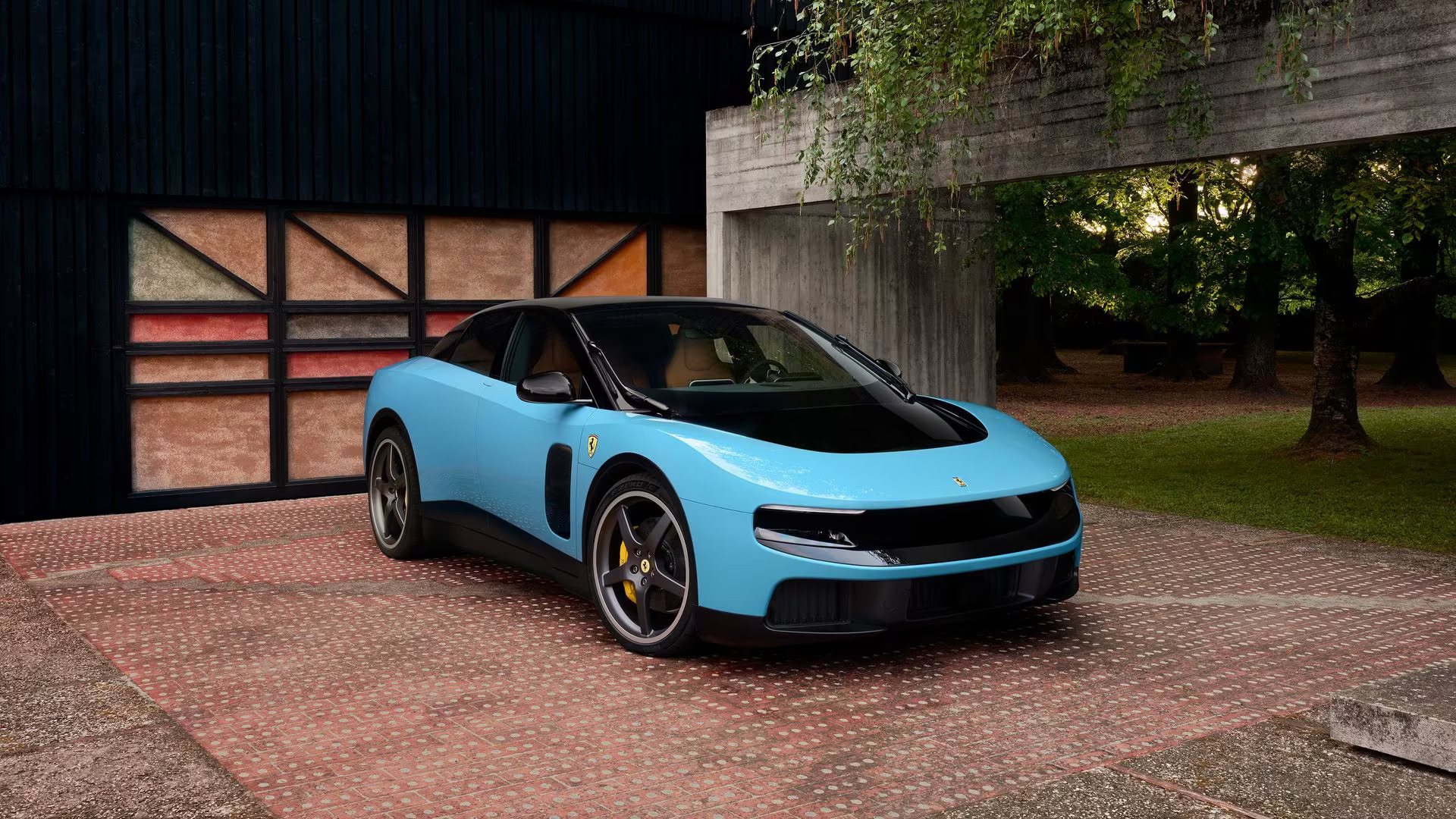
Why do electric cars look so much more futuristic than the cars I grew up around, and why is the jump so much bigger than anything that happened in the decades before? That is the question I keep coming back to when one of them comes down the street, and the answer has less to do with taste than with what sits underneath the sheet metal.
For most of the past ten years, car design did not move much. Shapes went rounder, then boxier, then rounder again, and the steps were small every time. An SUV looked like an SUV. A truck looked like a truck. You could tell what you were looking at from two hundred metres, and you could rarely tell which year it was from. Now there is variety on the roads again, and two things brought it back: the shift to electric drive, and what happened to headlights.
The layout that held everything in place
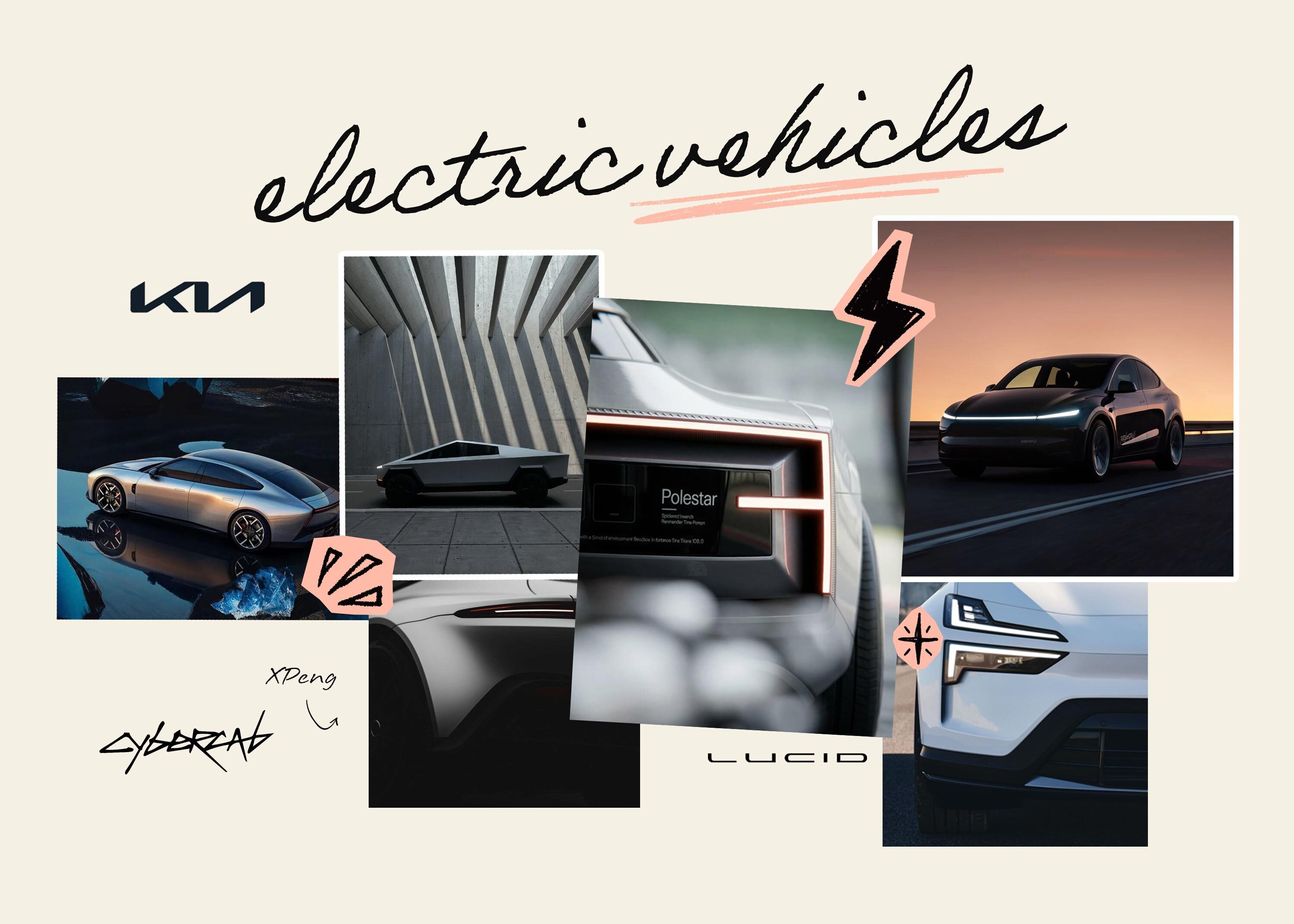
Designers were not being cautious for those decades. They were working around a layout that had not changed in a century. An engine block sat in front of the cabin, a transmission tunnel ran through it, and a radiator at the front had to be fed air. Every one of those fixed a proportion. Electric drive removed all three at once. Hyundai built the Ioniq 5 on a platform made for electric cars alone, which gives it a completely flat interior floor and three metres between the front and rear wheels.1 Lucid used the same freedom differently: the Air offers more interior space than sport coupes do, in a smaller body, at a drag coefficient of 0.20.2 Those are not styling decisions. They are the room that opened up, and styling followed.
The grille stopped doing its job
The clearest place to watch it happen is a part that no longer does anything. A grille fed a radiator. There is no radiator now, so the opening is free, and every maker has had to decide what to do with a shape people recognise them by. BMW kept its kidneys on the iX3 and sculpted them, describing them as referencing "the Neue Klasse of the 1960s in their vertical arrangement".3 Hyundai built a new sign instead, a single pixel motif repeated across headlights, tail lights and wheels. Polestar took the rear window out altogether and put a camera on the roof. The same freedom, three completely different answers, and that is why the street looks varied again.
Light became the thing you recognise
The second driver is light. Audi put matrix LED headlights into the A8 in 2013, twenty-five individual segments switched, dimmed or shut off one by one.4 Once a headlight is made of segments rather than one bulb, it can be drawn rather than merely fitted, and at night it is the only part of a car anybody can identify. A badge is invisible in the dark and lettering cannot be read at speed. Rivian built its recognition entirely there: two vertical oval lamps it calls stadium headlights, the first American-made units to carry adaptive high beam, which could not be certified in the United States at all until the rule changed in February 2022.5
The Cybertruck went further than that
All of that is evolution with more room to move. The Cybertruck was something else. It did not restyle a pickup, it questioned whether a pickup has to look like one. Elon Musk named the references himself: Blade Runner, and the submersible Lotus Esprit from The Spy Who Loved Me. Franz von Holzhausen described the brief as "this exoskeleton idea, a low-resolution-looking type of truck".6 The folded, flat-panelled language behind it goes back to Giorgetto Giugiaro, who had been building cars out of straight creases since the Esprit and the DeLorean. For fifty years that language lived on motor-show turntables and cinema screens. The Cybertruck put it on a road, and the courage in that was not the material or the engineering. It was deciding that the look and feel we knew from science fiction was allowed to arrive in the present.
The future I was promised
I am a fan of this, and I should say so plainly, because I have been a science fiction fan for as long as I can remember. Cyberpunk, Blade Runner, I, Robot: the stories carried me, but it was the design language that got me. Hard edges, cold light, surfaces that looked engineered rather than styled. I spent a good part of my childhood looking at that and understanding it as the future.
Not everyone likes what is happening on the roads now, and that disagreement is real. But it is a disagreement about shapes everybody recognises, which is a better place for car design to be than the polite sameness it came out of. What I feel when one of these cars goes past is simple enough. The present finally looks like the future I was promised.
Written with AI assistance, edited by a human. Find out more about our Use of AI.
1. Wikipedia, "Hyundai Ioniq 5", accessed 6 September 2026, for the E-GMP platform, the flat interior floor and the three-metre wheelbase. https://en.wikipedia.org/wiki/Hyundai_Ioniq_5
2. Wikipedia, "Lucid Air", accessed 6 September 2026, for the interior space compared with sport coupes and the drag coefficient of 0.20. https://en.wikipedia.org/wiki/Lucid_Air
3. BMW Group, "BMW iX3: Start of the new BMW design language", 15 September 2025, for the quoted description of the kidneys. https://www.bmwgroup.com/en/news/general/2025/bmw-ix3-design-language.html
4. Audi Technology Portal, "Matrix LED headlights", accessed 6 September 2026, for the introduction on the Audi A8 in 2013 and the twenty-five individually switched, dimmed or deactivated segments. https://www.audi-technology-portal.de/en/electrics-electronics/lighting-technology/matrix-led-headlights
5. Car Design News, "Ten strange and wonderful car light designs", 22 May 2025, for Rivian's stadium headlights as the first American-made lights carrying adaptive driving beam technology: https://www.cardesignnews.com/lighting/ten-strange-and-wonderful-car-light-designs/428493. NHTSA, "Federal Motor Vehicle Safety Standards; Lamps, Reflective Devices, and Associated Equipment; Adaptive Driving Beam Headlamps", final rule released 1 February 2022, for the amendment to FMVSS No. 108 without which adaptive driving beams could not be certified in the United States: https://www.nhtsa.gov/sites/nhtsa.gov/files/2022-02/ADB-Final-Rule-02-01-2022-web.pdf
6. Wikipedia, "Tesla Cybertruck", accessed 6 September 2026, for the design references named by Elon Musk and the quotation from Franz von Holzhausen. https://en.wikipedia.org/wiki/Tesla_Cybertruck
About the author

Brands mentioned in Article

The electric vehicle company repositioning itself as an autonomous technology and robotics platform, with ambitions extending from mobility to humanoi…
11 Articles
Italian luxury sports car manufacturer building exclusive, performance-focused vehicles in Maranello, anchored in Formula 1 heritage and a defined ann…
16 Articles
Bayerische Motoren Werke Aktiengesellschaft, together with its subsidiaries, develops, manufactures and sells cars and motorcycles, as well as spare p…
12 Articles
British luxury car manufacturer repositioning as an all-electric brand built around 'exuberant modernism.'
8 Articles