A Stage Borrowed from Hollywood
On 10 October 2024, Tesla staged "We, Robot" on the lot of Warner Bros. Studios in Burbank, California. The invitation-only event opened with a convoy of 50 autonomous vehicles moving silently through the studio streets, with Cybercabs leading a formation that included Model 3 and Model Y cars operating without drivers.
The setting and the name were deliberate. By referencing Isaac Asimov's foundational robot fiction, Tesla signalled that what followed was not a car launch in the conventional sense — not a motor show reveal, not a spec sheet — but a statement about the kind of future the brand believed it was building.
What Was Shown
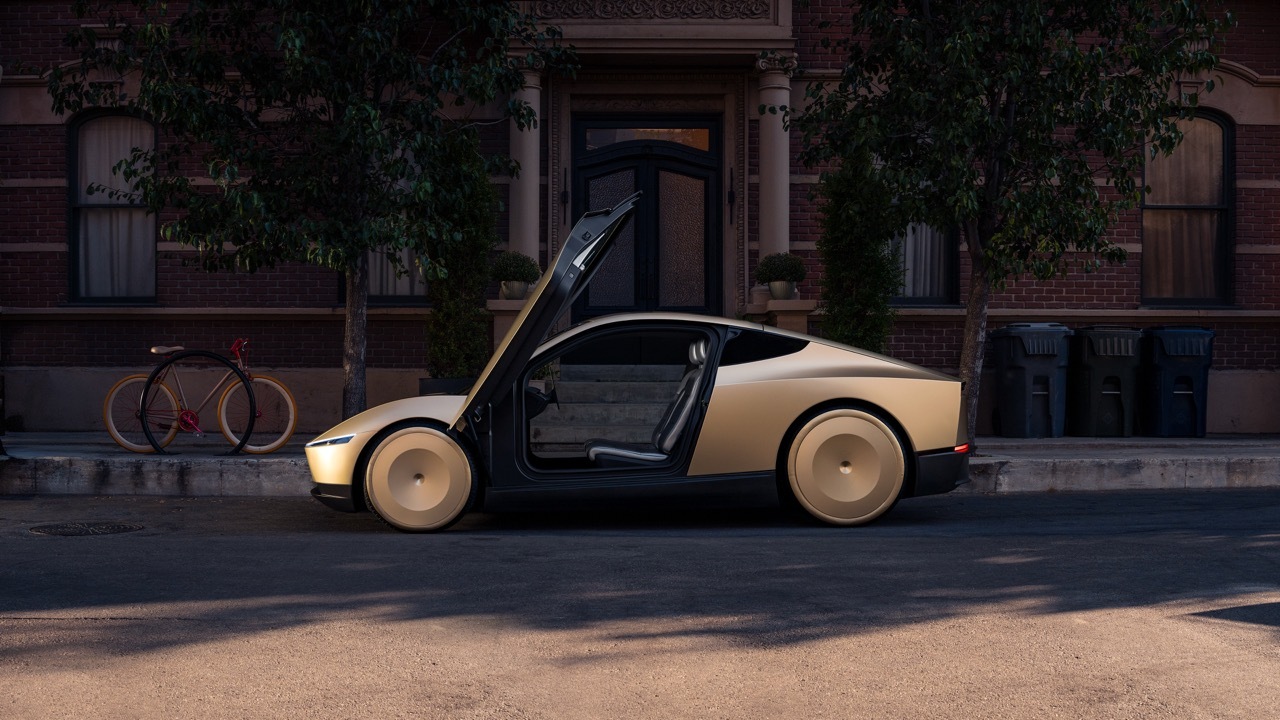
Elon Musk introduced two new vehicles. The Cybercab is a two-seater with no steering wheel and no pedals, priced below $30,000 and targeted for production before 2027. Both the Cybercab and the Robovan, a 20-passenger autonomous pod with Art Deco-influenced styling, would use inductive charging, eliminating the need for a physical plug. Alongside the vehicles, Tesla's Optimus humanoid robots circulated through the crowd serving drinks, not as a product demonstration in isolation, but as a live enactment of the event's central claim: that autonomous capability at Tesla extends beyond vehicles entirely.
A Communicative Pivot
The deeper significance of "We, Robot" was not the hardware it introduced but the brand communication register it established. Where Tesla had previously competed at motor shows and measured itself against other car manufacturers, the Warner Bros. event placed the company in an entirely different frame of reference, science fiction, cinematic spectacle, and the long-arc ambitions of the robotics industry.
For Tesla's brand, the event marked a clear pivot: from car company to autonomy platform. The Cybercab was not presented as a better car but as evidence that the personally-owned vehicle would eventually become irrelevant infrastructure. The presence of Optimus reinforced that framing, Tesla's stated ambition, as communicated at "We, Robot," encompasses the automation of physical labor as much as personal mobility. It was the most explicit signal yet that Tesla's future brand identity would be defined by robotics and artificial intelligence as much as by electric vehicles.
Analyst reaction was measured. The event offered theatrical clarity of concept but limited technical precision — no detailed autonomy specifications, no confirmed regulatory pathway, no production volume commitments. Tesla's stock declined in the days following the announcement. But within the longer arc of the brand's communication history, "We, Robot" represents the clearest available statement of where Tesla intends its identity to reside: not among automakers, but among the organizations building the infrastructure of an autonomous world.




Written with AI assistance, edited by a human. Find out more about our Use of AI.