
An invitation, scored to House of Pain
On 3 February 2026, Volkswagen releases a 90 second online film titled The Great Invitation: Drivers Wanted.1 A 30 second version airs in the second half of Super Bowl LX on NBC and Telemundo on 8 February.2, 3 It is the brand's second Super Bowl appearance in three years and its most pointed revival of a distinctive brand asset in more than two decades.1 The slogan at the centre of the film, Drivers Wanted, first ran in 1995 under Arnold Communications and carried Volkswagen of America through the launch of the New Beetle, the Da Da Da Golf spot and the Cabrio Pink Moon film of 1999.4, 5
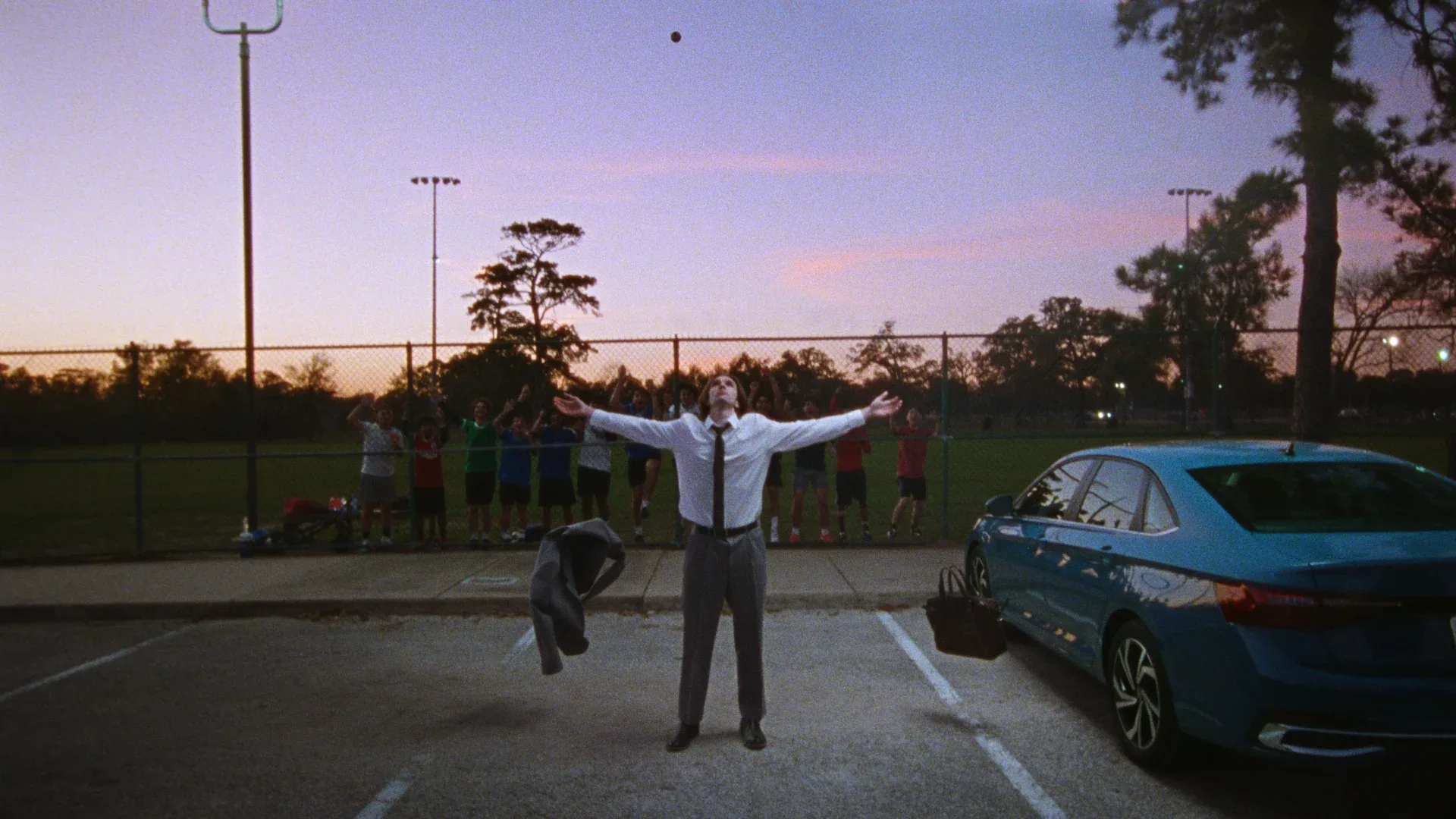
The new film is the work of Johannes Leonardo, the New York agency that has held the Volkswagen of America brand account since the 2019 Hello Light reset.6 Zoe Kessler leads as executive creative director.7 Leigh Powis directs through ProdCo.8 The spot is shot on location in Houston, Texas, and runs as a montage of small human moments stitched together by invitations and spontaneous decisions: friends pulling each other into a night out, a dust covered Golf GTI carrying a handwritten call me number, a kitchen table that turns into a dance floor.8 The soundtrack is House of Pain's 1992 anthem Jump Around.7, 8 The car cast spans Jetta, Tiguan, ID. Buzz and Golf R.3
Why the slogan returns, and on what terms
The brand presents the revival as a continuation rather than a nostalgia exercise. Kjell Gruner, president and chief executive officer of Volkswagen of America, frames the work around the brand's relationship to its drivers and away from a feature led product message.1, 9 The supporting headline runs as a positioning sentence: all the ways you can say yes in life.1 Driving is staged as one expression of a broader posture, and the film carries no horsepower numbers, no range claims, no price points.10
The return arrives at a difficult commercial moment in the United States. Volkswagen of America reports a year on year sales decline for 2025, its first annual drop since 2022.1 A Super Bowl placement at the cost of a network half spot is therefore a deliberate visibility bet, and the choice to deploy a heritage platform rather than a new claim is a statement that the brand believes its strongest position is still its own archive.
The asset, not the era
Volkswagen treats Drivers Wanted here as a distinctive brand asset rather than a period reference. The 1990s framing sits inside the film as a craft cue, in the casting of the music and in the dust covered GTI, but the surrounding language is contemporary. The film does not stage a 1990s revival party; it stages a 2026 invitation that happens to be set to a song that places the brand in its strongest creative decade.11 The distinction matters because it determines whether the slogan can carry forward. A literal revival would expire with the launch cycle. An asset revival can be extended into out of home, social, sponsorships and product pages over multiple years.
The wider rollout suggests Volkswagen is preparing for exactly that. The 30 second Super Bowl placement is supported by a takeover of premium out of home positions in New York City's Times Square, a paid and owned social campaign across the brand's North American channels, and a month long presenting sponsorship of Emma Chamberlain's Anything Goes podcast through February.1, 7, 9 The cross channel pattern resembles the way Arnold extended the original platform across the New Beetle launch in 1998, the Milky Way Cabrio spot in 1999 and the Da Da Da Golf commercial in 1997, when a single line carried the brand through five years of distinct executions rather than a single campaign cycle.5
The continuity with Johannes Leonardo
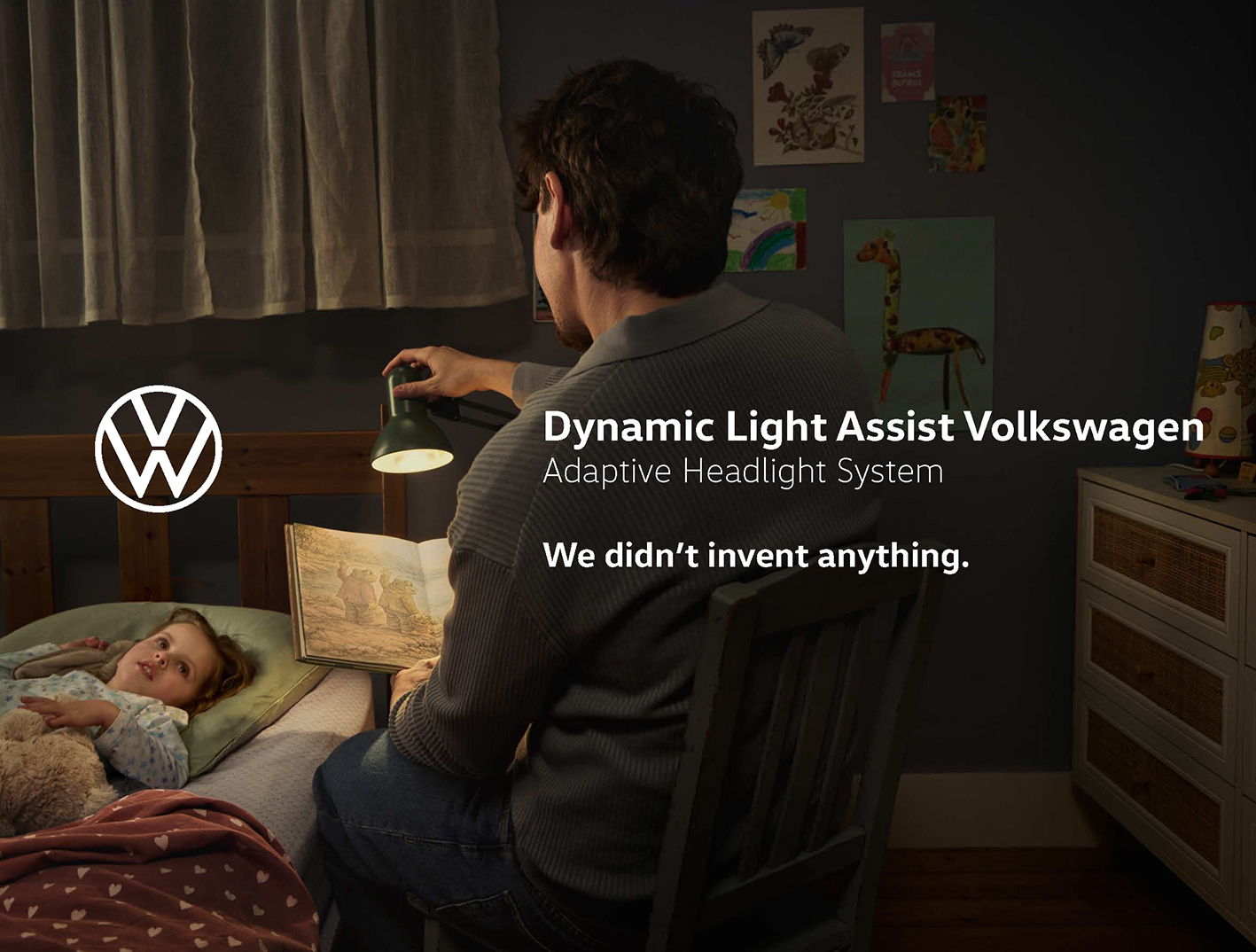
The agency relationship gives the revival a creative through line. Johannes Leonardo took over the Volkswagen of America account in 2019 with the express remit to bring the brand back into culture after Dieselgate.6 Hello Light opened that chapter with a heritage referencing print platform that reproduced the layouts of the 1960 Lemon and 1959 Think Small ads.6 The 2026 Super Bowl film completes the move from heritage as acknowledgement to heritage as positioning. Volkswagen is no longer borrowing its archive to apologise; it is borrowing its archive to stand on.
The film's Houston setting reinforces the shift. The original Drivers Wanted campaign in 1995 framed the brand around individual driving culture and individuality, and was anchored in the urban Northeast where Volkswagen of America had its strongest dealer network.5 The Houston shoot reads as a deliberate widening: Sunbelt streets, Sunbelt light, a market in which Volkswagen is still rebuilding share. The film argues that the platform can travel.
What the revival is asking for
The campaign sits at the intersection of two pressures common to legacy brands in 2026. The first is the cost of new distinctive assets in a fragmented media environment, where building recognition from zero requires reach and time that few brands command at the necessary scale. The second is the commercial pressure on a brand whose North American sales line has turned negative for the first time in three years.1 Drivers Wanted is the answer Volkswagen of America gives to both pressures. The platform already lives in the audience's memory, it is associated with a creative high point of the brand and it can be extended into product lines that did not exist when it last ran. The Super Bowl placement is the price of asking the audience to recognise it again.
Source: Volkswagen USA Youtube
Written with AI assistance, edited by a human. Find out more about our Use of AI.
1. Media Marketing, "Volkswagen brings back its iconic Drivers Wanted slogan in a Super Bowl campaign", 4 February 2026, for the 3 February debut of the 90 second film "The Great Invitation: Drivers Wanted" and the 30 second Super Bowl cut, for the campaign being the brand's second Super Bowl appearance in three years, for Kjell Gruner as President and CEO of Volkswagen of America and his framing of the campaign around the brand's long-standing relationship with its drivers rather than product features, for the supporting line "all the ways you can say yes in life", for the year on year United States sales decline reported for 2025 as the brand's first annual drop since 2022, and for the supporting rollout of Times Square out of home, social media and the February presenting sponsorship of Emma Chamberlain's Anything Goes podcast. https://www.media-marketing.com/en/news/volkswagen-brings-back-its-iconic-drivers-wanted-slogan-in-a-super-bowl-campaign/
2. Adweek, Tilde Herrera, "Volkswagen's Super Bowl Ad Reboots Iconic 'Drivers Wanted' Campaign", 3 February 2026, for the 30 second spot airing in the second half of Super Bowl LX on NBC and Telemundo after the 90 second film was released on 3 February, and for Drivers Wanted having debuted in 1995 and helped Volkswagen to record United States sales. https://www.adweek.com/creativity/volkswagens-super-bowl-ad-reboots-iconic-drivers-wanted-campaign/
3. iSpot.tv, "Volkswagen Super Bowl 2026 TV Spot, 'The Great Invitation: Drivers Wanted' Song by House of Pain [T1]", air date 8 February 2026, for the Super Bowl LX placement on that date and for the four vehicles shown in the spot, the Jetta, the Tiguan, the ID. BUZZ and the Golf R; off whitelist and used for corroboration only. https://www.ispot.tv/ad/gnaK/volkswagen-extended-super-bowl-2026-extended-the-great-invitation-drivers-wanted-t1
4. Agency Compile, "Johannes Leonardo, Volkswagen Super Bowl, The Great Invitation", agency case listing, undated, for the work being presented by the agency as a reimagining of Volkswagen's 1995 Drivers Wanted campaign for a contemporary audience; off whitelist and used for corroboration only. https://www.agencycompile.com/agencies/johannes-leonardo/content/johannes-leonardo-volkswagen-super-bowl-the-g
5. Encyclopedia of Major Marketing Campaigns, "Volkswagen of America, Inc.", via Encyclopedia.com, for Arnold Fortuna Lawner & Cabot, later Arnold Communications, winning the Volkswagen of America account in April 1995, for Drivers Wanted first surfacing in July 1995 with the line "On the road of life, there are passengers and there are drivers. Drivers Wanted", for the platform being used in almost every Volkswagen vehicle launch over the following ten years including the New Beetle campaign of March 1998, and for the original campaign's framing around driving and individuality. The dates of the Da Da Da Golf spot and of the Cabrio Milky Way and Pink Moon film are not covered here and are recorded in retrofit-notes.md; off whitelist and used for corroboration only. Added during the footnote retrofit. https://www.encyclopedia.com/marketing/encyclopedias-almanacs-transcripts-and-maps/volkswagen-america-inc
6. Creative Review, Megan Williams, "VW repurposes classic ads to come clean about emissions", 6 June 2019, for Hello Light being the first campaign by Volkswagen's newly enlisted United States agency Johannes Leonardo, for the accompanying print platform repurposing the Doyle Dane Bernbach classics Lemon and Think Small while keeping their layouts and playful tone, and for the 2015 emissions scandal the campaign was built to address. Added during the footnote retrofit. https://www.creativereview.co.uk/vw-emissions-scandal-campaign/
7. LBBOnline, Addison Capper, "Volkswagen Revives 'Drivers wanted' with Big Game Spot Set to House of Pain Classic", 9 February 2026, for Zoe Kessler as executive creative director at Johannes Leonardo, for the soundtrack being House of Pain's "Jump Around", and for the campaign being extended across Emma Chamberlain's podcast and Times Square. https://lbbonline.com/news/volkswagen-drivers-wanted-super-bowl-lx-commercial
8. SHOOTonline, "VW, Johannes Leonardo, Director Leigh Powis Extend A 'Drivers Wanted' Invitation To Young Consumers In Super Bowl Ad", 3 February 2026, for Leigh Powis directing through the production company ProdCo, for the Houston, Texas shoot, for the montage of invitations including friends asking someone to dance in the rain and the dust covered Golf GTI carrying a handwritten number, and for the soundtrack being House of Pain's "Jump Around" of 1992. https://www.shootonline.com/shoot_video2/vw-johannes-leonardo-director-leigh-powis-extend-a-drivers-wanted-invitation-to-young-consumers-in-super-bowl-ad/
9. Reel 360 News, Colin Costello, "Volkswagen revives 'Drivers Wanted' for Big Game", 8 February 2026, for Kjell Gruner, there given as President and CEO of Volkswagen Group of America, saying "Our passion has always been about our cars and our people; our drivers, our dealers, our employees", for Rachael Zaluzec, SVP customer experience and brand marketing at Volkswagen of America, calling Drivers wanted "more than a message; it's an invitation to take the wheel", for the Johannes Leonardo credits of Jonathan Santana as chief creative officer and Zoe Kessler as executive creative director, and for the rollout across Times Square out of home, podcast sponsorship, social and the myVW app. https://reel360.com/article/volkswagen-revives-drivers-wanted-for-big-game/
10. Daily Commercials, Liviu, "Volkswagen Super Bowl 2026 Review: The Great Invitation: Drivers Wanted and Nostalgia-Driven Automotive Branding", 9 February 2026, for the reading of the film as a brand advertisement rather than a product commercial, "more about feeling than features", carrying no product claims, and for the ID. Buzz appearing in the spot; off whitelist and used for corroboration only. https://dailycommercials.com/volkswagen-super-bowl-2026-review-the-great-invitation-drivers-wanted-and-nostalgia-driven-automotive-branding/
11. D&AD, Madhuri Chowdhury, "Super Bowl Sunday: D&AD Sports Entertainment judge Jonathan Santana on his newest commercial for Volkswagen and his favourite spots of all time", 10 February 2026, for Jonathan Santana, chief creative officer at Johannes Leonardo, saying of the revived platform "however, this isn't a nostalgia play" and describing the spot as "a 2026 evolution of that 90s rallying cry". https://www.dandad.org/insights/features/super-bowl-sunday-dad-sports-entertainment-judge-jonathan-santana-on-his-newest-commercial-for-volkswagen-and-his-favourite-spots-of-all-time