A campaign that argues by analogy rather than demonstration
Volkswagen and BBDO Paris release The Parents, a multi-film campaign signed with the line We didn't invent anything.1 The work is rolled out across television, digital, press, and out-of-home channels and consists of four films and a print and outdoor system.2, 3 Trade reporting around the launch confirms the agency credit (BBDO Paris), the production company (VOIR Pictures), and the director (Ariela Dorf).1, 4 The creative direction sits with Marion Thiery, copywriting is by Leopold Cartier, and the art direction is by Calvin Peigne, with President and Chief Creative Officer Alexander Kalchev signing the wider creative output.1 Bruno Alves edits, Victor Seguin shoots, and Arthur Paux colour-grades.1
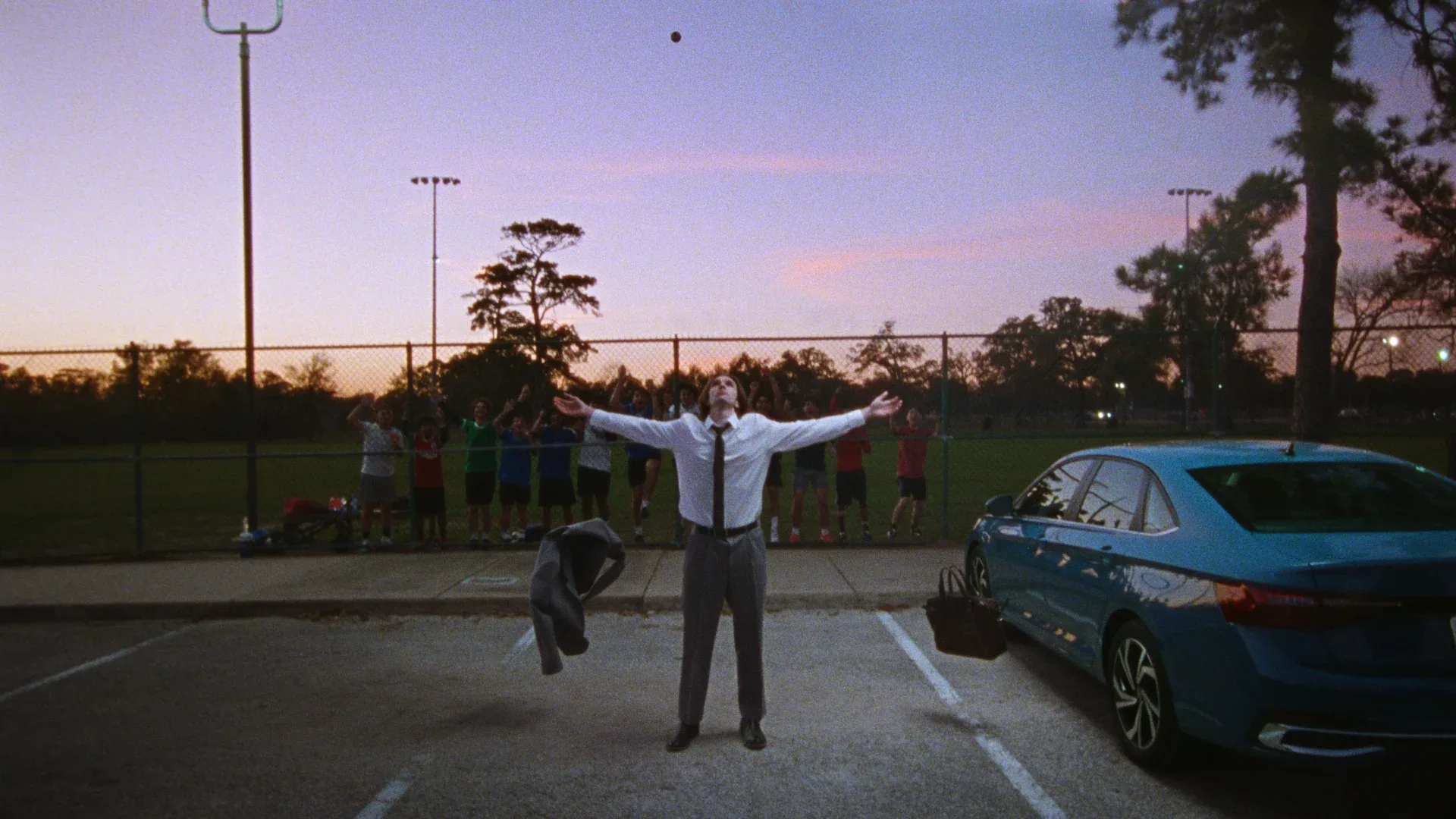
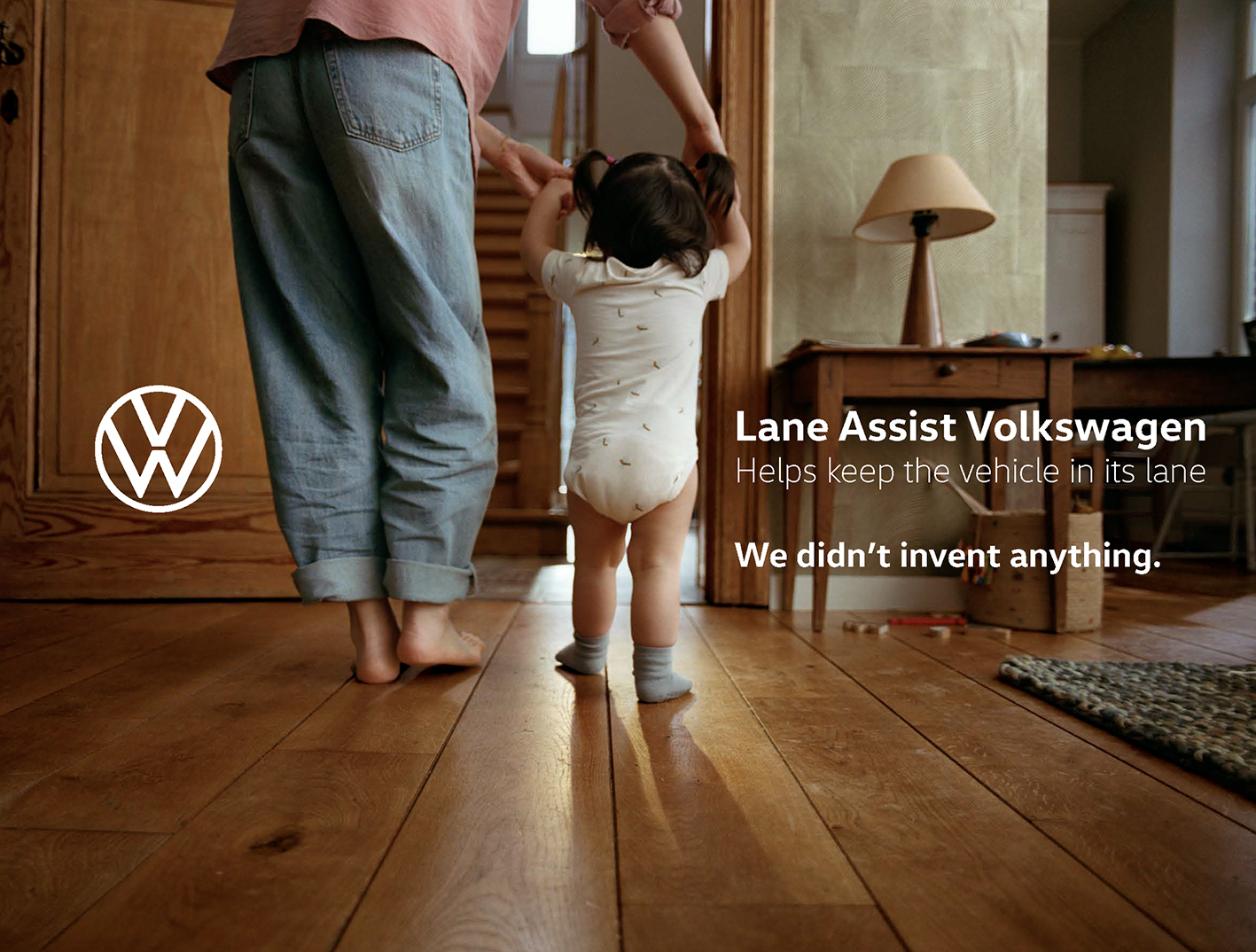
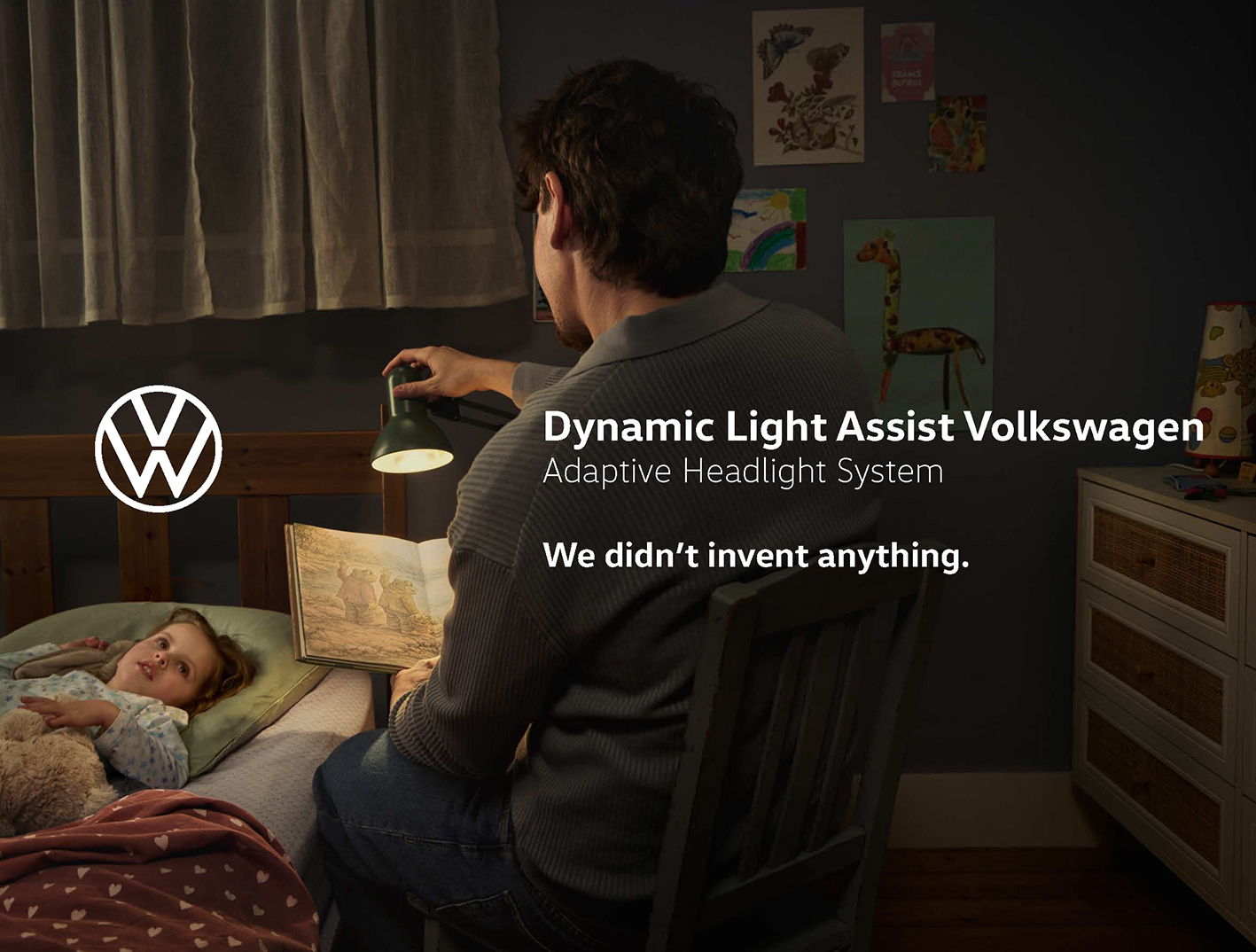
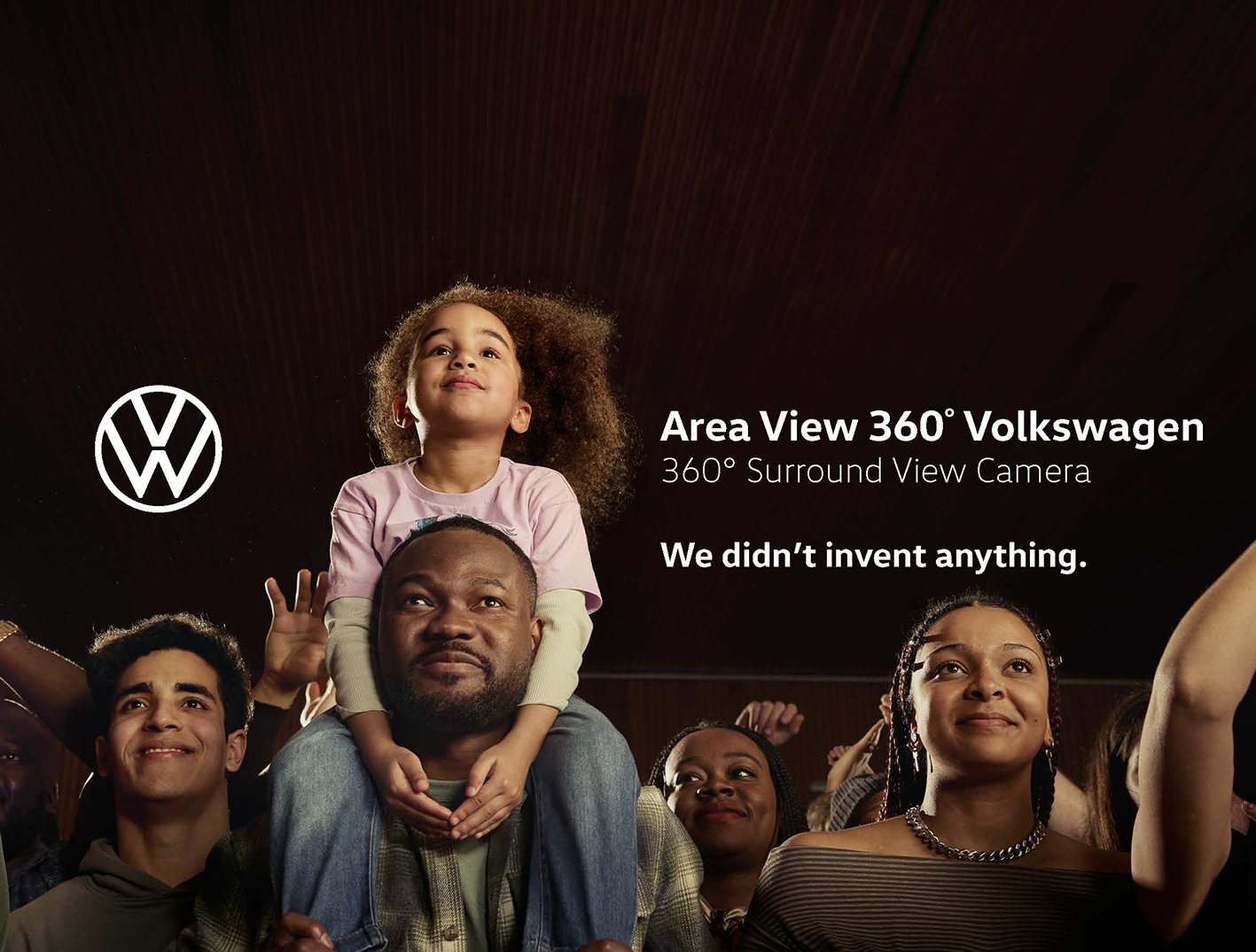
The premise of the campaign is structural. Each of the four films pairs a piece of Volkswagen driver assistance technology with a familiar parental gesture and lets the analogy carry the argument.5 Lane Assist is mapped onto the parent who steadies a child between sliding doors. Area View 360 is mapped onto the parent who scans a room before a child enters it. Dynamic Light Assist is mapped onto the parent who softens a light at bedtime. Park Assist is mapped onto the parent who guides a child into a chair. The signature, We didn't invent anything, gives the campaign its closing logic. The features Volkswagen sells, the line argues, were already present in the gestures parents have always made.
The strategic problem the campaign answers
Volkswagen and BBDO Paris build the campaign on a piece of Cetelem Observatory research that the agency cites in launch communications: 51 per cent of European drivers report that their cars include technologies they could do without, and 62 per cent feel that the multiplication of features makes their cars unnecessarily complex.2, 6 The headline finding is therefore that the car category has overshot the audience on technology. The brief that BBDO Paris answers in The Parents is to re-anchor Volkswagen's communication of driver assistance away from feature claims and toward usefulness, and to do so without retreating into a generic safety narrative.
The strategic position the campaign occupies is therefore distinct in the category. Most premium and mass-market brands argue assistance technology by listing capability. BBDO Paris removes capability from the foreground entirely. The films do not display dashboards, do not name the technology in the cut, and do not visualise sensor envelopes. They show the human gesture, then they show the car's equivalent, then they sign the whole observation as something the brand has not invented. The argument is that the engineering is in service of the instinct, rather than the other way round.
Why the line works
The signature, We didn't invent anything, performs three pieces of work for the brand. It removes the boastful register that the assistance category usually relies on. It compliments the audience by attributing the underlying behaviour, looking after others, to them rather than to the engineering team. And it positions Volkswagen at the right altitude inside the broader Volkswagen Group, where Audi handles the technology demonstration brief and where the Volkswagen marque is asked to carry a more populist, more domestic register.
The line is also a quiet citation of the long Volkswagen advertising tradition. The brand's communication history has favoured understatement since the DDB Beetle work in the United States from 1959 onwards, and The Parents extends that vocabulary into the assistance era.7 Where the Beetle work argued that small could be virtuous, The Parents argues that simplicity in technology can be virtuous. The structural move is the same. The brand declines the boast that the category invites, and lets the audience finish the sentence.
Sorce: BBDO Paris Youtube
The production and the cast of films
Ariela Dorf directs through VOIR Pictures, with Aurelien Drosne as Head of Production and Mary Amely Le Bornec, Efrosini Spanoudis, and Simon Durot producing.1 Post production is handled by Orage Studio.1 Sound is mixed in-house at DDB Paris through Studio 5.1 The four films share a documentary realism that lets the parental gesture register as observed rather than performed. Each cut moves quickly between the human action and the equivalent vehicle behaviour, and the editing rhythm sets up the closing line as a punctuation rather than as a reveal.
The print and out-of-home system extends the platform into still imagery. The visual logic mirrors the films. A parental gesture is photographed at close range, then paired with an equivalent vehicle situation, and the line sits on the page or the panel as the only typographic mark. The visual restraint is consistent across the system and gives the campaign a uniform read across markets. The platform is designed to extend over multiple flights rather than to peak in a single launch month.
How the campaign sits inside the Volkswagen Group brand architecture
The Parents is consistent with the brand role Volkswagen holds inside the Volkswagen Group. Audi's recent campaigns argue from technology and aesthetics, Porsche argues from performance and dreams, and Skoda argues from value. The Volkswagen marque is positioned in the populist centre, where the brief is to talk to the broad European driving audience without elitism. The Parents fits that position precisely. It selects a universal experience, parenting, as the metaphor and refuses to dramatise its technology at any point in the cut.
What the campaign continues to model
The Parents is a useful reference for any brand operating in a feature-heavy category at a moment when the audience is signalling overload. It demonstrates that a category can be addressed through analogy rather than demonstration, that a brand can credit its audience rather than its engineering team without losing technical authority, and that an unboastful line can carry a multi-film system across television, digital, and out-of-home. It also extends a long Volkswagen pattern of communicating modern propositions in restrained, familiar terms, and it returns the brand to the part of the advertising landscape it has historically been most credible in.
Written with AI assistance, edited by a human. Find out more about our Use of AI.
1. shots, "Volkswagen celebrates the parents", 7 April 2026, for the campaign title The Parents and its signature "We didn't invent anything", and for the full credit list: BBDO Paris as agency, VOIR Pictures as production company, Ariela Dorf as director, Alexander Kalchev as President and Chief Creative Officer, Marion Thiery as creative director, Leopold Cartier as copywriter, Calvin Peigne as art director, Aurelien Drosne as Head of Production, Mary Amely Le Bornec, Efrosini Spanoudis and Simon Durot as producers, Victor Seguin as director of photography, Bruno Alves as editor, Arthur Paux as colourist, Orage Studio for post production and Studio 5, in house at DDB Paris, for sound. https://shots.net/news/view/volkswagen-celebrates-the-parents
2. Little Black Book, "Volkswagen Reframes the Role of Technology in Driving in 'The Parents'", 2 April 2026, for the rollout as a series of four films and visuals across television, digital, press and outdoor, and for the two research figures the campaign is built on, 51 per cent of Europeans saying their car includes technologies they could do without and 62 per cent saying that the multiplication of those technologies makes cars unnecessarily complex. https://lbbonline.com/news/Volkswagen-The-Parents
3. Ad Age, spot listing "Volkswagen, The Parents, 30s", for the 30 second television cut of the campaign; page not reachable on 17 September 2026. https://adage.com/video/volkswagen-the-parents-30s/
4. Creative Brands Mag, "Volkswagen's 'The Parents' Campaign Highlights Simplicity in Technology", 7 April 2026, corroborating the BBDO Paris, VOIR Pictures and Ariela Dorf credits and the attribution of both research figures to the Cetelem Observatory; the article body sits behind a login wall and only the summary was readable on 17 September 2026. https://creativebrandsmag.com/volkswagens-the-parents-campaign-highlights-simplicity-in-technology-2/
5. Ads of the World, "Volkswagen France: VW Parents", April 2026, for Volkswagen France as the brand and BBDO Paris as the agency, for the campaign structure of pairing Volkswagen assistance systems with the instinctive gestures of parents rather than demonstrating the technology, and for the four features the campaign names: Lane Assist, Area View 360, Dynamic Light Assist and Park Assist. https://www.adsoftheworld.com/campaigns/vw-parents
6. Volkswagen France, press release "Volkswagen et BBDO Paris parlent d'innovation en célébrant les parents", 31 March 2026, for the attribution of both figures to the Observatoire Cetelem of December 2024. The release carries them as "51% des Européens estiment que leur voiture embarque des technologies dont ils pourraient se passer" and "62% jugent que leur multiplication rend l'automobile inutilement complexe", and gives the signature in the original French as "On n'a rien inventé". https://media.volkswagen.fr/volkswagen-et-bbdo-paris-parlent-dinnovation-en-celebrant-les-parents/?lang=fr
7. Wikipedia, "Think Small", for the Doyle Dane Bernbach Beetle campaign having run in the United States from 1959; off whitelist and used for corroboration only. https://en.wikipedia.org/wiki/Think_Small