
A quiet thirty seconds that rebuilt an artist's legacy
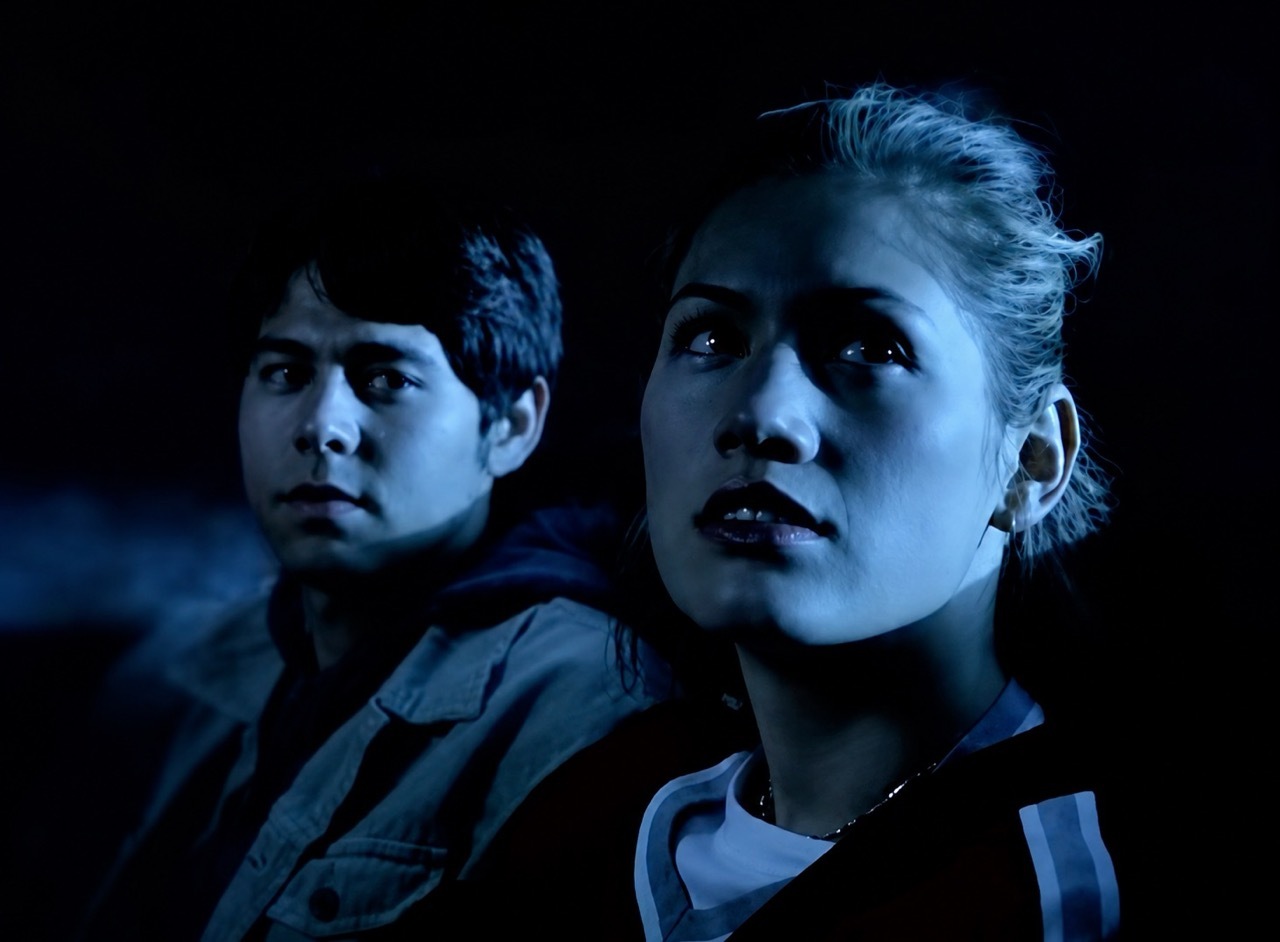
On 11 November 1999 Volkswagen of America aired a television advertisement for the Cabrio convertible that the Boston agency Arnold Communications had developed under the working title Milky Way. The spot opened on four young passengers in a Cabrio rolling through a starlit countryside at night, cut between their faces and the open sky, declined to insert a single product shot of the car badge, and used Nick Drake's 1972 recording Pink Moon as the soundtrack. The thirty-second execution carried only one line of copy at the end, set above the Volkswagen logotype, and the line read, We're all driving the wrong way. The spot ran in the United States for several months and reframed the Cabrio not as a sun-and-music summer convertible but as a vehicle for a quieter, almost contemplative mood.
The advertisement was the work of four Arnold creatives, the agency's flagship Volkswagen of America team led by group creative director Lance Jensen with writer Tom Gianfagna, art director Liz Cartwright and producer Mark Sitley. The team had originally intended to score the spot with The Church's 1988 single Under the Milky Way, which produced the working title that the agency continued to use after the music brief shifted. One of the creatives brought Pink Moon into the office from a personal copy late in the production, the team listened to the track, and the agency switched the soundtrack within days. The substitution defined the final tone of the spot and accidentally reshaped the late-career reputation of the British folk musician Nick Drake.
The artist behind the soundtrack
Nick Drake had released three studio albums in his lifetime, Five Leaves Left in 1969, Bryter Layter in 1971 and Pink Moon in 1972, before his death in November 1974 at the age of twenty-six. The third album had been recorded in two late-night sessions at Sound Techniques in Chelsea, London, with Joe Boyd's protégé John Wood as engineer, and it carried only voice and guitar across all eleven tracks. Pink Moon had sold modestly on release through Island Records, had received affectionate but limited press, and had moved into the cult-back-catalogue category that supported a slow but persistent readership across the next two decades. By the late 1990s the album was a known reference point for British folk and singer-songwriter audiences but remained almost unknown in mainstream American culture.
The Cabrio spot reversed that obscurity. Sales of Pink Moon rose from 815 units in the same first-ten-week period of 1999 to 4,742 units in the first ten weeks of 2000, a near five-fold increase. Drake's wider back catalogue also returned to the charts during the same period. Joe Boyd, who had produced the first two albums and who held the publishing rights to much of Drake's recorded output, later wrote that the Volkswagen campaign was the single largest factor in Drake's posthumous discovery by the American audience, and that the commercial had achieved in thirty seconds what twenty-five years of dedicated press coverage and reissue marketing had been unable to produce. Drake's family, who had quietly maintained the catalogue through the intervening years, agreed to the licence at a rate the agency described as nominal in trade press at the time.
The decision to refuse the category conventions
Convertible advertising at the end of the 1990s relied on a small set of repeating images. The category communicated through sunlit coastline driving, contemporary pop music, group laughter and the wind-in-the-hair shot. Arnold's Milky Way refused all of those conventions. The car drove at night through an unlit landscape. The music carried no contemporary pop signal. The four passengers did not speak, did not laugh, and did not gesture toward the camera. The shot framing held the car at a distance from the viewer for the entire thirty seconds. The product fact, that the Cabrio was a convertible, was demonstrated only by the open sky above the passengers.
The closing line, We're all driving the wrong way, performed two functions at once. It read first as a literal observation. The four passengers had decided to leave a brightly lit social setting at night and to drive into the dark. It read second as a positioning statement. The Volkswagen Cabrio audience was assumed to be the audience that took the unexpected exit, the audience that drove away from the obvious, the audience for which a convertible at night under the stars made more sense than a convertible at noon on a coastline. The line did not name a competitor and did not list a feature. The line proposed a temperament and invited the viewer to identify with it.
The cultural arc that followed
Milky Way is now widely studied as the founding example of the late-1990s advertising practice of pairing a quietly produced product spot with a back-catalogue song that the broader audience had not previously encountered. The format was followed across the next decade by Apple, by Nike, by John Lewis, and by a range of fashion and beverage brands. The Volkswagen Cabrio spot was the prior reference for every subsequent music-discovery campaign of the 2000s. The Arnold team also returned to the format on later Volkswagen of America commercials, notably the 2001 Da Da Da reissue and the 2002 Cabrio Inspector spot, both of which used Arnold's working method of selecting an artist from an existing back catalogue rather than commissioning original score.
The Volkswagen Cabrio platform continued in North America until the model was retired from the United States line-up in 2002. The 2001 model year carried a special Cabrio edition that bundled a compilation compact disc featuring Pink Moon as the first track. The Arnold team won several Effie Awards for the work, and Milky Way appeared on industry retrospective lists of the most influential commercials of the decade. Nick Drake's catalogue has since sold more than five million units globally, and the Cabrio commercial is named in almost every press account of the resurgence as the inflection point.
Source: Alan Pafenbach Youtube
Written with AI assistance, edited by a human. Find out more about our Use of AI.