
Volkswagen Da Da Da: how Arnold tuned the brand for irony
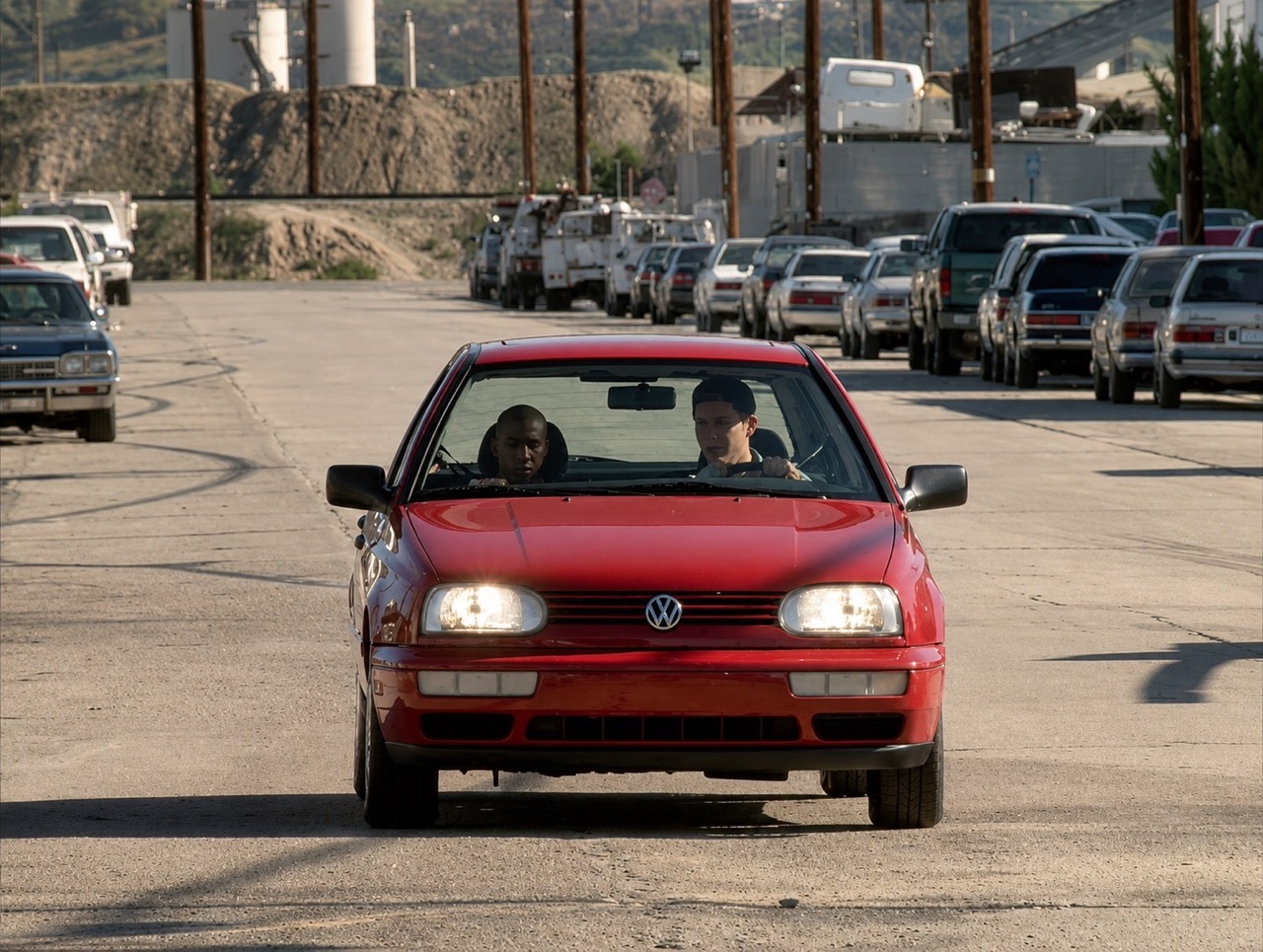
In the summer of 1997 Volkswagen of America aired a thirty-second television commercial that became the most quoted American car advertisement of the late 1990s. Two young men cruised through suburban streets in a red Mk3 Golf, found an abandoned armchair on the kerb, loaded it into the boot, and drove away. After half a block they noticed an unpleasant smell, glanced at one another, made eye contact, and put the chair back. Trio's 1982 synth-pop single "Da Da Da" carried the entire soundtrack. The spot, created by Arnold Communications in Boston, restored Volkswagen's deadpan voice, returned the brand to American cultural relevance, and reset the agency landscape for the next decade.
The crisis Volkswagen needed to solve
Volkswagen of America had been in slow decline since the early 1980s. The brand's US sales bottomed out at roughly 50,000 units in 1993, down from a peak of over 500,000 units in 1970. The Pennsylvania assembly plant in Westmoreland had closed in 1988. The Rabbit had been replaced by the Golf with limited commercial success. Volkswagen's American advertising had drifted across multiple agencies and tonal positions through the early 1990s, with German engineering claims competing against price-led promotional messaging in inconsistent rotation. The brand's mid-century DDB legacy, the Helmut Krone and Julian Koenig deadpan voice of Think Small (1959) and Lemon (1960), was a memory rather than a working asset.
The Arnold arrival
Arnold Communications, a Boston-based agency founded in 1979, won the Volkswagen of America account in 1995 after a competitive review. Ron Lawner had joined Arnold as Chief Creative Officer in 1991 with a mandate to elevate the agency's national profile. The Volkswagen pitch had been led by a young copywriter named Lance Jensen, then 33 years old, who proposed reading the DDB legacy back into the brand. The first deliverable was Drivers Wanted, the platform tagline launched in 1995. The 1997 work that followed was the moment Arnold's strategic position landed in popular culture.
The spot
"Da Da Da" was directed by Roman Coppola through Anonymous Content. The narrative carried no spoken dialogue. Two friends, played by unknown actors, exchanged glances, gestures and the sung "da da da, ich lieb' dich nicht, du liebst mich nicht" refrain from the Trio recording. The visual language was unhurried. Long static shots of the Mk3 Golf moving through residential streets framed the chair as a found object. The pickup, the smell, the visual realisation, the drop-off and the return to driving were rendered without product shots, performance claims or comparative messaging. The only Volkswagen content sat in the closing two seconds, a small VW logo and the line "Drivers Wanted." Trio's original 1982 single, which had been a German chart hit and a moderate American novelty record, was licensed in full and used unedited.
The cultural ripple
The spot achieved three things at once. It reset Volkswagen's tonal position in the United States. The brand's communication moved from German engineering claims into deadpan absurdism, and the new register held for the next decade across the Drivers Wanted platform. It revived a 15-year-old song. Trio's "Da Da Da" re-entered the US charts on the back of the spot. The track moved more than 350,000 copies as a 1997 promo single in the United States, and the band's catalogue returned to streaming relevance. It also revived Volkswagen's commercial trajectory. US sales doubled across the four years that followed, from 137,000 units in 1997 to 355,000 units in 2001, with the New Beetle launch of January 1998 absorbing the lift that the Mk3 Golf campaign had already begun to generate.
The Arnold platform
"Da Da Da" anchored a longer body of work that followed the same logic. The 1998 Drivers Wanted spots paired the New Beetle with similar music-led set pieces and minimal copy ("If you sold your soul in the '80s, here's your chance to buy it back."). The 1999 Pink Moon spot for the New Beetle Cabrio, set to Nick Drake's 1972 recording, completed the Arnold tonal architecture, with the campaign tone moving from absurdism into quiet reflection without breaking the underlying grammar. The agency held the account for fourteen years and reset the visual benchmark for American car advertising across the late 1990s and early 2000s. Lance Jensen and Alex Bogusky's parallel work at Crispin Porter Bogusky on the Mini Cooper launch in 2002 was a direct heir to the Da Da Da position.
Editorial reading
The spot worked because Arnold made three correct strategic bets. The first was the recognition that Volkswagen's American problem was a voice problem, not a product problem. The Mk3 Golf was a competitive small car, and the price point sat in range. What was missing was a tone of voice that the audience could identify as the brand. The second was the decision to read the DDB legacy as a system rather than a memory. The 1959 Think Small ad had used negative space, dry copy and a deadpan attitude. Da Da Da used the same grammar in moving image and music. The third was the commitment to product restraint. The spot showed the car for less than five seconds in total and trusted the audience to make the connection. By withholding the conventional product display, Arnold restored the brand's narrative authority. Volkswagen has not produced a more influential American spot in the thirty years since.
Source: The Ad Club Youtube
Written with AI assistance, edited by a human. Find out more about our Use of AI.