Moving past the wall of text
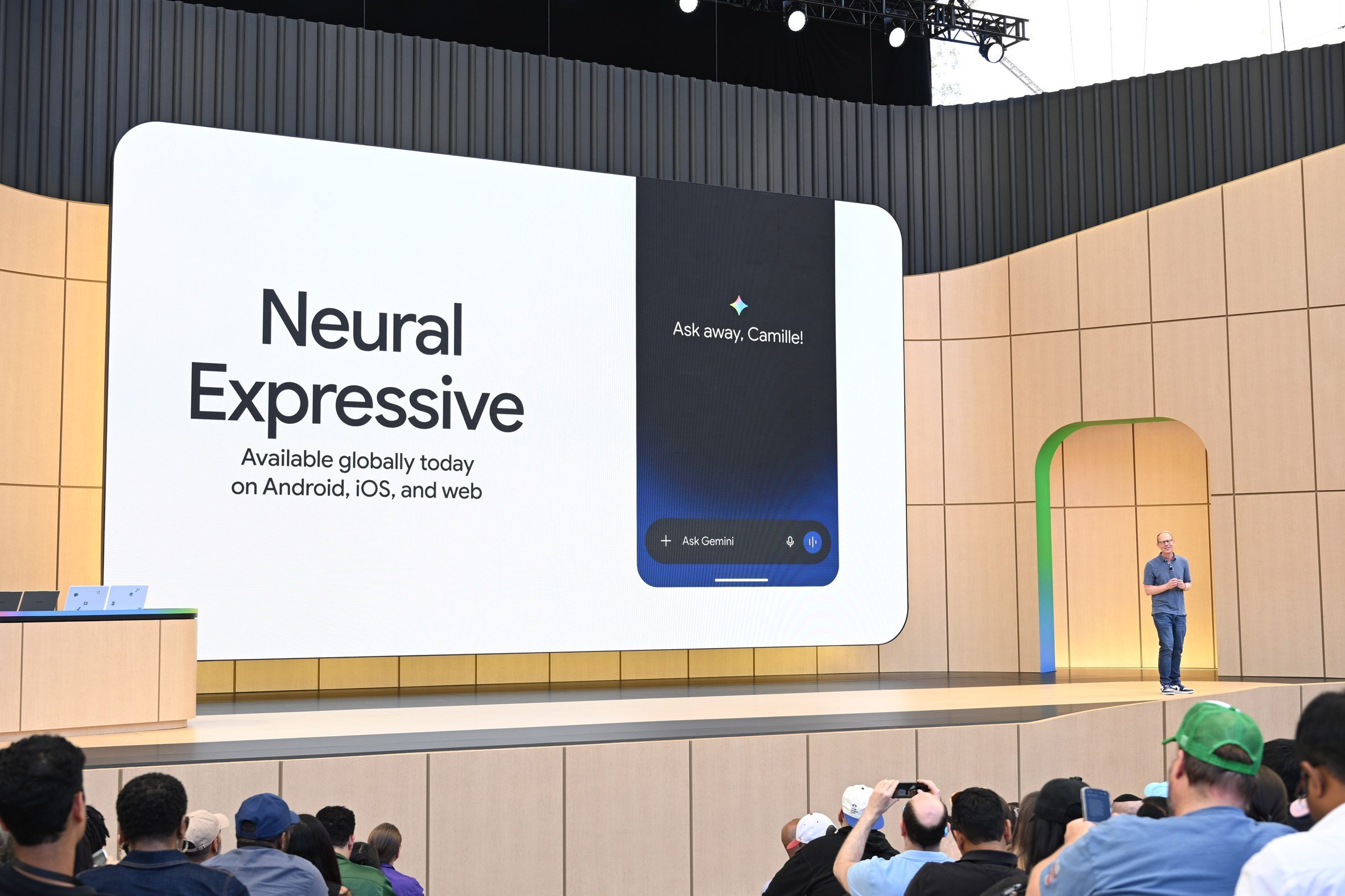
At Google I/O on 19 May 2026, Google presented Neural Expressive, a new design language built specifically for Gemini, its AI assistant app.1 The company describes it as a vibrant, dynamic and thoroughly reworked visual system, intended to replace the conventional chatbot interface, in which every answer arrives as an unbroken block of text, with responses that move, respond and adapt to what a person is actually asking.1 The rollout began immediately across the web, Android and iOS, reaching an app Google says now serves more than 900 million monthly active users.1
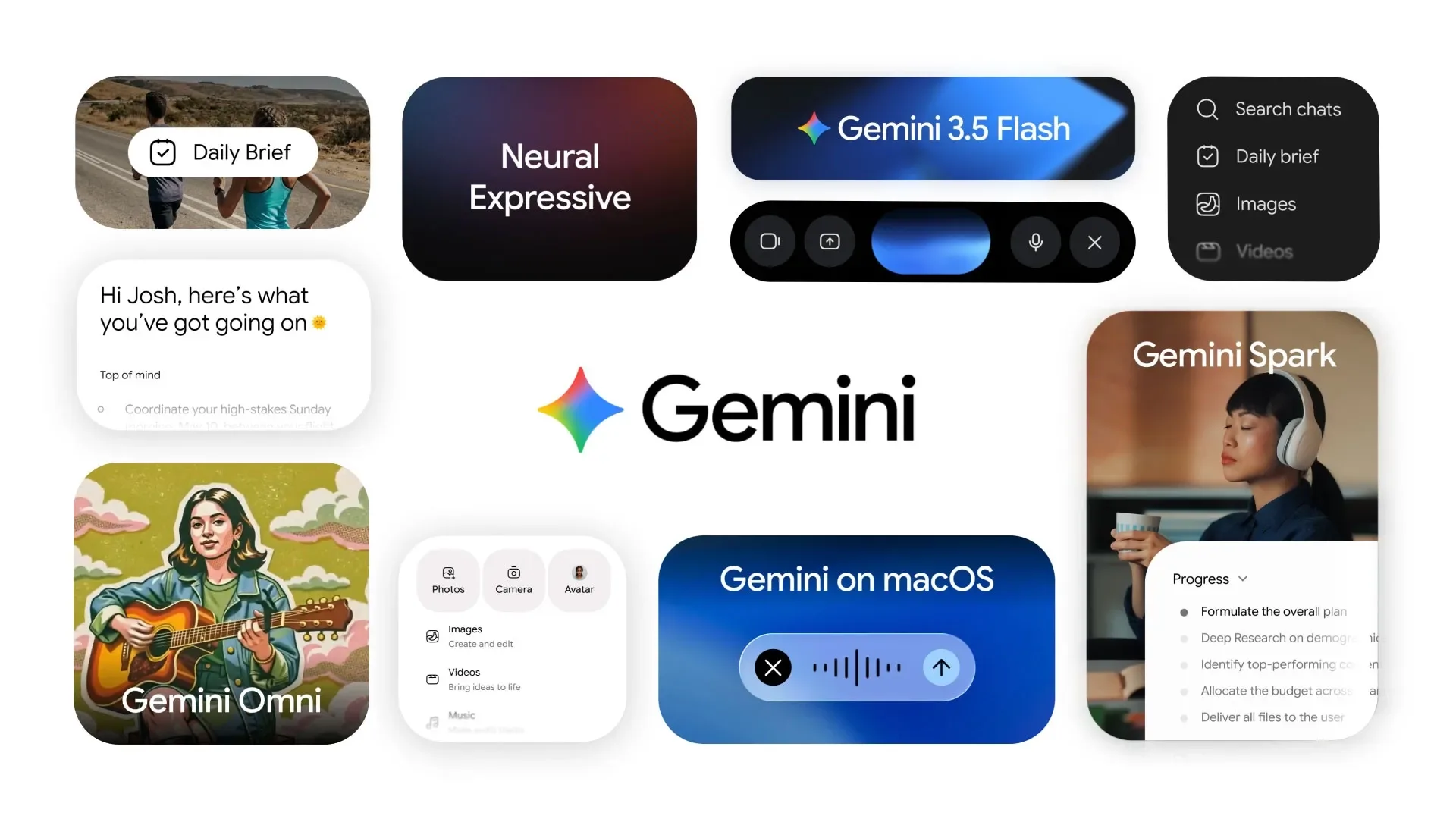
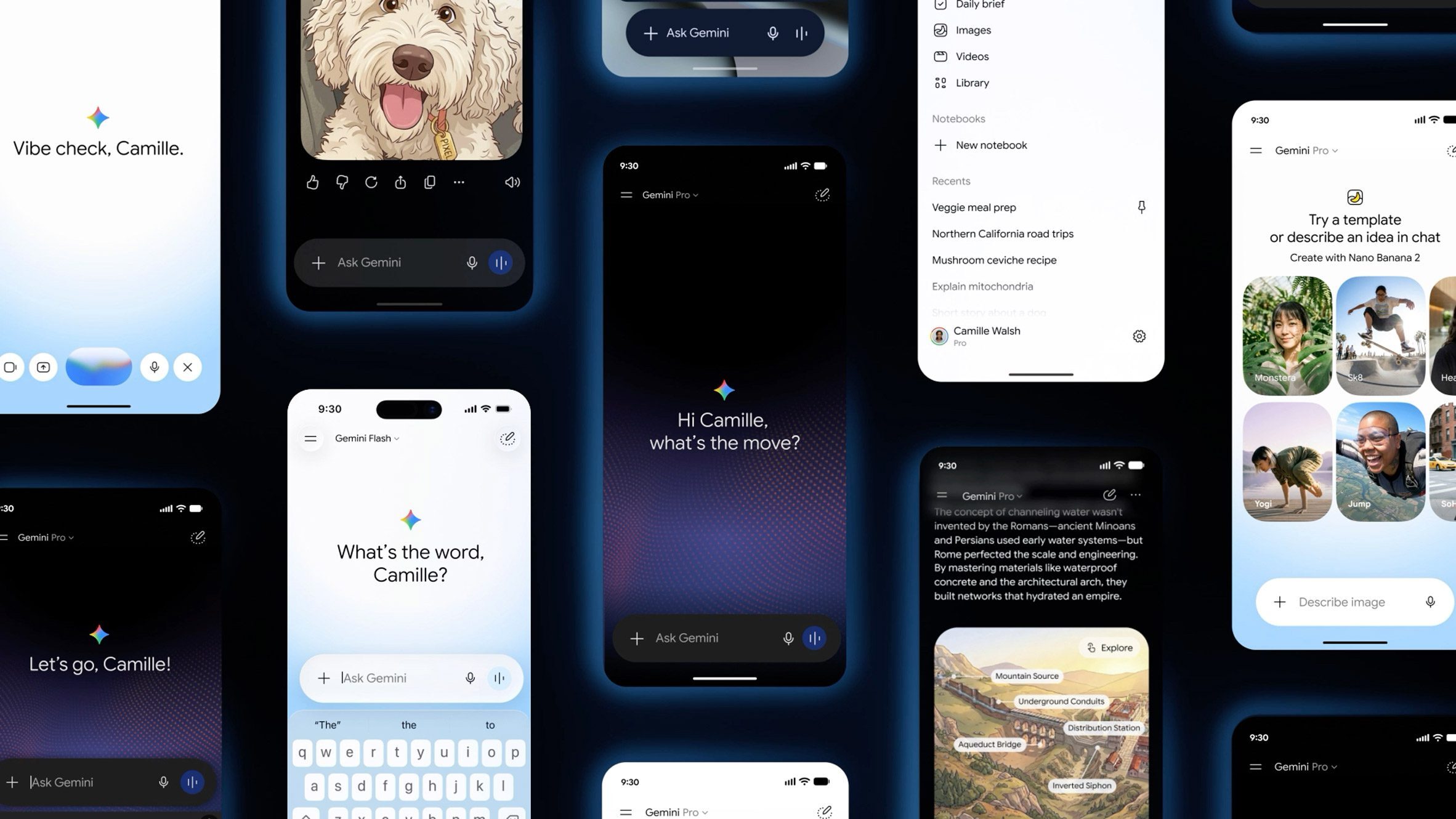
Neural Expressive brings together fluid animation, a brighter and more varied color palette, a refreshed typographic system and haptic feedback into a single, coordinated set of interface rules.2, 3 Rather than treating these as separate polish items, Google frames them as a way of communicating state: the transitions and the haptic pulses that accompany them are built to signal when Gemini is listening, thinking, or delivering an answer, not simply to decorate the interaction.1, 4
An editorial layout, not a chat log
The clearest change sits in how Gemini structures a response. Instead of scrolling text in a single column, Neural Expressive borrows logic from editorial page design: the most important piece of information in a given answer is set apart, bolded and placed at the top of the response, with supporting depth, detail and sources available further down through scrolling.2, 3 The typography itself stays a simple sans-serif, but Google uses ombre treatments, gradient shading applied across individual words, to highlight emphasis within a sentence rather than relying purely on bold or color blocks.5
That structural shift supports a broader change in what a Gemini response can contain. Under Neural Expressive, the app can generate interactive layouts built from images, timelines, graphics and narrated videos alongside text, with the specific mix adapting to the type of question being asked.2, 3, 4 A request for a travel itinerary, for example, can surface as a visual timeline rather than a numbered list, while a factual query might still default to a short, direct answer with expandable detail beneath it.
Part of a broader Gemini update
Neural Expressive arrived alongside a wider set of changes to the Gemini app announced at the same Google I/O keynote, including a Daily Brief feature and expanded agentic capabilities intended to make the assistant proactively useful throughout the day rather than only in response to a typed prompt.1 Google positions the design language as the visual counterpart to that shift: as Gemini takes on more initiative, moving from a tool a person queries to one that surfaces information on its own, the interface needed a vocabulary that could represent activity and intent, not just static replies.
The same keynote introduced the Gemini 3.5 Flash model and a 24/7 agent Google calls Spark, both framed as extensions of the same proactive Daily Brief feature. Hands-on coverage from outlets including Android Authority focused specifically on how the new interface behaves in daily use rather than in a demo: reviewers noted that the fluid transitions and haptic cues make it easier to tell when Gemini is still generating an answer versus when a response is complete, addressing a common complaint about earlier versions of the app appearing to finish a reply before it actually had. The same coverage flagged an adjustment period, since some of the interactive layouts take a moment longer to load than a plain block of text would.
Continuing a decade of Google design systems
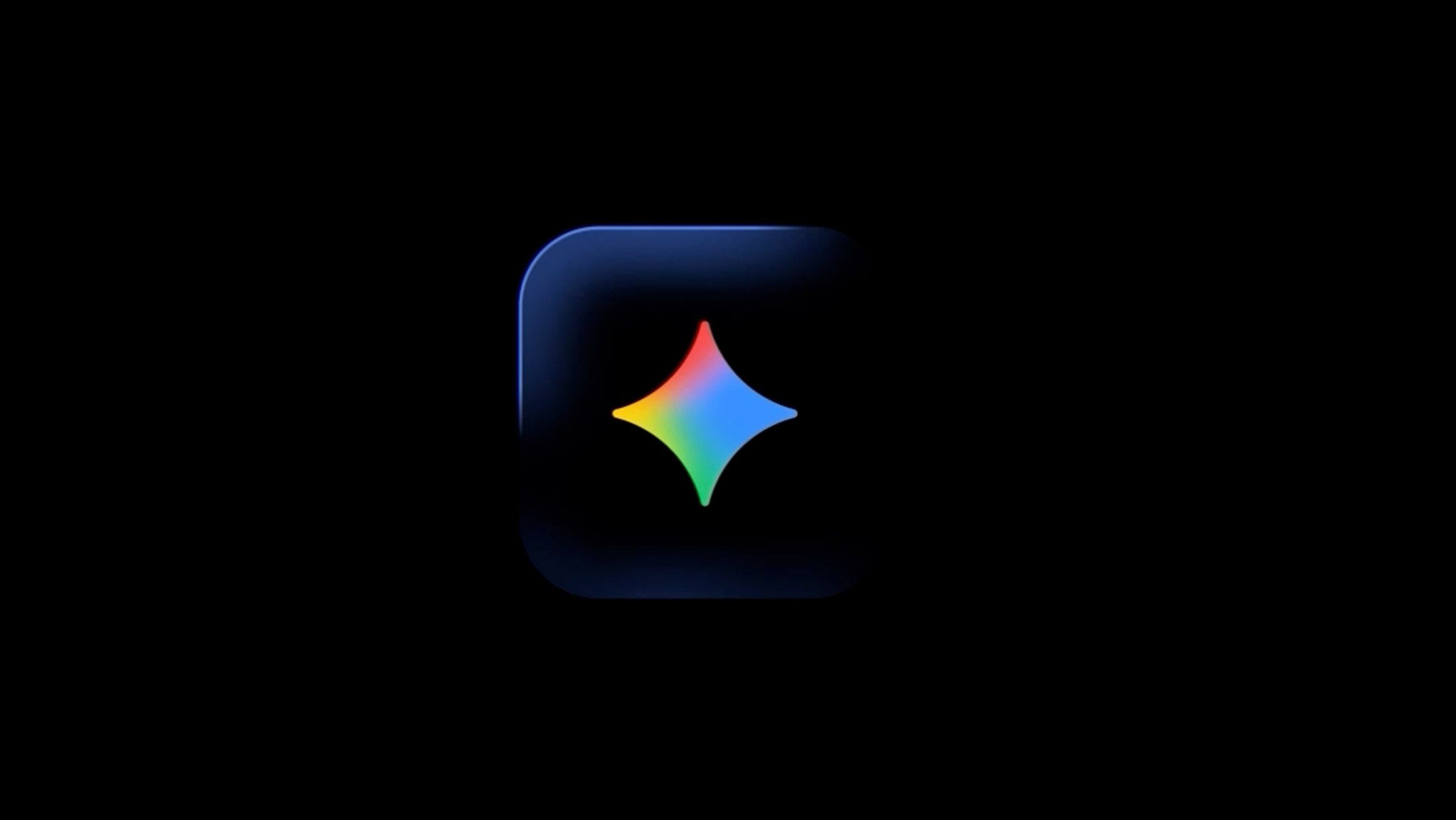
Neural Expressive extends a lineage that runs back through Google's earlier design systems. Material Design, introduced at Google I/O in 2014, established the company's first company-wide visual and interaction language, rooted in the physical metaphor of paper, shadow and light.6 Neural Expressive keeps that same ambition of a shared, systematic design vocabulary but shifts the reference point from physical materials to responsiveness and motion, better suited to an assistant that generates content in real time rather than displaying fixed screens. It also shares its brighter, gradient-driven color language with the gradient "G" icon Google extended company-wide from September 2025, tying the AI assistant's interface to the same visual identity used across the rest of the company's products.7
Early hands-on impressions from reviewers were mixed but engaged: some praised the shift away from static text as a genuine usability improvement for complex answers, while others noted an adjustment period in an interface that behaves less predictably than a conventional chat log.8, 9 Google has not announced a timeline for bringing Neural Expressive to other AI-powered surfaces across its product range, though the company's framing suggests the design language is intended as a long-term foundation rather than a one-off visual refresh limited to the Gemini app alone.
Source: PCMag Youtube
Written with AI assistance, edited by a human. Find out more about our Use of AI.
1. Google, Josh Woodward, "The Gemini app becomes more agentic, delivering proactive, 24/7 help", 19 May 2026, for the announcement of Neural Expressive at Google I/O on 19 May 2026, the framing of the update as a redesign of the Gemini app, the rollout "globally today across the web, Android and iOS for everyone", the figure of more than 900 million monthly users, the same keynote's introduction of the Daily Brief feature and expanded agentic capabilities, and haptic feedback being named among the new design language's features. https://blog.google/innovation-and-ai/products/gemini-app/next-evolution-gemini-app/
2. 9to5Google, Abner Li, "Gemini app rolling out 'Neural Expressive' redesign, 3.5 Flash, 24/7 Spark agent, and Daily Brief", 19 May 2026, off whitelist and used for corroboration only, for Neural Expressive being described as combining fluid animations, vibrant colors, haptic feedback and new typography, for responses being designed to show the most important information at the top and in bold with inline images, narrated videos, timelines and interactive visualizations, and for Gemini 3.5 Flash and the Spark agent being introduced at the same keynote. https://9to5google.com/2026/05/19/gemini-app-google-io-2026/
3. TechCrunch, Aisha Malik, "Google updates its Gemini app to take on ChatGPT and Claude at IO 2026", 19 May 2026, for fluid animations, vibrant colors, new typography and haptic feedback being named as the components of the redesign, for key information appearing in bold at the top with additional elements such as images and timelines appearing as the user scrolls down, and for the Daily Brief, Spark and Omni features being announced at the same event. https://techcrunch.com/2026/05/19/google-updates-its-gemini-app-to-take-on-chatgpt-and-claude-at-io-2026/
4. urdesignmag, "Google's Gemini Trades the Chat Window for a Living Interface: And Retires the Prompt Era", 21 May 2026, off whitelist and used for corroboration only, for the fluid transitions and haptic feedback being described as communicating processing state rather than being ornamental, and for the app assembling answers from inline imagery, narrated video, interactive timelines and dynamic graphics depending on the type of question asked. https://www.urdesignmag.com/google-gemini-neural-expressive-redesign-2026/
5. Dezeen, Ellen Eberhardt, "Google rolls out Neural Expressive redesign of Gemini AI tool", 19 May 2026, for the typography staying a simple sans-serif and for the ombre gradient treatments used for word-level highlighting. https://www.dezeen.com/2026/05/19/google-rolls-out-neural-expressive-redesign-of-gemini-ai-tool/
6. Google Design, Zach Gibson, "Google's Material Design: A Look Back at Its Beginning" (design.google's Material Design tenth-anniversary retrospective; the page carries no specific publication date), for Material Design having debuted at Google I/O in 2014 as the company's first company-wide visual and interaction language, and for the system's founding physical metaphor of paper, shadow and light. https://design.google/library/material-design-launch-2014
7. Google, "Google's 'G' gets a brighter look", 29 September 2025, for the gradient "G" icon being extended company-wide from September 2025, keeping the four iconic Google colors while brightening them. https://blog.google/company-news/inside-google/company-announcements/gradient-g-logo-design/
8. Android Authority, Brady Snyder, "Gemini Neural Expressive UI hands-on: What I love (and hate)", 22 May 2026, off whitelist and used for corroboration only, for a hands-on impression that finds the redesigned interface more visually inviting but, in the reviewer's words, a step backward for utility and functionality. https://www.androidauthority.com/gemini-neural-expressive-android-app-hands-on-3668985/
9. Android Authority, Rita El Khoury, "Gemini's new app design makes me worried for the future of Android UI", 22 June 2026, off whitelist and used for corroboration only, for a hands-on impression that welcomes the fluid animations, colors and haptic feedback while flagging navigation changes, a thinner typeface and a less predictable layout as usability setbacks. https://www.androidauthority.com/gemini-new-design-makes-me-worried-future-android-ui-3677170/