
The biggest design project in the world
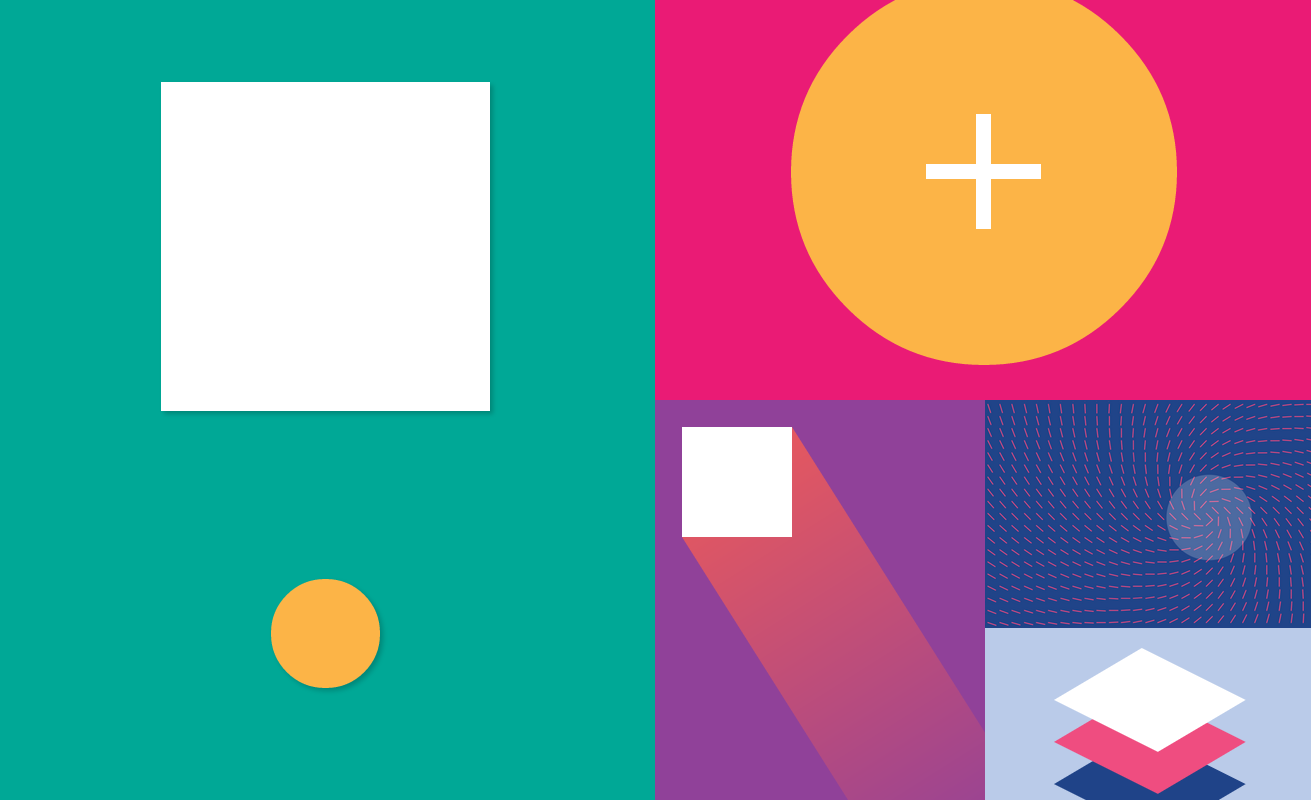
On 25 June 2014, at its annual I/O developer conference, Google introduced Material Design, a company-wide design system built to bring visual and interaction consistency to Android and to Google's own web and mobile products. The announcement was delivered by Matías Duarte, Google's vice president of design, in what was, at the time, an unusual choice for a conference historically focused on engineering product launches and code labs rather than design.
The project had begun two years earlier and far more quietly. Zach Gibson, a designer who joined Google in 2012 as part of a six-person unit called the Art Department, was initially hired to make product icons and logos consistent with Kennedy, a recent design refresh that had introduced clearer typographic hierarchy and more whitespace across Google's top-tier web products, but stopped short of covering the company's full range of tools. The Art Department joined forces with a team called UXA, which was doing equivalent work on interaction design, and the two groups began building a shared visual language for desktop and mobile together. That collaboration became the origin of Material Design.
Built from paper, not pixels
The team rooted the new system in a material people had understood for thousands of years: paper. Designers built product icons out of physical paper to study how light and shadow behaved on folded and layered surfaces, and explored how a sheet of paper might plausibly move, sliding into a frame rather than spinning or twirling, to establish rules for how interface elements should animate. Early prototypes for something as simple as a mail icon moved through paper folds, flat white cutouts and finished Gmail lockups before settling into a final form. The team printed drafts on large sheets of paper, reviewed them together each morning, then tore them down and crumpled them at the end of the day, a physical, iterative process the team credited with keeping the work grounded and collaborative.
When word spread internally that Duarte would present the system as a keynote at Google I/O, the team understood the scale of what they had built. Gibson later recalled sitting outside late one night before the conference and realizing the group was, in effect, redesigning Google itself.
Source: Google for Developers Youtube
From a keynote to a million apps
Material Design's debut marked a departure for I/O, which had not previously given design this kind of platform. Within a year of the 2014 keynote, more than a million products in the Android app store had adopted parts of the Material system, and its influence extended well beyond Google's own products: the design language became a widely used reference point for other companies building their own interface systems in the years that followed.
Inside Google, Material's reach touched nearly every everyday interaction across the company's tools, from Gmail and Calendar to Contacts, Calculator and Music. Gibson connected that ambition directly to Google's long-standing mission statement, to organize the world's information and make it universally accessible and useful, framing Material Design as an extension of that goal into the realm of interface components: not just improving Google's own products, but building a shared design vocabulary and giving it away freely for others to build on.
A foundation for later systems
Material Design set the template Google would return to repeatedly in the following decade, most directly the following year, when the company drew on the same systematic thinking to rebuild its own logo and brand identity in 2015. The system itself kept evolving rather than staying fixed: at Google I/O in 2021, the company introduced Material You, later formalized as Material Design 3, which shifted the emphasis from a shared visual language applied uniformly across devices to a personalized one, generating a device's color scheme from a user's own wallpaper and carrying it through buttons, widgets and system menus. The update arrived first on Pixel phones alongside Android 12 later that year, before reaching the wider Android ecosystem.
A decade after the original 2014 keynote, Google marked the anniversary with a retrospective series on its design blog, revisiting Material's origins as what the team involved still describes as the beginning of the biggest design project the company had undertaken. That framing has held up: three successive generations of the system, from the original paper-inspired Material in 2014 through Material Design 2 to Material You, have each carried the same underlying ambition Duarte set out at the first keynote, a single design language flexible enough to serve every Google product and, by extension, much of the Android app ecosystem built on top of it.
Written with AI assistance, edited by a human. Find out more about our Use of AI.