
A brand that is heard when the payment goes through
On 17 June 2019, at the Cannes Lions festival, Visa announced that its sensory branding was being adopted in 25 countries through more than a dozen new partnerships.1 The suite, which Visa had first introduced in December 2017, consisted of three cues that appeared when a Visa transaction completed: a sound, an animation and a haptic vibration.1,2 In Adweek's summary, a consumer would "hear a sound, see an animation or feel a phone vibration when their transaction completes."3
The sound was the core of it. Sonic branding (a brand's audio identity, like a jingle or sound logo) usually lives in advertising. Visa placed its sound at the point of sale, where the brand's work is actually done. The partners named in the release were the places where that happened: payment terminals from Poynt, Pax, Aurus and Equinox Payments, Ziosk ordering tablets at restaurant chains including Olive Garden and Chili's, the San Francisco Giants' Oracle Park, stadiums in France during the FIFA Women's World Cup, and mobile wallet apps in Singapore and Latin America.1 In many of these settings the customer might never see a card at all: a phone held to a terminal, a tablet on a restaurant table, an app
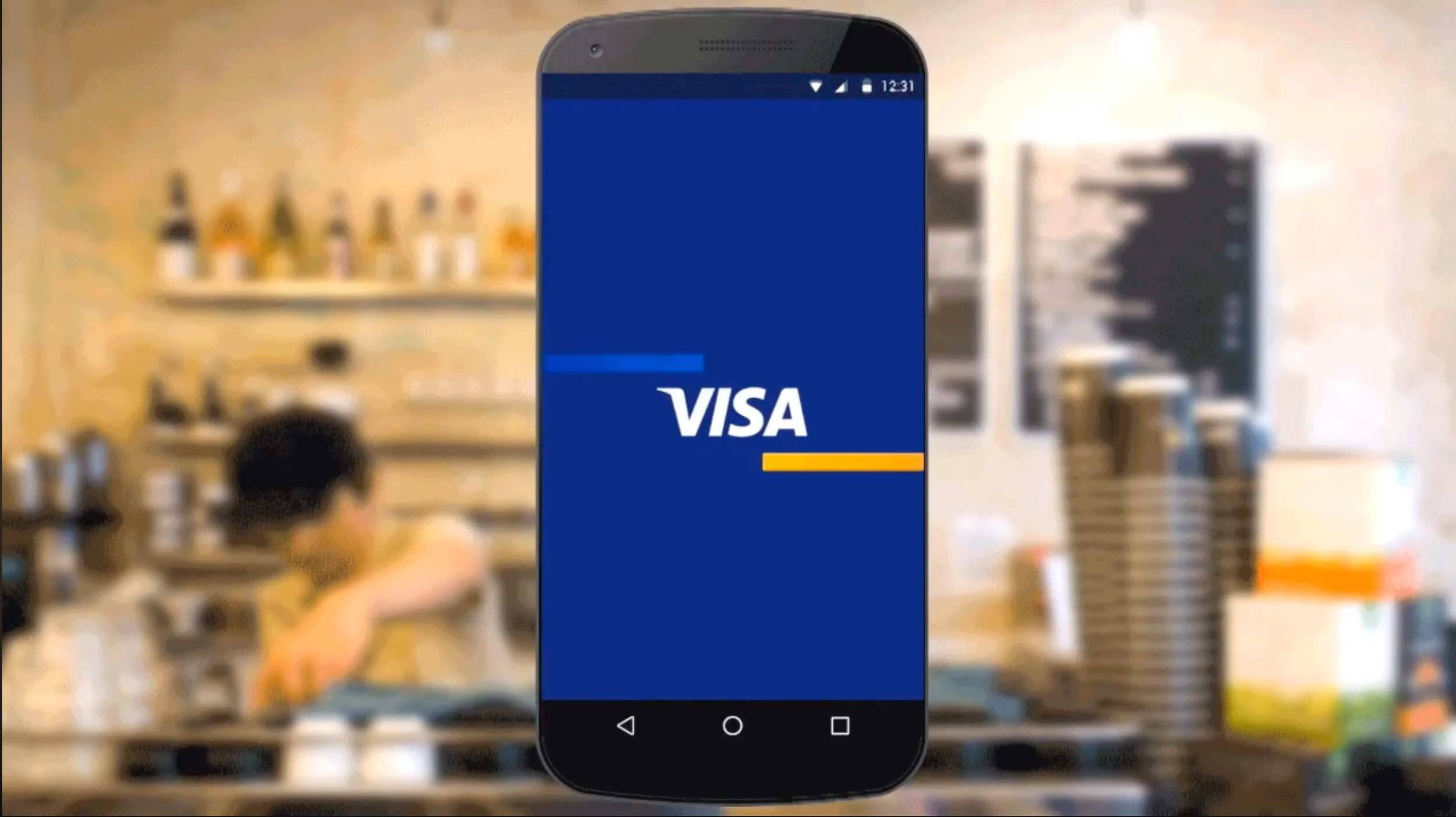
Source: Marketing Interactive
A brand without an object
Visa makes nothing that a customer keeps. Its presence has always been borrowed: the mark on a bank's card, the sticker on a shop door. When it first introduced the suite, Visa explained the problem in those terms. Its research showed the brand signified trust and security, and the new cues were designed to evoke the same response even where the traditional Visa logo was not visible.2 Lynne Biggar, chief marketing and communications officer at Visa, said at the time:
"As new payment experiences continue to take shape in the world, this suite of sensory branding elements will give consumers the assurances we know they want every time they use Visa."2
Payments were moving to phones, watches and connected devices, which meant the card, and with it the logo, was appearing less often. Biggar put it plainly, as PYMNTS reported: the Visa brand mark needed to be as prevalent in the new ways to pay as it had been in the old.4 The sound was shorter than a second.2 It was chosen after more than a year of work, from about 200 candidates narrowed in successive rounds with focus groups, three specialist agencies and neuro-research.4 It debuted in Visa's global advertising ahead of the Olympic Winter Games in PyeongChang in 2018.2 The spots showed Olympians paying and hearing it.4
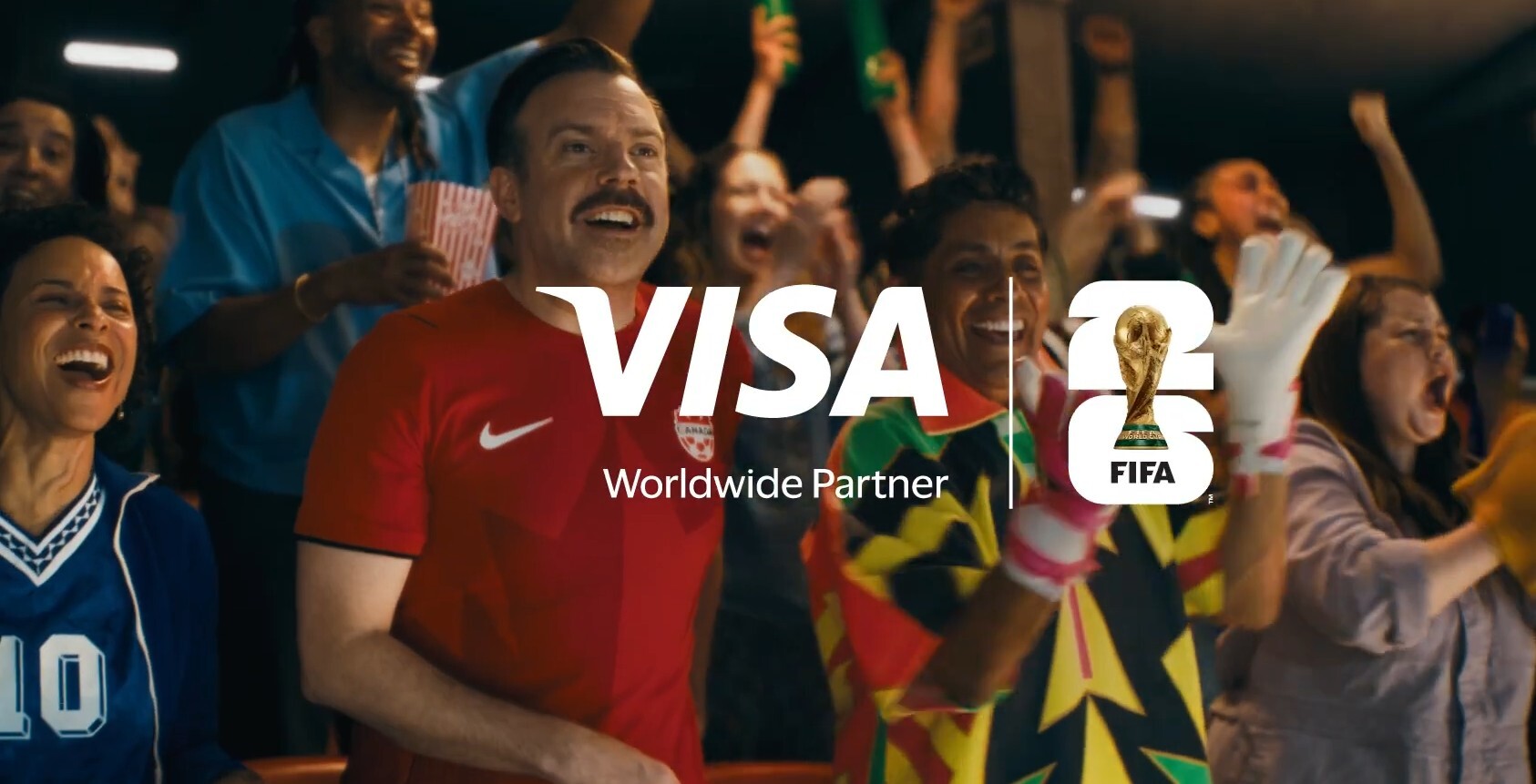
Source: Visa Youtube
From the advertisement to the terminal
The 2019 announcement moved the cues out of the commercial and into daily use. After "focus groups and elimination rounds," Visa said, it had landed on a single "energetic" and "optimistic" sound, with complementary animation and haptic vibration.1 Biggar described letting customers "see, hear or feel Visa when they pay" as "an essential ingredient" for the brand.1 At Cannes she presented the work in a session titled "The Next Frontier of Sound and Sense Branding."1
The partners framed it as reassurance. Osama Bedier, founder and CEO of Poynt, said: "My first reaction to Visa's sensory branding was, wow, someone finally got it."1 Visa's own research with Bay Area merchants using Poynt terminals found that consumers who experienced the cues were 12 percent more likely to say the merchant cared about their security, and showed a 14 percent increase in positive perceptions of the Visa brand.1
Visa was not alone in the move. Four months earlier, Mastercard had introduced its own sound, built to be recognised at purchase and in advertising.5 Both networks faced the same condition: a brand that consumers rarely chose directly, whose logo was shrinking out of sight. For Visa the sound was therefore also a matter of differentiation at the counter, where two networks competed for the same short moment of attention.
A trust signal for the moment of payment
The sensory suite was not a redesign of the Visa logo. What changed was where the brand appeared. On a card, Visa was present before the purchase and after it, in a wallet. In a tap, a voice command or an app, it was present only for the instant the payment was confirmed. Visa chose to occupy that instant.
The choice also redefined what the brand stands for in use. A sound at completion did not advertise; it confirmed. It told the buyer that the transaction went through and whose network carried it, in less than a second. Visa had long described itself as being everywhere you want to be. With the sensory cues, it gave that claim a form for a world in which the card itself was no longer in view.
Written with AI assistance, edited by a human. Find out more about our Use of AI.
1. Visa, "How Visa is Reinforcing Consumer Trust in a Changing Payments World", press release headed "Animation, Sound & Vibration", Cannes and San Francisco, 17 June 2019, read 18 October 2026, for adoption in 25 countries through more than a dozen partnerships, the three cues, the named partners, the selection process and the single energetic and optimistic sound, the quotations from Lynne Biggar, chief marketing and communications officer, and Osama Bedier, founder and CEO of Poynt, the Cannes Lions session title, and Visa's research figures from Bay Area merchants. https://usa.visa.com/about-visa/newsroom/press-releases.releaseId.16426.html
2. Visa, "See, Hear and Feel the Evolution of Visa Through Sensory Branding", press release, San Francisco, 7 December 2017, read 18 October 2026, for the first introduction of the sound, animation and haptic cues, the brand as a signal of trust and security where the traditional logo is not visible, the sound lasting less than a second, its debut in the global advertising campaign ahead of PyeongChang 2018, and the quotation from Lynne Biggar, chief marketing and communications officer. https://usa.visa.com/about-visa/newsroom/press-releases.releaseId.15371.html
3. Adweek, "Visa Is Doubling Down on Multi-Sensory Purchases at Cannes", 17 June 2019, read 18 October 2026, for the description of what the consumer hears, sees and feels when a transaction completes. https://www.adweek.com/brand-marketing/visa-is-doubling-down-on-multi-sensory-purchases-at-cannes/
4. PYMNTS, "Visa Adds Sound To POS Experience", 8 December 2017, read 18 October 2026, citing The Wall Street Journal, for the search of more than a year, about 200 candidate sounds, focus groups, three specialist agencies and neuro-research, Lynne Biggar's statement that the Visa brand mark must be as prevalent in the new ways to pay as in the old, and the Olympic ads showing athletes paying and hearing the sound. https://www.pymnts.com/visa/2017/visa-is-recreating-its-branding-around-full-sensory-experiences/
5. Adweek, "Sonic Branding Continues to Gain Popularity as Mastercard Launches Its Own Sound", 8 February 2019, read 18 October 2026, for Mastercard's sonic brand, meant to be recognised at purchase and in advertising. https://www.adweek.com/brand-marketing/sonic-branding-continues-to-gain-popularity-as-mastercard-launches-its-own-sound/