
A broker's first physical object
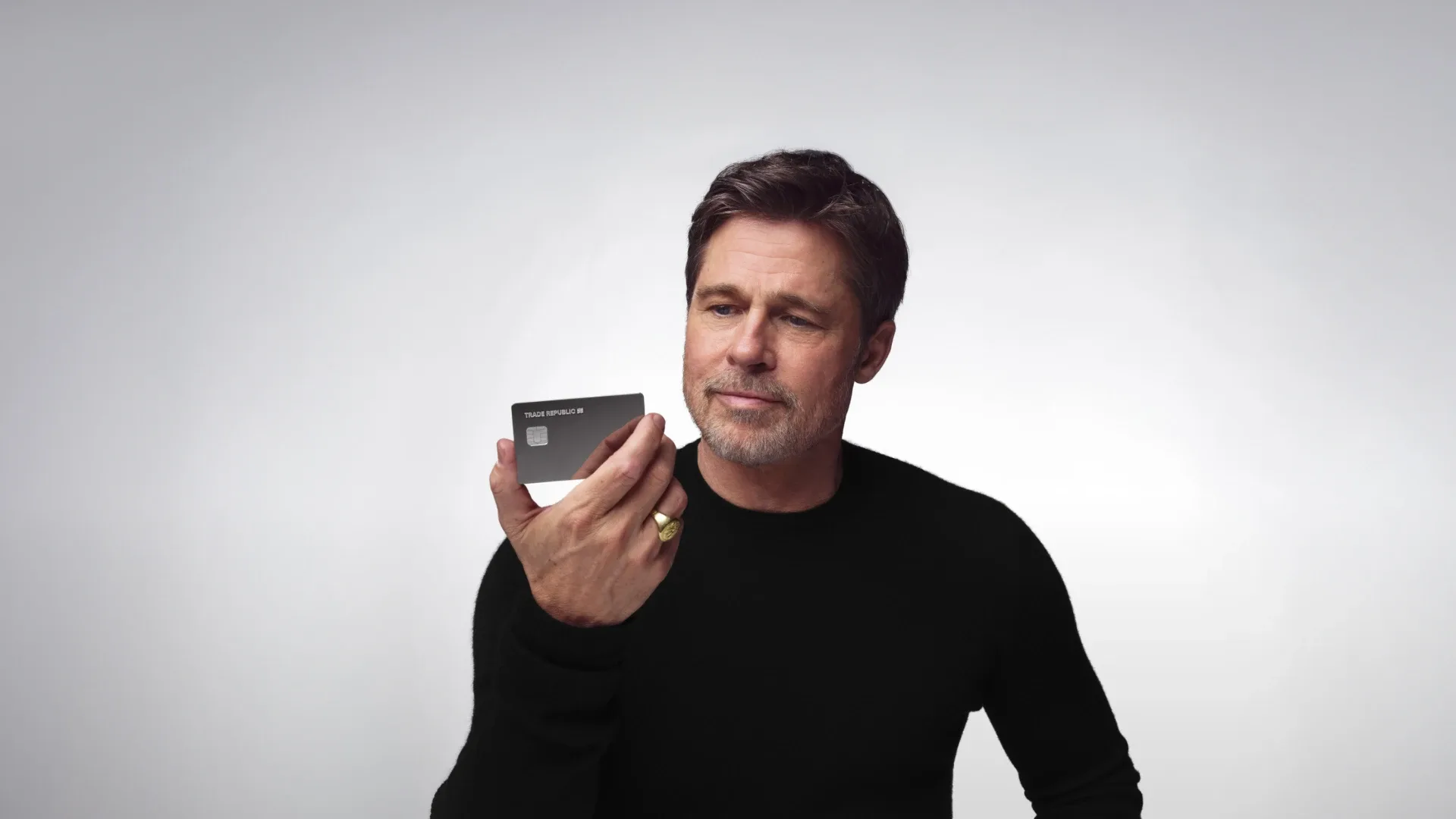
Trade Republic introduces a Visa debit card on 9 January 2024, timed to what the company calls its fifth birthday.1 It is the first thing the brand has ever put in a customer's hand. Since the app opened in 2019 the company has existed as an app, a wordmark and a set of terms, and the card gives it a surface, a weight and a finish.2
The card comes in three variants: a mirror finish, a classic design and a free virtual card.1 All three carry identical benefits, which is an unusual decision in a category built on tiers.1 There is no premium account behind the mirror version and no feature withheld from the virtual one. The finish is a choice about appearance rather than a purchase of privileges.
Mirror as a material decision
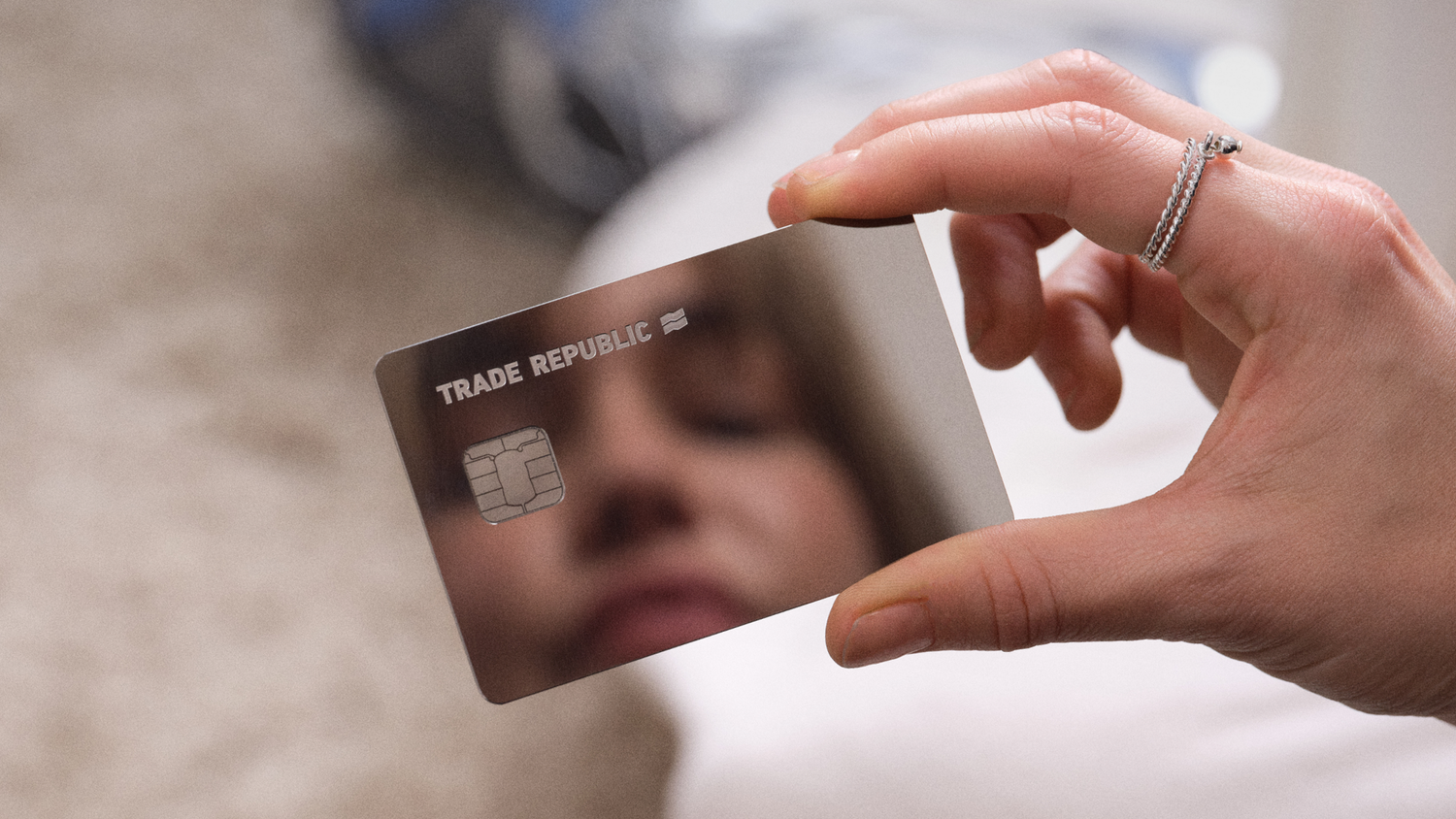
The mirrored surface is the part people notice, and it is doing brand work rather than product work. Payment cards have long used material to signal rank, from the metal issued by premium travel programmes to the matte black adopted across challenger banking. A mirrored card enters that conversation and says something different. It reflects whoever is holding it instead of displaying a tier.
The object is also unusually legible at the point of payment. A card is one of the few brand assets that gets shown to strangers several times a day, in a moment when the holder is not thinking about the brand at all. For a company whose product had been invisible by construction, existing only behind a phone screen, that visibility is itself the acquisition argument.
Saveback turns the card into a funnel
The mechanic behind the finish matters more than the finish. Every card payment returns 1 percent as what Trade Republic names Saveback, and the reward does not arrive as cash.1 It goes into the holder's savings plan. A round-up feature does the same with spare change, directing it into any asset the customer has selected.1
Co-founder Christian Hecker states the logic directly: "Every act of spending is an act of savings. This empowers every individual to start their savings plan and begin building wealth."1 The construction inverts the usual reward promise. Conventional cashback returns money to be spent again, which makes the card a loyalty device for consumption. Saveback moves the same money in the opposite direction, out of spending and into the market.
Read as brand strategy, the card is a recruitment device for the core product. A customer who takes it for the payment features acquires a savings plan as a condition of using it, which places the brokerage inside a daily habit rather than a monthly decision. The structure moves the persuasion from the decision to invest to the decision about which card to pay with.
The card as a category signal
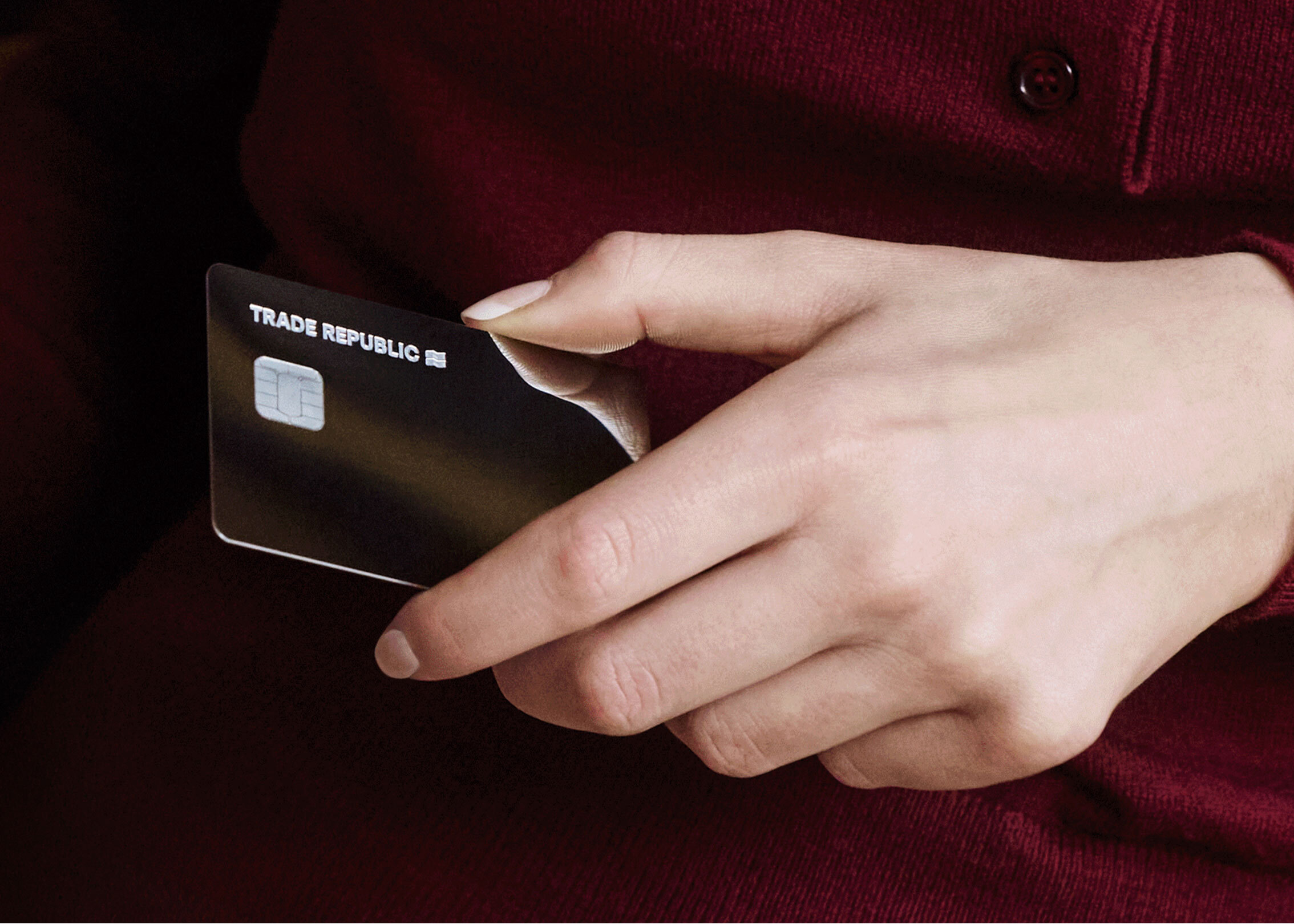
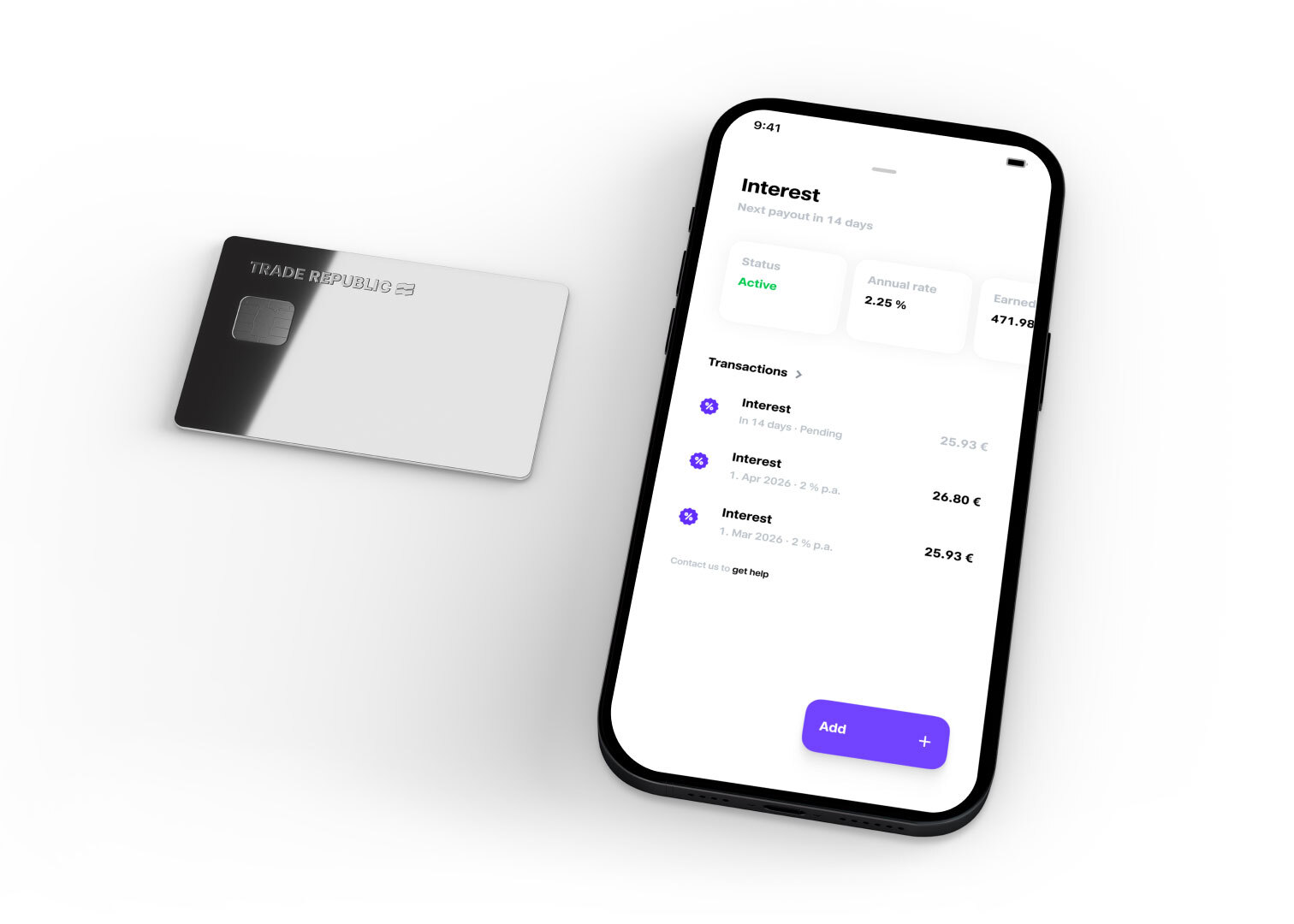
The surrounding terms position the product against everyday banking rather than against brokerage. There is no monthly fee, though physical cards carry an issuance charge.1 Cash withdrawals are free worldwide above 100 euros, with a one euro fee below that, and there is no surcharge on foreign currency.1 Cash balances earn 4 percent a year at the time of launch.1
Visa's regional managing director Albrecht Kiel describes the combination as one that "ensures that every card payment counts towards wealth accumulation", while Marsel Nikaj of Trade Republic calls it "simply the most attractive card account in the European market".1 The phrase worth noting is card account. A broker does not have accounts, and the vocabulary has already moved ahead of the licence the company will spend the following year putting to use.
What the waitlist showed
The response runs ahead of what the product promises on paper. Writing two weeks after the announcement, the German fintech publication Payment and Banking records more than one million people on the waitlist for the card and describes the level of fear of missing out around it as unusual for the market.3 Its explanation puts the finish first, calling it a robust mirrored card and reading the surface as a statement about the holder's own finances.3
The number is worth holding against the customer base. Trade Republic reports 4 million customers at the time, so the waitlist amounts to a quarter of them queueing for a payment card from a company they joined in order to buy shares.1, 4
An anniversary used as a platform
The timing is deliberate. Trade Republic ties the announcement to five years of operation, 4 million customers across 17 countries and roughly 35 billion euros under management, and opens a waitlist the same day with delivery promised across all 17 markets in the months that follow.1, 4
Anniversaries are usually spent on retrospection, on founder stories and archive material. This one is spent on a category move. The company uses its birthday to reintroduce itself as something a customer pays with, and it does so a month after receiving a full banking licence from the European Central Bank in December 2023.1, 2
The sequence explains the object. A brand that has argued since 2019 that ordinary money belongs in the market needs a way to reach that money before it leaves the account. The mirrored card is that mechanism, and it is the first version of the argument that has to survive contact with a wallet.
Written with AI assistance, edited by a human. Find out more about our Use of AI.
1. Trade Republic, "Trade Republic celebrates its 5th birthday with 4 million customers and introduces a new card with a 1 percent Saveback reward for every card payment", 9 January 2024, for the launch date and the company's own fifth birthday framing; for the three variants, "Customers can choose between a Mirror card or classic card for an issuance fee, or create a free virtual card.", and for their benefits being identical, "All cards offer identical benefits."; for the reward mechanic, "Customers earn 1 percent Saveback reward back into their savings plan for every card payment.", and for the round-up, "Customers can automatically round up their payments and invest their spare change into any asset."; for the absence of a monthly fee, the worldwide free withdrawals with a one euro fee below 100 euros and foreign exchange rates without surcharge; for the 4 percent a year on uninvested cash; for the waitlist opening on the day of the announcement, "Today, existing and new customers can join a waitlist for the new card. The cards will be delivered to customers in the coming months."; for the anniversary figures of 4 million customers in 17 countries and around 35 billion euros in assets; and for the full banking licence from the European Central Bank, which the release dates only as recent. The Christian Hecker passage reads in the release: "Every act of spending is an act of savings. This empowers every individual, regardless of income, to start their savings plan and begin building wealth." Albrecht Kiel is given as "Regional Managing Director Visa Central Europe" and quoted: "Trade Republic uniquely combines daily payments with investing. The partnership between Trade Republic and Visa ensures that every card payment counts towards wealth accumulation". Marsel Nikaj is given as "Vice President Product" and quoted: "That's simply the most attractive card account in the European market." The same release was published under two file names, an international version and a version for the German market; both are English and both are listed here. https://assets.traderepublic.com/assets/files/240109_TradeRepublic_PressRelease_Card_INT_EN1.pdf https://assets.traderepublic.com/assets/files/240109_TradeRepublic_PressRelease_Card_DE_EN.pdf
2. Wikipedia, "Trade Republic", for the app opening in 2019, securities trading offered to a closed user group from February 2019 and without user restrictions from May 2019, and for the full banking licence granted by the European Central Bank in December 2023, the month the press release leaves out. The article records a debit card launched in 2024 without naming a month, Visa or Saveback. https://en.wikipedia.org/wiki/Trade_Republic
3. Payment and Banking, André M. Bajorat, "Trade Republic Visa-Karte, was ist dran am Hype?", 24 January 2024, off whitelist and used for corroboration only, for the scale of demand two weeks after the announcement, "haben sich inzwischen mehr als 1.000.000 Nutzerinnen und Nutzer auf die Warteliste für die Trade Republic eigene Visa-Karte angemeldet."; for the level of fear of missing out, "mir ist keine Lösung bekannt, in der so viel FOMO entstand."; and for the explanation that puts the object before the mechanic and the marketing, the first reason given being "es gibt unter anderem eine sehr robuste 'Mirrorcard' (ein Schelm wer dabei Bilder im Kopf hat) aus Metall", ahead of the Saveback and round-up functions and the word of mouth effect, with the surface read as "Die verspiegelte Karte soll zeigen: 'Es geht hier um meine Finanzen und mich.'" The article also calls the card metal, which the body does not. https://paymentandbanking.com/trade-republic-karte-was-ist-dran-am-hype/
4. Business Wire, "Trade Republic Celebrates Its 5th Birthday with 4 Million Customers and Introduces a New Card with a 1 Percent Saveback Reward for Every Card Payment", wire distribution of the same release, carrying the Berlin dateline of 9 January 2024 and timestamped 8 January 2024 in its own URL, for the anniversary figures the body cites, "Currently, 4 million customers in 17 countries invest with Trade Republic, managing assets of around 35 billion euros". Like the release itself, it puts no market count on the delivery, only "The cards will be delivered to customers in the coming months." https://www.businesswire.com/news/home/20240108240857/en/Trade-Republic-Celebrates-Its-5th-Birthday-with-4-Million-Customers-and-Introduces-a-New-Card-with-a-1-Percent-Saveback-Reward-for-Every-Card-Payment