A card in the post before anyone asked
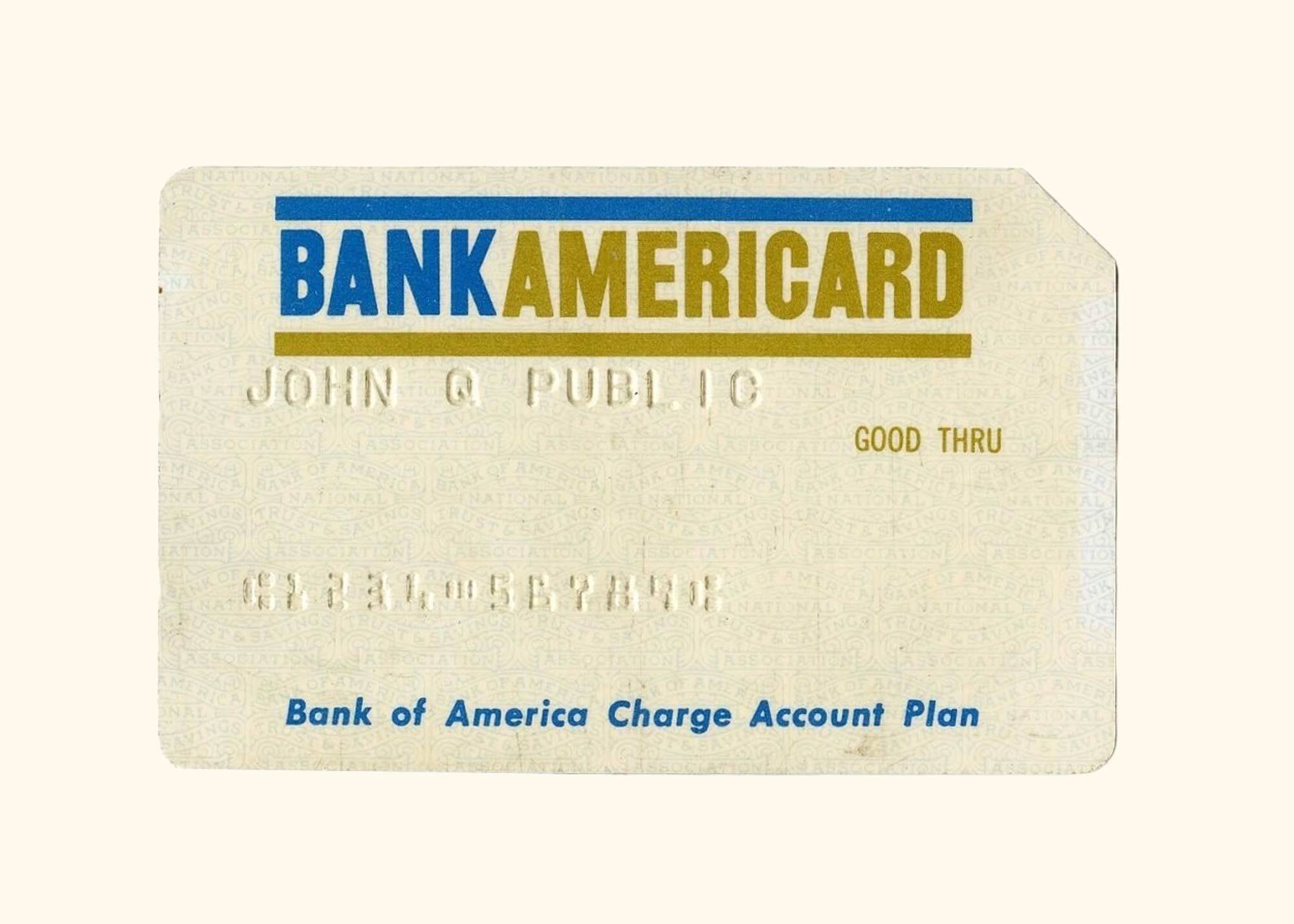
On 18 September 1958, Bank of America put about 60,000 BankAmericards into the mailboxes of Fresno, California.1 Nobody had applied for them. The cards arrived ready to use, each with between $300 and $500 of credit.2 The mailing became known locally as the Fresno Drop.3 Visa still starts its own story there: its history page dates the beginning to 1958, when Bank of America launched BankAmericard, which Visa describes as the first card with a revolving credit feature.4
The plan came from Joseph P. Williams, a senior vice president in charge of the bank's six-man Customer Services Research Department.1 Fresno, a city of about 250,000 people, made a contained test market, and 45 percent of its families already banked with Bank of America.2 That share mattered. The bank was not introducing a stranger to the town. It was handing its own customers a new object that carried the bank's name.
The card as its own advertisement
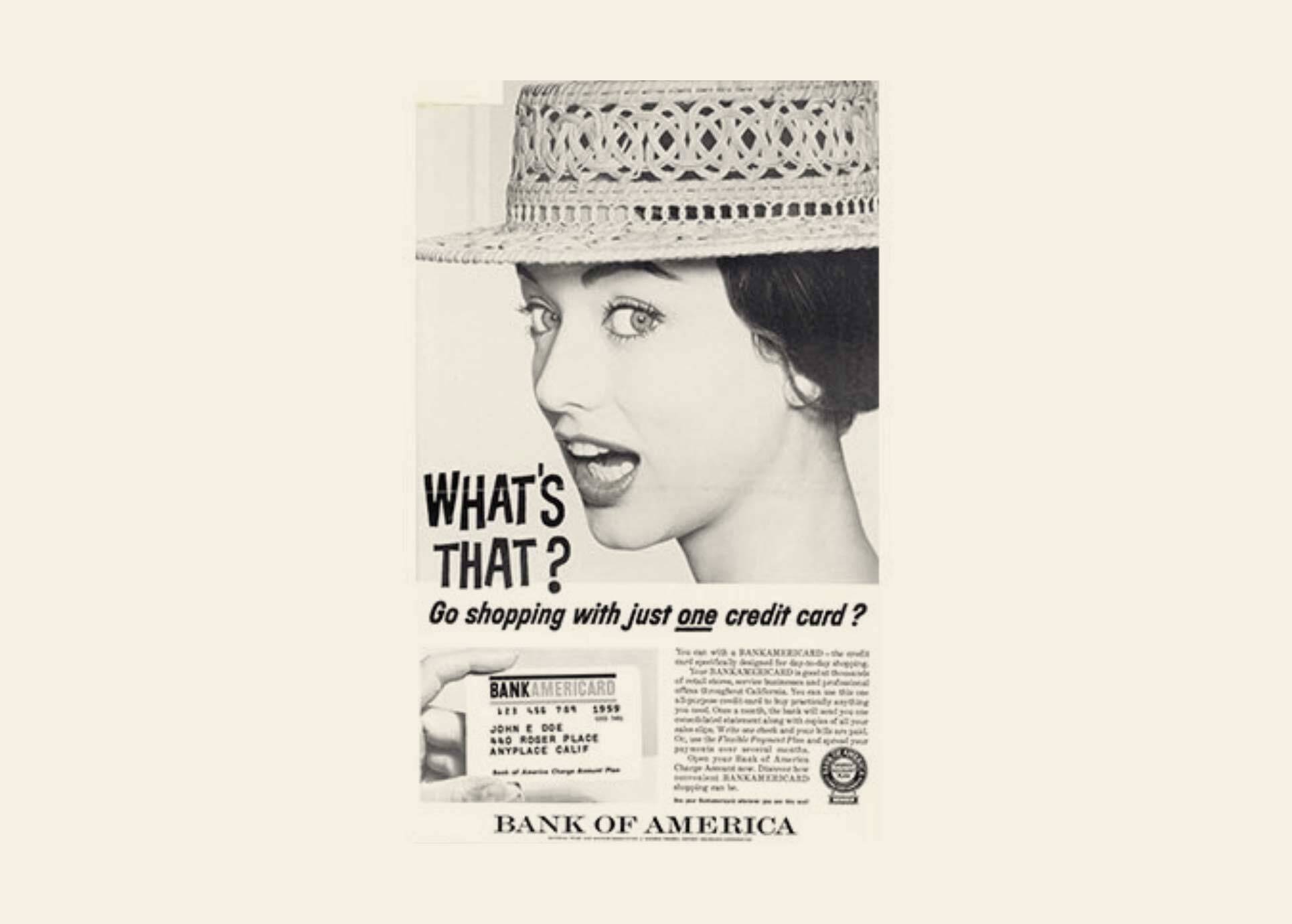
Most consumer products of the time were advertised first and bought later, and credit was something a customer applied for. The BankAmericard reversed that order. The card itself was the message, delivered to households that had not asked for it, so that the first encounter with the brand was ownership rather than persuasion. A mass mailing of unsolicited cards, a drop in the trade's own word, did the work that a campaign would otherwise have done.5
A card in a kitchen drawer was worth nothing without a counter that took it. The bank signed up more than 300 Fresno merchants.2 Florsheim Shoes became the first major retail chain to accept the card.5 The launch therefore had two audiences at once. Cardholders needed shops that said yes, and shops needed customers who already held the card. By putting the card into tens of thousands of hands on a single day, Bank of America gave merchants a reason to sign, and by signing merchants it gave the cards a use.
ast growth at a high price
The method spread quickly. Within three months the bank had dropped cards in Modesto and Bakersfield, and within a year in San Francisco, Sacramento and Los Angeles.2 Thirteen months after Fresno, the bank had issued 2 million cards and some 20,000 merchants had agreed to accept them.1,2
The speed had a cost. Delinquency reached 22 percent of accounts, against the 4 percent expected, and police across California met a new crime, credit card fraud.5 Merchant fees were set at 6 percent.2 The bank officially lost over $8.8 million on the launch.5 Williams left the bank less than two years after the drop, and within a few years BankAmericard turned a profit.2 The episode tied the brand from the start to a trade off it would keep managing: the wider the card's reach, the more its reputation depended on trust in the system behind it.
From one bank's card to a shared network
Acceptance turned out to be the asset. In 1966, in response to the rival Master Charge, Bank of America began licensing the BankAmericard programme to other banks.5 The card that had started as one bank's product in one city became a system that other institutions issued, and the network of merchants grew with every new issuer. In 1976 that system took a new name, Visa, a change covered in a separate article. The name could change because what the network sold was no longer one bank's card but the counters that took it.
What the drop left to the brand
Fresno fixed the logic the brand would later advertise: a card is worth what it opens. In October 1985, Visa and BBDO New York launched the line "Visa. It's everywhere you want to be", which has its own article.6 The line turned the oldest problem of the Fresno launch, getting enough counters to say yes, into the brand's central promise. What had been an operational worry for a six-man department in 1958 became, 27 years later, the sentence the brand signed its advertising with.
Visa now reports acceptance at more than 175 million merchant locations in more than 200 countries and territories.7 The scale has changed; the principle set in Fresno has not. The product became a brand by being in people's hands before they had decided they wanted it, and by being accepted where they went. Every later promise of "everywhere" rests on the same pairing that the Fresno Drop put in place in 1958: a card in the wallet and a counter that takes it.
Written with AI assistance, edited by a human. Find out more about our Use of AI.
1. Myrna Oliver, Los Angeles Times via The Seattle Times, "J.P. Williams, who developed first bank credit card, dies at 88", 30 November 2003, read 18 October 2026, for the mailing of 60,000 BankAmericards in Fresno on 18 September 1958, Williams as senior vice president in charge of the six-man Customer Services Research Department, and about 20,000 merchants within 13 months. https://archive.seattletimes.com/archive/20031130/williamsobit30/jp-williams-who-developed-first-bank-credit-card-dies-at-88
2. Alex Rampell, a16z, "The Fresno Free-for-All Behind the Original Credit Card", 18 September 2019, read 18 October 2026, for cards ready to use with $300 to $500 of credit, more than 300 Fresno merchants, a city of about 250,000 with 45 percent of families as Bank of America customers, expansion to Modesto, Bakersfield, San Francisco, Sacramento and Los Angeles, 2 million cards and 20,000 merchants after 13 months, 6 percent merchant fees, Williams leaving within two years and the later profit. https://a16z.com/2019/09/18/history-of-the-credit-card/
3. Joe Moore, KVPR Valley Public Radio, Central Valley Roots, "The Fresno Drop and the birth of VISA", 4 June 2026, read 18 October 2026, for the name Fresno Drop and the unsolicited mailing to Fresno area customers on 18 September 1958. https://www.kvpr.org/podcast/central-valley-roots/2026-06-04/the-fresno-drop-and-the-birth-of-visa
4. Visa, "History of Visa", corporate history page, undated, read 18 October 2026, for Visa dating its beginning to 1958 and describing BankAmericard as the first card with a revolving credit feature. https://africa.visa.com/about-visa/our_business/history-of-visa.html
5. Wikipedia, "Visa Inc.", read 18 October 2026, for the term drop for the mass mailing, Florsheim Shoes as the first major retail chain to accept the card, delinquency of 22 percent against 4 percent expected, credit card fraud, the official loss of over $8.8 million (citing Joseph Nocera, A Piece of the Action), and licensing to other banks from 1966 in response to Master Charge. https://en.wikipedia.org/wiki/Visa_Inc.
6. Rebecca Stanfel, WARC (Encyclopedia of Major Marketing Campaigns), "Visa U.S.A.: Visa. It's Everywhere You Want To Be campaign", 1 January 2000, read 18 October 2026, for the launch of the line in October 1985 with BBDO New York. https://www.warc.com/content/article/gale-emmc/visa-usa-visa-its-everywhere-you-want-to-be-campaign/en-gb/84565
7. Visa, "About Visa", corporate site, undated, read 18 October 2026, for more than 175 million merchant locations (including an estimated 64 million through payment facilitators) and more than 200 countries and territories. https://corporate.visa.com/en/about-visa.html