Bringing back the original shape
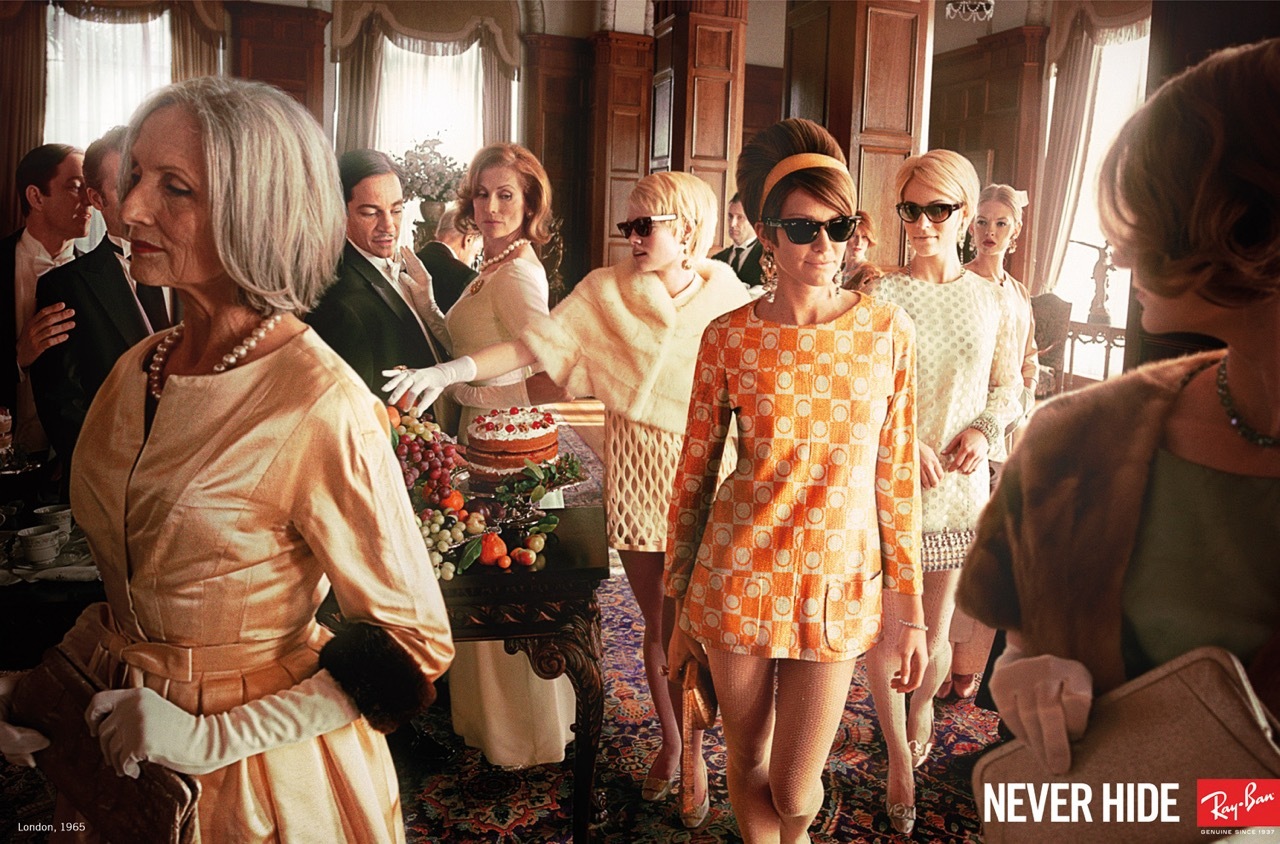
On 7 March 2007 Ray-Ban reissued the original Wayfarer and launched a global advertising campaign under the line Never Hide. The reissue restored the model's first shape, the pronounced trapezoidal frame designed in 1952, after years in which the Wayfarer had been sold mainly in a softer, more rounded form. The campaign and the product arrived together, a deliberate pairing of a heritage design with a new piece of brand communication.
The move came after the brand's repositioning under Luxottica, which had acquired Ray-Ban in 1999. With the product quality and distribution rebuilt, the Wayfarer reissue gave the brand a clear hero product to market, and Never Hide gave it a message to attach to that product. Ray-Ban worked with the San Francisco agency Cutwater on the campaign, which ran in print, outdoor and early online formats.
A message built around self-expression
Never Hide was framed as a rallying line rather than a product claim. Instead of describing lenses or frames, the campaign presented the act of wearing Ray-Ban as a form of self-expression, an invitation to be visible rather than discreet. The imagery favoured unposed, slightly irreverent scenes over the polished glamour common in eyewear advertising, positioning the brand as informal and self-assured.
The approach suited the Wayfarer's history. The model had become a cultural fixture in the 1980s through film and music before fading at the end of the decade, and Never Hide reconnected the frame to that sense of personality and attitude. The campaign did not ask the audience to admire the product so much as to identify with what wearing it signalled.
Returning the Wayfarer to the top
The combination of the reissued shape and the campaign returned the Wayfarer to the front of the market. The model regained its position as one of the best-selling sunglasses in the world, and the campaign carried the brand back into wider popular culture. For Ray-Ban, Never Hide demonstrated that the recovery begun in 1999 had moved beyond product and pricing into the realm of brand meaning.
The timing helped. The reissue arrived as interest in heritage and vintage styling was rising across fashion, and a frame with genuine mid-century credentials fitted that mood precisely. Ray-Ban did not have to manufacture nostalgia, because the Wayfarer already carried decades of cultural association. Never Hide gave that history a forward-looking voice, presenting an old design as a current choice rather than a backward-looking one.
The campaign also became a long-running platform rather than a single burst of advertising. Never Hide ran for several years across many markets and supported a series of brand activities, including music and short-film projects, that extended the line well beyond print. By treating the message as a durable brand idea rather than a seasonal slogan, Ray-Ban gave the Wayfarer reissue a consistent voice over time.
Why the pairing worked
The 2007 reissue is a clear example of heritage branding, the practice of building present-day marketing on a brand's own history. Ray-Ban did not invent a new product to relaunch the line. It returned an existing design to its original form and wrapped it in a contemporary message. The product supplied authenticity and recognition, while Never Hide supplied relevance to a new generation of buyers.
That balance is what made the campaign effective. A reissue alone would have appealed mainly to those who already knew the Wayfarer, and a campaign alone would have lacked a distinctive product to anchor it. Together they gave the brand both a credible object and a reason to care about it. The Wayfarer's recovery showed how a heritage model could be made current without altering the design that made it recognisable in the first place.
The campaign is also remembered for how it used emerging channels. Never Hide ran at a moment when brands were beginning to treat online video and social platforms as more than an afterthought, and Ray-Ban used short films and shareable imagery to spread the message beyond paid media. The brand's informal, self-expressive tone suited those channels, where polished advertising often felt out of place.
For Ray-Ban, the episode set a template the brand would use again. The pattern of taking a founding design, presenting it in its most authentic form and supporting it with a clearly defined brand idea ran through much of the company's later marketing. Never Hide marked the point at which Ray-Ban moved from repairing its business to actively shaping its image, using the Wayfarer as the vehicle for that shift.
Source: gafasDsol Youtube
Written with AI assistance, edited by a human. Find out more about our Use of AI.