
A heritage eyewear brand becomes a tech platform
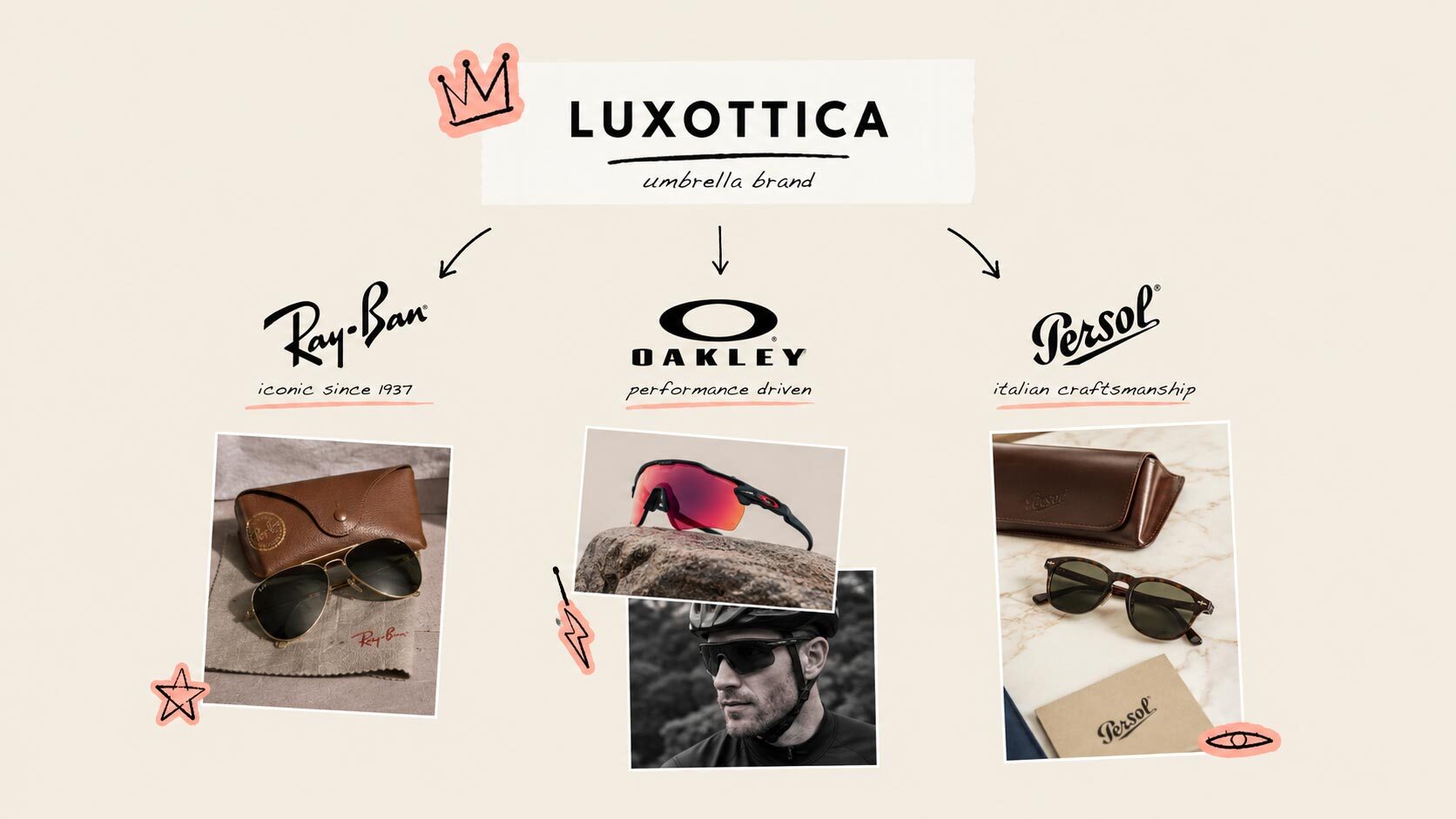
Ray-Ban has spent most of its history as a maker of sunglasses, but its partnership with the technology company Meta is turning the brand into something closer to a consumer electronics platform. The collaboration, between EssilorLuxottica, Ray-Ban's parent, and Meta, places cameras, microphones, speakers and increasingly artificial intelligence inside frames that retain the look of a Wayfarer.1, 2 It is a brand collaboration, a partnership in which two brands appear together on a product, that asks a heritage fashion brand to carry an entirely new category of function.
The first product in the partnership arrived as Ray-Ban Stories in 2021, a pair of glasses with built-in cameras.1 A second generation, branded Ray-Ban Meta, followed and added audio, voice control and a connection to Meta's AI assistant.1 The arrangement gives Meta the credibility and design heritage of an established eyewear brand, while giving Ray-Ban a route into wearable technology that few fashion brands can match.
From camera glasses to a display
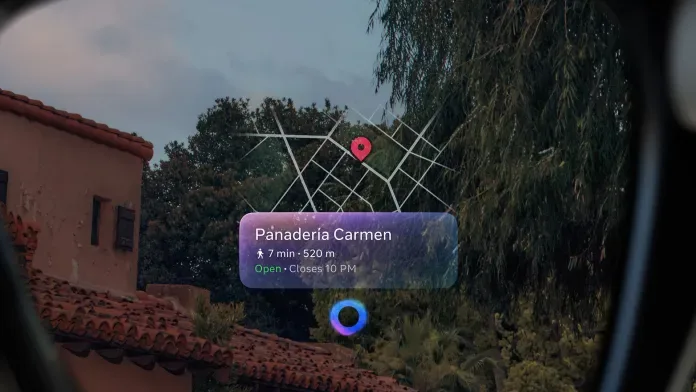
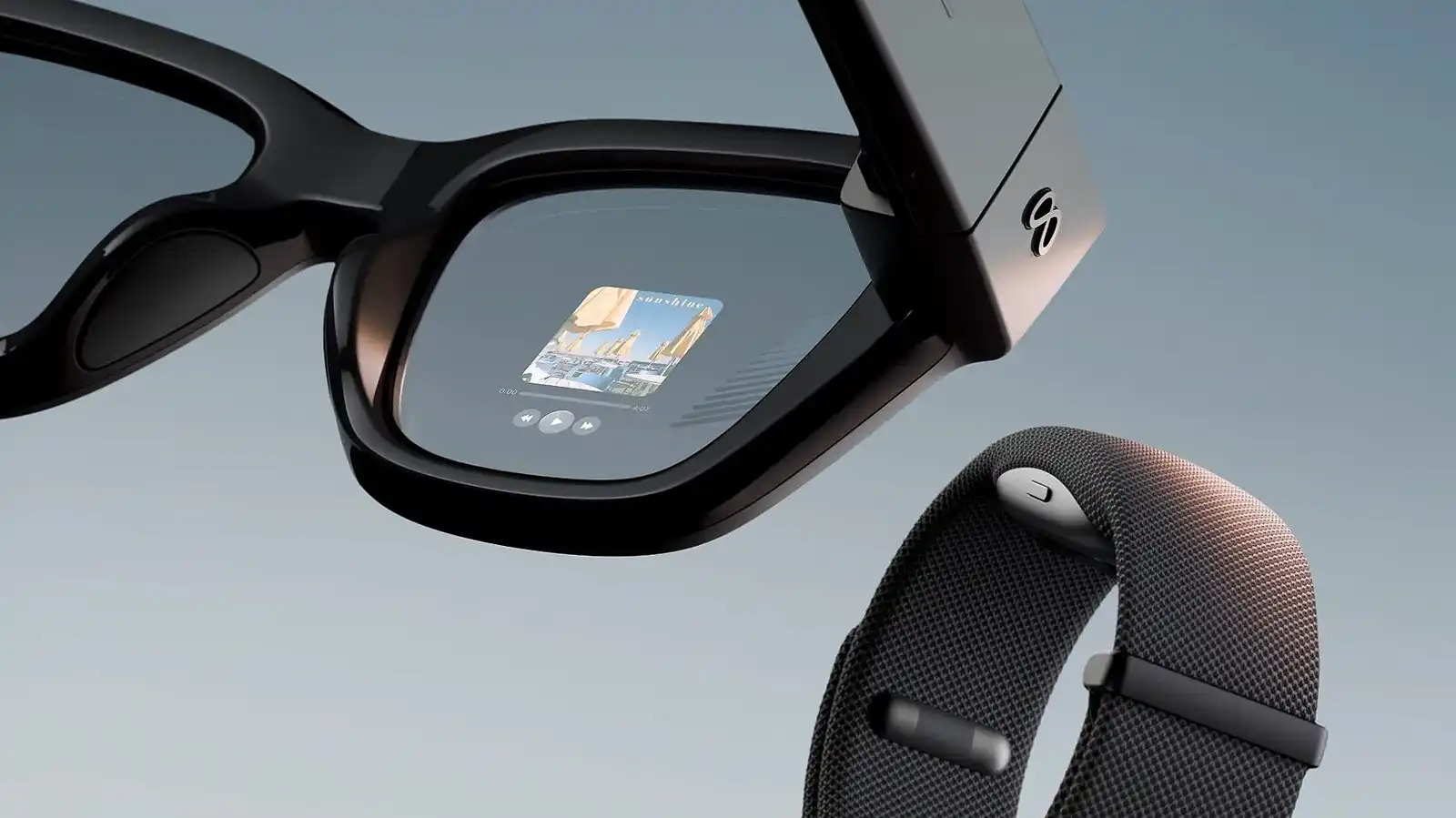
The partnership takes a significant step in 2025 with Meta Ray-Ban Display, announced at Meta's Connect conference in September and released in the United States later that month at a price of 799 dollars.1, 3, 4 Unlike the earlier models, this version includes a small full-colour display built into the right lens, giving the glasses visual output for the first time.1, 4 The product ships with a wristband, the Meta Neural Band, that lets the wearer control the interface through subtle hand movements.1, 4
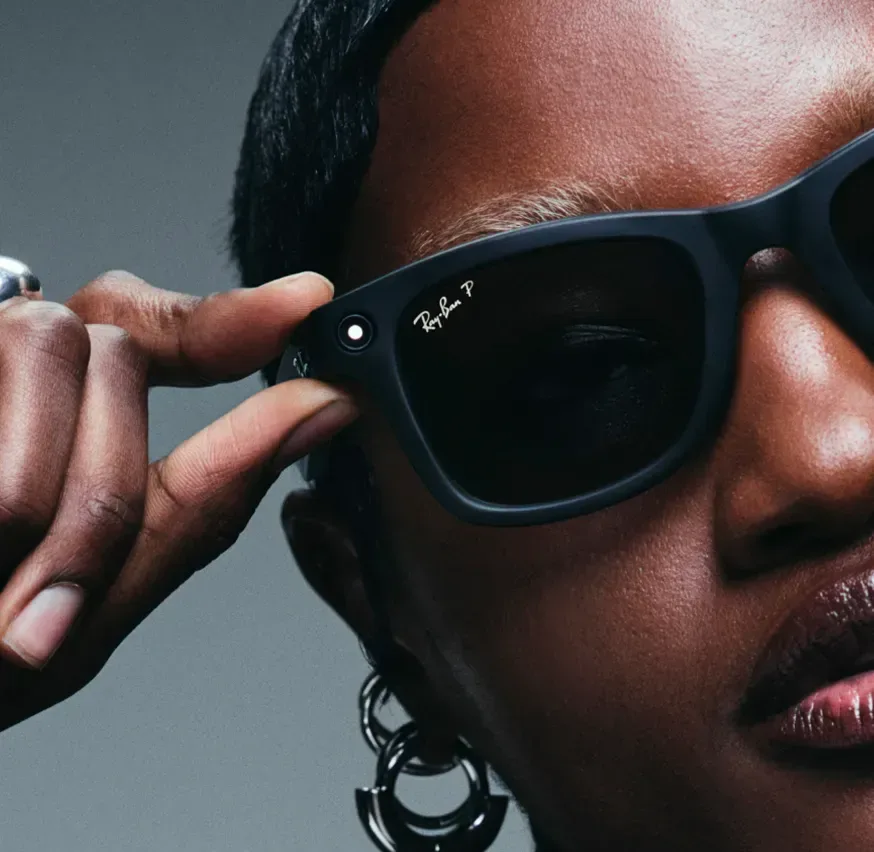
The design keeps the Ray-Ban identity at the centre. Meta describes the Display as carrying the DNA of the Wayfarer silhouette, made slightly taller and squarer, with edges rounded for comfort and a gently curved front to reduce glare.5 The decision to anchor a new computing device in a familiar eyewear shape is deliberate. It allows a piece of advanced technology to read first as a pair of Ray-Bans, lowering the barrier to wearing it in public.
Why the brand matters to the product
For Meta, the value of the partnership lies largely in the Ray-Ban brand itself. Smart glasses have a long history of consumer resistance, often because they look conspicuously like gadgets. By building its hardware into Ray-Ban frames, Meta addresses the social barrier directly, relying on the brand's familiarity and fashion credibility to make the devices acceptable to wear. The technology is housed inside a product people already understand and trust as eyewear.
For Ray-Ban, the partnership extends the brand into a category it could not credibly enter alone. The collaboration positions a brand founded on anti-glare lenses in 1937 as a participant in the development of wearable computing, attaching it to the AI ambitions of one of the world's largest technology companies.2, 6 It is a brand extension that reaches well beyond fashion, into a market defined by software, sensors and continuous product updates.
A continuing expansion
The partnership continues to broaden. In early 2026 the companies introduce additional Ray-Ban Meta models designed for prescription wearers and all-day use, alongside new colours, lens options and software updates across the range.7 The expansion signals that the collaboration is not a single experiment but a developing product line, with regular releases more typical of consumer electronics than of eyewear.
The structure of the deal is itself notable. Two large companies, one in eyewear and one in technology, share a single product line in which each contributes what the other lacks, EssilorLuxottica the frames, the retail network and the brand, Meta the silicon, the software and the AI services. Few brand collaborations operate at this depth, where the partners co-develop the product rather than simply lending a name. That integration is what allows a sunglasses brand to ship a credible computing device, and what makes the relationship more than a licensing arrangement.
The arrangement also raises questions that sit at the intersection of fashion and technology. A heritage brand built on a stable, enduring product is now attached to devices that age on the rapid cycle of consumer electronics, and to the data and privacy concerns that accompany cameras and microphones worn on the face. How Ray-Ban manages the relationship between its timeless image and the fast-moving technology it now carries will shape what the brand comes to mean. For now, the partnership has turned one of the most recognised names in eyewear into a leading brand in the emerging category of smart glasses, a position built on the trust and familiarity the brand has accumulated over nearly nine decades.
For an industry watching the slow emergence of everyday wearable computing, the partnership offers a working answer to a question that has frustrated technology companies for years, how to make people want to wear the device. Ray-Ban's contribution is not a component but a reason to put the glasses on at all.
Written with AI assistance, edited by a human. Find out more about our Use of AI.
1. English Wikipedia, "Ray-Ban Meta", as read on 18 September 2026, for EssilorLuxottica being Ray-Ban's parent company in the partnership with Meta, publicly announced on 20 September 2020, for Ray-Ban Stories launching on 9 September 2021 as the first product of the partnership with built-in cameras, for the second generation announced on 27 September 2023 and branded Ray-Ban Meta, which added improved directional speakers, a five microphone array and Meta AI with multimodal computer vision, for Meta Ray-Ban Display being announced at Connect on 18 September 2025, priced at 799 US dollars and launched in the United States on 30 September 2025, for its monocular 600 by 600 pixel display integrated into the right lens, and for the Meta Neural Band, a surface electromyography wristband that interprets muscle signals from the wrist. https://en.wikipedia.org/wiki/Ray-Ban_Meta
2. English Wikipedia, "Ray-Ban", as read on 18 September 2026, for the Wayfarer being one of the models the brand is most notable for, which is the basis for describing the frames as retaining the look of a Wayfarer, and for the brand resting on the "Anti-Glare" prototype with green lenses that could cut out the glare without obscuring vision, which is the basis for the description of a brand founded on anti-glare lenses. https://en.wikipedia.org/wiki/Ray-Ban
3. Meta, "Meta Ray-Ban Display: Breakthrough AI Glasses Available Now", 30 September 2025, for Meta Ray-Ban Display reaching United States shelves on the day of publication, the page carrying the line "The wait is over. Meta Ray-Ban Display hits shelves in the US today!". The body of this page is rendered client side and could not be read on 18 September 2026, so only the title and the page description could be confirmed. https://www.meta.com/blog/meta-ray-ban-display-ai-glasses-connect-2025/
4. Meta Newsroom, "Meta Ray-Ban Display: AI Glasses With an EMG Wristband", 17 September 2025, updated 30 September 2025, for the price starting at 799 US dollars and covering both the glasses and the Meta Neural Band, for United States availability from 30 September 2025 at Best Buy, LensCrafters, Sunglass Hut and Ray-Ban Stores, for the full colour, high resolution display placed off to the side so that it does not obstruct the wearer's view, and for the Meta Neural Band using EMG to read subtle hand and finger movements, letting the wearer silently scroll, click, swipe and pinch without touching the glasses. https://about.fb.com/news/2025/09/meta-ray-ban-display-ai-glasses-emg-wristband/
5. Android Central, Michael L Hicks, "Inside the Meta Ray-Ban Display glasses: A firsthand look at these impressive AI glasses", 18 September 2025, for the frame keeping a Wayfarer look, described there as a "jumbo-sized Wayfarer look", and for Meta having "rounded off the edges" so that the frames rest against the face rather than cutting into it, off whitelist and used for corroboration only. The rest of that sentence, the silhouette being made slightly taller and squarer and the gently curved front said to reduce glare, is presented in the body as Meta's own description and could not be verified from any reachable source, see the retrofit notes. https://www.androidcentral.com/wearables/meta-ray-ban-display-hands-on-demo-impressions
6. English Wikipedia, "Aviator sunglasses", as read on 18 September 2026, for the "Anti-Glare" prototype created in 1936 by Bausch and Lomb having gone on sale to the public in 1937, which is the date the body attaches to the anti-glare lenses the brand was founded on. https://en.wikipedia.org/wiki/Aviator_sunglasses
7. TechCrunch, Aisha Malik, "Meta launches two new Ray-Ban glasses designed for prescription wearers", 31 March 2026, for the two models built for prescription wearers, the Ray-Ban Meta Blayzer Optics (Gen 2) and the Ray-Ban Scriber Optics (Gen 2), which Meta calls the most comfortable it has ever designed and "made for all-day comfort", for the new colour and lens options including the Skyler frame in Shiny Transparent Peach with Transitions Brown lenses, and for the software updates rolled out across the range, nutrition tracking by voice or photo, hands-free WhatsApp summaries and Neural Handwriting. https://techcrunch.com/2026/03/31/meta-launches-two-new-ray-ban-glasses-designed-for-prescription-wearers/