
Sunglasses designed for the cockpit
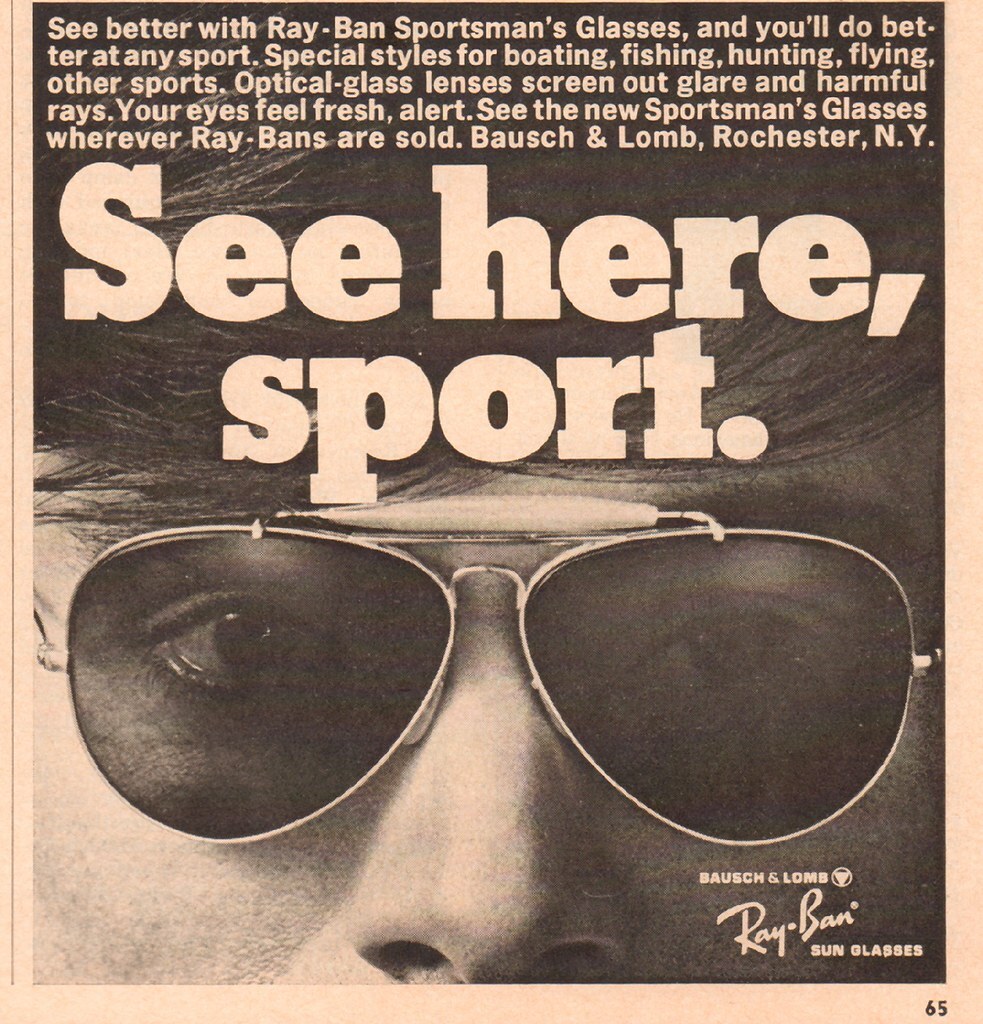
Ray-Ban began as a solution to an aviation problem. In the early 1930s, pilots flying at high altitude struggled with intense glare from the sun, which caused headaches and impaired vision. The American optical company Bausch & Lomb, based in Rochester, New York, developed a lens to reduce that glare, and in 1937 the result reached the market as the Ray-Ban Aviator. The product gave the brand both its first defining design and its name.
The name itself describes the function. The lenses were engineered to ban the glare, or rays, of the sun, and the brand name Ray-Ban followed directly from that purpose. It is an early example of a product name derived from a clear functional benefit, a naming approach that tied the brand to its reason for existing.
From military equipment to consumer product
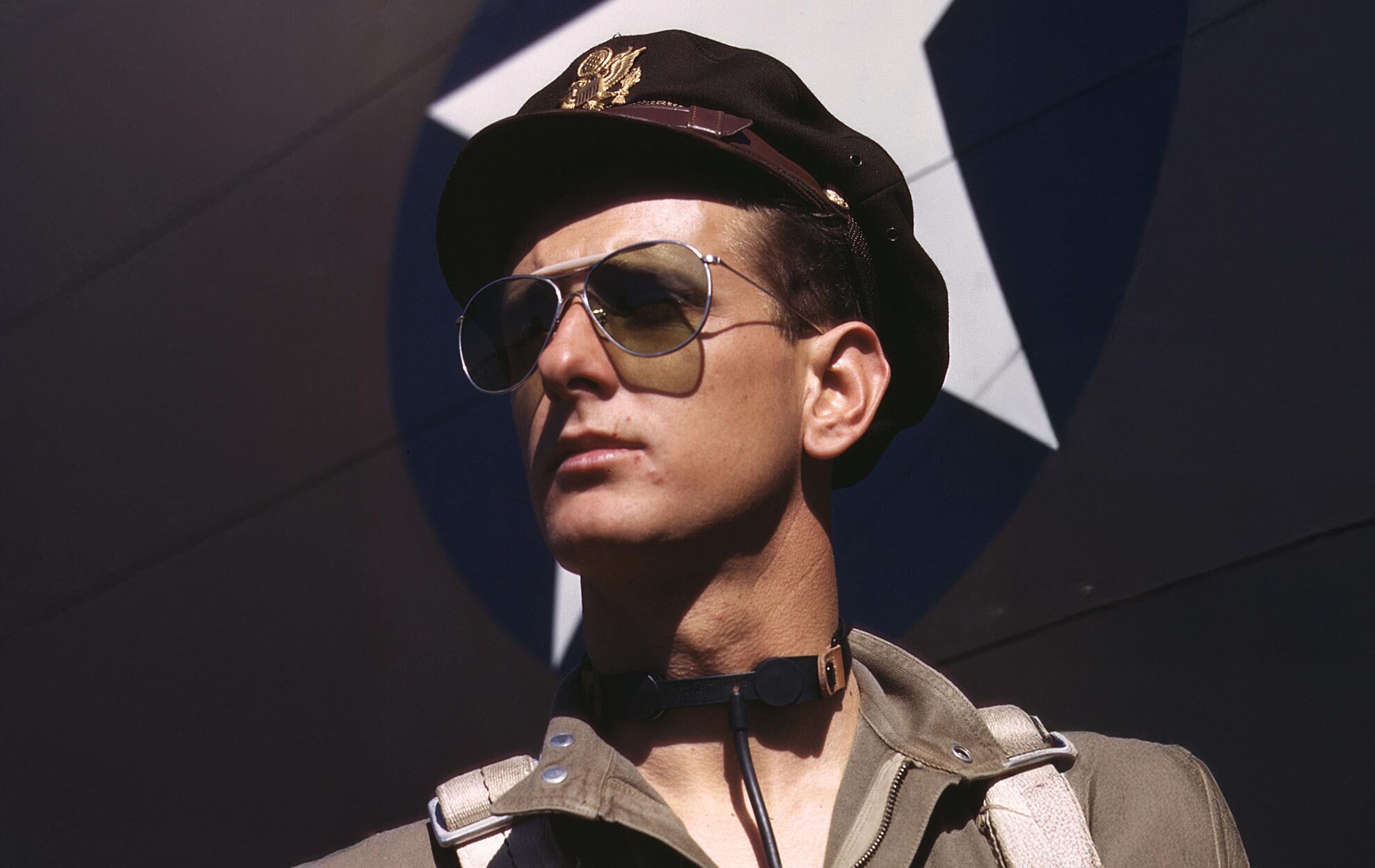
The Aviator's distinctive shape, with large teardrop lenses and a thin metal frame, was driven by the requirements of pilots rather than by fashion. The lenses were shaped to cover the full range of the eye's movement, shielding vision from as many angles as possible, and the green tint was chosen to cut glare while preserving clarity. The design originated as functional equipment for aviators, and its association with pilots gave it an aura of purpose and competence that later proved valuable in the consumer market.
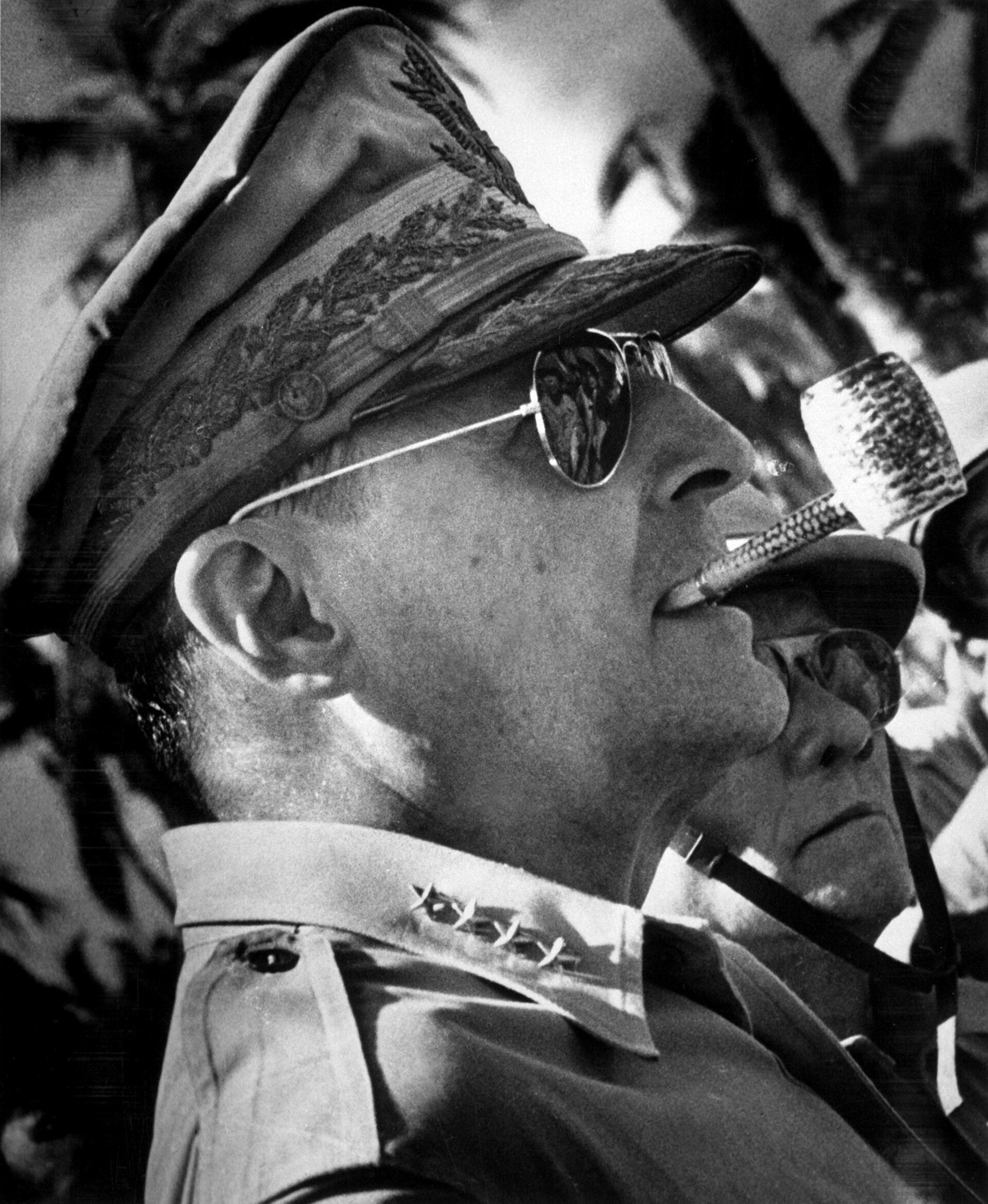
That military association deepened during the Second World War, when Ray-Ban eyewear became closely linked to American pilots and officers. The brand's connection to aviation and the armed forces gave it a credibility rooted in real use, the kind of authenticity that is difficult to manufacture through marketing alone. When the glasses moved fully into civilian life, they carried that heritage with them.
A product that became an archetype
The Aviator did more than launch a brand. Its silhouette became a category archetype, a shape so widely copied that the word aviator now describes a style of sunglasses regardless of maker. For Ray-Ban, owning the original gave it a durable claim to the form, a distinctive product asset that competitors could imitate but not authentically claim. The Aviator remains one of the brand's defining models more than eight decades after its introduction.
This pattern, a single product that defines both a brand and an entire category, is one of the most powerful positions a company can hold. The Aviator established Ray-Ban as the reference point for protective eyewear with style, a position the brand would build on with later models. The functional origin mattered, because it gave the product a story grounded in genuine need rather than in fashion, and that story continued to lend the brand authority as it grew.
The model also proved adaptable without losing its identity. Over the decades Ray-Ban offered the Aviator in new lens colours, frame finishes and sizes, yet the essential teardrop shape stayed constant. That balance, varying the details while protecting the core form, allowed the brand to keep the model current across changing fashions without surrendering the recognition the original shape had earned.
The foundation of a heritage brand
The Aviator set the template for how Ray-Ban would operate as a brand. It paired a clear functional benefit with a strong, recognisable design, and it drew authority from authentic use in demanding conditions. Each of these elements, the descriptive name, the purpose-built shape, the association with aviation, became part of the brand's identity and shaped how it was understood for decades.
Bausch & Lomb owned Ray-Ban until 1999, when it sold the brand to the Italian eyewear group Luxottica, today part of EssilorLuxottica. Across those changes in ownership the Aviator endured as the brand's anchor product, a reminder that Ray-Ban began not as a fashion label but as an answer to a practical problem in the cockpit. The brand's later cultural prominence rested on that foundation, a product designed to ban the sun's rays, which gave the company its name and its first lasting design.
The Aviator's influence on the brand's later naming is easy to trace. Ray-Ban built much of its range around clearly named, distinctly shaped models, the Aviator, and later the Wayfarer, each treated as a named product with its own identity rather than as an anonymous frame in a catalogue. That model-led structure, established by the success of the Aviator, gave the brand a portfolio of recognisable designs that customers could ask for by name, a valuable asset in a category where many competitors sell undifferentiated frames.
Written with AI assistance, edited by a human. Find out more about our Use of AI.