
An assistant asked to hold a memory
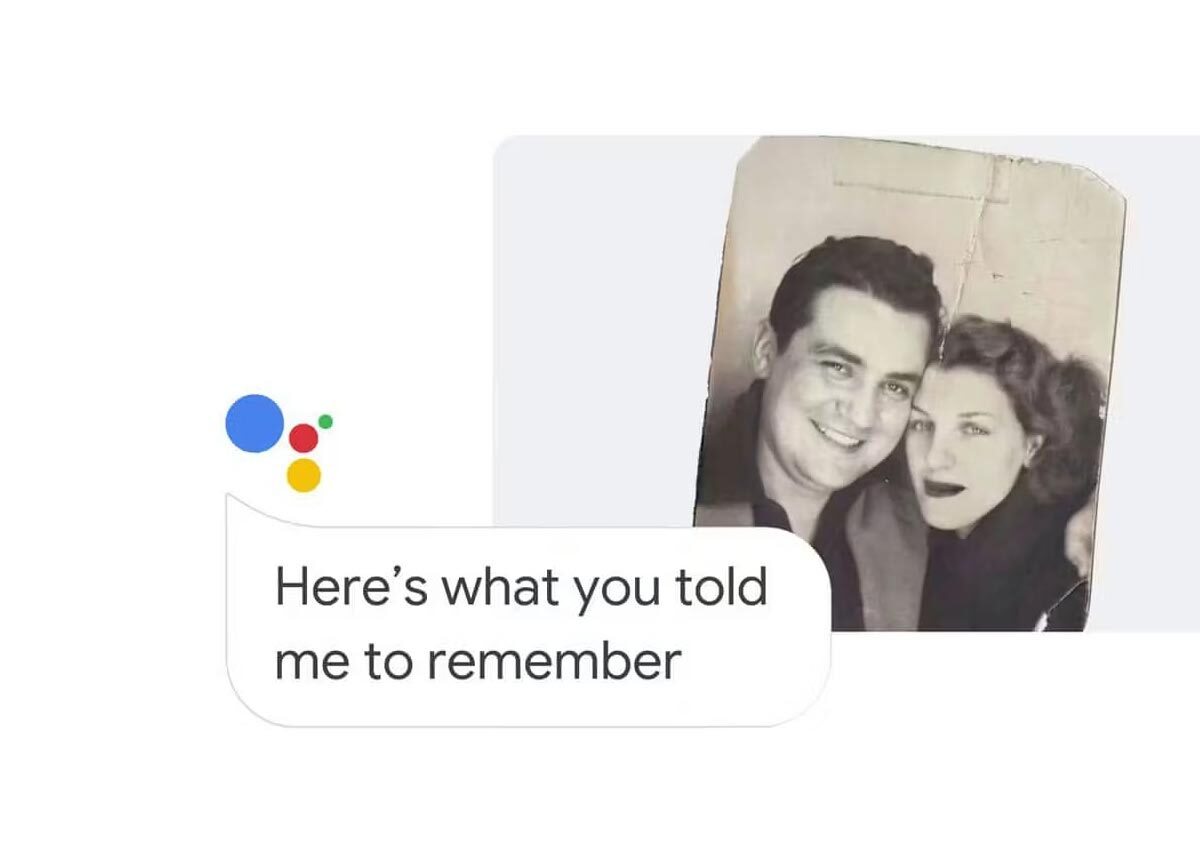
On 2 February 2020, during Super Bowl LIV, Google runs a commercial called Loretta. An elderly man asks Google Assistant to help him remember things about his late wife. The assistant stores what he dictates, then reads it back: that she hated his moustache, that she had the best laugh, that she always said not to work too hard. Old home footage plays. At the end he asks to be reminded that Loretta hated his moustache, and his voice breaks.
The spot runs 90 seconds, an unusual length for the Super Bowl, and is written and produced by Google Creative Lab. It is announced on the company blog on 28 January by Lorraine Twohill, Google's chief marketing officer.
The decision that carries the film
The voice belongs to the 85-year-old grandfather of a Google employee. He is not an actor, the story is his own, and Loretta was his wife. Twohill describes it as his film debut in front of an audience of millions.
That single production decision does most of the work. The Super Bowl is the most heavily performed hour in American television, a place where sentiment is normally manufactured with visible craft, and audiences arrive braced for it. Using a real widower's voice, with its hesitations intact, sets the film outside that register. Nothing in the sound design has to signal sincerity, because the sincerity is a matter of fact.
The product argument is made in the same understated way. Google Assistant appears only as a set of ordinary requests, and the capabilities shown are unremarkable: dictate a note, store a photo, set a reminder. There is no demonstration of what the technology can do that a competitor cannot. The commercial argues instead that these small functions can matter enormously to a person in a particular situation, which is a claim about usefulness rather than superiority.
The visual treatment follows the same restraint. Most of the screen is occupied by handwritten notes, faded photographs and grainy home footage, and the only marker of the technology is a small line of text confirming that the assistant has understood. Google's four colours appear once, briefly, in the closing frame. For a brand whose products live behind glass, choosing to show almost none of the interface is the most confident decision in the film.
Source: Eslogan Magazine Youtube
Continuity with 2010
Twohill drew the connection explicitly, describing Loretta as a companion to Parisian Love, Google's first Super Bowl commercial from 2010, and noting that both are simple love stories told through what the products do. The structural parallel is exact: one life, one relationship, told entirely through fragments of interaction with a Google product, with the audience assembling the narrative.
What changed in the decade between them is the nature of the product. In 2010 the interaction was typed and the interface was visible. In 2020 it is spoken, the interface has disappeared, and the company faced a harder communication problem: how to give a voice assistant an emotional dimension when there is nothing to look at. Loretta answers by removing the device from the frame almost entirely and pointing the camera at the person instead.
Reception and the questions it raised
The commercial was widely singled out in Super Bowl coverage the following morning, with CNN, TODAY and others reporting the volume of viewer response. It appeared near the top of most critics' rankings for the year and was the rare Super Bowl spot discussed in terms of grief rather than entertainment.
Not all commentary was uncomplicated. Some observers noted that a company whose business rests on data collection was making an emotional case for handing it more personal material, and that the film's warmth sat awkwardly beside the privacy debate then surrounding voice assistants. Google made no attempt to address that in the work itself.
The spot also arrived at a moment when Google needed a human account of its AI work. The Assistant had been positioned largely through capability demonstrations, including the widely debated Duplex booking calls of 2018, and the public conversation about conversational AI was dominated by questions of what the systems could do rather than what they were for. Loretta answered the second question without engaging the first.
As brand communication, Loretta is notable for what it refuses. It does not name a competitor, quote a specification, or explain what an assistant is. It assumes the audience already knows, and spends its 90 seconds on a single question: what is this for. The answer it gives, that a product can help someone keep hold of a person they have lost, is a large claim delivered very quietly.
Written with AI assistance, edited by a human. Find out more about our Use of AI.