
A love story told in search queries
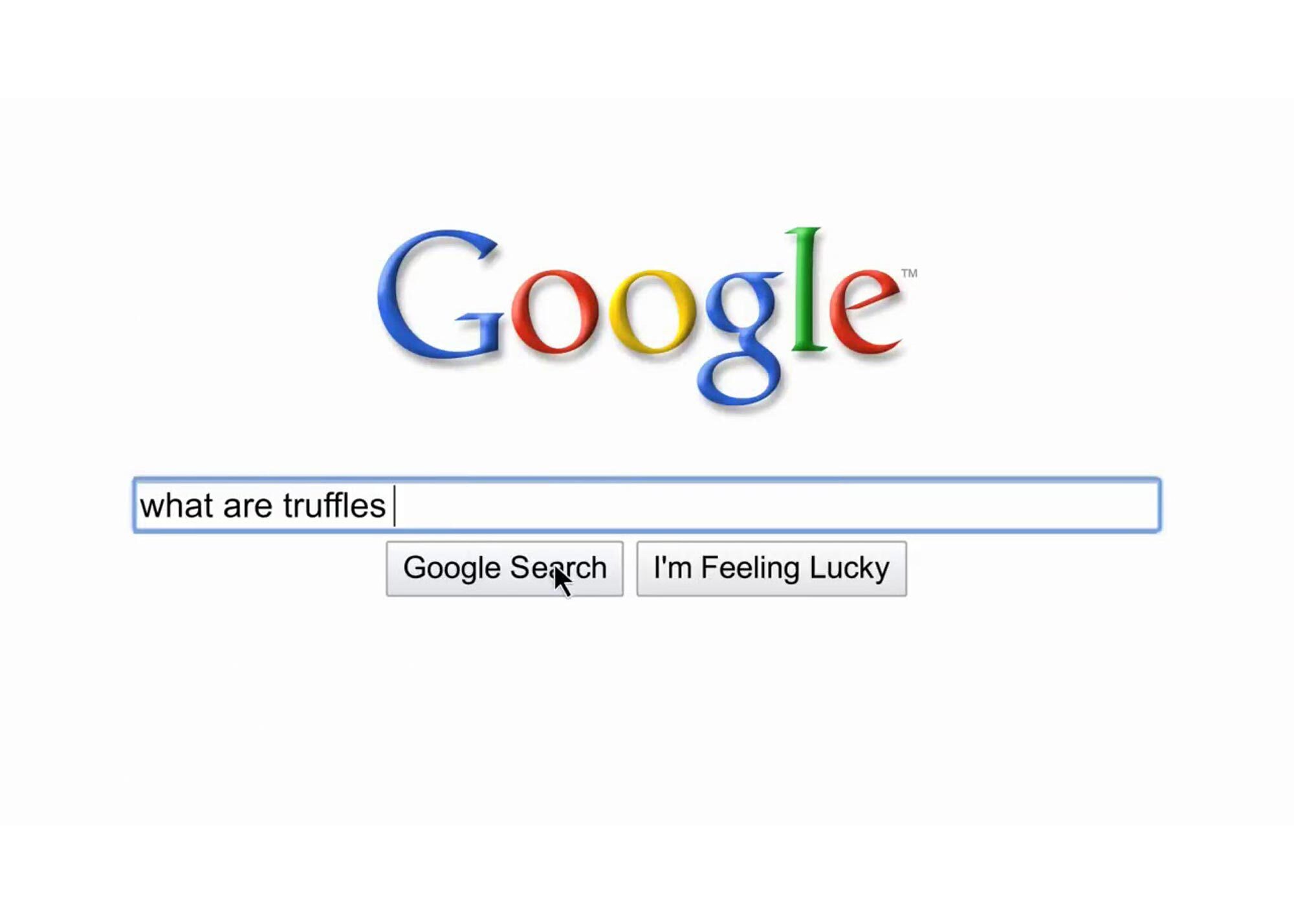
On 7 February 2010, during Super Bowl XLIV, Google ran its first commercial in the event that American advertising treats as its showcase. The spot was called Parisian Love. It lasted 60 seconds, contained no actors, no dialogue and no product demonstration in the usual sense, and consisted entirely of words being typed into a search box.
The sequence begins with "study abroad paris france", moves through "cafes near the louvre", "translate tu es tres mignon", "impress a french girl", "chocolate shops paris france", "what are truffles", "who is truffaut", "long distance relationship advice", "jobs in paris", "AA120", "churches in paris", "how to assemble a crib". Music rises underneath. The screen fades on the line "search on". Nothing is explained, and nothing needs to be.
Why the format worked
Advertising a search engine is unusually difficult. The product has no packaging, no showroom and no visual signature beyond a text field, and its function is so familiar that describing it is close to pointless. Most search advertising of the period tried to argue about relevance and results, a discussion Microsoft had opened when it launched Bing in 2009 and began spending heavily to claim better answers.
Parisian Love declined that argument entirely. Instead of asserting that Google was good at search, it showed a life being lived through search, and let the audience assemble the story themselves. Each query is a fragment; the meaning sits in the gaps between them. The viewer does the work of realising that a semester abroad has turned into a relationship, then a move, then a marriage, then a child.
This is what made it effective as brand advertising rather than product advertising. The commercial made no claim about speed, accuracy or index size. It claimed a place in the audience's life, which is a much harder thing to contest. Comscore's ARS testing scored the spot at 51 points, placing it in the top fifth of the commercials the firm had measured, and attributed its performance to the emotional framing and the constant visible presence of the Google interface.
There is also a quiet argument about the product embedded in the sequence. The queries are imprecise, conversational and occasionally misspelled, and the results are useful anyway. A viewer watching someone type "impress a french girl" and get somewhere with it learns more about the search engine's tolerance for vague human language than any accuracy claim could convey.
Source: Google Youtube
An internal film that became a campaign
The work came from Google Creative Lab, the company's in-house creative group, rather than from an outside agency. It had first appeared on YouTube in November 2009 as part of a small series and was not made for television at all. Its promotion to the Super Bowl was a late decision, and Eric Schmidt, then chief executive, announced the buy on Twitter shortly before the game, framing it as a departure for a company that had spent a decade insisting it did not need to advertise.
That framing was part of the story's appeal. Google had grown to dominance through word of mouth and product quality, and had made something close to a virtue of its absence from mass media. Buying the most expensive airtime in American television was, on the surface, a reversal. The choice of film softened it. A 60-second spot with no voiceover, no celebrity and no jokes signalled that the company was entering the format on its own terms.
A template Google kept using
The structure proved durable. Google returned to the search-box device repeatedly over the following decade, in the annual Year in Search films, in campaigns for individual markets, and in later Super Bowl work. The company's chief marketing officer, Lorraine Twohill, has described the approach as showing simple love stories through what the products can do, a description that fits both Parisian Love and its 2020 successor.
Its influence spread beyond Google as well. The search-box narrative became a recognisable advertising form, used by other technology companies and parodied often enough to qualify as a genre, and it remains one of the few advertising devices invented in the era that survives on its own logic rather than on production values.
Fast Company later described Google as the most unconventional major brand marketer of the 2010s, and this commercial is where that reputation begins. It established that Google would advertise by demonstrating usefulness inside a human situation rather than by making claims about itself, a position the company has held to with unusual consistency.
Written with AI assistance, edited by a human. Find out more about our Use of AI.