A weatherproof material from a country draper
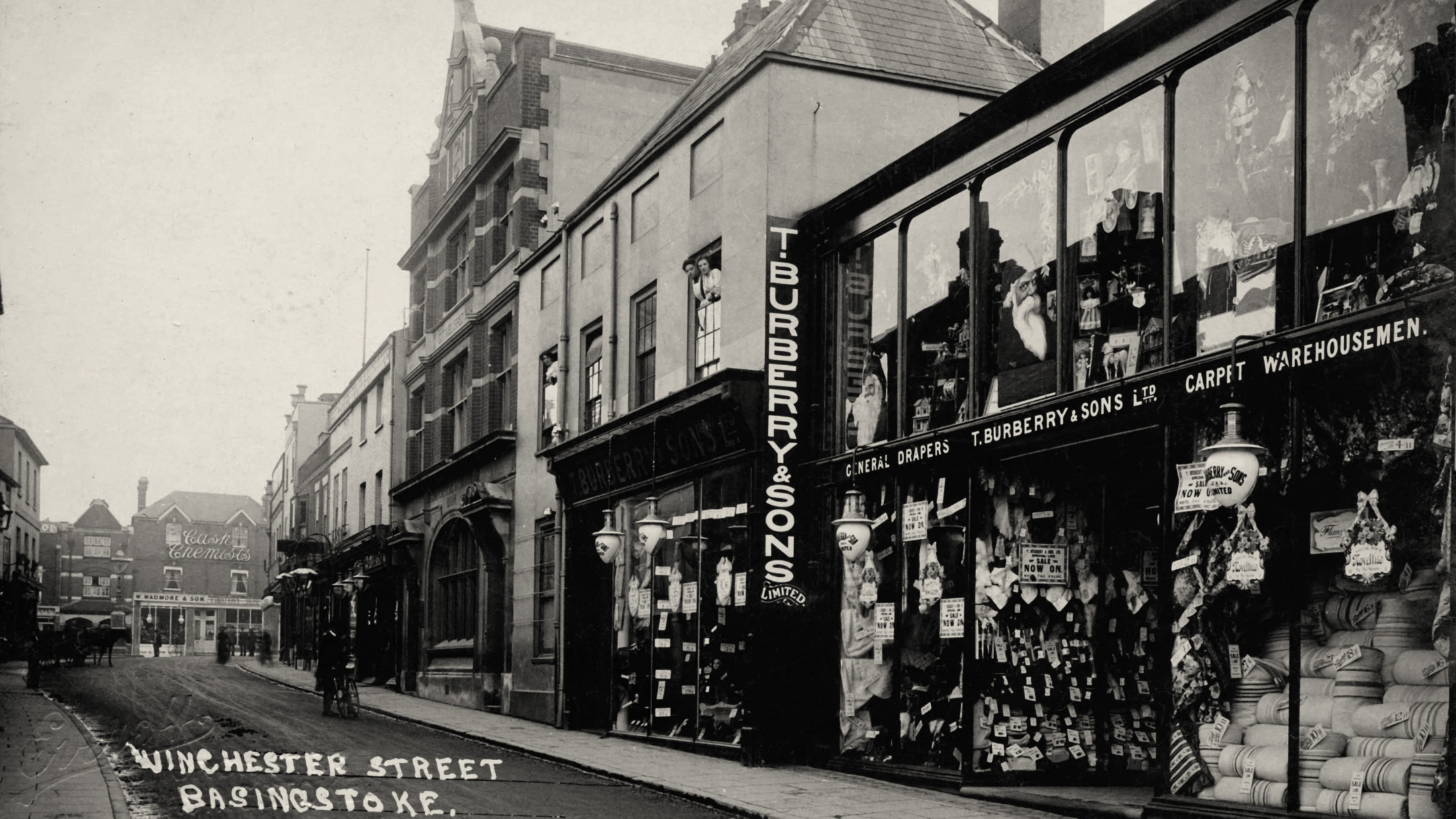
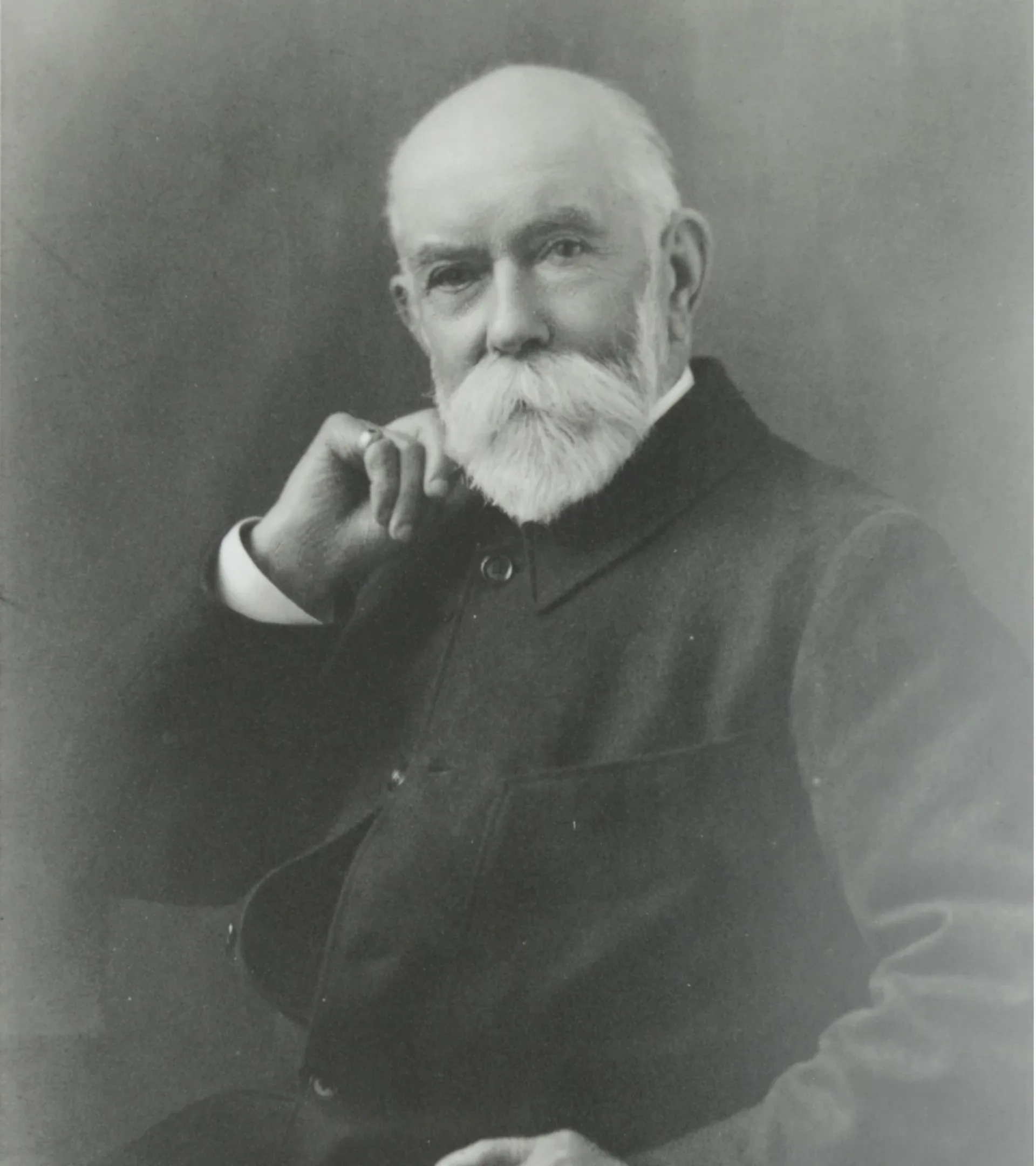
In 1879, Thomas Burberry invented gabardine in Basingstoke, Hampshire. Burberry had opened a country draper's shop on Winchester Street in 1856 at the age of twenty-one and had spent more than two decades observing how local farmers, gamekeepers and shepherds protected themselves against rain and wind. The smock and the cape were the working garments of the period, treated with rubber, oils or wax to repel water. Each method created problems. Rubberised material became heavy, restricted movement and trapped sweat. Waxed cotton was warmer but stiff and prone to cracking. Burberry set out to design a fabric that would be lightweight, breathable, hard-wearing and naturally weatherproof, without surface treatment.
An innovation built into the yarn
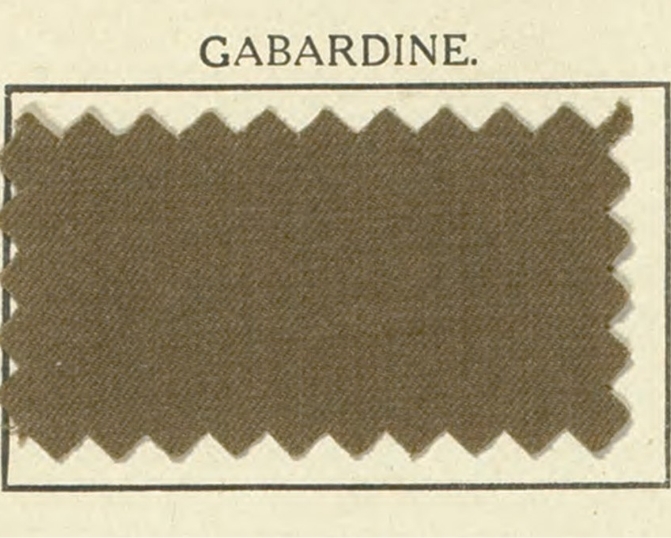
The breakthrough sat in the yarn rather than in the finish. Burberry developed a process in which long-staple Egyptian cotton or worsted wool yarns were waterproofed before weaving rather than after. The fibres were tightly twisted, treated to repel water and then woven into a dense, twill construction. The resulting cloth shed rainwater along the diagonal of the weave, allowed perspiration to evaporate and held its shape under load. Burberry registered the name gabardine in 1888 and trademarked the term shortly afterwards. The word itself was drawn from a Middle English term for a long, loose travelling cloak, used by Shakespeare in The Merchant of Venice. The choice of name positioned the new fabric within an older English tradition of protective garments rather than as a purely industrial invention.
Adoption by exploration and expedition
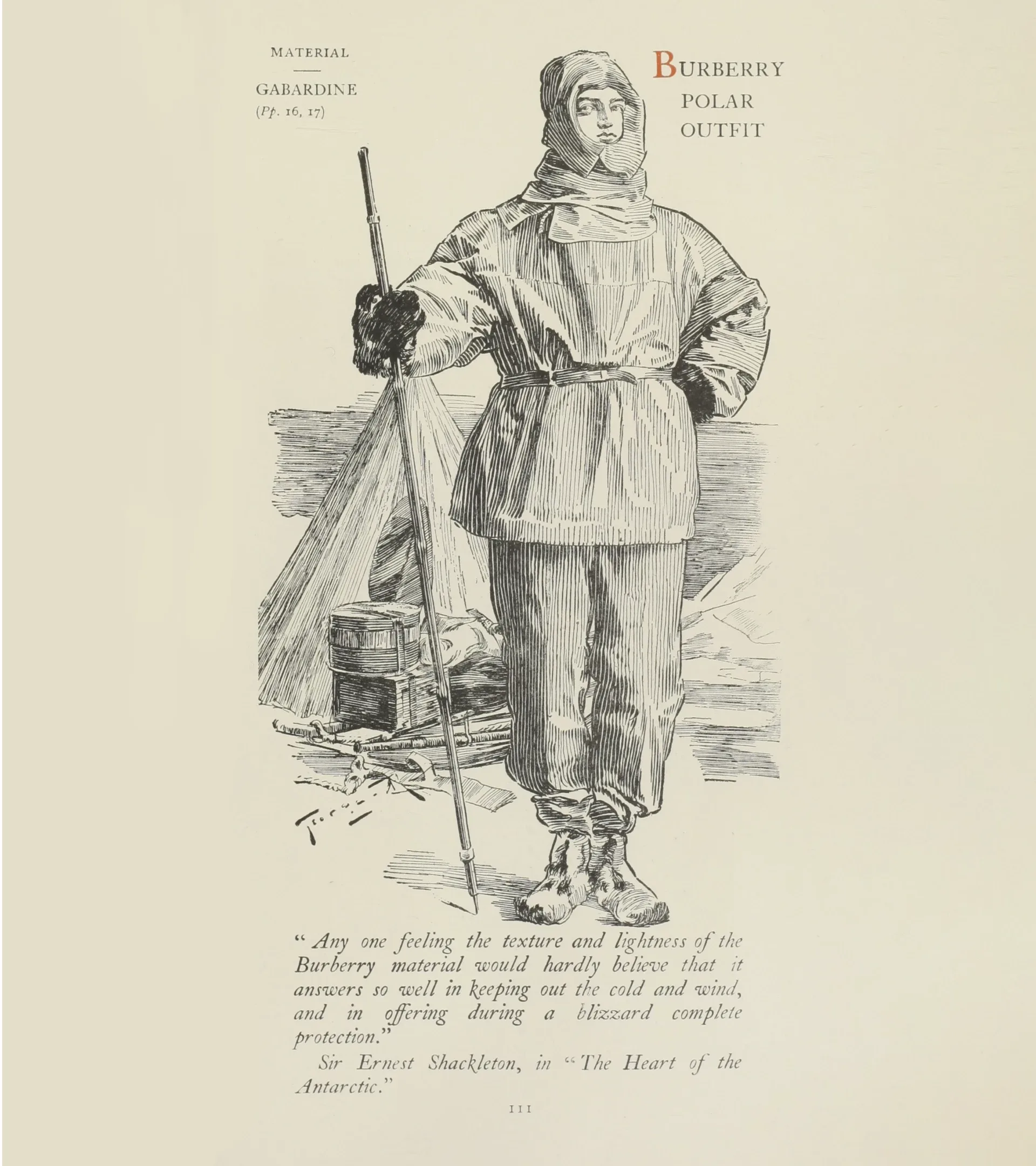
Through the late nineteenth and early twentieth centuries, gabardine moved out of country wear and into expedition equipment. Burberry produced gabardine outerwear for the British Army, for early aviation pioneers and for polar explorers. Roald Amundsen's expedition to the South Pole in 1911 used Burberry gabardine garments and tents. Ernest Shackleton's Imperial Trans-Antarctic Expedition in 1914 carried Burberry equipment, including the gabardine layers used during the loss of the Endurance and the open-boat journey to South Georgia. George Mallory wore Burberry gabardine on his 1924 Mount Everest attempt. Each association reinforced the same message. Gabardine was a working fabric for severe conditions, validated by people who depended on it.
The structural foundation of the trench coat
Gabardine became the structural foundation for what would later be called the trench coat. During the First World War, the British War Office issued specifications for an officers' raincoat that was lightweight, breathable, easy to move in and weatherproof. Burberry's gabardine met those requirements directly. The Tielocken, an earlier Burberry design from 1912, had already established the silhouette, with its overlapping front, belt and storm flaps. The wartime garment refined that pattern with epaulettes, D-rings, gun flap and storm yoke. The military origin of the trench coat is well documented in fashion history, but the precondition for that garment to exist at scale was the gabardine fabric Burberry had introduced thirty-five years earlier.
A material that became a brand promise
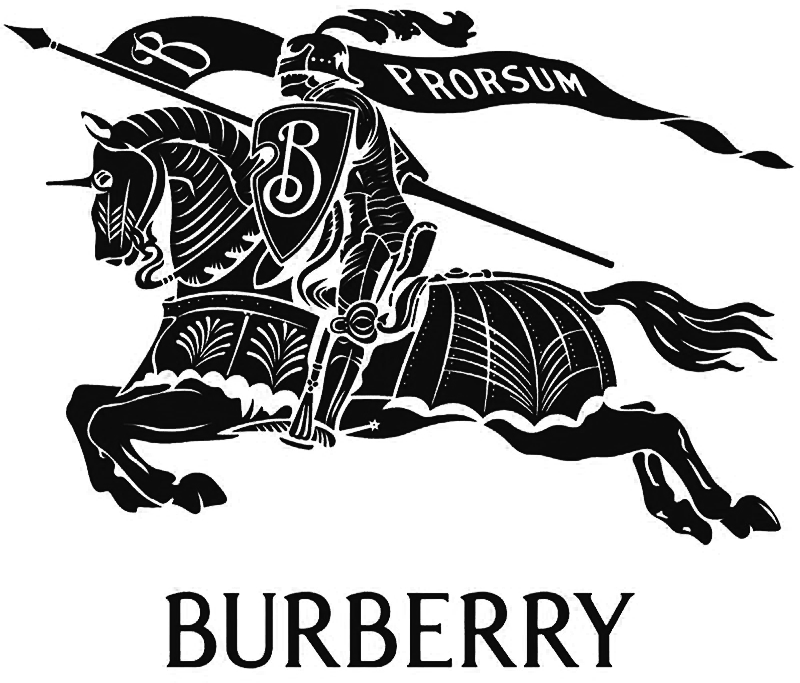
Gabardine functioned as more than a fabric. It became the material expression of Burberry's brand promise. Long before the Equestrian Knight Design was registered as a trademark in 1909 and long before the Burberry Check tartan was used as an interior lining for the trench coat in 1924, the house was identified with gabardine. The fabric provided the brand with a distinctive, ownable claim that no competing draper could replicate without infringing the patent. It also tied the house to a clear functional benefit, weather protection, that did not depend on fashion cycles. That foundation explains why Burberry can return repeatedly to outerwear, weather and the trench coat without those references becoming exhausted. The category was built on a material innovation that preceded almost every other element of the brand.
A starting point for a 141-year identity
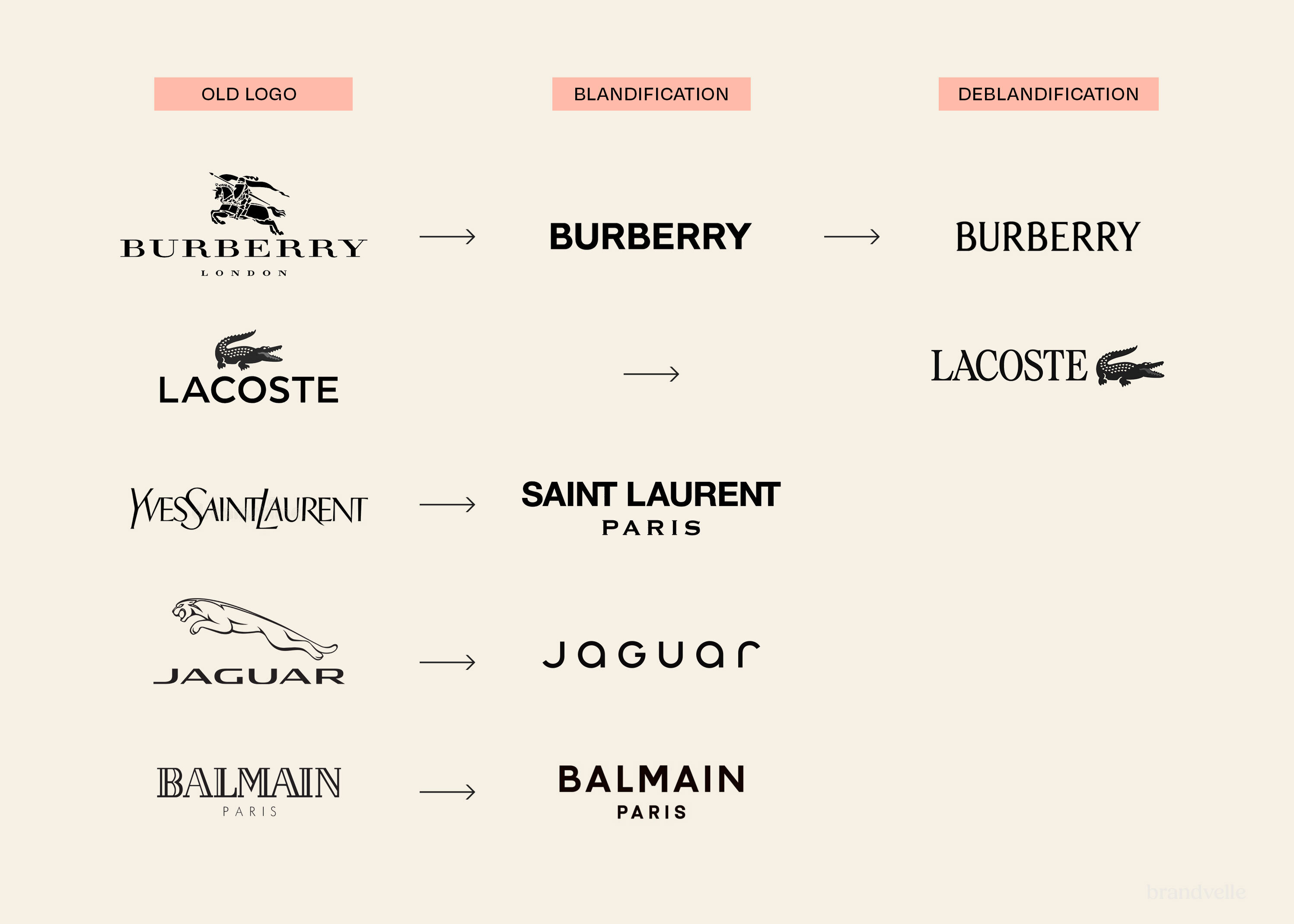
The 1879 invention of gabardine is the strongest single technical event in Burberry's history. Every later identity decision, the Equestrian Knight, the registered Check, the trench coat, the Brand Burberry repositioning of the early 2000s, the Tisci sans-serif of 2018 and the Daniel Lee restoration of 2023, sits on top of the original fabric story. Without gabardine, the trench coat does not exist in the form the public knows it. Without the trench coat, Burberry does not occupy its current position in heritage outerwear. The Hampshire shop opening of 1856 set the conditions for the brand. The gabardine invention of 1879 set its enduring proposition.
Written with AI assistance, edited by a human. Find out more about our Use of AI.