A new word for an old correction
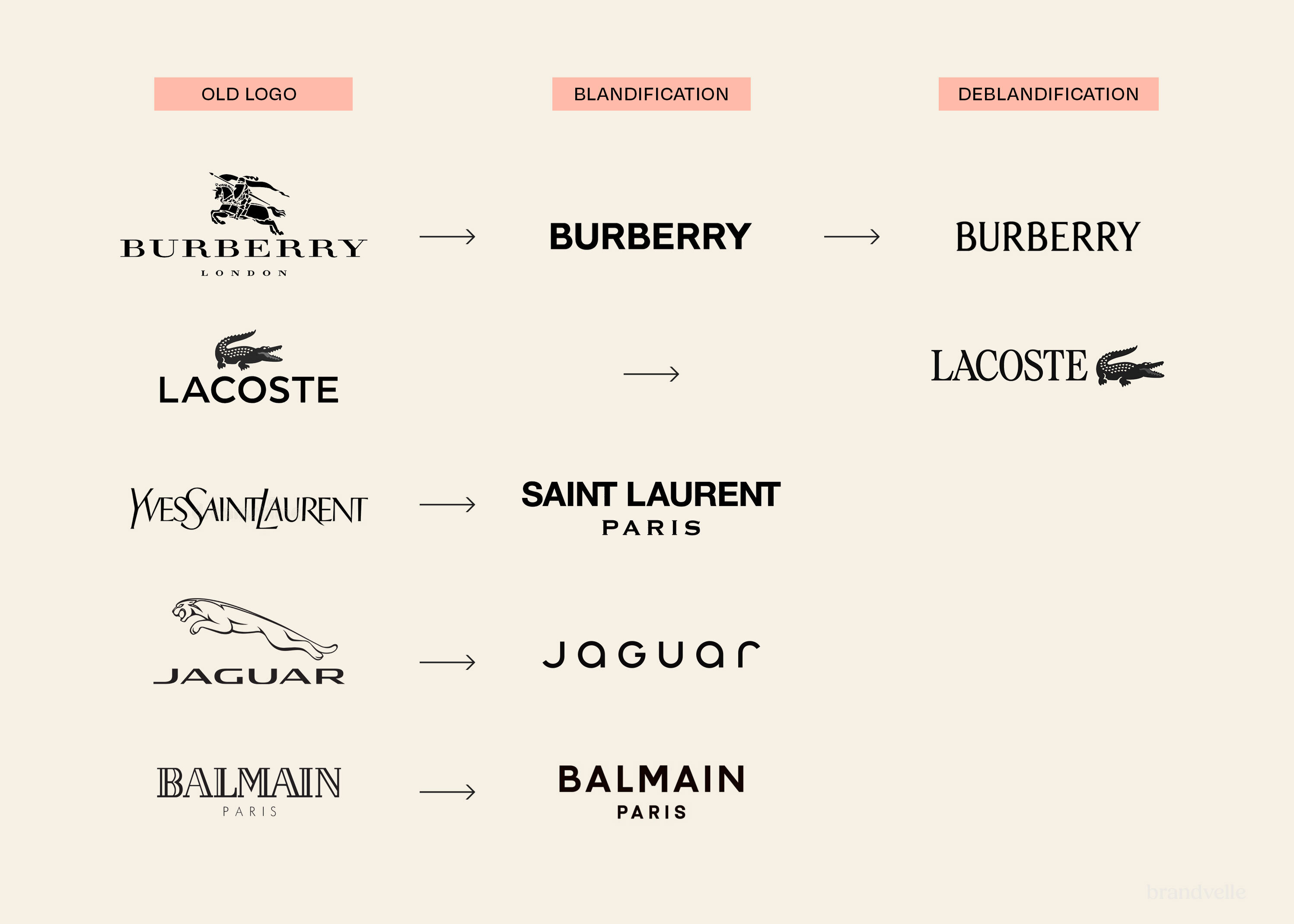
The trade press has needed a name for what is now visibly happening in luxury and consumer brand identity. The decade between roughly 2015 and 2024 produced a sustained convergence on geometric sans-serif wordmarks, monochrome palettes and category-anonymous design systems. Marketers called the phenomenon "blanding." The reversal that has been underway since 2023 deserves its own term. "Deblandification" is the most descriptive option in circulation. It captures the corrective rather than nostalgic character of the movement: brands are not regressing to old forms because the old forms feel safe, they are restoring distinctive equity because the alternative has measurably eroded.
Two cases anchor the trend, one from luxury fashion and one from premium sportswear. Burberry sets the precedent in 2023. Lacoste extends it in 2026 with a refresh that is more comprehensive in scope and more revealing in its strategic logic. Read together, they describe a return to first principles in identity design.
The Burberry precedent
Burberry's 2018 rebrand under Riccardo Tisci, designed by Peter Saville, was the most quoted instance of the blanding wave inside luxury fashion. The new wordmark was set in flat capitals, the equestrian knight was retired, and the Burberry check was retreated to a supporting role. The execution was technically accomplished and brand-strategically costly. The brand spent the late 2010s indistinguishable in lockup from a dozen peers and product collaborators.
The reversal arrives in February 2023 under new creative director Daniel Lee. The Equestrian Knight Design, originally chosen through a public competition in 1901, returns to the centre of the identity. The wordmark recovers a serif construction close to its pre-2018 form. The Burberry check is reasserted across product, packaging and retail. The press at the time treated the move as a course correction. With three years of distance, it reads more clearly as a category signal. A brand of Burberry's standing was prepared to admit publicly that a high-profile rebrand had subtracted equity, and was prepared to invest again in the assets that had been removed. Other houses noticed.
The Lacoste extension
Lacoste's announcement on 21 April 2026 is structurally different from a logo refresh. The brand restores or refines almost every brand-distinctive cue at once. A bespoke serif typeface, drawn from the Lacoste archive, replaces the previous sans. The Crocodile, originally drawn by illustrator Robert George after a sketch by founder René Lacoste in 1933, is refined with a more visible red tongue and adjusted proportions. The historic Lacoste green is restored to a deeper, more saturated tone. Two new palette colours, "clay" referencing tennis courts and "farine" referencing René Lacoste's first blazer, expand the system without diluting it. René Lacoste's handwritten script is reintroduced for selected expressions, including the new Café Lacoste logotype.
What makes the move strategic rather than decorative is the operating principle behind it. CEO Thierry Vallat has framed the work as "not redesigning, but refining how it is expressed." The brand is treating its existing distinctive assets, the Crocodile, the green, the serif, the founder's handwriting, as protected commercial inventory. The refresh restores their visibility without replacing their substance. The 2026 system looks fresh because the underlying assets are themselves more than ninety years old. That is the deblandification pattern in its purest form.
The pattern beyond fashion
Pepsi's 125th-anniversary refresh in March 2023 is the second relevant case, executed inside FMCG rather than fashion. The brand reasserts the heritage globe, restores the wordmark inside the device and codifies the electric blue as a distinctive asset rather than a background colour. Porsche's crest refresh in January 2023 follows the same logic. The crest is refined rather than flattened, the historic Stuttgart elements are sharpened, the typography is rebuilt to honour the 1963 reference. Mercedes-Benz returns the flat star to brand communications in April 2025, the third time the brand cycles back to a minimal-form representation while keeping the chrome version on the vehicles. None of these moves is a return to nostalgia. Each one treats the brand's most distinctive existing assets as the place to invest, rather than the place to abandon.
What deblandification actually rewards
The economic logic is consistent across the cases. Distinctive brand assets, in the framework codified by Jenni Romaniuk's 2018 work for the Ehrenberg-Bass Institute, are the cheapest source of brand recognition a company has. They have already been paid for, sometimes across decades. They reduce the marketing budget required to remain mentally available to consumers. They protect pricing power because they cannot be copied without imitation costs. The blanding wave converted these assets into category-conforming ones, and the cost of that conversion is now legible in the form of higher acquisition spend and weaker recognition tests.
Deblandification is, at its core, a return to that economic logic. The brands now investing back into their distinctive assets are not making aesthetic statements. They are making balance-sheet decisions. A serif wordmark is a serif wordmark, but a Lacoste serif drawn from the 1933 archive carries equity that a generic geometric sans does not. The point is not the serif. The point is the equity.
The limit of the trend
The movement has a clear ceiling. Deblandification only works for brands that have something to deblandify. A heritage device, a founder's signature, a category-defining colour, a decades-old typographic tradition: these are the assets the move recovers. Brands without that history do not have the option. They have to build the assets from scratch, which is the slower, more expensive route that the blanding wave was an attempt to bypass.
For brands that do have heritage to draw on, the question is no longer whether to retreat from the geometric-sans default. The Burberry precedent and the Lacoste extension establish that the retreat is now safe to perform publicly, and is being read by the trade press as strategic rather than reactionary. The remaining question is how much of the previous decade's identity work has to be re-done. For most brands carrying a serious archive, the answer is more than they would like to admit.
Written with AI assistance, edited by a human. Find out more about our Use of AI.
About the author

Brands mentioned in Article

Founded by tennis champion René Lacoste in 1933, the Maison fuses sportswear heritage with French elegance and is known worldwide for the embroidered …
15 Articles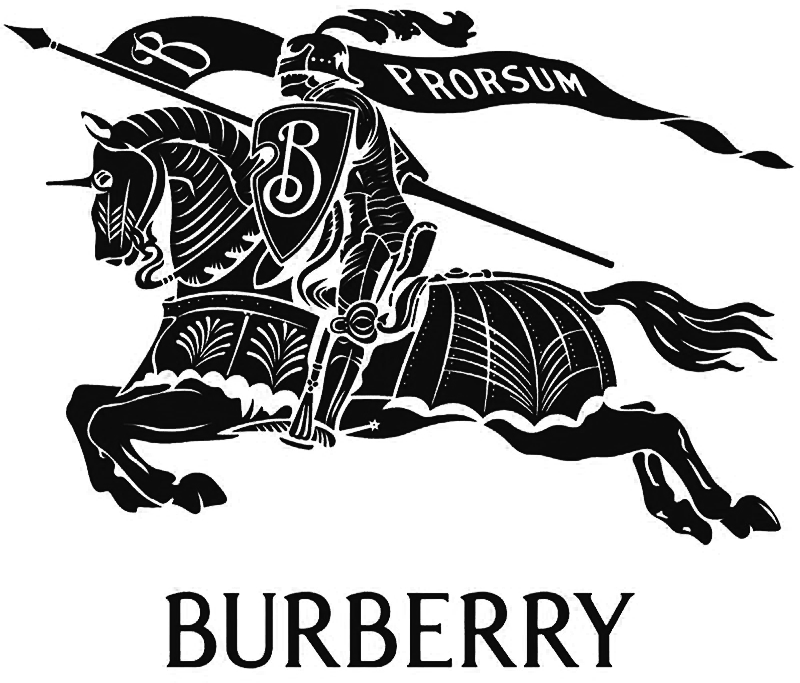
Founded by Thomas Burberry in 1856, the British Maison is known worldwide for the gabardine trench coat, the Burberry Check tartan and a heritage root…
18 Articles