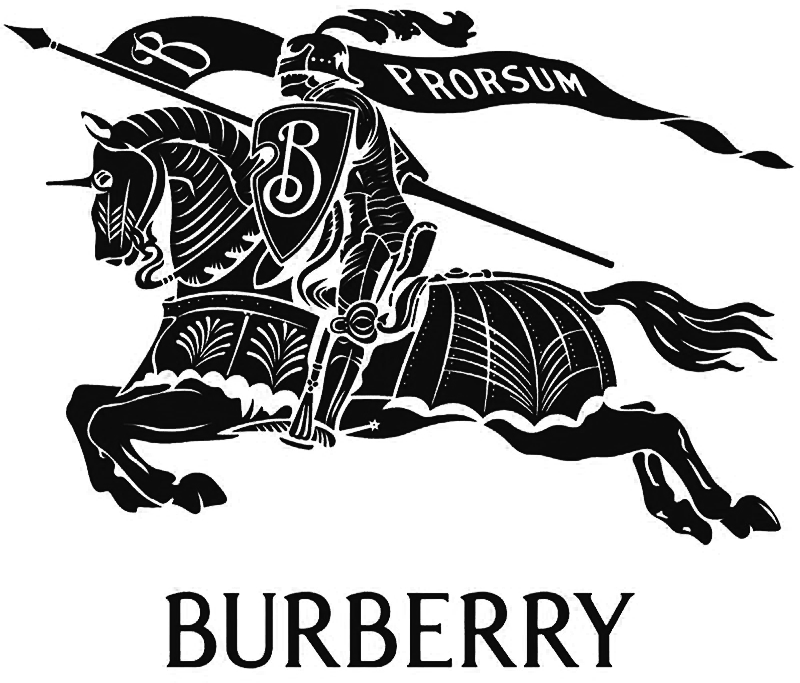
A 117-year wordmark retired
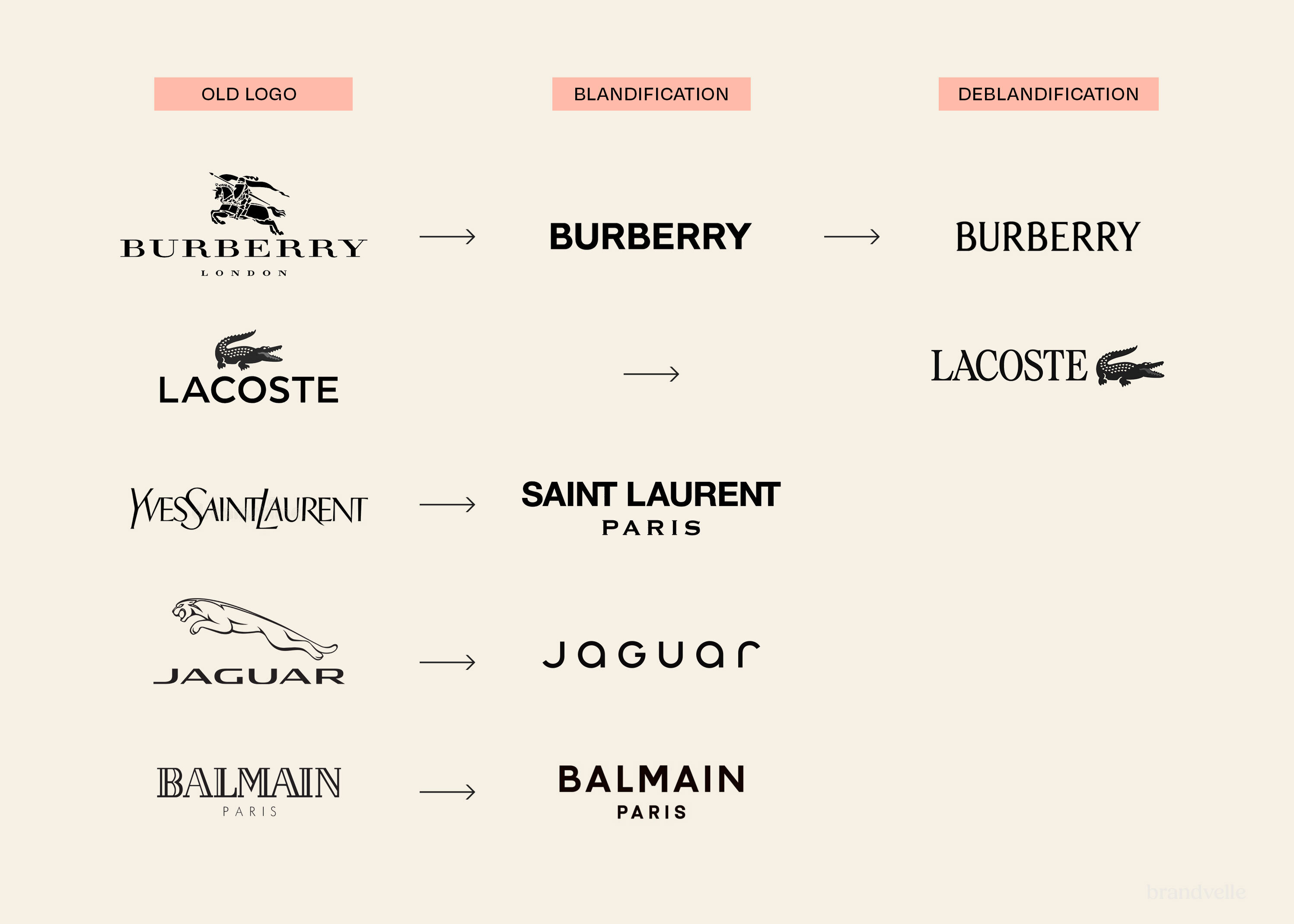
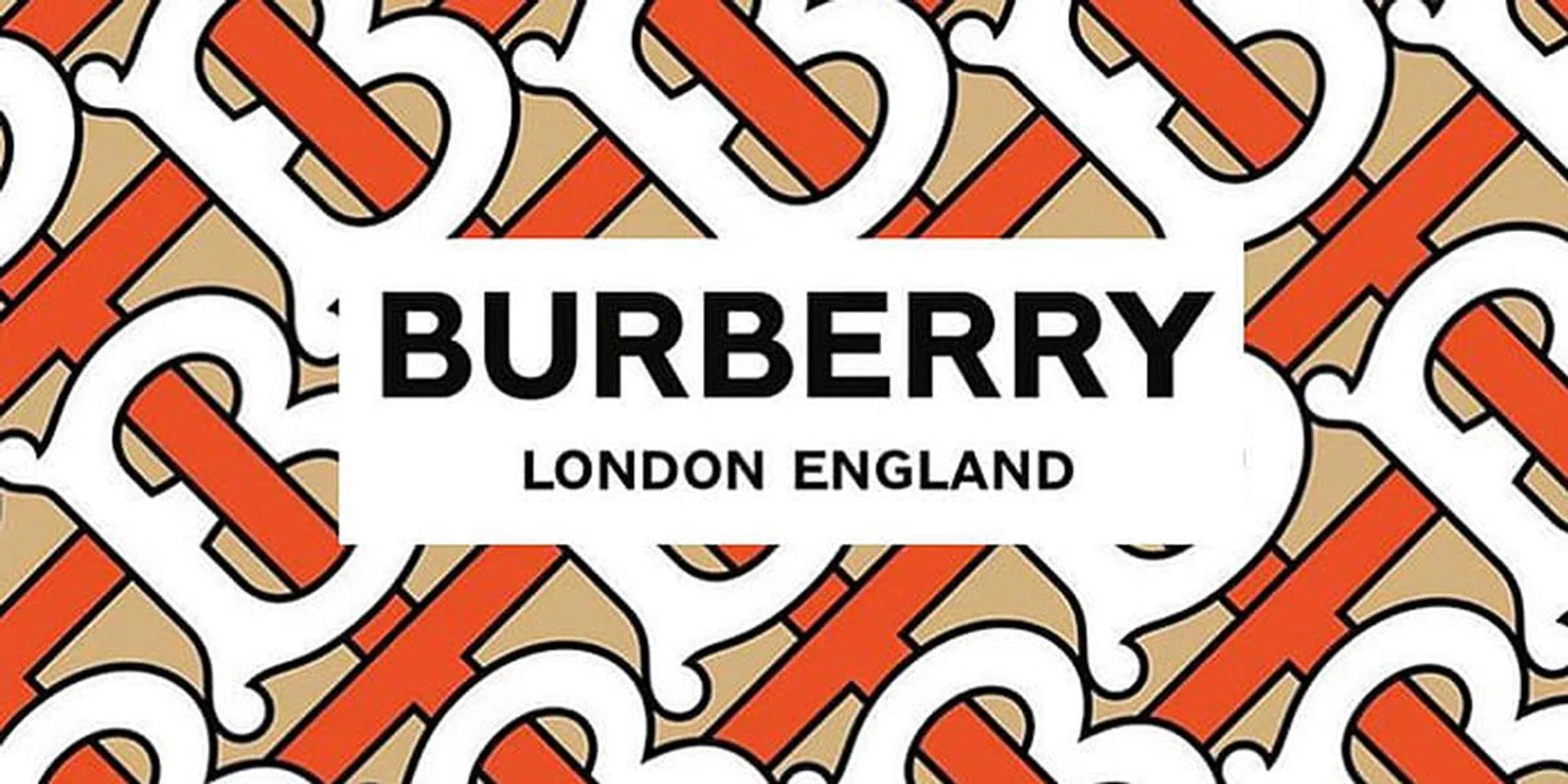
On 2 August 2018 Burberry revealed a new visual identity that closed a chapter the British Maison had kept open for one hundred and seventeen years.1 The Equestrian Knight wordmark, registered in 1901 and elaborated over more than a century, was retired in favour of a clean, condensed sans-serif logotype.2, 3 The bespoke Bodoni lettering of the old wordmark and the heraldic figure of the knight, with his "Prorsum" banner, were both removed from primary brand expressions.1, 4 In their place came a single, confidently spaced word, set in a custom variant of a tightly tracked grotesque, and a new monogram pattern composed of interlocking T and B letters in honour of founder Thomas Burberry.5, 6
The new identity was introduced through Riccardo Tisci's Instagram account on the morning of the announcement, with a series of short visual posts that placed the logotype against plain backgrounds and revealed the monogram in cropped views.7, 8 Burberry's own channels followed within hours, and the trade press carried the story through the day.1 The launch sequence avoided a dedicated press conference, framing the change as an editorial moment in line with Tisci's wider preference for releasing work directly through social platforms.
Saville and Tisci, working in conversation
The identity was developed by graphic designer Peter Saville together with Burberry's then Chief Creative Officer Riccardo Tisci, who had joined the Maison in March 2018 from Givenchy.1, 4 Saville, best known for his work with Factory Records, Joy Division, New Order and a long sequence of cultural and luxury collaborations, has frequently described his role at brand level as that of an editor rather than a designer in the conventional sense.4 The collaboration with Tisci was set up around a small number of editorial decisions rather than a comprehensive system delivered in a single document.
The wordmark used a custom variant of a tightly tracked grotesque, with even letterforms, confident weight and a wide x-height. It was set without serifs and without the knight, and the spacing between letters opened the word out, giving the logotype the bearing of an editorial masthead. The TB monogram was rendered as a continuous, geometric pattern in hues of beige, white and ochre, with a structure that could be cropped, scaled or recoloured for application across leather goods, ready-to-wear, packaging and digital surfaces.1 The pattern referenced the visual register of historical fashion houses while avoiding direct quotation of any single archival monogram.
A repositioning toward streetwear-aware luxury
The intent of the rebrand was to support a strategic repositioning toward a younger, more globally networked luxury consumer. Tisci had built his reputation at Givenchy in part by translating streetwear codes into haute couture. At Burberry he was hired to do a related job, anchoring the Maison's heritage in a contemporary, almost editorial visual register that signalled a wider product-line refresh and a more frequent drop calendar. The first ready-to-wear collection under the new identity was presented at London Fashion Week in September 2018, accompanied by a B Series of monthly product drops sold through social platforms.8
The reception in the design industry was mixed and unusually animated.3 Critics of the new wordmark argued that its sans-serif neutrality risked indistinguishability from a wave of similar simplifications across luxury fashion in the late 2010s, including Balmain, Berluti, Saint Laurent and others.5 Supporters argued that the change was less about the wordmark in isolation and more about restoring narrative space around the founder's name, with the heritage visual elements held in reserve for selective use. Both readings persisted in the design press through the following years.
What stayed and what was held in reserve
Although the Equestrian Knight was withdrawn from the primary visual identity, it was not deleted from the Maison's vocabulary. The figure remained a registered trademark, and selected products and architectural treatments continued to use it as a heritage element. The Burberry Check tartan, originally introduced as a coat lining in the 1920s, was kept in active use throughout the rebrand, while sitting alongside the new TB monogram pattern as a parallel system rather than a replaced one.2
The 2018 identity remained the Maison's primary visual framework through Tisci's tenure, which continued until 2022.4 The pace and direction of subsequent visual changes belong to a different chapter of Burberry's history, but the editorial questions raised by the 2018 work, about how a heritage brand can use a sans-serif wordmark without losing its specificity, continued to circulate in the wider conversation about luxury branding.
Looking back, the Tisci and Saville moment can be read as the cleanest expression of a particular late-2010s industry move, in which heritage Maisons stepped away from elaborate scriptural marks and toward letterforms tuned for screens, social platforms and global readability. Burberry's distinctness in the cohort came from the way the change was framed: not as a denial of the past, but as a quiet recasting of the founder's name as the primary brand sign, with the heraldic apparatus held nearby for editorial use.
Written with AI assistance, edited by a human. Find out more about our Use of AI.
1. Dezeen, India Block, "Peter Saville collaborates with Riccardo Tisci to design new Burberry logo and monogram", 2 August 2018, off whitelist and listed in the article's sources, for the new logo and monogram having been announced that day via Burberry's Instagram page, for the new logo in a sans serif font replacing "the Burberry Equestrian Knight logo with its bespoke Bodoni font, which had been used by the clothing company since 1901", for the design by Peter Saville together with Riccardo Tisci, Burberry's chief creative officer since taking over from Christopher Bailey in March 2018, and for the TB monogram appearing on its own or as a repeating, tessellated pattern of interlinked T and B. The timing "within hours", the palette and the list of applications are not covered by this note. https://www.dezeen.com/2018/08/02/peter-saville-collaborates-with-riccardo-tisci-to-design-new-logo-for-burberrys-new-graphic-identity/
2. Burberry plc, "History", undated corporate timeline, consulted on 25 September 2026, for the Equestrian Knight Design having been crowd-sourced from a public competition for a new logo in 1901, for the Burberry Check, now registered as a trademark, having been introduced as a lining to rainwear in the 1920s, for the company name having changed from Burberrys to Burberry in 1999, and for the appointment of Riccardo Tisci as Chief Creative Officer in 2018. https://www.burberryplc.com/company/history
3. Designtagebuch, Achim Schaffrinna, "Burberry geht in Sachen Branding mit der Mode", 8 August 2018, for the Equestrian Knight, associated with Burberry since 1901, having been removed in favour of a wordmark of sans-serif capitals, and for the storm of online indignation the change set off. The article is in German: "Eine simple, rein aus serifenlosen Großbuchstaben bestehende Wortmarke ist das neue Logo der Modemarke Burberry.", "Das seit 1901 mit Burberry assoziierte Markenzeichen, dem von Firmengründer Thomas Burberry höchstpersönlich entworfenen „Equestrian Knight", wurde entfernt." and "Im Netz ist ein Sturm der Entrüstung entfacht, wie es ihn in der Modewelt seit der missglückten Logoeinführung von GAP wohl nicht mehr gegeben hat." https://www.designtagebuch.de/burberry-geht-in-sachen-branding-mit-der-mode/
4. Wikipedia, articles "Burberry", "Riccardo Tisci" and "Peter Saville (graphic designer)", consulted on 25 September 2026, a reference source under the Brandvelle whitelist: "Burberry" for the Equestrian Knight logo of 1901 "containing the Latin word 'Prorsum', meaning 'forwards'", for Burberry naming Riccardo Tisci, creative director at Givenchy from 2005 to 2017, as chief creative officer in March 2018, and for Tisci presenting a new logo and monogram designed by Peter Saville; "Riccardo Tisci" for his tenure at Burberry lasting until September 2022; "Peter Saville (graphic designer)" for the record sleeves he designed for Factory Records, the label he co-founded, most notably for Joy Division and New Order, and for fashion clients including Jil Sander, Yohji Yamamoto, Christian Dior and Calvin Klein. Saville's description of his role as an editor is not covered by this note. https://en.wikipedia.org/wiki/Burberry https://en.wikipedia.org/wiki/Riccardo_Tisci https://en.wikipedia.org/wiki/Peter_Saville_(graphic_designer)
5. Creative Review, Rachael Steven, "Burberry, Calvin Klein and the changing face of fashion branding", 16 August 2018, for the knight logo having been replaced by a minimal wordmark created by Peter Saville and Riccardo Tisci and revealed alongside a new monogram that spells out TB, the initials of the founder Thomas Burberry, inspired by a logo from 1908, and for the wider move of fashion houses replacing a distinctive, well known logo with a simpler, less distinctive one, where the piece names Berluti and Calvin Klein. Balmain and Saint Laurent are not named there. https://www.creativereview.co.uk/burberry-calvin-klein-and-the-changing-face-of-fashion-branding/
6. Brand New (UnderConsideration), Armin Vit, "As Different as Knight and Day", subtitled "New Logo for Burberry by Peter Saville", 3 August 2018, off whitelist and listed in the article's sources, for the before and after of the knight logo and the new uppercase sans-serif wordmark with its monogram pattern, as the page shows and tags them. The review text sits behind the site's subscription and could not be read on 25 September 2026. https://www.underconsideration.com/brandnew/archives/new_logo_for_burberry_by_peter_saville.php
7. It's Nice That, Emma Latham Phillips, "Burberry enlists Peter Saville to redesign its logo for first time in 20 years", 2 August 2018, off whitelist and listed in the article's sources, for Riccardo Tisci having revealed the rebrand through a series of Instagram posts showing his email correspondence with Peter Saville, including Saville's note that he was inspired by the house archive, especially a logo from 1908. https://www.itsnicethat.com/news/burberry-rebrand-peter-saville-graphic-design-020818
8. WWD, "Burberry Adopts a Monthly Drop Model, With First Capsule Released on Oct. 17", October 2018, off whitelist, for the logo having been revealed in August on Tisci's Instagram Stories, for Tisci's debut show as chief creative officer during London Fashion Week in September 2018, for the surprise B Series drop released ahead of that show, and for the monthly releases on the 17th of every month sold through Burberry's Instagram, WeChat, Line and Kakao. The page renders without a visible date line; the month is taken from the headline. https://wwd.com/fashion-news/fashion-scoops/burberry-adopts-monthly-drop-model-with-first-capsule-released-oct-1202879582