A name change at the top of the sport
On 24 April 2024 Ferrari and the technology company HP announce a multi-year title partnership that changes the formal name of the Formula 1 team.1, 2 From the Miami Grand Prix in early May, the team competes as Scuderia Ferrari HP, and the HP logo appears on the cars, the drivers' suits and the wider team identity.1, 3, 4 The agreement also extends across the Scuderia Ferrari Esports team, the Ferrari Esports series and the Ferrari entry in the F1 Academy series.1, 2
The move is significant because of what the team name has, and has not, carried for more than a decade. A title partner sits at the very front of a team's identity, ahead of the manufacturer's own name in commercial terms, and Ferrari has historically guarded that position carefully. Bringing an outside brand into the name is a deliberate decision about how much of its most valuable asset Ferrari is prepared to share.
The first title name since the tobacco era
For most of the 2010s and early 2020s the team raced simply as Scuderia Ferrari.5 The last partner to occupy the title position in a comparable way was Marlboro, whose decades-long backing produced the name Scuderia Ferrari Marlboro before tobacco branding was pushed off the cars.5, 6 A short-lived arrangement around the Mission Winnow platform followed at the end of the 2010s, but it did not establish a lasting consumer brand in the name.5 The HP deal therefore represents the first time in years that a mainstream, freely advertisable brand takes the title slot in the team's name.
That distinction matters for brand architecture. Ferrari is one of the few names in motorsport strong enough to stand alone, and for years it did exactly that. Choosing to append HP signals a calculated judgement that the right partner adds value rather than diluting the marque, and that the technology category fits the image Ferrari wants to project.


Why HP, and why now
The partnership is framed around technology and innovation rather than simple logo placement. HP positions the deal as a way to bring its hardware and services, from computing devices to conferencing and printing technology, into the team's operations, supporting the data-intensive work of running a modern Formula 1 effort.1, 3, 4 Both companies emphasise a shared interest in sustainable innovation and high performance, language designed to make the pairing read as a strategic fit rather than a transaction.1, 2
For Ferrari, the logic is partly commercial and partly about positioning. A title partner brings substantial funding to an expensive sport, but it also associates the team with a category, technology, that aligns with how Ferrari increasingly describes itself. For HP, the appeal is reach. Few brand vehicles offer the global, repeated, high-engagement exposure of the most recognised name in Formula 1, and entering that name puts HP in front of audiences across every race weekend of the season.
Managing the value of the name
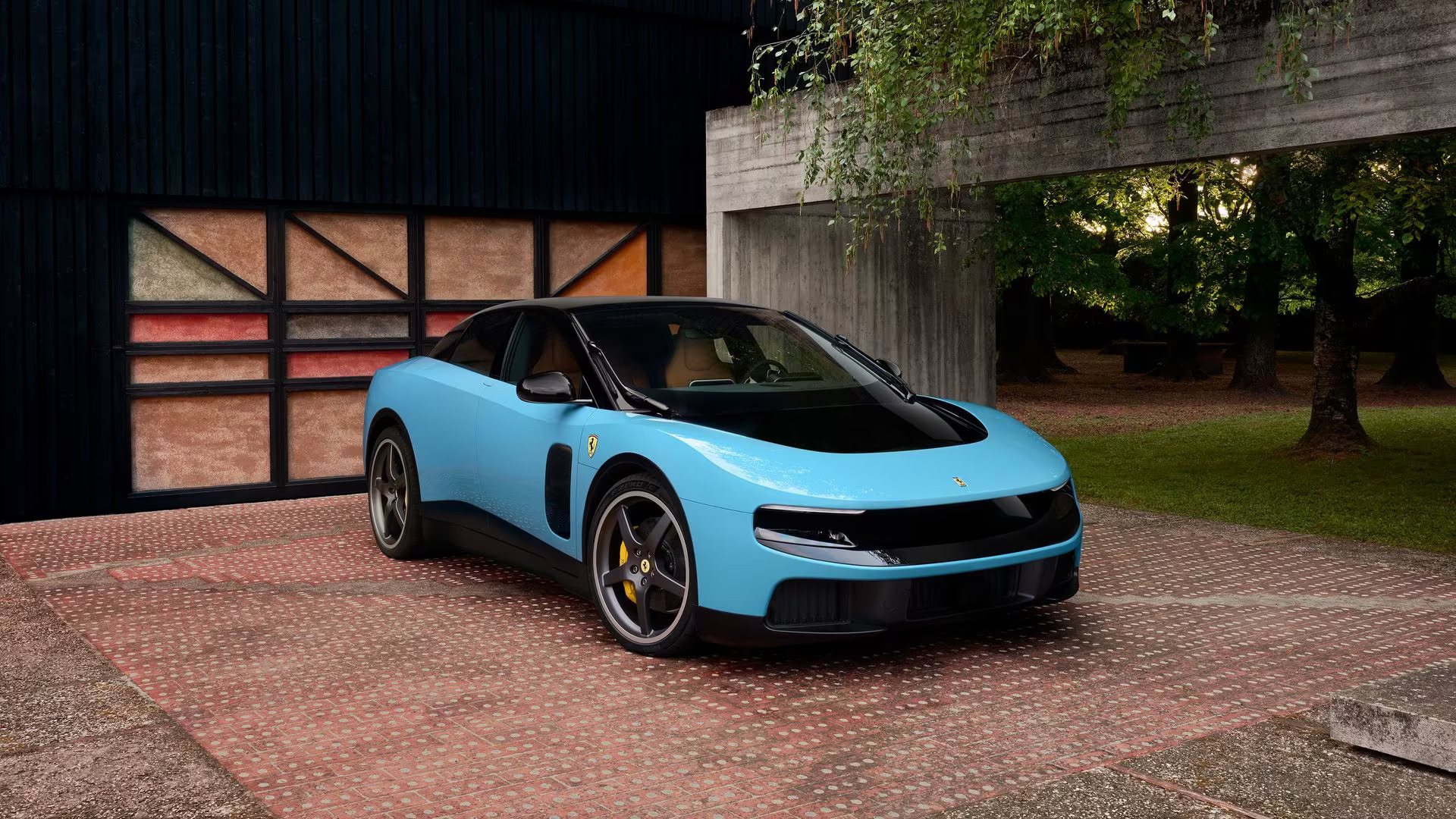
The central tension in any title partnership is the balance between revenue and brand control. The Ferrari name carries enormous equity, and any addition to it risks reshaping how the team is perceived. By choosing a single, established technology brand, and by integrating the partner into the team's identity rather than scattering logos across available surfaces, Ferrari attempts to keep the arrangement coherent. The new identity is presented as a unified Scuderia Ferrari HP brand, with a refreshed look introduced at Miami, rather than as a Ferrari livery with a sponsor attached.7
The debut at the Miami Grand Prix gives the change a clear public starting point.7 Launching a new team name and visual identity at a high-profile event, in a key commercial market for both companies, frames the partnership as a fresh chapter rather than a quiet contract renewal. The choice of venue is itself a branding decision, placing the rollout where attention is highest.
The Scuderia Ferrari HP partnership shows how a heritage brand manages the modern economics of elite sport. Ferrari protects the scarcity and prestige of its name across its road cars and its wider business, yet in Formula 1 it accepts that a title partner is part of how the sport is funded and presented. The decision is less a departure than a careful negotiation, allowing a major technology brand into the most visible part of the team's identity while keeping the Ferrari name, and the prancing horse, firmly at the centre of everything the team stands for.
Written with AI assistance, edited by a human. Find out more about our Use of AI.
1. HP Inc., "Ferrari and HP Announce a Title Partnership", 24 April 2024, for the announcement of the multi-year title partnership on that date and the resulting change to the formal name of the Formula 1 team, for the new name and the HP logo appearing from the Miami Grand Prix of 3 to 5 May 2024, for the agreement extending across the Scuderia Ferrari Esports team, the Ferrari Esports series and the Scuderia Ferrari car in the F1 Academy series, for the HP hardware and services named in the release as adaptive PCs and devices, collaboration products and services and printing capabilities, and for both companies framing the deal around sustainable innovation and performance rather than logo placement. https://www.hp.com/us-en/newsroom/press-kits/2024/scuderia-ferrari-hp.html
2. Ferrari, "Ferrari and HP announce a Title Partnership", 24 April 2024, for the Ferrari side of the same announcement on that date, for the scope of the agreement across the Formula 1 team, the Scuderia Ferrari Esports team and the Scuderia Ferrari car in the F1 Academy series, and for both companies presenting the partnership in terms of shared values, innovation, performance and a sustainable future. https://www.ferrari.com/en-EN/corporate/articles/ferrari-and-hp-announce-a-title-partnership-corporate
3. Autosport, "Ferrari announces HP as new F1 team title sponsor", 24 April 2024, the day of the announcement, the page itself carrying no rendered date line; off whitelist and used for corroboration only, for the deal being multi-year and taking effect from the Miami Grand Prix, and for the technology HP supplies to the team, described there as computers, printers, hardware and conferencing technology. https://www.autosport.com/f1/news/ferrari-announces-hp-as-new-f1-team-title-sponsor/10602728/
4. Goodwood Road and Racing, Simon Ostler, "Scuderia Ferrari announces title partnership with HP", 24 April 2024; off whitelist and used for corroboration only, for the HP branding appearing on the cars, the team kit and the driver overalls from the Miami Grand Prix, and for Ferrari using HP products and services throughout its own facilities. https://www.goodwood.com/grr/f1/scuderia-ferrari-announces-title-partnership-with-hp/
5. Wikipedia, "Scuderia Ferrari", consulted on 18 September 2026, for the sequence of entrant names: Scuderia Ferrari Marlboro from the 1997 season after Philip Morris moved its Marlboro brand from McLaren, the plain Scuderia Ferrari name carried from 2011 through the 2010s and early 2020s, the Mission Winnow branding used on and off from 2018 and dropped after the 2021 season, and Scuderia Ferrari HP from the 2024 Miami Grand Prix. https://en.wikipedia.org/wiki/Scuderia_Ferrari
6. RaceFans, Keith Collantine, "Ferrari drops 'Marlboro' from official team name", 8 July 2011; off whitelist and used for corroboration only, added during the footnote retrofit, for Marlboro being removed from the official team name in July 2011, the team reverting to Scuderia Ferrari while the sponsorship itself continued. https://www.racefans.net/2011/07/08/ferrari-drops-marlboro-official-team/
7. HP Inc., "Scuderia Ferrari HP Debuts New Team Name and Livery at Miami Grand Prix", 1 May 2024, for the new team name and a new livery being presented together at the Miami Grand Prix as the public debut of the Scuderia Ferrari HP identity, the livery shown there celebrating the historic Ferrari colours Azzurro La Plata and Azzurro Dino across the cars, suits, shoes, gloves and helmets. https://www.hp.com/us-en/newsroom/blogs/2024/hp-ferrari-miami-grand-prix.html