
A brand that needed a story, not an apology
Samsung entered 2017 with a reputational problem rather than a product one. The Galaxy Note 7 had been recalled twice and then discontinued after battery failures, an episode that cost the company an estimated $7 billion in market value and, more damagingly, put the word Samsung next to the word fire in headlines worldwide.
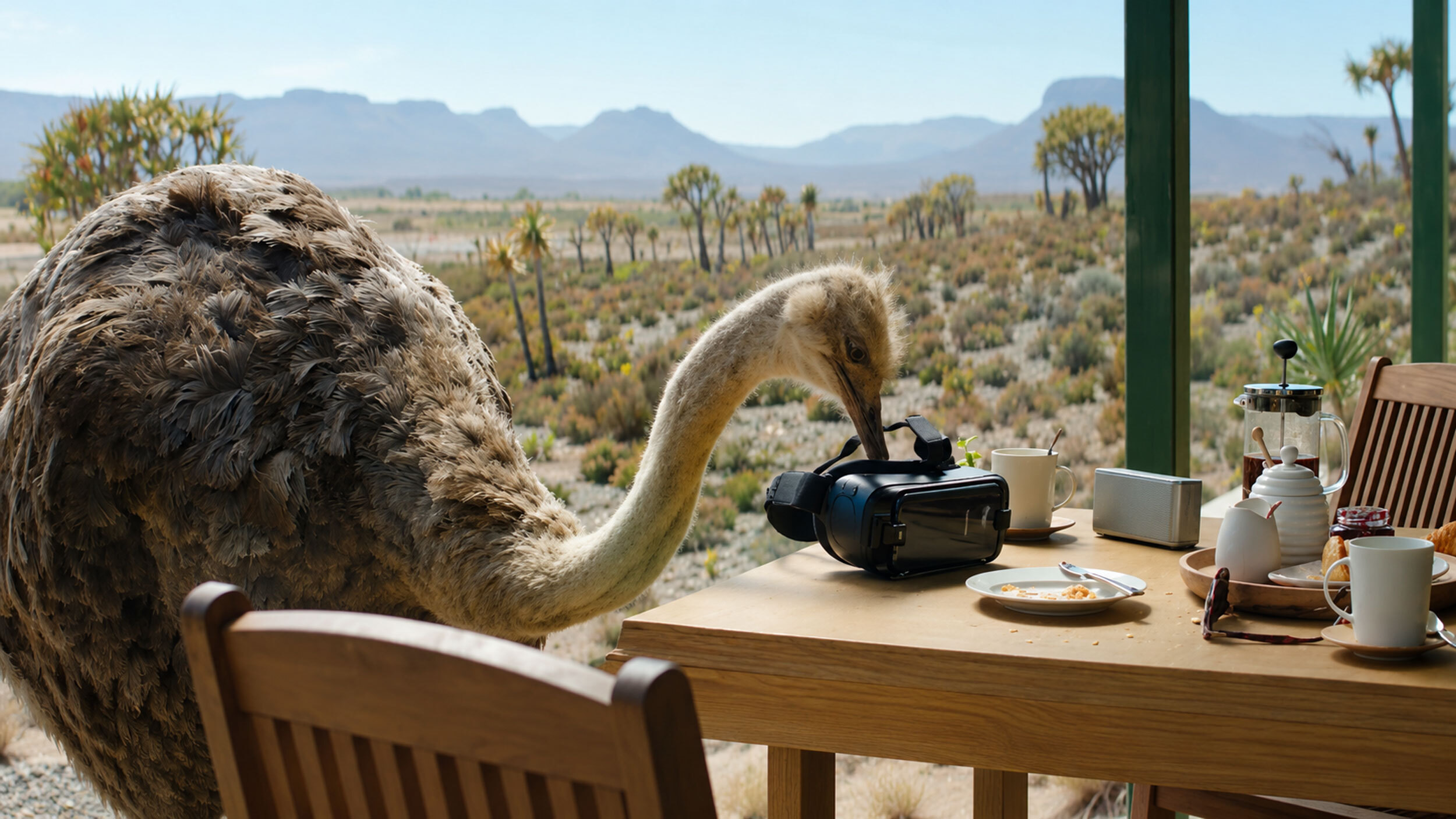
The response was not a corrective campaign. In March 2017 Samsung released a 90-second film called Ostrich, made by Leo Burnett Chicago, to launch the Galaxy S8 under the brand platform Do What You Can't. The film does not mention the recall, does not apologise and barely shows the phone. It tells the story of a flightless bird that puts on a virtual reality headset, experiences flight, and then teaches itself to fly.
How it was made
Matthijs van Heijningen directed the film through the production company MJZ, with visual effects and colour grading by MPC. Leo Burnett's creative leadership included global chief creative officer Mark Tutssel, US chief creative officer Britt Nolan, and senior vice president creative directors Colin Selikow and Vince Cook. The soundtrack is Elton John's "Don't Let the Sun Go Down on Me", and sound work came from The Elements Music and Sound.
The ostrich itself is a computer-generated character, and the craft investment shows. MPC creative director Michael Gregory described the first version he saw as a turntable on black with a test applied so that the feathers moved, and called the result utterly amazing. Matt Blitz, then a senior vice president at Leo Burnett, noted the departure from Samsung's usual register: Samsung, he said, is not a brand that typically uses mascots or computer-generated characters like this.
Source: M+AD Youtube
The strategy behind the bird
Do What You Can't had already been established as Samsung's global brand platform. The Ostrich film gave it a story simple enough to travel without translation, which is precisely the requirement for a company selling in essentially every market. Leo Burnett's global strategy director Christopher Bridgland framed it in those terms: no matter the country, where you are from or what language you speak, you can connect with the film emotionally.
The strategic move is worth naming. A brand recovering from a safety failure has two conventional options, contrition or a change of subject. Samsung took a third, restating what the brand claims to be for. The ostrich is an animal defined by a limitation, and the film argues that technology is what dissolves limitations. The Note 7 is never referenced, but the platform answers the question the recall raised, which is whether Samsung's ambition had outrun its competence, by reasserting the ambition rather than retreating from it.
Choosing an animal rather than a person was also a practical decision for a global brand. A human protagonist carries nationality, age and class, all of which have to be either localised or accepted as a compromise in every market. A computer-generated bird carries none of that. It is the same character in Seoul and in São Paulo, which is why a film with no dialogue and one licensed song could run essentially unmodified worldwide.
The product tie-in is light by design. The Gear VR headset appears as the device that shows the bird what flight looks like, and the Galaxy S8 launch sat behind the film with a separate unboxing video for viewers who wanted the specifications. The brand film and the product film were kept apart, which let Samsung run one message for the brand and another for the category. The Galaxy S8 had a specification argument to make, and that argument was made where buyers look for it. The film was left free to say nothing measurable at all.
The record it set
Ostrich became the most awarded campaign of 2017 at Cannes Lions, and the bird became the most awarded advertising character of that year. Ad Age placed it ninth in its best television and film work of 2017. Samsung's brand metrics recovered over the following period, and the campaign is routinely cited as a component of that recovery, though attribution to a single film is never clean.
The longer significance is structural. Samsung's advertising had for years been organised around product demonstration and comparison, frequently in direct contrast with Apple. Do What You Can't moved the argument up a level, from what the device does to what the owner does with it, and Ostrich is the clearest expression of that shift. It is also a reminder that platform work carries risk: a 90-second film with no product on screen for most of its running time is a bet that the brand is worth more than the spec sheet.
Written with AI assistance, edited by a human. Find out more about our Use of AI.