Five beers and a bottle of ketchup
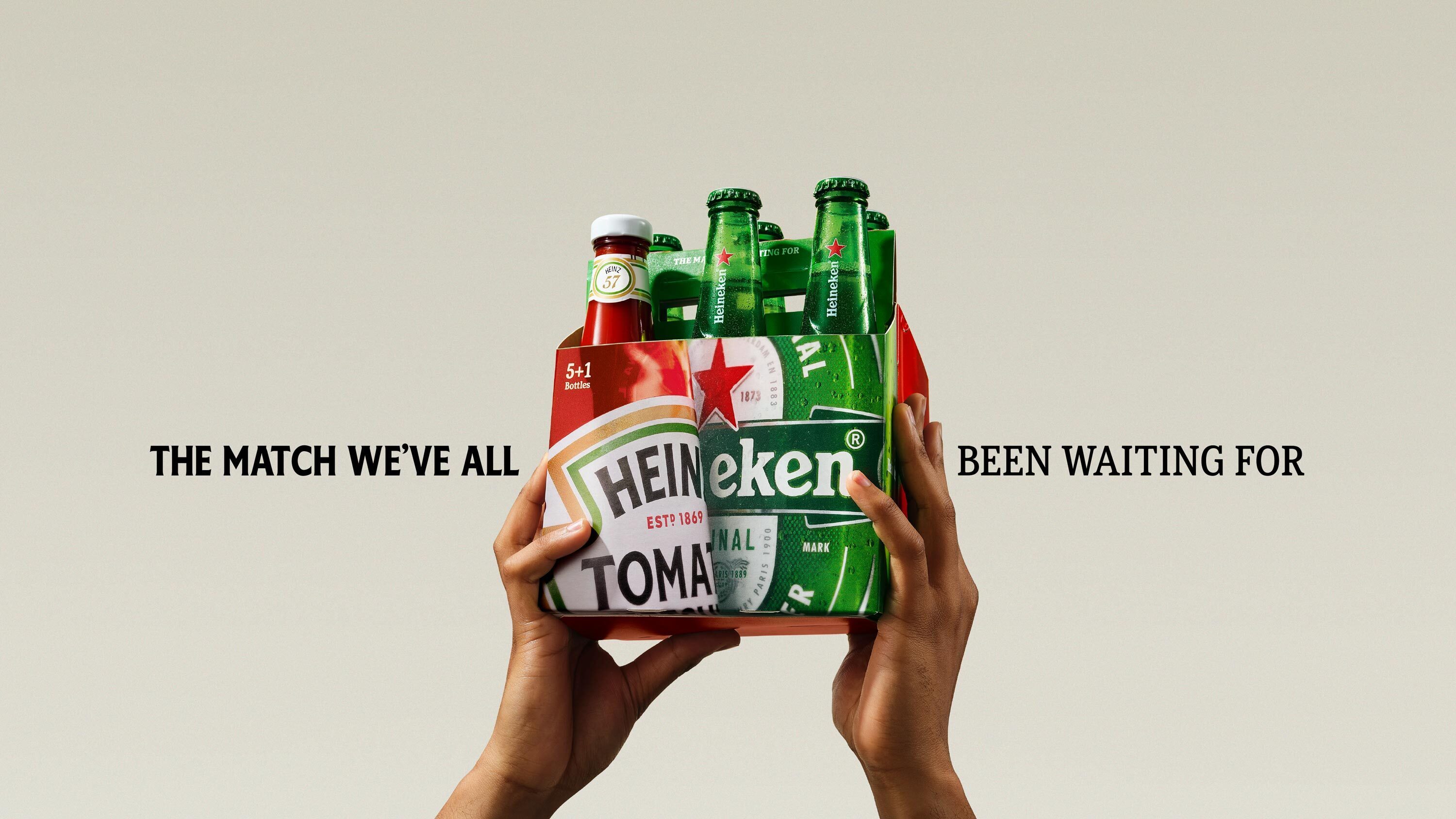
Heinz and Heineken announce their first official collaboration on 10 June 2026.1 The two brands introduce a limited-edition six-pack that pairs five bottles of Heineken lager with one bottle of Heinz Tomato Ketchup, available in a strictly limited run over the summer.1 The campaign carries the line "The match we've all been waiting for", a football reference timed to the opening of the FIFA World Cup 2026 in North America.1, 2 The announcement appears on the Heineken company newsroom in Amsterdam and, almost simultaneously, as a collaborative post on both brands' Instagram accounts, where the same image lands on each grid at once.1, 3
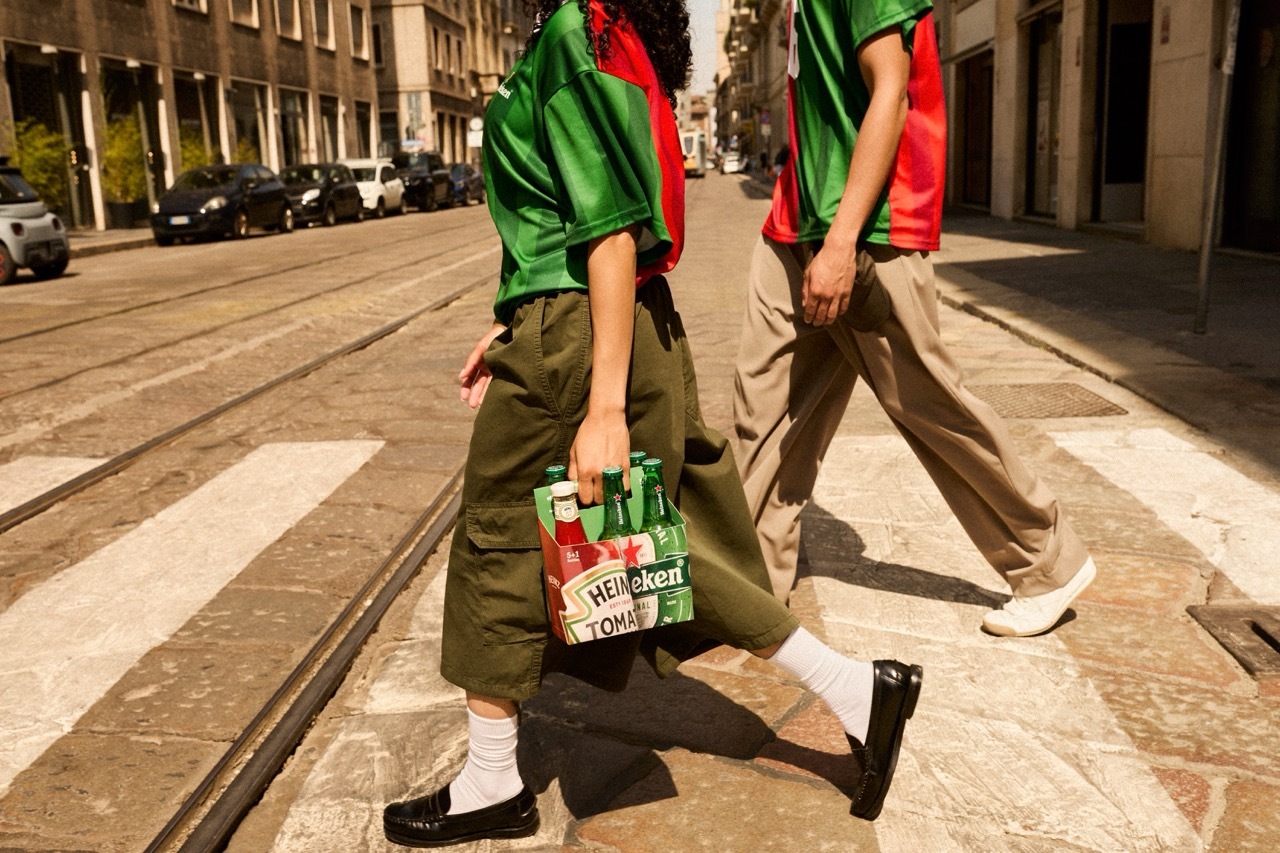
The release frames the pack as the formalisation of a relationship that consumers have maintained for generations.1 According to the announcement, the two brands have appeared side by side for more than 150 years, around tables, in front of screens and at events.1 The six-pack turns that familiarity into a single image: five green bottles where shoppers expect them, and a red ketchup bottle in the sixth slot.
"For 150 years, HEINZ and Heineken have been part of the moments that bring people together. This summer, we're making it official. From the irrational love that inspires our fans to go 'all in' to our shared commitment to quality, this partnership may be our most rational one yet," says Karen Owen, Chief Growth Officer at Heinz.1 Nabil Nasser, Global Head of Heineken Brand, frames the pack in similar terms: "This collaboration is a reminder that even the most unlikely pairings can feel completely natural when they're part of shared moments; it's the match we've all been waiting for... as unexpected as it might be."1
Two heritage marks, one fridge
Gerard Adriaan Heineken founded his brewery in Amsterdam in 1864; Henry J. Heinz started his food business in Sharpsburg, Pennsylvania, in 1869.4, 5 Both companies have since turned a single colour into a proprietary asset. Heineken owns the green bottle, the red star and the smiling letter e of its wordmark; Heinz owns the keystone label and a shade of red so closely tied to the product that the brand routinely builds entire campaigns on it.4, 5, 6 The six-pack stages exactly this contrast. Red against green, condiment against lager, the pack reads as a co-branding statement without a single line of explanatory copy.
Created in-house, launched on social
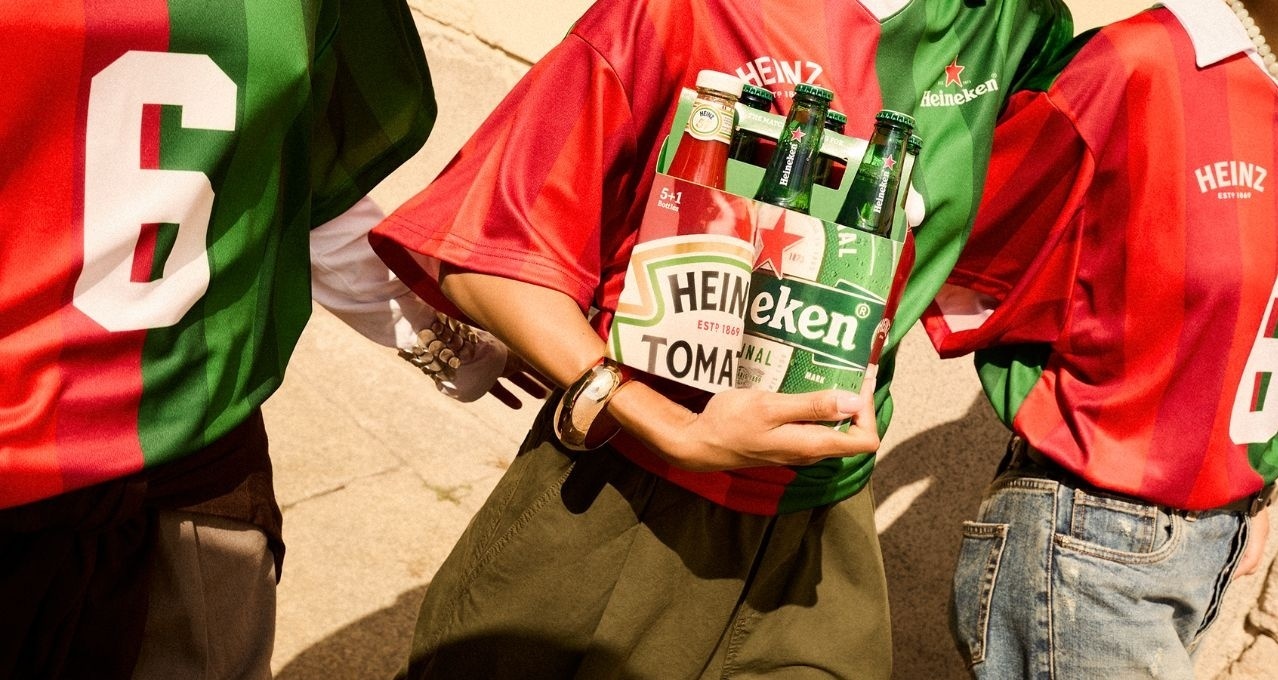
The campaign is created by The Kitchen, the in-house agency of Kraft Heinz, in partnership with LePub Milan, the Publicis Groupe agency that leads global creative duties for the Heineken brand, and the PR agency The Romans.2, 7 Photography by Paolo Zerbini shows groups of friends in split red-and-green jerseys carrying the pack through city streets, an image that anchors the creative in football culture without showing a single match scene.2
Todd Kaplan, Chief Marketing Officer of Kraft Heinz North America, describes the logic in a LinkedIn post: "After 150 years, it's time to make the relationship official."2 The best ideas, he adds, celebrate behaviours that have been part of consumers' lives for generations.2 Alongside the physical pack, the brands promote a DIY edition, an open invitation to buy both products separately and assemble the six-pack at home.3 The mechanic costs nothing and extends the campaign to every retailer that stocks both brands.
World Cup timing without a sponsorship
The launch coincides with the FIFA World Cup 2026, which brings 48 teams and 104 matches to 16 host cities across the United States, Canada and Mexico.2, 8 Neither brand is an official tournament sponsor.2 The campaign relies instead on its wordplay and its colours to signal the occasion, a positioning that keeps both companies clear of sponsorship fees while placing them inside the tournament conversation. The commercial context is substantial. Research firm Numerator projects roughly 7.5 billion US dollars in consumer spending around the tournament, reports that 89 percent of intended viewers expect to make a purchase tied to watching the games, and ranks alcoholic beverages among the top planned categories at 38 percent.2
Packaging as the entire campaign
The collaboration involves no new product and no elaborate mechanic. A single substitution carries the whole idea: one bottle swapped for another, photographed once, distributed everywhere. The pack works as packaging design, brand wordplay and social media creative at the same time, which makes it one of the most economical co-branding executions of the season.
The arrangement also illustrates why co-branding between non-competitors travels so well. Heineken and Heinz never meet in a product category, but they meet constantly in shopping baskets, at barbecues and at watch parties. The six-pack formalises a pairing that household behaviour established long before either marketing department did, and both brands gain access to the other's audience through a single shared object. The Heinz x Heineken six-packs are available in a strictly limited run through the summer.1
Written with AI assistance, edited by a human. Find out more about our Use of AI.
1. The Heineken Company, "The match we've all been waiting for: HEINZ and Heineken finally make it official", 10 June 2026, for the announcement of the first official collaboration on that date, the limited-edition six-pack pairing five Heineken beers with one bottle of HEINZ Tomato Ketchup, the "strictly limited run this summer" wording that appears both mid-release and as the closing line, the campaign line "The match we've all been waiting for" as the headline of the release, the Amsterdam newsroom as the place of publication, the framing of the pack as the formalisation of a pairing consumers have long maintained, the more than 150 years of appearing side by side "around tables, in front of screens, at events, and beyond", the quoted words and job title of Karen Owen, Chief Growth Officer at HEINZ, and the quoted words and job title of Nabil Nasser, Global Head of Heineken Brand, whose quotation in the release opens with a further sentence, "Heineken has always been about sparking fresh connections", that the body does not reproduce. https://www.theheinekencompany.com/newsroom/the-match-weve-all-been-waiting-for-heinz-and-heinekenfinally-make-it-official/
2. DesignRush, Janet Osayande, "Heinz, Heineken Make Their 2026 World Cup Match Official", undated on the page, retrieved 17 September 2026, off whitelist and used for corroboration only, for the campaign being timed to the FIFA World Cup 2026 and running under the line "The match we've all been waiting for", for the credits naming The Kitchen as the in-house agency of Kraft Heinz working in partnership with LePub Milan and the PR agency The Romans, for the Paolo Zerbini photography, for the Todd Kaplan quotation "After 150 years, it's time to make the relationship official" having been posted on LinkedIn, for his job title as Chief Marketing Officer of Kraft Heinz North America and his further remark that the best ideas celebrate behaviours that have already been part of consumers' lives for generations, for the tournament figures of 48 teams, 104 matches and 16 host cities in North America, for neither brand being an official tournament sponsor and the campaign staying clear of any official sponsorship fee, and for the Numerator research cited there, namely roughly 7.5 billion US dollars in projected consumer spending, 89 percent of intended viewers expecting to make a purchase tied to watching the games, and alcoholic beverages at 38 percent among the top planned purchase categories. https://news.designrush.com/heinz-heineken-world-cup-collaboration
3. Famous Campaigns, James Herring, "Heinz and Heineken: the match we've all been waiting for?", 9 June 2026, off whitelist and used for corroboration only, for the campaign having gone live as a collab post on both brands' Instagram accounts with "the same image landing on Heinz and Heineken's grids at once", and for the DIY edition, glossed there as "brand speak for 'buy both and assemble it yourself'". https://www.famouscampaigns.com/2026/06/heinz-and-heineken-the-match-weve-all-been-waiting-for/
4. Wikipedia, "Heineken", retrieved 17 September 2026, for Gerard Adriaan Heineken having bought the De Hooiberg brewery in Amsterdam in 1864, the act the body describes as founding his brewery there, and for the beer being typically sold in a green bottle with a red star. https://en.wikipedia.org/wiki/Heineken
5. Wikipedia, "Heinz", retrieved 17 September 2026, for Henry J. Heinz having begun packing foodstuffs on a small scale at Sharpsburg, Pennsylvania, in 1869, and for the keystone logo having been based on that of Pennsylvania, the keystone state. https://en.wikipedia.org/wiki/Heinz
6. Heineken Collection Foundation, "The Heineken Label", undated, retrieved 17 September 2026, for the smiling letter e of the wordmark, which the foundation attributes to Alfred Heineken replacing the capitals with rounded lower case letters and giving the e a small backward slant. https://www.heinekencollection.com/en/stories/heineken-label
7. The Heineken Company, "HEINEKEN announces a new creative agency model with Publicis Groupe and the consolidation of media buying with dentsu", 4 November 2020, for LePub being the creative agency model built with Publicis Groupe to hold global creative and brand experience duties for the Heineken brand, noting that the release places its headquarters in Amsterdam with a team across Amsterdam and Milan rather than in Milan alone. https://www.theheinekencompany.com/newsroom/heineken-announces-a-new-creative-agency-model-with-publicis-groupe-and-the-consolidation-of-media-buying-with-dentsu/
8. Wikipedia, "2026 FIFA World Cup", retrieved 17 September 2026, for the tournament being the first with 48 teams, for the increase in the total number of matches from 64 to 104, and for it being jointly hosted by 16 cities, 11 in the United States, 3 in Mexico and 2 in Canada. https://en.wikipedia.org/wiki/2026_FIFA_World_Cup