
A search company claims the front door of the web
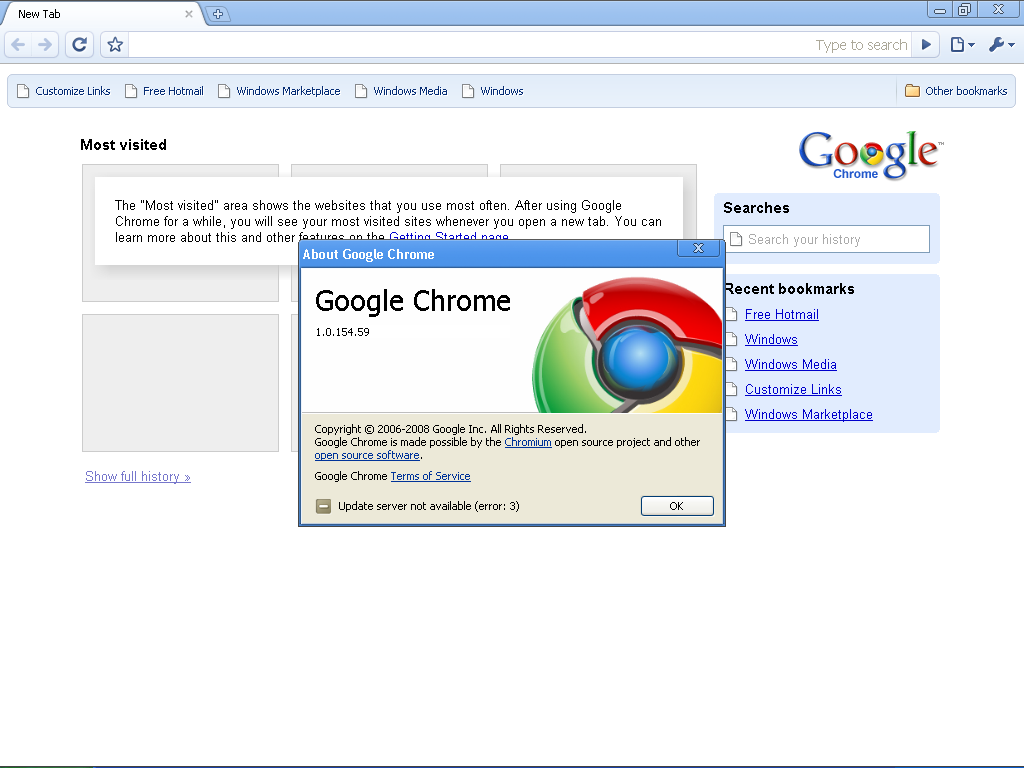
On 2 September 2008, Google released the first beta of Chrome, a web browser for Windows. It was the company's first entry into a category it had until then left to others, and it placed the Google name on the most contested piece of software on the desktop. Internet Explorer held roughly 70 per cent of the market at the time, Firefox most of the rest, and few observers expected a search company to change that arrangement.
The launch itself was understated. A press mailing leaked a day early, Google moved the announcement forward, and the product was explained to developers in a 38-page comic by Scott McCloud rather than through a conventional campaign. The quiet packaging concealed one of the most consequential brand decisions in the company's history.
Why a search company needed a browser
The reasoning was direct. Google's revenue depended on people reaching its search engine, and the browser was the layer that decided how they got there. As long as that layer belonged to Microsoft or to Mozilla, Google's access to its own users ran through software it did not control, and the default search field had to be bought from partners. Owning a browser meant owning the point of entry.
What looked like a product decision was equally a brand decision. A company known for a white page with a single input field was asserting that the way into the web was its territory, and that its name could carry infrastructure software rather than just services. Chrome's market share climbed from roughly one per cent at launch to clear dominance on the desktop within a few years, which turned that assertion into fact.
A product with its own face
Google gave the browser an identity that stood deliberately apart from the corporate brand. The name Chrome had been an internal code name, associated with fast cars, and it survived partly as a joke: in interface design, chrome is the term for the visible framing around content, and one of the browser's stated goals was to reduce it as far as possible. Google kept a name that described the thing the product was trying to eliminate.
The visual identity followed the same logic. The original Chrome mark was a segmented sphere in the four Google colours, closer to a button on a machine than to a software icon, and it borrowed nothing from the company's wordmark. Chrome was positioned from the first day as a product with its own face rather than as a Google feature, which is the decision that made everything that followed possible.
Open source as brand strategy
Alongside the browser Google released Chromium, the open-source project from which Chrome is built. The split allowed Google to claim contribution to the open web while retaining a branded, proprietary product with its own updater, its own account integration and its own commercial purpose. It also meant that other companies could build browsers on Google's engine, which over the following fifteen years most of them did. The engine spread under the open name while the brand stayed with Google.
The brand that outgrew the browser
The more interesting outcome for brand architecture was what Google did with the name afterwards. Chrome became a platform identity rather than a browser identity. ChromeOS followed in 2011, Chromebook became the name for a category of laptop sold by Acer, Samsung, HP, Lenovo and others, and Chromecast arrived in 2013 as a streaming device with no browser in it at all.
This was a substantial piece of naming work. Google had created a sub-brand strong enough to endorse hardware built by third parties, which is a role usually reserved for a corporate name. Chromebook in particular functions the way Intel's Inside programme once did: a Google-owned mark placed on other manufacturers' products as a sign of compatibility and quality.
The extension was not without cost. Naming a laptop after a browser required the public to accept that Chrome meant a way of working rather than a piece of software, and in the early years Chromebooks were widely misunderstood as machines that could only browse. Google spent several years and a good deal of education budget correcting that impression in schools, where the category eventually found its market.
Seventeen years on, Chrome is the most widely used piece of consumer software Google has ever released and the only product name in the portfolio that has grown into a family of its own. It began as a browser launch that much of the industry read as a sideshow, and it ended with Google owning the window through which most of the world sees the web.
Source: Google Chrome Youtube
Source: Google Chrome Youtube
Written with AI assistance, edited by a human. Find out more about our Use of AI.