
A small deal with enormous consequences
In July 2005, Google quietly acquired a little-known start-up called Android Inc. for a reported sum of around 50 million US dollars. The purchase became public the following month, in August 2005, and at the time it attracted little attention. Android had no product on the market, minimal revenue and only a handful of employees. Measured against the acquisitions that would follow, it was a modest transaction. Measured by its eventual impact, it was one of the most valuable brand bets in the history of technology.
Android Inc. had been founded in 2003 by Andy Rubin, Rich Miner, Nick Sears and Chris White. Its original ambition was a smarter operating system, initially conceived for digital cameras before pivoting toward mobile phones. Google's leadership recognised that mobile devices were poised to become the primary way people accessed the internet, and that owning the software platform beneath them would be strategically decisive. Buying Android was a way to secure a foothold in that future before it arrived.
From acquisition to platform brand
For a few years after the purchase, Android developed largely out of public view. The first Android-powered phone reached the market in 2008, and from there the platform grew with remarkable speed. Rather than positioning Android as a closed, single-manufacturer product, Google made it available to a wide range of device makers, an open approach that allowed the platform to spread across phones from many brands and price points around the world.
That distribution strategy turned Android from an acquired start-up into a global platform brand. Over time it came to power billions of devices, becoming the most widely used mobile operating system in the world. The name Android, once known only to a small circle, became a household term, familiar to consumers who had no idea it had begun as a tiny company Google bought almost in passing.
An identity of its own
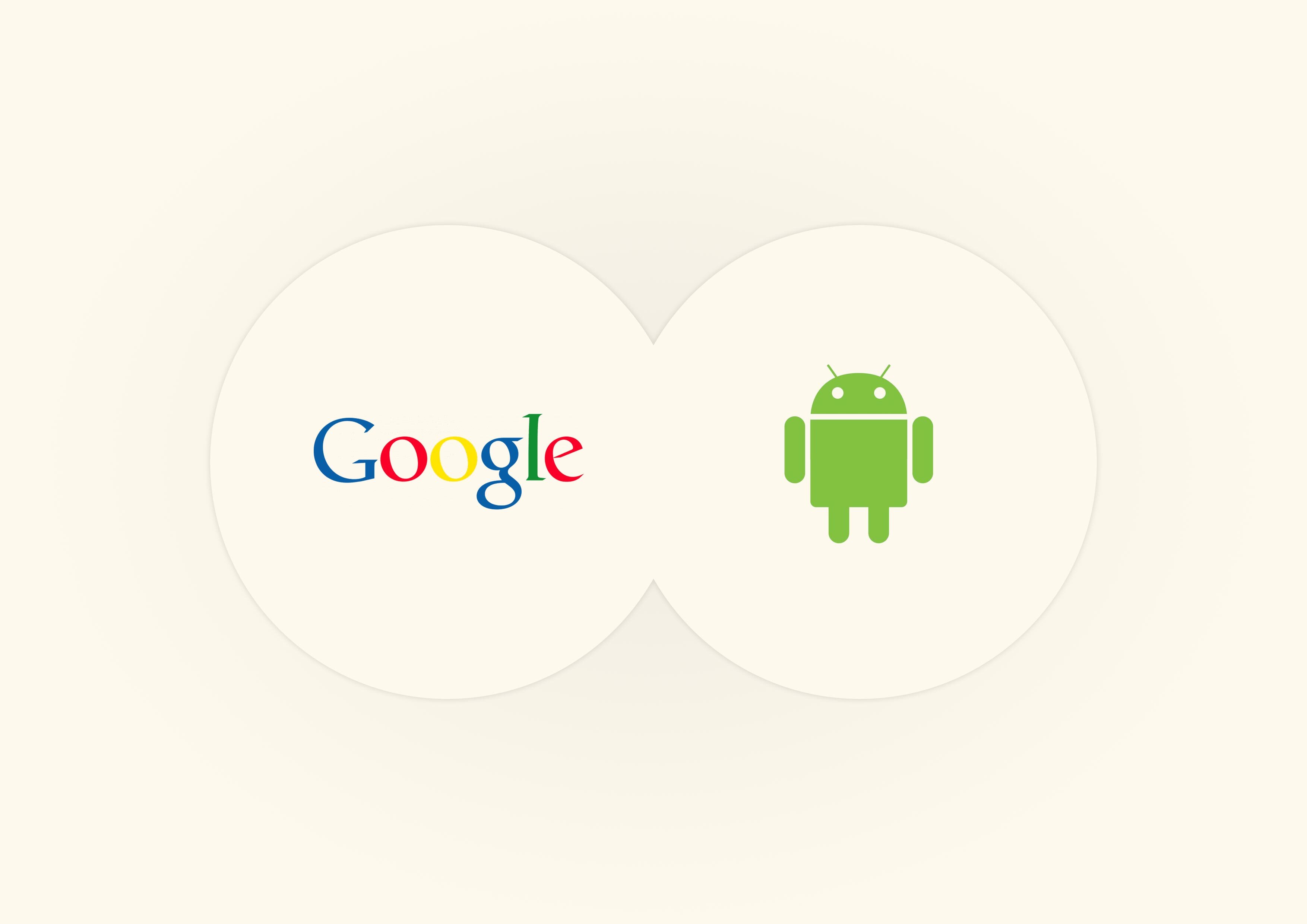
What makes Android notable as a branding story is that Google gave it a distinct identity rather than presenting it simply as Google software. Android developed its own name, its own visual language and, most memorably, its own mascot, a friendly green robot that became one of the most recognisable symbols in consumer technology. The robot, often referred to as the Bugdroid, was designed to be open and freely usable, reinforcing the platform's collaborative, approachable character.
This separate identity served a clear purpose. Android needed to appeal to many different device manufacturers, developers and mobile operators, some of whom competed directly with Google in other areas. A brand that felt like a shared, open platform rather than a purely Google-owned product was easier for those partners to adopt and build upon. Android could be co-branded with manufacturers and carriers in ways that a strictly Google-labelled product could not.
The approach fit a pattern in how Google managed its portfolio. Much as it kept YouTube distinct after acquiring it in 2006, Google allowed Android to operate as its own brand while integrating it strategically behind the scenes. Both cases reflected an understanding that a strong, independent brand can reach places a corporate masterbrand cannot, and that ownership does not require absorption.
The return on a modest bet
The financial and strategic return on the Android acquisition is difficult to overstate. A purchase valued in the tens of millions became the foundation of a platform running on billions of devices and a central pillar of Google's presence in mobile computing, from apps and services to advertising and its wider ecosystem. Few acquisitions in any industry have delivered a comparable ratio of cost to eventual value.
Seen from the present, the 2005 purchase of Android reads as a case study in identifying strategic value early and then nurturing it as a brand. Google did not simply buy a piece of technology; it acquired the seed of a platform, gave it a distinct and approachable identity, and let that identity grow into one of the most recognised names in the world. The quiet deal that drew almost no notice in 2005 became one of the defining moves of the mobile era.
Written with AI assistance, edited by a human. Find out more about our Use of AI.