
When a brand becomes a biography
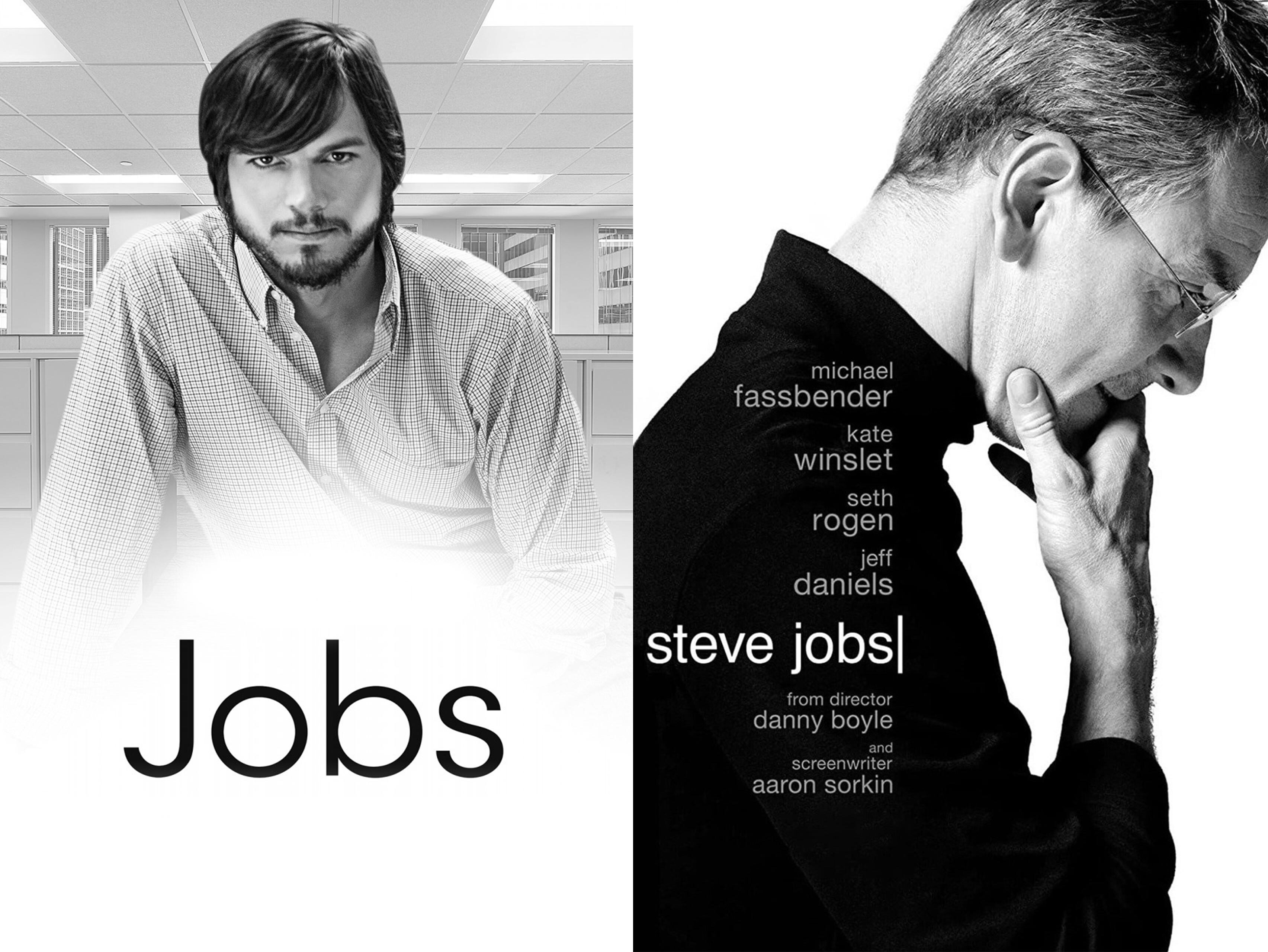
Few company founders have been dramatised in their own lifetimes, and fewer still twice within a decade. Steve Jobs was the subject of two major films, "Jobs," released in 2013 and directed by Joshua Michael Stern with Ashton Kutcher in the lead, and "Steve Jobs," released in 2015, directed by Danny Boyle from a screenplay by Aaron Sorkin, with Michael Fassbender as Jobs. That Hollywood returned to the same figure so quickly is itself a branding fact. Jobs had become inseparable from Apple, and to tell his story was to tell the story of the brand.
For a journal about branding, the two films are less interesting as cinema than as evidence. They show how a corporate identity can grow so large that it detaches from the products and attaches to a person. Apple did not commission either film, yet both traded on the meaning the company had built. The founder had become intellectual property in the cultural sense, a character the public felt it owned.
Two approaches to the same myth
The 2013 film took the conventional route of the biopic. It followed Jobs across decades, from the founding of Apple through his exile and return, and tried to compress a life into a single arc. Critics were largely unconvinced, and the film struggled at the box office. Its ambition was to explain the man by walking through his career in order, which left little room for the tension that made the story compelling.
The 2015 film chose the opposite structure. Adapted loosely from Walter Isaacson's authorised biography, it staged the story in three acts, each set backstage in the minutes before a major product launch: the Macintosh in 1984, the NeXT computer in 1988, and the iMac in 1998. Rather than narrate a life, it dramatised three moments and let the repetition reveal the character. The approach earned strong reviews and awards attention, including an Oscar nomination for Fassbender, even as it also disappointed commercially.
Product launches as the stage
The most telling branding detail is that the 2015 film built its entire structure around launches. The screenplay understood that Jobs's life, and Apple's identity, were organised by the ritual of the keynote. The drama did not happen in laboratories or boardrooms. It happened in the moments before Jobs walked on stage to present a machine to the world. That choice confirms how central the launch event had become to the Apple brand. Even a film about the man could not resist using the company's own signature format as its skeleton.
Both films leaned heavily on the founding mythology the company had cultivated since 1984, and both engaged with the period explored in our verse on Steve Jobs's return to Apple in 1997. The exile and comeback gave each screenplay its emotional spine. A brand's origin story, once it is strong enough, becomes public material that others retell for their own purposes.
The risk of the founder brand
The contrast between the two films illustrates a tension that every founder-led brand faces. When a company's meaning is carried by one person, that person becomes a story the world wants to tell, and the company loses control of the telling. Neither film was an Apple production, yet both shaped how millions understood the brand's history. The 2013 version flattened the myth, the 2015 version sharpened it, and Apple could do little but watch.
This is the quiet cost of building an identity around a founder. It creates enormous clarity while the founder is present and enormous exposure once the story passes into other hands. Apple has spent the years since Jobs's death working to distribute its identity across products, design, and values rather than a single figure, precisely so the brand cannot again be rewritten by an outside screenwriter.
What the two films leave
Taken together, the films are a record of how completely a brand and a biography had merged. One tried to honour the founder and faltered, the other reframed him and endured, and both proved that Apple's story had become part of the wider culture. For a company built on controlling its own narrative, the two films are a reminder that the most powerful brand stories eventually escape their authors and are told by everyone.
Source: Rotten Tomatoes Trailers Youtube
Source: Universal Pictures Youtube
Written with AI assistance, edited by a human. Find out more about our Use of AI.