Quick Facts
Review and key takeaways
Review
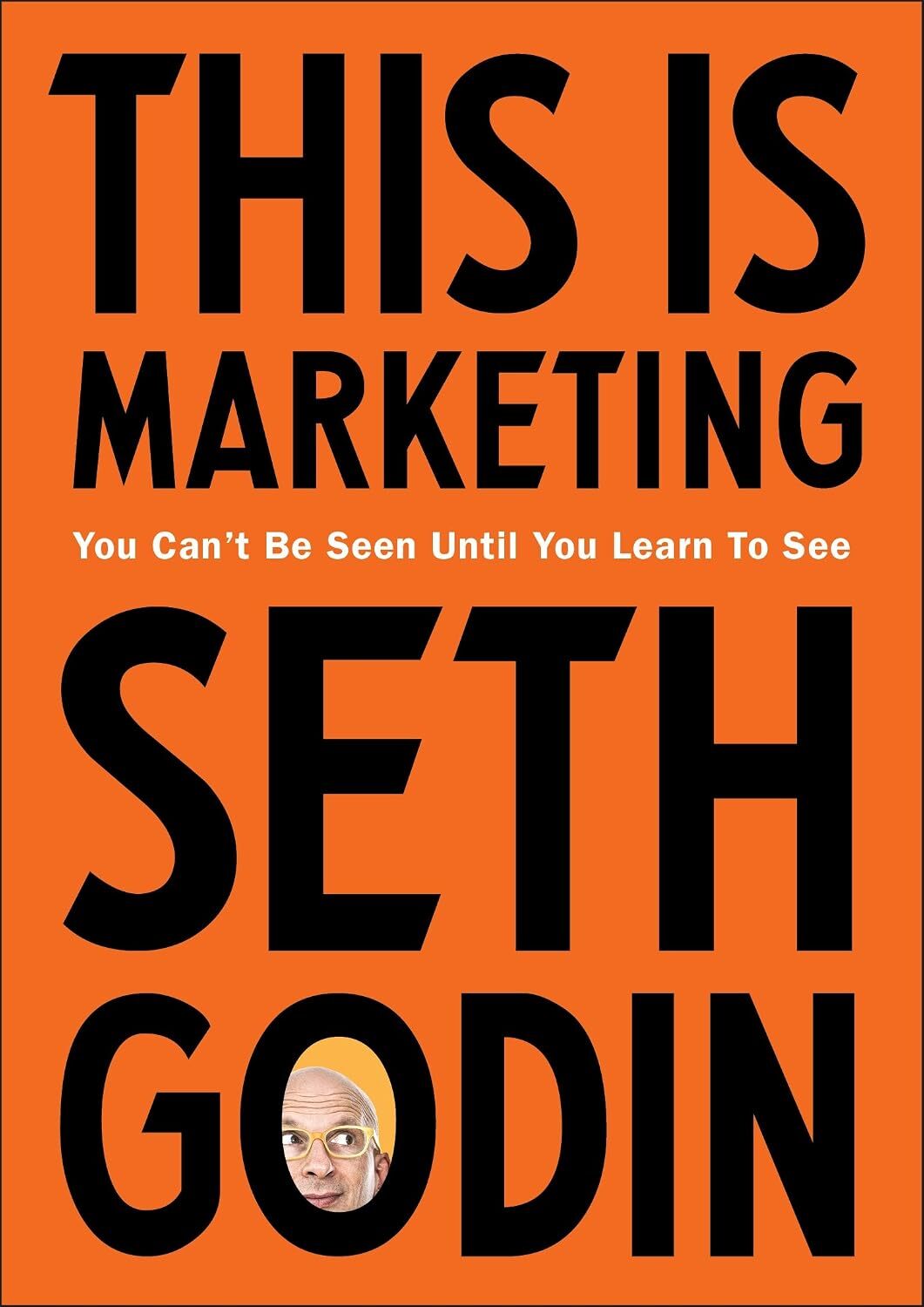
Seth Godin has spent decades writing about marketing, and This Is Marketing reads like the distillation of all of it. Its starting point is a defence of the discipline itself. Marketing, in the popular imagination, has become shorthand for interruption, manipulation and noise. Godin argues for a different definition. Marketing, as he describes it, is the generous act of helping someone solve a problem, of making change happen for a specific group of people who want it. The marketer is not a hustler pushing product but someone who sees an audience clearly enough to serve it. That optimistic, almost humane view of the profession is the book's foundation, and it is a welcome one.
From there, Godin narrows the focus. Instead of reaching everyone, a brand should seek its smallest viable market: the group of people it can genuinely matter to, and whose worldview it understands. His recurring phrase, "people like us do things like this", captures the idea that customers act less on features than on identity and belonging. A brand earns its place by fitting into a culture its audience already lives in, and then nudging that culture forward.
The book's most useful ideas concern what actually moves people. The first is tension. Godin argues that marketers create change by introducing a productive kind of tension, the feeling that something is missing or that others are already moving, which the product then resolves. Tension is not a trick; it is how forward motion begins. The second, and arguably the sharper insight, is status. People constantly navigate where they stand relative to others, whether through affiliation, the desire to belong to a group, or dominance, the desire to rise above one. Godin shows that many buying decisions are status decisions in disguise. For anyone working on brands, this is a lens that explains a great deal of consumer behaviour that feature lists and price comparisons never will.
Godin is also notably critical of marketing that lives entirely by its numbers. He draws a clear line between direct marketing, which is measurable and action-oriented, and brand marketing, which is not. Performance marketing has its place, but he warns against letting what is easy to measure crowd out what matters. Brand building works through consistency, trust and familiarity built over time, and its effect cannot be captured in a click-through rate. In an industry increasingly organised around dashboards, this argument for the value of unmeasurable brand work is one of the book's most important contributions.
Where the book is weaker is in its form. Godin writes in short, aphoristic sections, which makes it easy to read but occasionally loose in structure. Some ideas return several times, and readers looking for a step-by-step method will find principles rather than procedures. It is a book of perspective more than of frameworks, and it asks the reader to do the translation into practice.
That limitation is also its strength. This Is Marketing is less a manual than a reorientation. It reminds marketers why the work matters, who it is for and what really drives the people on the other side. Read as a corrective to metric-obsessed, attention-grabbing marketing, it is sharp and persuasive. Read alongside more operational books, it supplies the thinking that makes their tools worth using.
Key takeaways
Marketing is an act of generosity. Godin redefines the discipline as helping people make a change they want. Good marketers earn attention by being useful, not by interrupting.
Start with the smallest viable market. Trying to reach everyone leads to bland work. A brand gains traction by mattering deeply to a specific group whose worldview it understands.
Tension creates movement. Change begins when people feel a gap between where they are and where they could be. Marketing introduces that tension and the product resolves it.
Status drives decisions. Customers constantly weigh where they stand, through affiliation or dominance. Many purchases are really status choices, and brands that understand this understand their audience.
Not everything that matters can be measured. Performance metrics are useful, but brand building works through trust and familiarity over time. Letting dashboards decide alone undervalues the work that builds lasting brands.
Who should read this
This book is for marketers, brand strategists and founders who want to understand why marketing works, not just how to run campaigns. It is especially valuable for anyone working in a metrics-heavy environment who needs a clear argument for investing in brand. Readers seeking a structured method will find it light on process, so it pairs well with more practical books on messaging and positioning. As a short, thought-provoking read that changes how you look at your audience, it is well worth the time.
About the author