The originator of the blue jeans, building cultural authority through music, film, and the enduring symbol of the red tab since 1873.
15 Articles
Nike is the world's largest athletic footwear and apparel company, building the brand around elite performance, athlete partnerships, and a long-runni…
12 ArticlesThe rule that makes the campaign
The 2026 FIFA World Cup, hosted across the United States, Canada, and Mexico, runs on a strict principle known as the clean stadium rule.1 Venues have to remove, cover, or rename any branding that does not belong to an official FIFA sponsor, so that partners such as Adidas, Coca-Cola, and Qatar Airways hold exclusive visibility inside the tournament footprint.1, 2 The policy exists to protect what sponsors pay for and to limit ambush marketing, the practice of associating a brand with an event without buying the rights to it.1
This year the rule produces an unexpected result. Several brands that are not sponsors turn the restriction itself into their most effective marketing. According to media intelligence firm Meltwater, non sponsor brand collaborations generate close to double the engagement of official sponsors in the run up to the tournament, near 61 million engagements against 33 million.3, 4 The constraint, it turns out, is an invitation.
The cover-up is the message
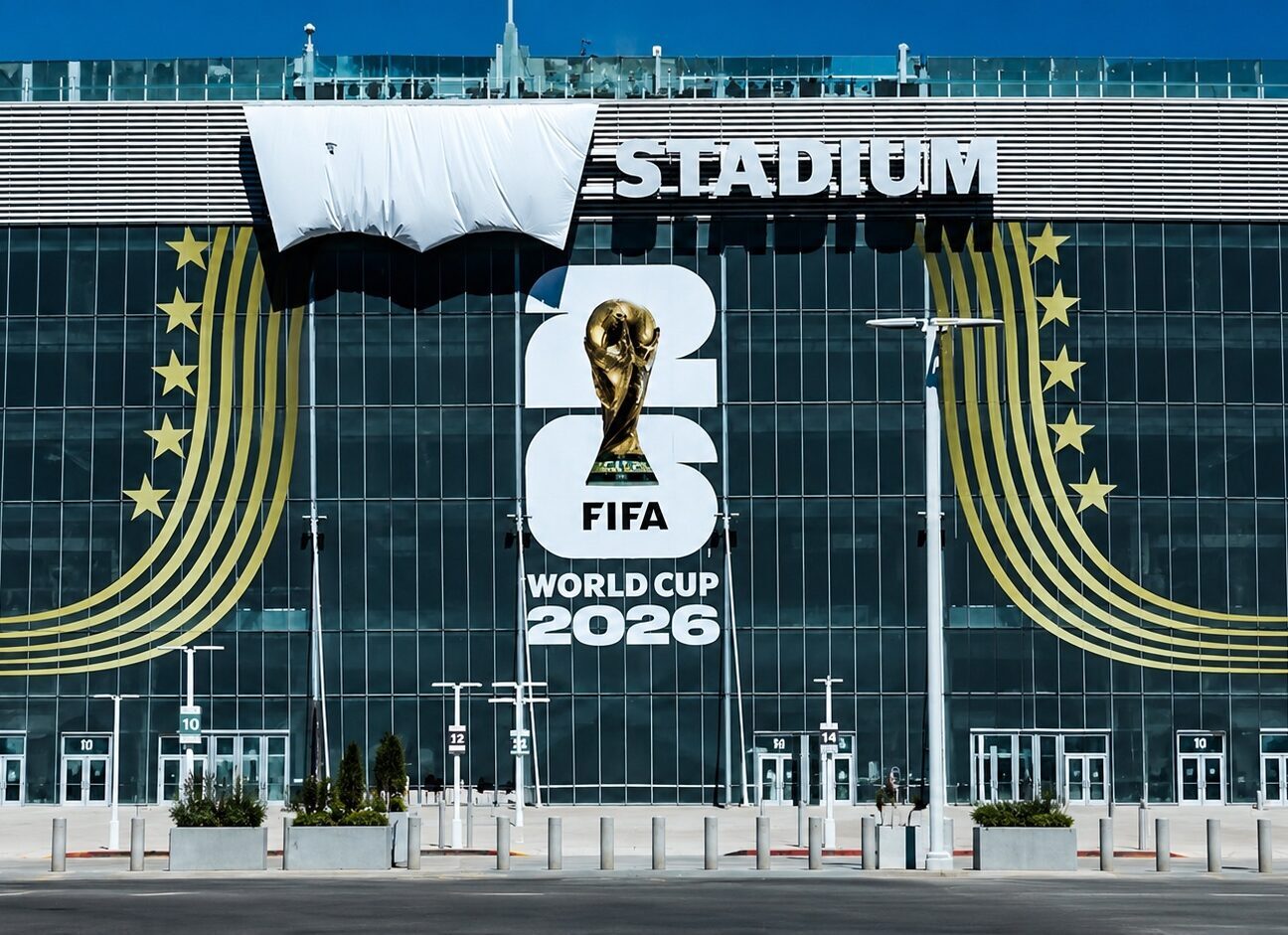
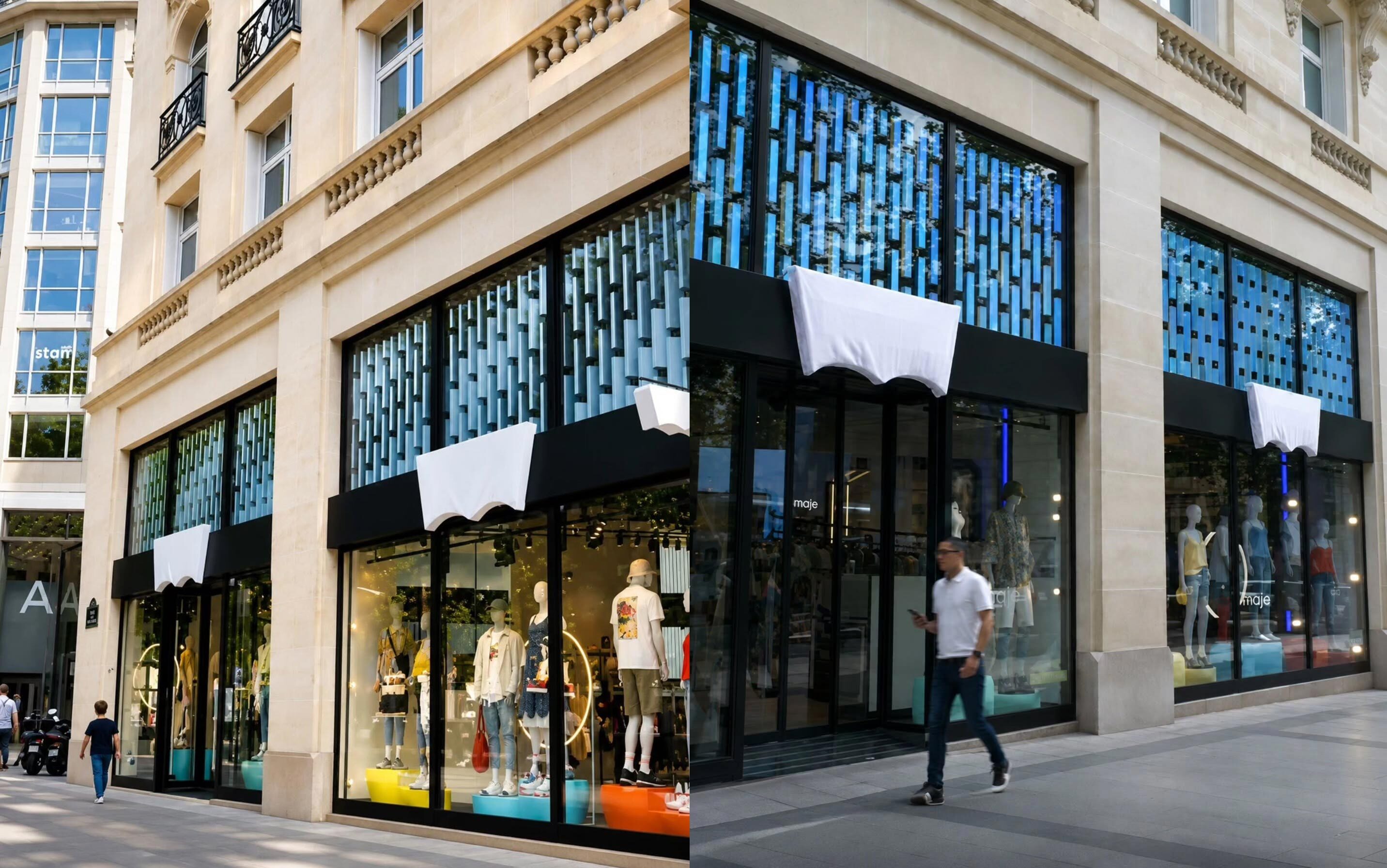
The clearest example is Levi's. Its naming rights venue in Santa Clara plays under a neutral title, the San Francisco Bay Area Stadium, and the large Levi's logo is draped in a plain white covering.5 Rather than accept the loss of visibility, Levi's makes the covering the campaign. The brand changes its social media profile pictures to mirror the concealed sign, applies white sheets to store fronts in Paris, London, Hong Kong, and markets across Brazil and Mexico, and welcomes the world to the "beautiful [redacted] stadium."5, 6, 7 Kenny Mitchell, Levi's chief marketing officer, writes that the episode becomes "the most commented and shared post in Levi's history," and credits "strong brand iconography" for the effect, since the batwing silhouette stays recognizable even under a blank sheet.3, 8, 9
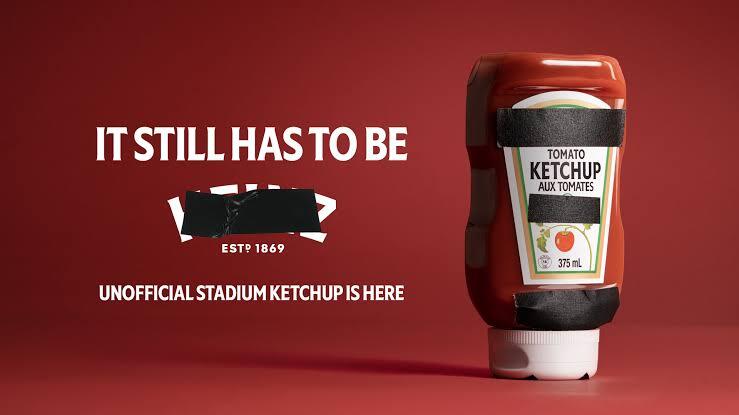
Heinz plays the same game from a different angle. After its condiment bottles are taped over inside stadium areas, Heinz Canada releases an "Unofficial Stadium Ketchup," a bottle whose label blacks out the Heinz name while leaving the shape and color unmistakable.10, 11 Razor brand Gillette shapes the covering over its own stadium logo in Massachusetts to resemble shaving foam.5 In each case the brands do not fight the restriction. They lean into it, trusting that audiences will recognize a famous identity through its outline alone. The result is a textbook Streisand effect, where the attempt to hide a mark draws more attention to it.
Source: Nike Football Youtube
Nike skips the stadium entirely
Nike takes the non sponsor logic to a larger scale. Without official rights, which belong to Adidas, the brand releases Rip the Script, a roughly six minute film made with its long time agency Wieden+Kennedy and featuring more than thirty football stars and entertainers.2, 12, 13 Distributed on Nike's own channels rather than through tournament inventory, the film passes 70 million views on YouTube, while the Adidas tournament advertisement counts roughly 7 million.3, 14 The piece keeps Nike's irreverent voice, the same register that ran through Winning Isn't For Everyone for the Paris 2024 Olympics, and proves that a brand with deep athlete relationships does not need a stadium board to own the moment.15
Why the rebellion resonates
The appeal goes beyond clever execution. Jared Watson, a marketing professor at New York University's Stern School of Business, observes that audiences support these efforts in part because they feel adversarial toward the commercialization of the event, a "stick it to the man" sympathy for brands that push back.3, 14 Andrew Rohm of Loyola Marymount University frames the off pitch contest as a battle between the expected and the unexpected, noting that brands free of FIFA's constraints can simply have more fun.3, 16
For brandvelle the lesson is about the value of a disciplined identity. Levi's, Heinz, and Gillette can play with a blank covering only because their logos, colors, and shapes are recognizable without a name attached. Nike can skip the venue only because its roster and its voice are assets in their own right. The 2026 tournament suggests that owning a cultural moment is increasingly separate from owning the sponsorship rights to it, and that a strong, consistent brand is what lets a company turn a restriction into a stage.
Written with AI assistance, edited by a human. Find out more about our Use of AI.
1. Burges Salmon, Hazel Flood, "Playing by the rules: ambush marketing and legal risk at the FIFA World Cup 2026", 18 June 2026, for the FIFA venue rule that no corporate branding may be visible inside a World Cup stadium unless the brand holds official sponsorship status, for the covering of the Levi's red tab at the San Francisco Bay Area Stadium as the worked example, and for the definition of ambush marketing as an attempt by a third party to create a commercial connection with a major event without paying to become an official sponsor. https://www.burges-salmon.com/articles/102n2y7/playing-by-the-rules-ambush-marketing-and-legal-risk-at-the-fifa-world-cup-2026/
2. Wikipedia, "2026 FIFA World Cup sponsors", read on 17 September 2026, for Adidas, Coca-Cola and Qatar Airways sitting in the FIFA Partners tier, the top sponsorship tier of the 2026 tournament, and therefore for the official football rights at the tournament belonging to Adidas rather than to Nike. https://en.wikipedia.org/wiki/2026_FIFA_World_Cup_sponsors
3. CNBC, "The brands winning with World Cup advertising may not be the sponsors", 26 June 2026, the reporting this piece is built on, for the Meltwater engagement comparison between non sponsor brand collaborations and official sponsors, for the quoted words of Levi's chief marketing officer Kenny Mitchell on the most commented and shared post in the company's history and on strong brand iconography, for the YouTube counts of Nike's Rip the Script against the Adidas tournament film, and for the quoted comments of Jared Watson and Andrew Rohm. Every one of those claims is corroborated in footnotes 4, 8, 14 and 16, because the page is not reachable on 17 September 2026, cnbc.com refusing automated requests. https://www.cnbc.com/2026/06/26/world-cup-marketing-levis-nike-taco-bell.html
4. eMarketer, Zak Stambor, "The World Cup gives retailers and brands a rare mass-audience moment, sponsorship not required", 26 June 2026, for the Meltwater figures as CNBC reported them, nearly double the social media engagement of official sponsors, about 61 million engagements against 33 million. Off whitelist and used for corroboration only. The original headline sets a dash where a comma is written here, to keep this file free of dashes. https://www.emarketer.com/content/world-cup-marketing-strategies-brand-engagement
5. MediaPost, Tanya Gazdik, "Levi's, Gillette Gently Mock World Cup Branding Ban", 22 June 2026, for Levi's Stadium in Santa Clara playing the tournament under the name San Francisco Bay Area Stadium, for Levi's changing its Instagram profile picture to the covered logo and captioning its video "Welcoming the world to the beautiful [redacted] stadium!", for the covered store fronts in further markets, and for Gillette shaping the covering over the logo at its Boston stadium to look like shaving cream. https://www.mediapost.com/publications/article/415964/levis-gillette-gently-mock-world-cup-branding-ba.html
6. WWD, Sourcing Journal, "Levi's Plays Into Viral FIFA Stadium Branding Controversy", for carrying the covered logo from the stadium out to Levi's store fronts around the world. Footnote 7 carries the same facts from a reachable source, because this page is not reachable on 17 September 2026, wwd.com answering automated requests with a paywall response. https://wwd.com/sourcing-journal/sj-denim/levis-viral-fifa-stadium-branding-controversy-world-cup-1239011017/
7. San Francisco Chronicle, Harrison Rich, "FIFA forced Levi's Stadium to cover up its branding. The company turned it into a viral campaign", 23 June 2026, for the white coverings applied to Levi's store fronts in Paris, London, Brazil, Mexico and Hong Kong, for the changed social media profile picture, and for the stadium trading as the San Francisco Bay Area Stadium during the tournament. Read through the Yahoo Sports syndication of the same article, sfchronicle.com being closed to automated requests. https://www.sfchronicle.com/sports/article/levi-s-stadium-s-sheet-covered-logo-went-22315774.php https://sports.yahoo.com/articles/fifa-forced-levis-stadium-cover-014327812.html
8. Benzinga, Priya Nigam, "Levi Strauss Flips FIFA Branding Restrictions Into 'Guerilla Marketing Moment,' Says Analyst", 1 July 2026, for Levi's chief marketing officer Kenny Mitchell describing the episode as the most commented and shared post in Levi's history, and for the white cloth wrapped around store front logos in London, Paris, Brazil, Mexico and Hong Kong. Off whitelist and used for corroboration only. https://www.benzinga.com/analyst-stock-ratings/price-target/26/07/60224579/levi-strauss-flips-fifa-branding-restrictions-into-guerilla-marketing-moment-says-analyst
9. Levi Strauss & Co., "Levi Strauss & Co. Appoints Kenny Mitchell as Chief Marketing Officer of the Levi's Brand", 20 April 2023, distributed through Business Wire, for the name and office of the executive quoted here, Kenny Mitchell, senior vice president and chief marketing officer of the Levi's brand. https://www.businesswire.com/news/home/20230420005849/en/Levi-Strauss-Co.-Appoints-Kenny-Mitchell-as-Chief-Marketing-Officer-of-the-Levis-Brand
10. HITC, Ishika Dadhwal, "Heinz pokes fun at FIFA's 'clean stadium' World Cup policy with hilarious new product release", 21 June 2026, for the condiment labels at World Cup venues being hidden with black tape and for Heinz answering the rule with a ketchup designed around it rather than fighting it. https://www.hitc.com/heinz-pokes-fun-at-fifas-clean-stadium-world-cup-policy-with-hilarious-new-product-release/
11. Creative Bloq, Rosie Hilder, "Heinz blacks out its logo in World Cup stunt", 24 June 2026, for Heinz Canada launching the Unofficial Stadium Ketchup with its branding blacked out and the line "It still has to be", and for the venue rule that made non sponsors cover their logos at grounds such as Toronto's BMO Field. https://www.creativebloq.com/design/branding/heinz-blacks-out-its-logo-in-world-cup-stunt
12. LBBOnline, Addison Capper, "Nike Rips the Script with Celeb-Packed, 6-Minute World Cup Epic", 5 June 2026, for the film Rip the Script running six minutes, for Wieden+Kennedy as the agency and Dan Streit as the director, and for the cast mixing footballers such as Ronaldinho and Cristiano Ronaldo with entertainers such as Channing Tatum and Travis Scott. https://lbbonline.com/news/nike-world-cup-2026-wieden-kennedy
13. Campaign US, Leslie Blount, "Nike 'rips the script' and writes new chapter with epic 2026 World Cup campaign", 4 June 2026, for the six minute film carrying more than 30 global celebrities and athletes, and for the Wieden+Kennedy credit. https://www.campaignlive.com/article/nike-rips-script-writes-new-chapter-epic-2026-world-cup-campaign/1960540
14. Soccerscene, Declan Chan, "The real winners of World Cup advertising aren't paying FIFA a cent, and Australian brands should be paying attention", 29 June 2026, for Nike passing 70 million YouTube views against roughly 7 million for the comparable Adidas film, for Jared Watson, assistant professor of marketing at the NYU Stern School of Business, on audiences responding to brands that look adversarial to the commercialisation of the game itself, and for Andrew Rohm, professor of marketing at Loyola Marymount University, framing the contest as the expected against the unexpected. Off whitelist and used for corroboration only. https://www.soccerscene.com.au/the-real-winners-of-world-cup-advertising-arent-paying-fifa-a-cent-and-australian-brands-should-be-paying-attention/
15. Creative Review, Eliza Williams, "Nike releases punchy new ad ahead of the Paris Olympics", 22 July 2024, for the Winning Isn't For Everyone film Nike ran into the Paris 2024 Olympics with Wieden+Kennedy Portland, and for its combative register, a voiceover by Willem Dafoe asking whether the qualities of elite sport are single-minded, selfish and obsessive. https://www.creativereview.co.uk/nike-ad-paris-olympics/
16. Loyola Marymount University Newsroom, "CNBC | The Brands Winning With World Cup Advertising May Not be the Sponsors", for Andrew Rohm being a professor of marketing at Loyola Marymount University, for his phrase the expected and the unexpected, and for his observation that the companies that are not official sponsors, and are therefore not restricted by FIFA, are able to have the most fun with their marketing. https://newsroom.lmu.edu/lmu-in-the-news/cnbc-the-brands-winning-with-world-cup-advertising-may-not-be-the-sponsors/