A warehouse on a back street in Hiroshima
Uniqlo began as a single store with a long name. On 2 June 1984, Unique Clothing Warehouse opened in the Fukuromachi district of Hiroshima, in the city's Naka ward.12 It belonged to Ogori Shoji, the menswear business that Hitoshi Yanai had founded in 1949 in Ube, Yamaguchi Prefecture, and that his son Tadashi Yanai now ran.13 "Our first store was opened on a back street in Hiroshima," Tadashi Yanai recalled in a 2001 talk at a Tokyo research institute.4
The opening was staged to be noticed. According to an account published by Nikkei, the store opened at six in the morning, handed out sweet buns and milk to the crowd that gathered, and advertised around 30,000 items in stock, most of them priced at 1,000 or 1,900 yen.2 Yanai modelled the format on a university co-op store he had seen in the United States.2 The idea, as Fast Retailing later relayed it from one of his books, was a store where customers could buy good clothing at reasonable prices "just like buying a magazine in a bookstore".5
The range followed from an observation Yanai made in menswear. "I noticed that casual clothes are ageless - what is more they are unisex," he said.4 Unique Clothing Warehouse was accordingly a unisex casual wear store, selling the same basics to men and women of every age rather than dressing one target customer.6 Clothing that does not depend on age or gender suits that kind of store: it can be sold in volume, displayed on shelves and chosen without a sales assistant.
Read word by word, the name described the format: Unique for the selection, Clothing for the product, Warehouse for the self-service, high-volume way of selling it. Yanai's ambition went beyond one store. "My idea was to create a chain of stores that had a clear sense of identity, as did American stores like the Limited and GAP," he said in the same 2001 talk.4 A year after Hiroshima, the first roadside store opened in Yamanota, Yamaguchi Prefecture, a format that Fast Retailing says set a new standard for the brand's stores.1 The real expansion came later. "The first Uniqlo store opened in 1984 and we began expansion into chain stores in 1991," Yanai said.4
From Uni-Clo to Uniqlo
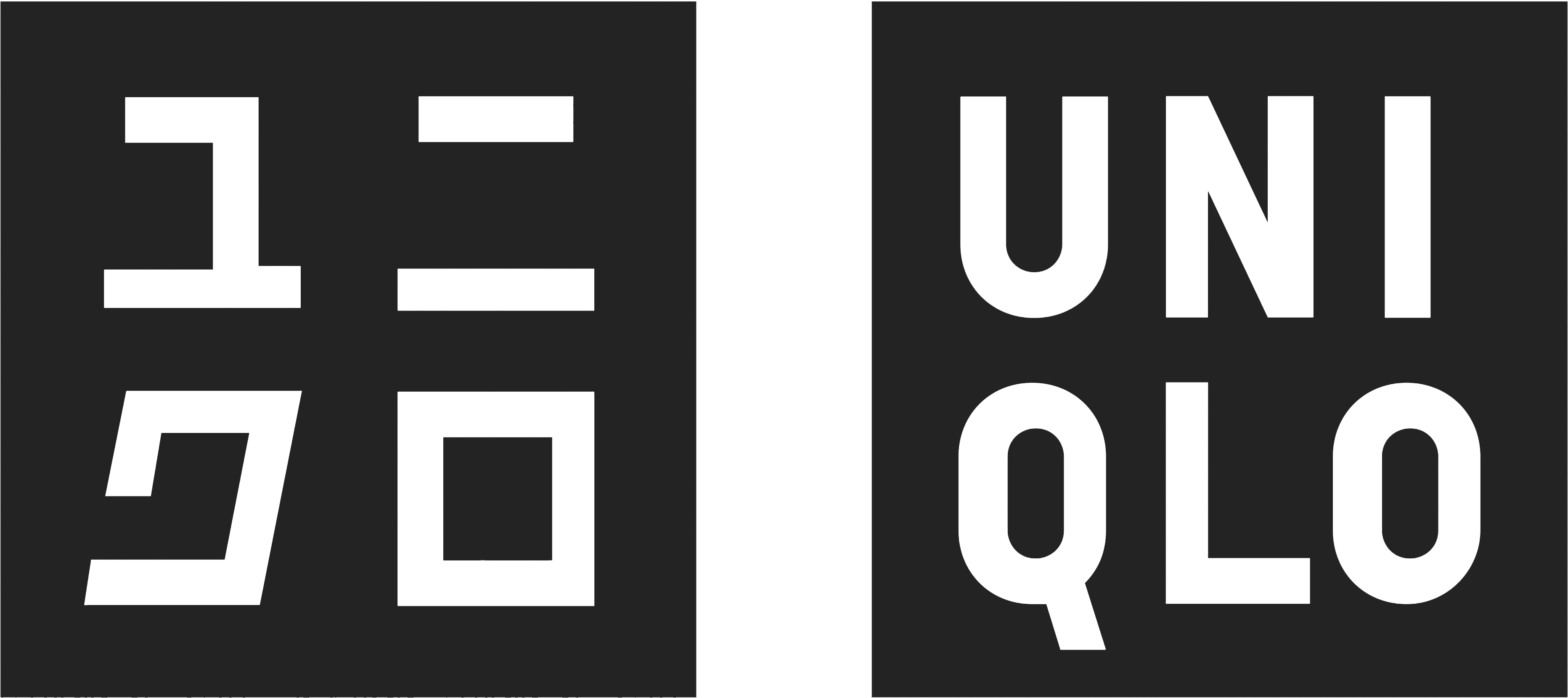
The name was shortened to Uni-Clo, written in Japanese as ユニ・クロ.6 Then came the change that fixed the brand's spelling for good. In 1988, when the company registered a joint venture in Hong Kong, the C in Uni-Clo was misread as a Q.53 SoraNews24 attributes the slip to a local partner filling in the forms.7 Nobody corrected it. According to the South China Morning Post, Yanai was intrigued by the new spelling and changed the store's name across Japan.5
The sources consulted do not name the person who made the error or quote Yanai on his choice. What the record shows is the decision itself: a clerical slip in a foreign registration became the trademark of the whole chain.63
What the Q changed
The misspelling changed more than one letter. Uni-Clo still read as an abbreviation of Unique Clothing, and with it of a warehouse. Uniqlo reads as a coined word. It no longer explains itself, and it no longer points to discount retailing.
The separation between company and brand followed soon after. In September 1991 Ogori Shoji renamed itself Fast Retailing, one month after the original Fukuromachi store had closed.1 The corporate name now described the business model, while Uniqlo was free to be a store brand. By 1994 the chain had opened its 100th store, all of them in Japan.3 When Uniqlo later presented itself abroad, the coined name travelled without needing translation, and from 2006 it appeared alongside its katakana form ユニクロ in the brand's identity.8
A founding story the brand tells itself
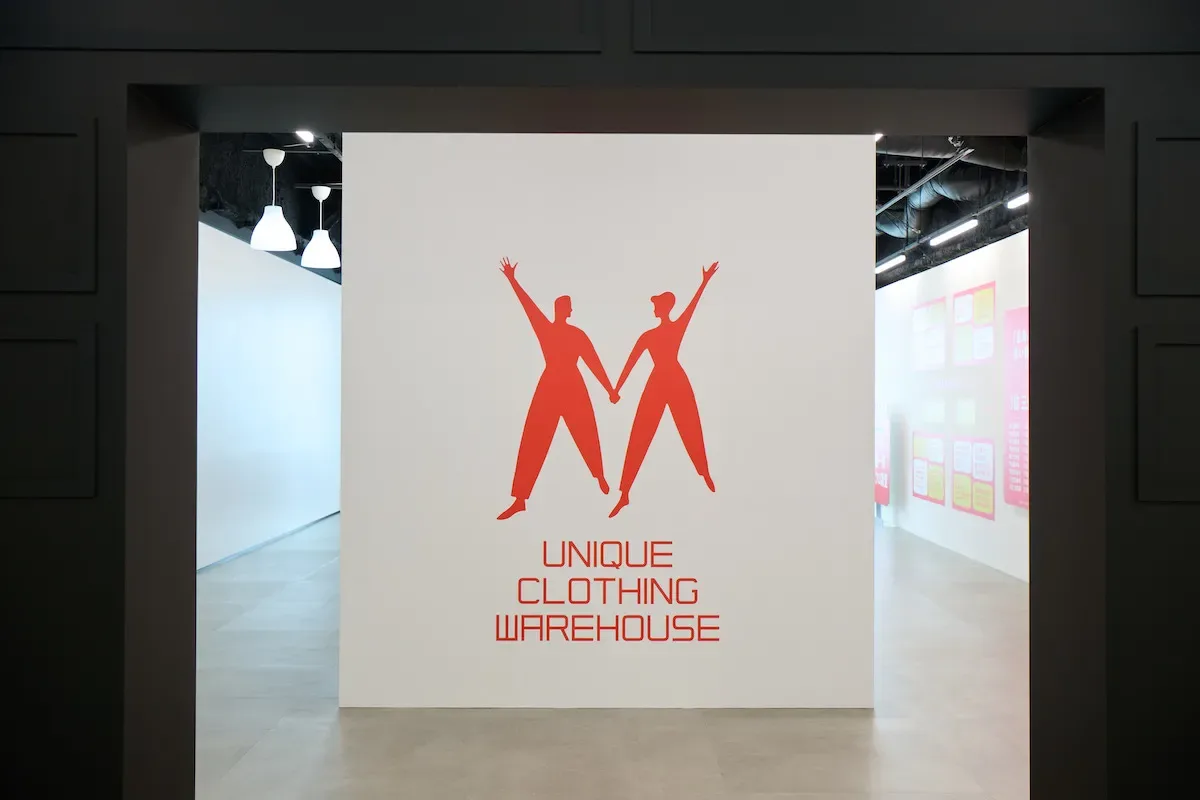
Uniqlo does not treat the error as an embarrassment. Its official Japanese Instagram account tells the story of the Q, as SoraNews24 reports in 2024.7 The same year, a media preview for the 40th anniversary opens with the Unique Clothing Warehouse name at its entrance and flag-style decorations carrying the early logo.9
The story gives a brand that now presents its clothing as carefully engineered everyday wear a modest point of origin: a back street store with buns and milk at dawn, and a founder who kept a mistake because he liked the spelling. The name that more than 2,500 stores carry today began as a letter nobody meant to write.3
Written with AI assistance, edited by a human. Find out more about our Use of AI.
1. Fast Retailing, "History 1949-2003", corporate history, read 8 October 2026, for Men's Shop Ogori Shoji founded in Ube in March 1949, the first Uniqlo store in Fukuromachi, Hiroshima, in June 1984 and its closure in August 1991, the first roadside store in Yamanota in June 1985 and the statement that it set a new standard for the brand's stores, and the renaming of Ogori Shoji to Fast Retailing in September 1991. https://www.fastretailing.com/eng/about/history/2003.html
2. Nikkei BOOKPLUS, excerpt from Takashi Sugimoto, "ユニクロ" (Nikkei, 2024), 27 April 2024, read 8 October 2026, for the opening date of 2 June 1984, the 6 a.m. opening, the sweet buns and milk handed out, the crowd before opening, the advertised stock of around 30,000 items mostly at 1,000 and 1,900 yen, and the model of an American university co-op store ("アメリカで見た大学生協のような店"). https://bookplus.nikkei.com/atcl/column/042600369/042600001/
3. Wikipedia, "Uniqlo", read 8 October 2026, for Hitoshi Yanai as founder and Tadashi Yanai at the helm in June 1984, the name Unique Clothing Warehouse, the C misread as a Q in Hong Kong in 1988, the 100th store in 1994, and 2,512 stores as of 28 February 2026. https://en.wikipedia.org/wiki/Uniqlo
4. Research Institute of Economy, Trade and Industry (RIETI), BBL seminar "The Secret to Uniqlo's Overwhelming Success and Japan's Textile Industry", 8 June 2001, English transcript, read 8 October 2026, for the quotations from Tadashi Yanai, then President and CEO of Fast Retailing. https://www.rieti.go.jp/en/events/bbl/01060801.html
5. South China Morning Post, "The Uniqlo story: from a single store to a global fashion empire with ambitions", about 2019, read 8 October 2026, for the store concept relayed by Fast Retailing from one of Yanai's books ("Provide a store where customers can shop easily and purchase high-quality clothing at reasonable prices, just like buying a magazine in a bookstore"), the C misread as a Q during the Hong Kong registration, and Yanai changing the name across Japan. https://www.scmp.com/lifestyle/fashion-beauty/article/3029602/uniqlo-story-single-store-global-fashion-empire-ambitions
6. Wikipedia (Japanese), "ユニクロ", read 8 October 2026, for the shortening to ユニ・クロ and the 1988 registration in Hong Kong. Original wording: "1988年に香港に現地法人を設立した際、会社登記の書類に略称の「UNI-CLO」を「UNI-QLO」と書き間違えられてしまった" and "そのスペルを柳井正が気に入り、そのまま英文綴りを「UNI-QLO」に変更した商標を採用した。" https://ja.wikipedia.org/wiki/ユニクロ
7. SoraNews24, "Why is Uniqlo spelled with a Q?", 9 June 2024, read 8 October 2026, for Uniqlo Japan telling the story of the misspelling on its official Instagram account and the error attributed to a local partner filling in the forms. https://soranews24.com/2024/06/09/why-is-uniqlo-spelled-with-a-q/
8. nippon.com, "Creative Director Satō Kashiwa: An Eye for the Iconic", about 2017, read 8 October 2026, for the katakana ユニクロ used as key visual in the identity Kashiwa Sato created for the 2006 New York flagship. https://www.nippon.com/en/people/e00109/
9. WWDJAPAN, "「ユニクロ」名前の由来は?1号店は? ファンとともに歩んだ40年を振り返る", 18 November 2024, read 8 October 2026, for the 40th anniversary media preview with the Unique Clothing Warehouse name at its entrance (photographed by Tameki Oshiro) and flag-style decorations carrying the early logo (旗を模したデコレーション。初期ロゴが目印). https://www.wwdjapan.com/articles/1969649