
A second attempt at the West
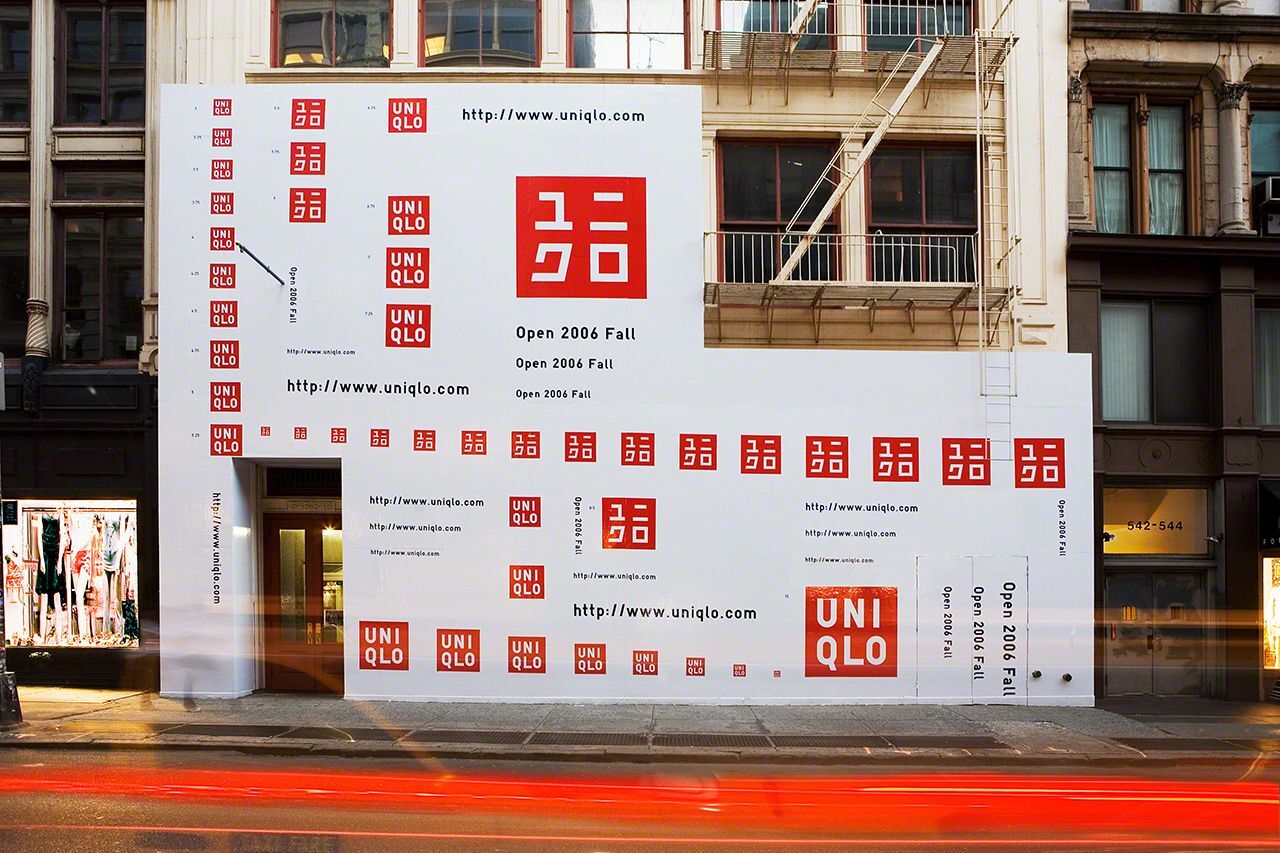
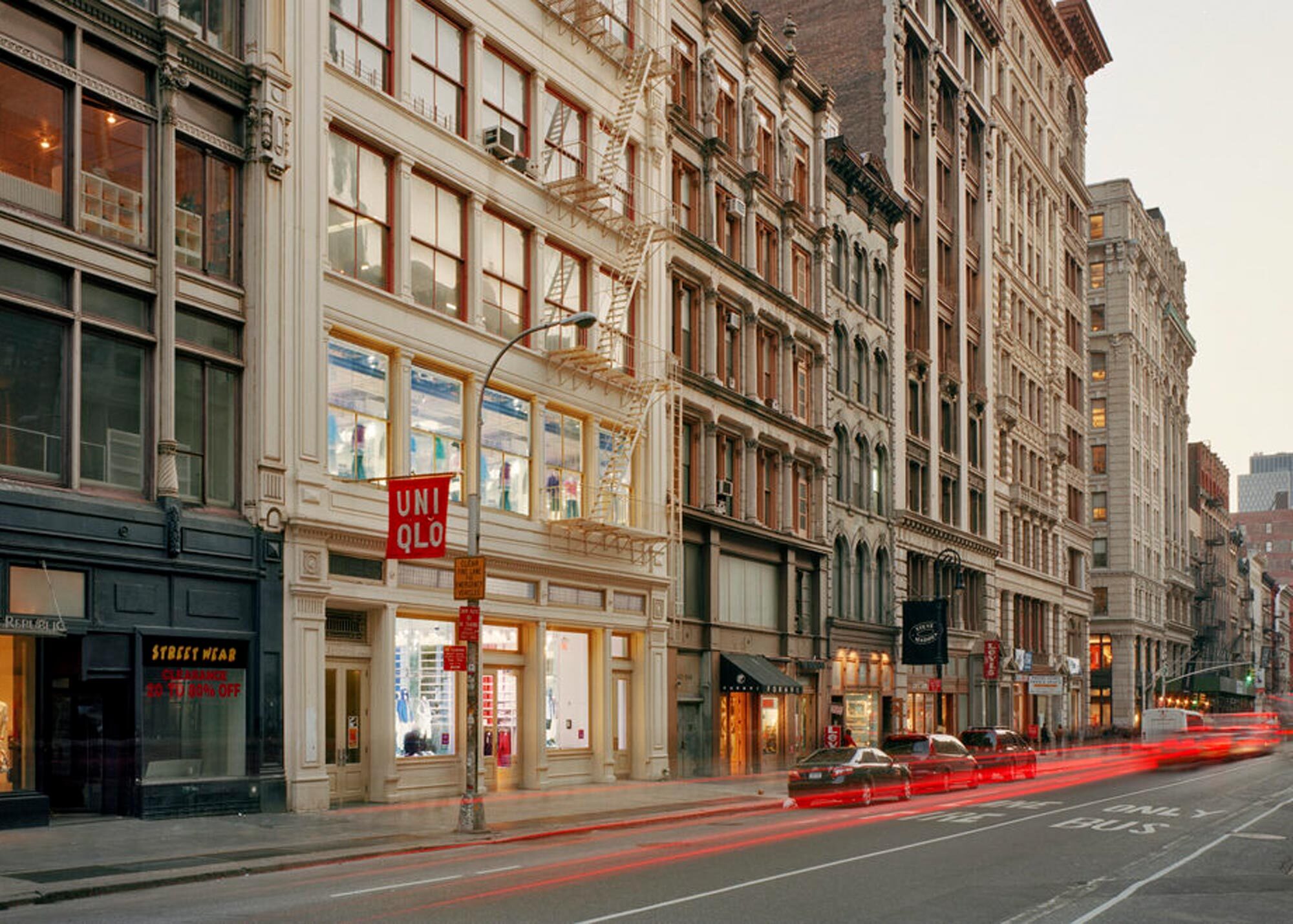
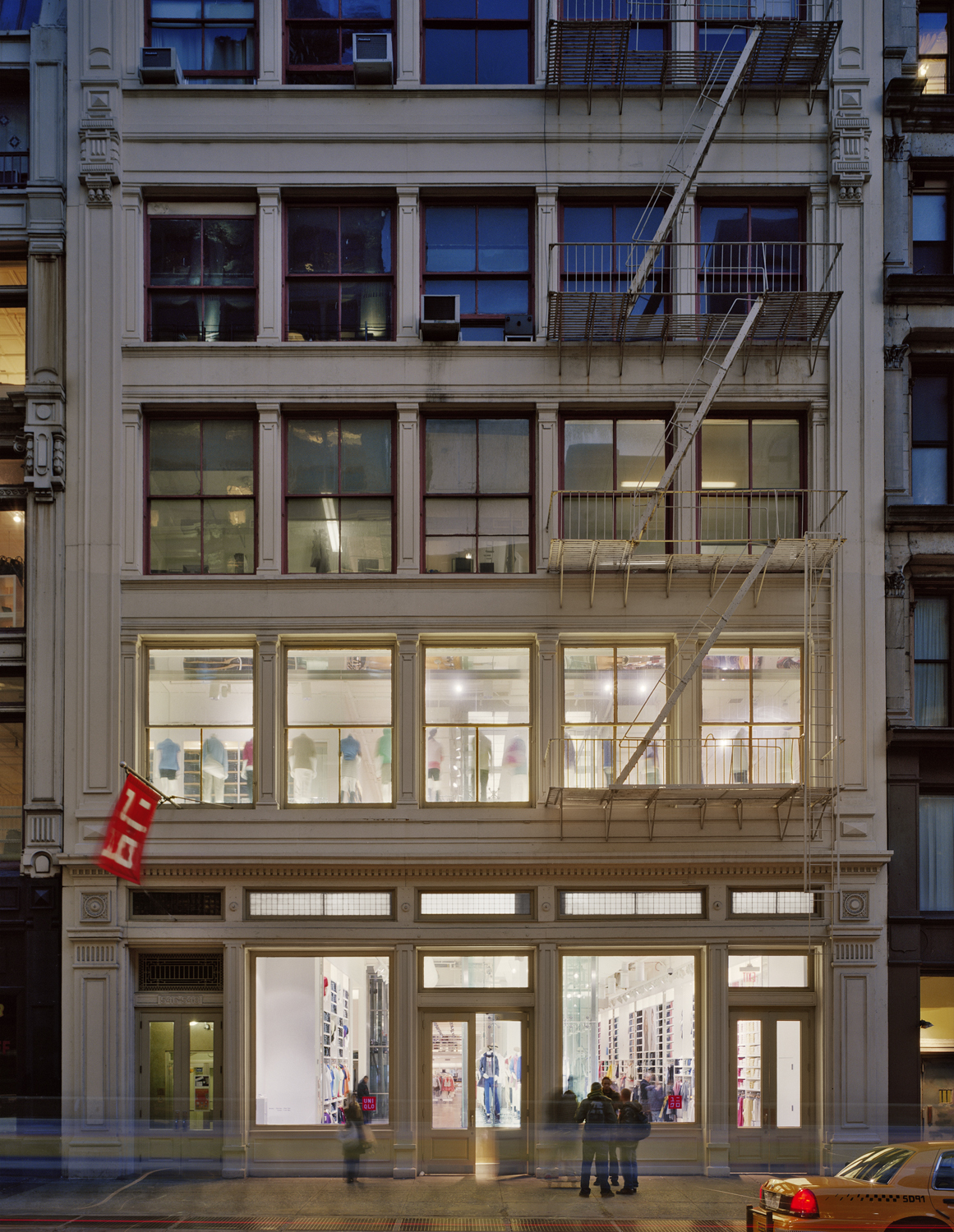
On 10 November 2006 Uniqlo opened a store at 546 Broadway in New York's SoHo. The company called it its global flagship and a touchstone for its worldwide expansion.1 At about 3,300 square metres on three levels, it was the largest Uniqlo store to date and, by the company's count, the second largest store in SoHo.1,2
It was not Uniqlo's first try abroad. The company had opened in London in September 2001 and grown to 21 stores in Britain; in March 2003 it announced that 16 of them would close.3,4 In the United States it began in September 2005 with stores in New Jersey malls, which Uniqlo's own history calls "a test-marketing project that flopped."4,2 Nobuo Domae, who headed Uniqlo USA, explained what had gone wrong: "We tried to imitate the Japanese model as much as possible," he said, adding: "We used metal shelving that was very efficient and functional." The team, he said, "didn't know that was only used for discounters."5
SoHo reversed that approach. The store was operated by UNIQLO USA, a subsidiary wholly owned by Fast Retailing and founded in November 2004 with capital of $30 million.1 Instead of small stores in suburban malls, Uniqlo opened one very large store in a fashion district. Tadashi Yanai, Fast Retailing's chief executive, argued that a small store would attract no attention, and that a company wanting to sell basics to everyone had to arrive in a big way.5
A Japanese creative team
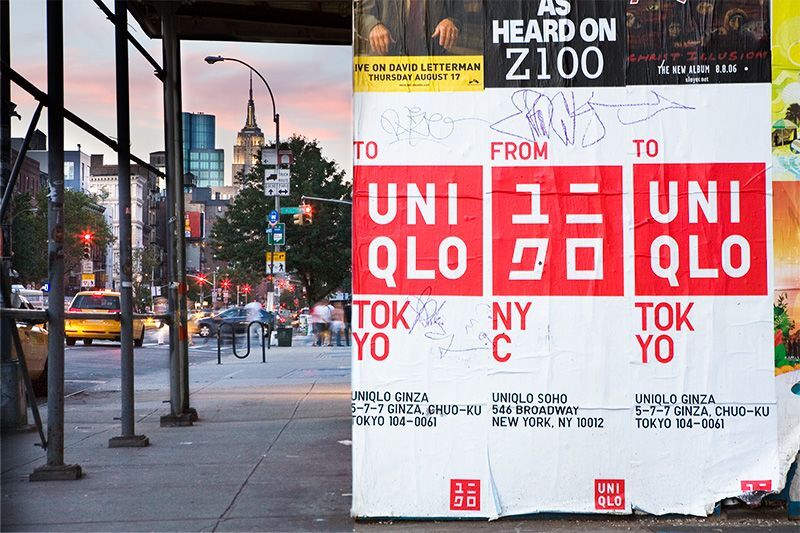
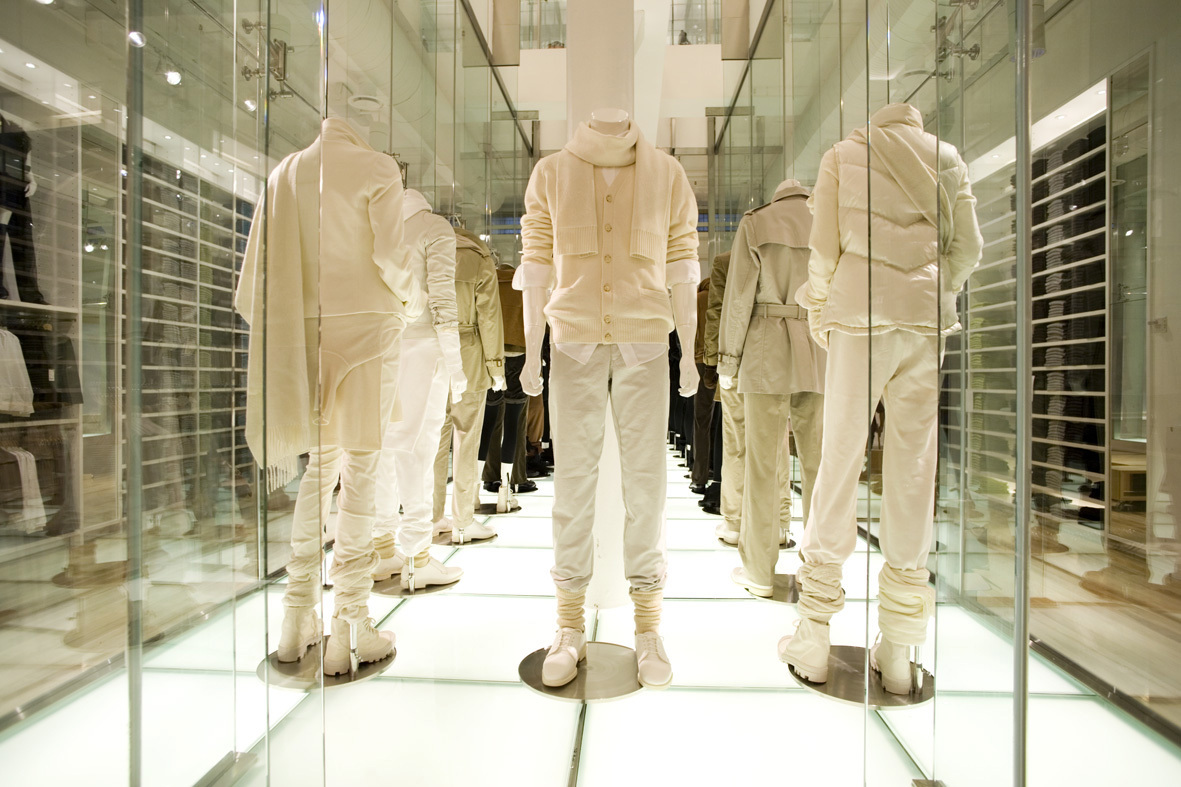
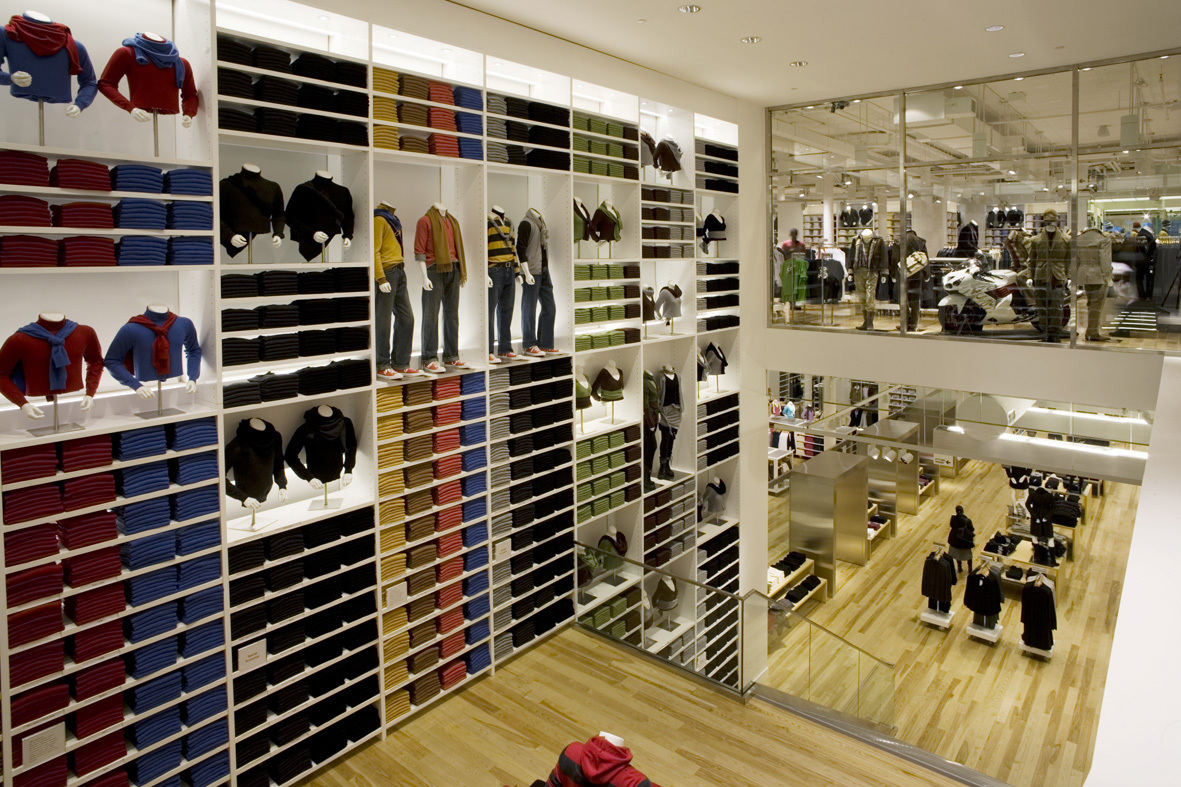
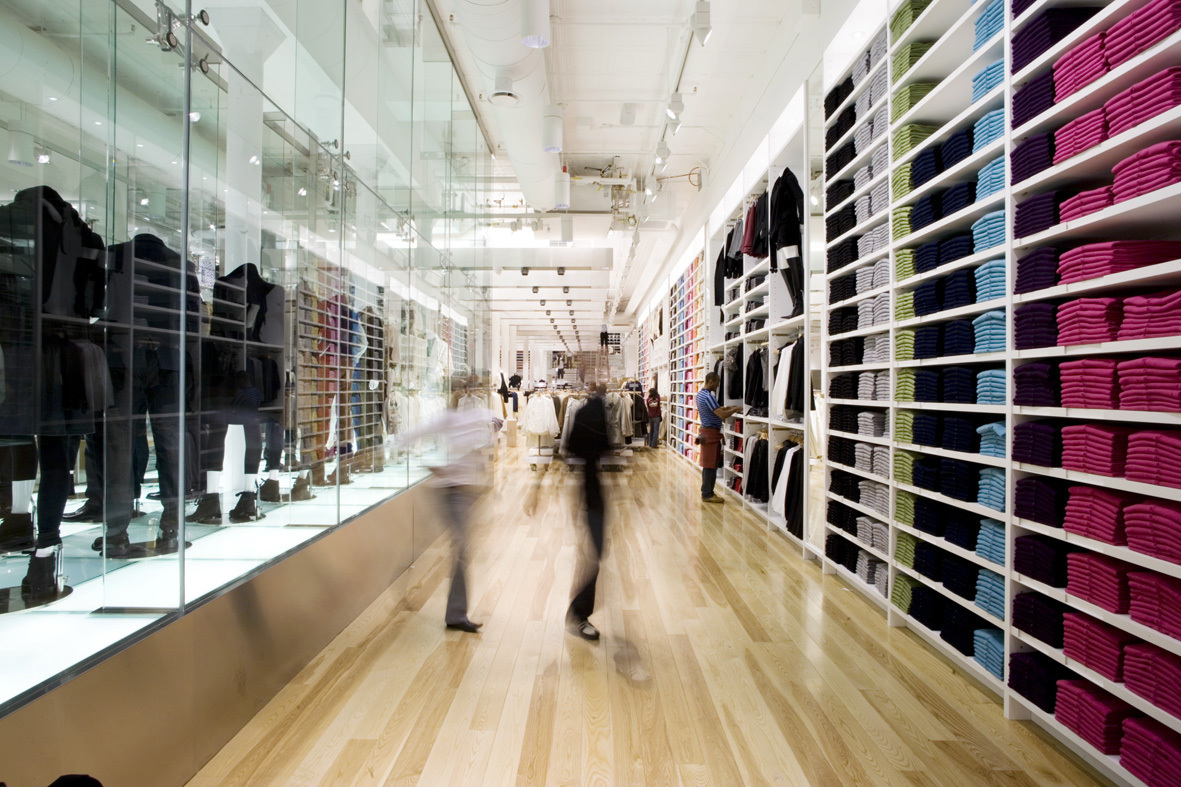
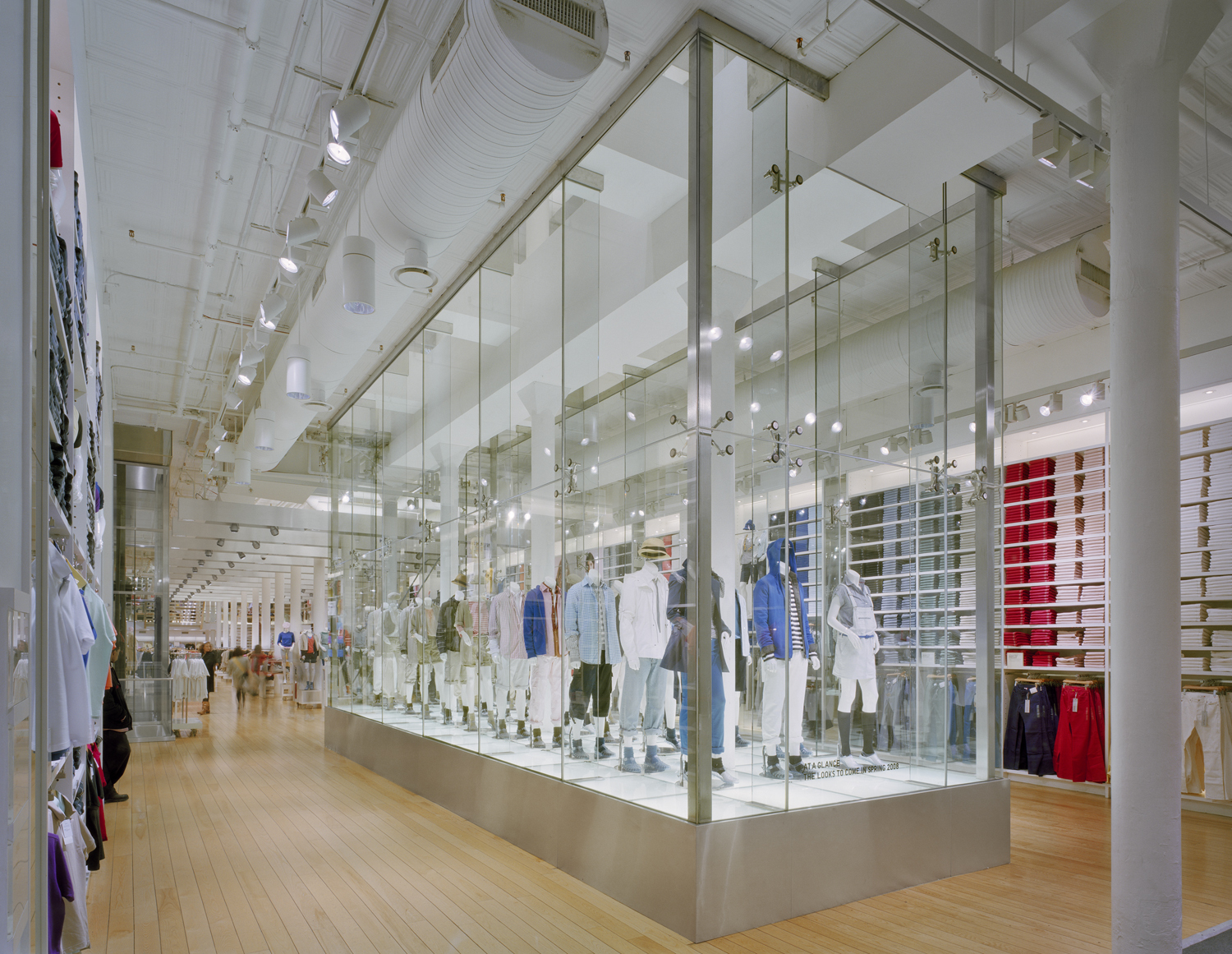
Uniqlo gave the project to a largely Japanese team. Kashiwa Sato of the studio Samurai was creative director, responsible for the concept and the visual identity.1,2,6 Masamichi Katayama of Wonderwall designed the interior: spinning mannequins at the entrance, glass protecting an old brick wall, stainless steel stairs leading to a wall of cashmere, and listening booths for music.7 The New York firm GreenbergFarrow turned the design into a building. It interpreted the sketches of Uniqlo's Japan-based architect, produced the construction documents and coordinated the full renovation of a century-old landmark building, completed in eight months on a fast-track schedule.8 The cashmere wall held nearly 8,000 sweaters in a grid, priced at $99 or less.5 The New York art director Markus Kiersztan edited a free magazine, UNIQLO Paper, distributed from late October.1 Yugo Nakamura built the website and Tomoyuki Tanaka, known as Fantastic Plastic Machine, compiled a music CD for the opening.1
Sato summed up the concept as "Practical Beauty"; the Japanese announcement called it a beauty-conscious hyper-rationality.2,9 In the identity, the red of the Uniqlo logo was deepened from wine red to crimson to evoke Japan more vividly, and the Roman name was paired with its katakana form.2,10 When it announced the store in May 2006, Uniqlo said the red stood for Japan and for the company's venture spirit, and called the project its global flagship.9 "I felt intuitively that katakana characters would work best as the key visual," Sato said later. "I was after a kind of “exquisite incongruity” that would elicit a double take from Japanese and foreign consumers alike."10
Japanese origin as the message
In New Jersey, Uniqlo had looked like a discounter. In SoHo it presented itself as a Japanese design brand. "My strategy was: ‘From Tokyo to the world’," Sato told Monocle. "I wanted to emphasise the Japanese provenance of the brand."6 The launch programme followed the same line. From September 2006 shipping containers carrying the Uniqlo logo appeared around Manhattan as pop-up shops, and the store sold T-shirts by 34 Japanese artists on the theme of today's Tokyo, available only in SoHo. Four webcams in the store streamed the opening live.1
The positioning gave Uniqlo something that its competitors could not claim. Sato placed the project in a period when "apparel brands like GAP and H&M were making big gains globally."10 Against American and Swedish chains selling similar basics, Japanese origin became the point of difference.
A template for the world
SoHo became the model for Uniqlo's flagships elsewhere. In late 2007 Sato and Katayama designed Uniqlo's new flagship on Oxford Street in London, the first of what Uniqlo called next-generation global flagships offering a modern Japanese shopping experience.11 Sato's branding moved on to Paris and Shanghai.10 Fast Retailing's plan at the time was to grow sales to one trillion yen by 2010, with Sato overseeing the new flagships in New York, London and Paris.6
Uniqlo's own history of its American business presents SoHo as its first global flagship and the start of its presence in the United States, with the New Jersey stores as the failed test before it.2 The lesson drawn from New Jersey shaped the openings that followed: a store abroad does not only sell clothing, it explains the brand to a public that has never heard of it.
Written with AI assistance, edited by a human. Find out more about our Use of AI.
1. Uniqlo, press release on the opening of the SoHo New York global flagship, 10 November 2006, read 8 October 2026, for the opening date and address, the size of about 1,000 tsubo (about 3,306 square metres) as the largest Uniqlo store and the second largest store in SoHo, the description as global flagship and touchstone for global expansion (「世界展開への試金石」), the creative team (Kashiwa Sato, Masamichi Katayama, Markus Kiersztan, Yugo Nakamura, Tomoyuki Tanaka), UNIQLO Paper from late October, the container shops from September 2006, the T-shirts by 34 Japanese artists sold only in SoHo, the four webcams streaming the opening, and UNIQLO USA, Inc., founded on 22 November 2004 with capital of US$30 million and wholly owned by Fast Retailing. https://www.uniqlo.com/jp/ja/contents/corp/press-release/2006/11/_1110.html
2. Uniqlo, LifeWear Magazine, "The History of UNIQLO in the US", undated (about 2021), read 8 October 2026, for SoHo as the first global flagship of 3,300 square metres on three floors, Kashiwa Sato's concept "Practical Beauty", the logo changed "from wine red to crimson" to evoke Japan more vividly, and the New Jersey stores described as "a test-marketing project that flopped." https://www.uniqlo.com/uk/en/contents/lifewear-magazine/the-history-of-uniqlo-in-the-us/
3. The Retail Bulletin, "Uniqlo to cut back UK operation", 8 March 2003, read 8 October 2026, for the announcement of 7 March 2003 that 16 of 21 UK stores would close, leaving five in London. https://theretailbulletin.com/general-merchandise/uniqlo-to-cut-back-uk-operation-08-03-2003
4. Wikipedia, "Uniqlo", read 8 October 2026, for the first UK store in London in September 2001 and the first US stores in New Jersey in September 2005. https://en.wikipedia.org/wiki/Uniqlo
5. VMSD, "Uniqlo Opens in SoHo", 10 November 2006, read 8 October 2026, for the quotations from Nobuo Domae, chief executive of Uniqlo USA, and for Tadashi Yanai's statements that a very small store would draw no attention and that selling basics to everyone required opening in a big way, and for the nearly 8,000 cashmere sweaters displayed in grids at $99 or less. https://vmsd.com/uniqlo-opens-soho/
6. Fiona Wilson, "In the first lane", Monocle, issue 8, 1 November 2007, read 8 October 2026, for Kashiwa Sato's studio Samurai, the quotations from Kashiwa Sato, his role overseeing the new flagships in New York, London and Paris, and the target of one trillion yen in sales by 2010. https://monocle.com/business/fast-retailing-uniqlo-global-brand-strategy/
7. Wonderwall, project page "UNIQLO SOHO NY", read 8 October 2026, for the interior by Masamichi Katayama: spinning mannequins, glass protecting the old wall, stainless steel stairs to the Cashmere Wall, the second-floor atrium and the CD sampling booths; photographs by Kozo Takayama. https://wonder-wall.com/project/25/
8. GreenbergFarrow, project page "Uniqlo NYC Flagship", read 14 October 2026, for its role in delivering the store: interpreting the design sketches of Uniqlo's Japan-based architect, development and construction documents, the full-scale renovation of a century-old landmark building, and completion in eight months on a fast-track basis; services listed as architecture and interior design. https://greenbergfarrow.com/project/uniqulo-nyc-flagship/
9. Uniqlo, press release announcing the New York global flagship, 25 May 2006, read 8 October 2026, for the concept 「美意識ある超合理性」 (translated here as a beauty-conscious hyper-rationality), the new logo and its red standing for Japan and the company's venture spirit. https://www.uniqlo.com/jp/ja/contents/corp/press-release/2006/05/ny.html
10. nippon.com, "Creative Director Satō Kashiwa: An Eye for the Iconic", about 2017, read 8 October 2026, for the quotations from Kashiwa Sato on katakana and on GAP and H&M, and for the branding moving on to London, Paris and Shanghai. https://www.nippon.com/en/people/e00109/
11. Design Week, "Top studios create Uniqlo London flagships", October 2007, read 8 October 2026, for the Oxford Street flagship designed by Kashiwa Sato and Masamichi Katayama and opening in late 2007, described by Uniqlo as next-generation global flagships offering a modern Japanese shopping experience. https://www.designweek.co.uk/issues/october-2007-online/top-studios-create-uniqlo-london-flagships/