Founded by James Jebbia on Lafayette Street in April 1994 as a skate shop, Supreme defined the modern streetwear category through a tightly controlled…
11 Articles
Nike is the world's largest athletic footwear and apparel company, building the brand around elite performance, athlete partnerships, and a long-runni…
12 ArticlesSupreme x Nike SB: the alliance that built skate streetwear
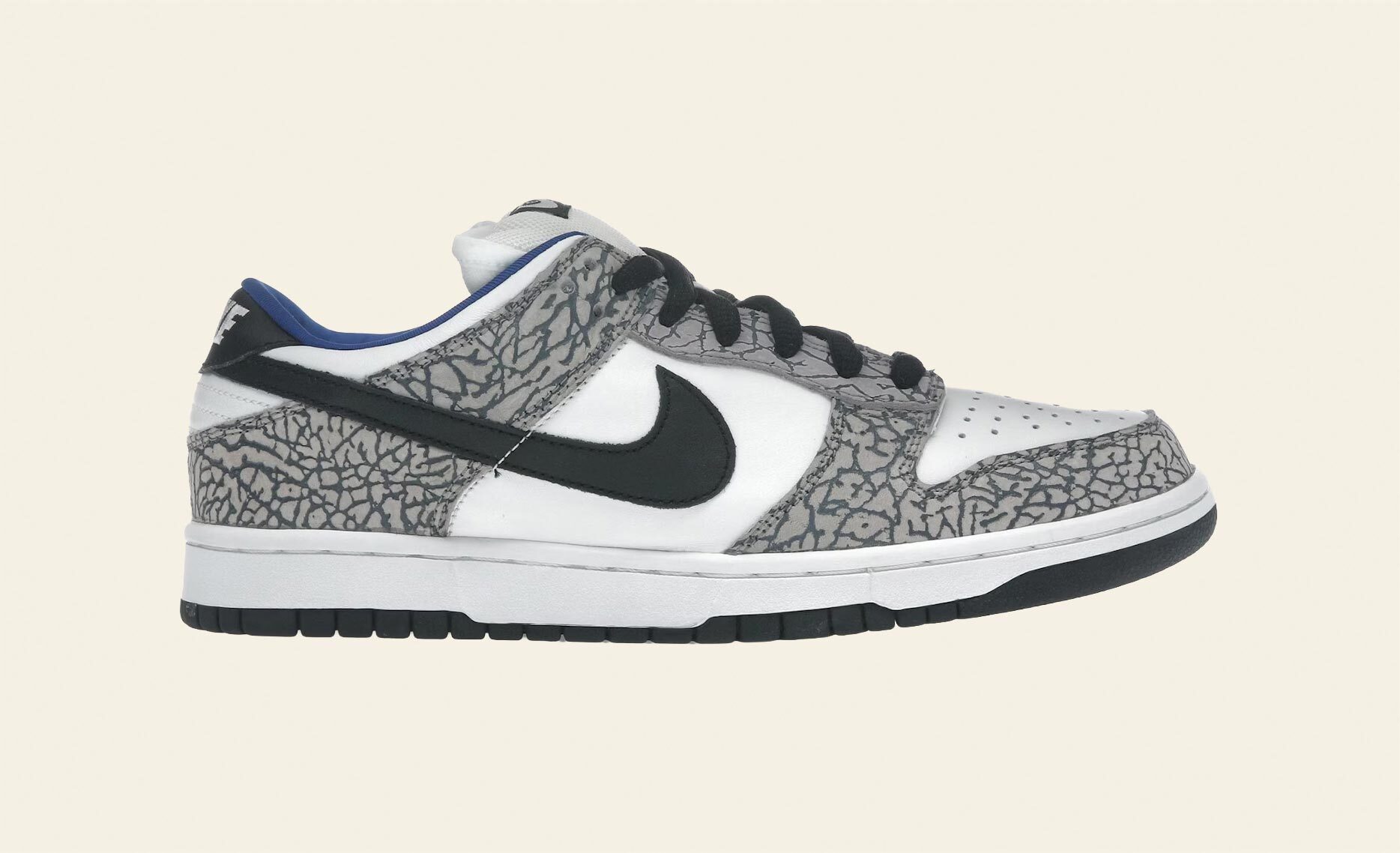
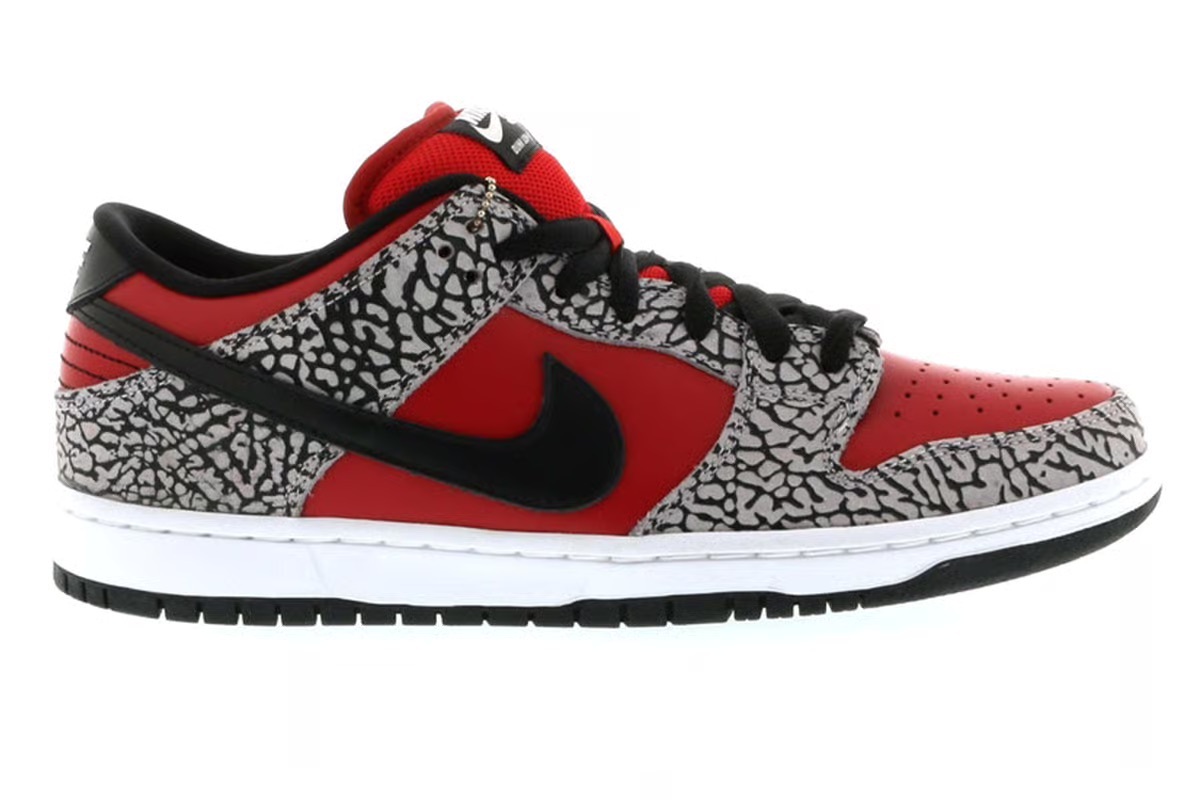
In April 2002 Supreme released a reworked Nike SB Dunk Low in two colourways. The shoe carried the elephant print pattern lifted from the 1988 Air Jordan 3, applied across the toe box and quarter panels in white cement and black cement. The drop coincided with the launch of Nike SB, the division Nike had set up to enter skateboarding properly after a stalled 1990s attempt. Twenty plus years later the moment reads as the founding act of a partnership that institutionalised the streetwear drop, set the template for hype-led footwear collaboration, and rewired the economics of two brands at once.
Two brands with different problems
Nike approached Supreme in late 2001 with a specific commercial need. Vans, DC, Etnies and emerca dominated skate retail, and Nike's earlier skate attempt had been rejected by the core market for cultural reasons. The SB division needed credibility transfer. Supreme had it. James Jebbia had founded Supreme on Lafayette Street in April 1994 with the explicit position of a skate shop rather than a fashion brand, and the store had become the de facto cultural address for downtown New York skateboarding by the end of the 1990s. Supreme, in turn, had distribution and pricing problems. Limited stock through three stores in New York, Los Angeles and Tokyo capped revenue, and the Box Logo tee was the only product with national name recognition. A Nike co-sign would resolve both.
The 2002 drop
The Supreme x Nike SB Dunk Low retailed at 65 US dollars in two colourways, white cement and black cement. The elephant print quoted Tinker Hatfield's Air Jordan 3, a deliberate Air Jordan reference embedded inside a skate silhouette. Gold lace tips and a Supreme branded sock liner completed the signature. Both colourways sold out on release day at Supreme retail and on Nike SB's then-limited skate shop network. Resale began immediately. By the late 2000s the white cement variant carried a five-figure asking price on the secondary market, and the model entered the canon of grail-level Nike SB pairs alongside the 2005 Pigeon Dunk.
A decade of drops
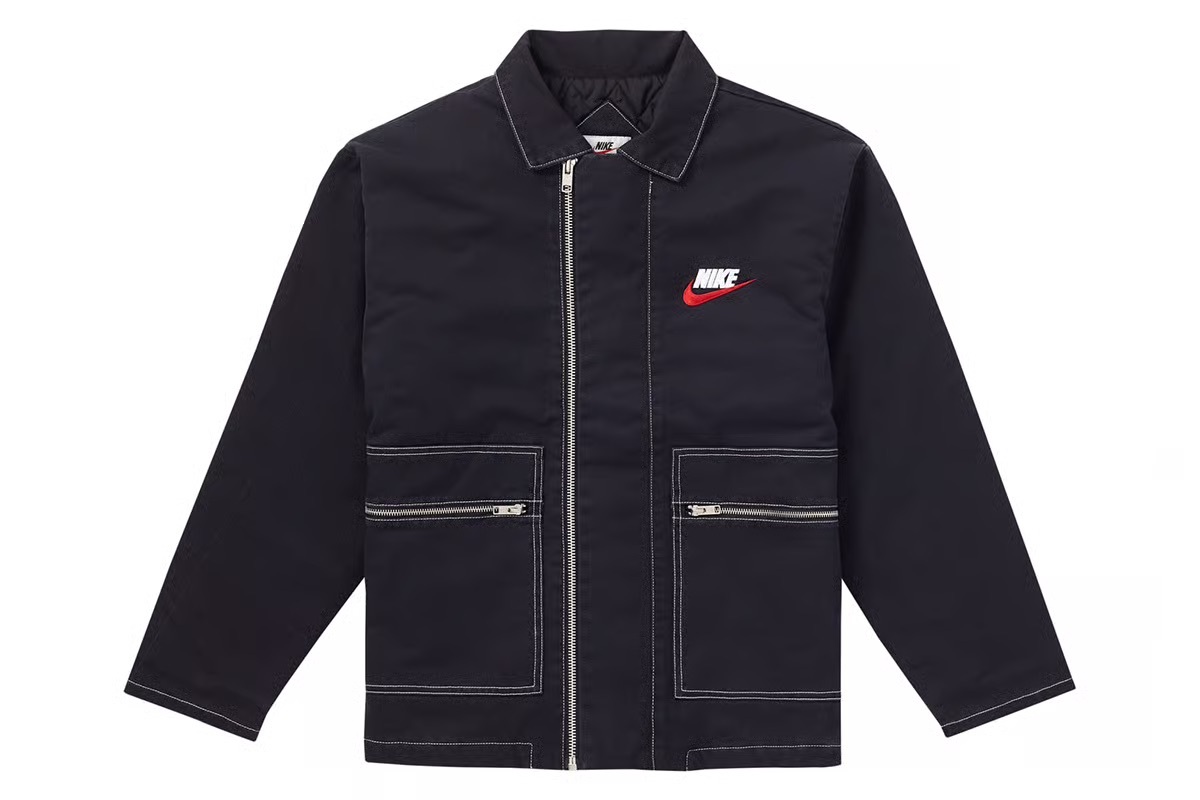
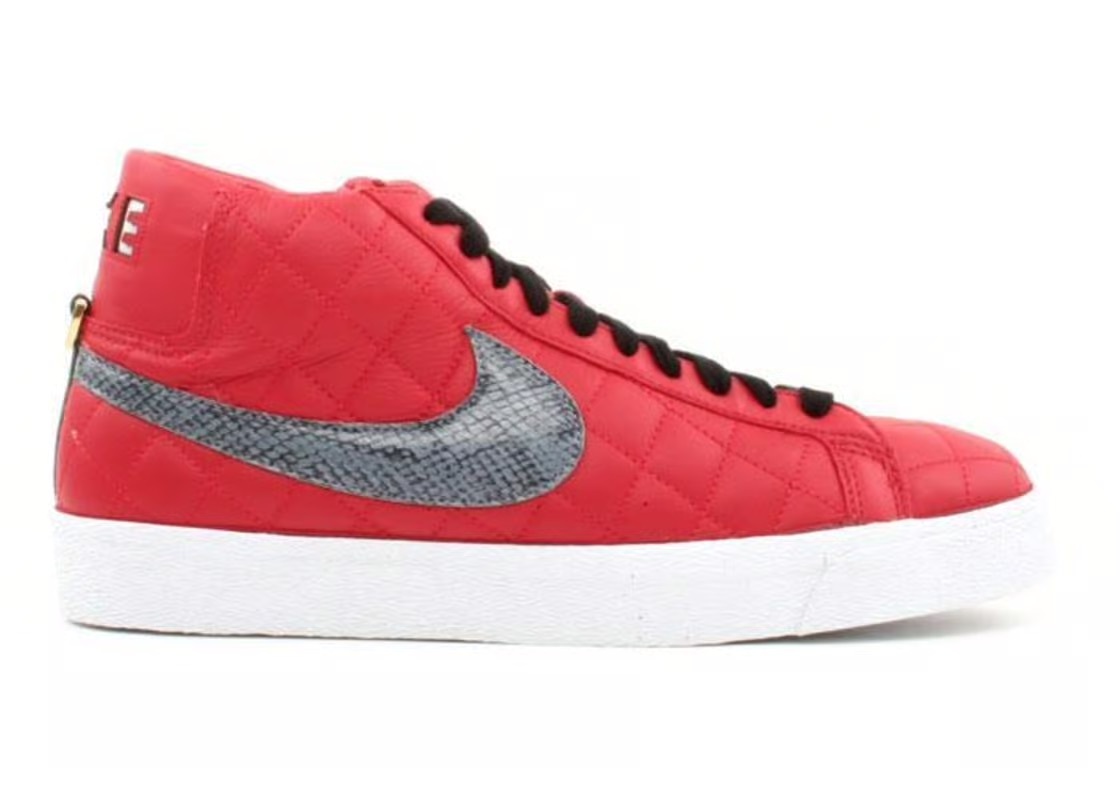
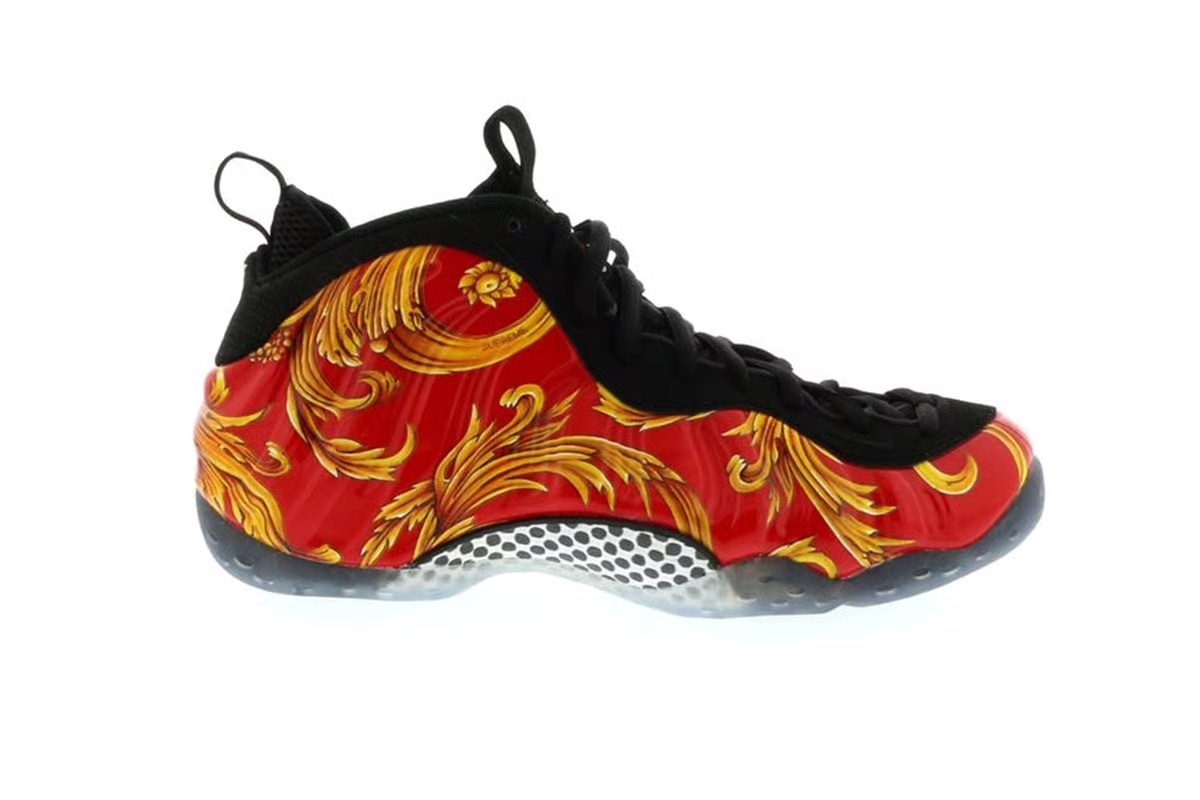
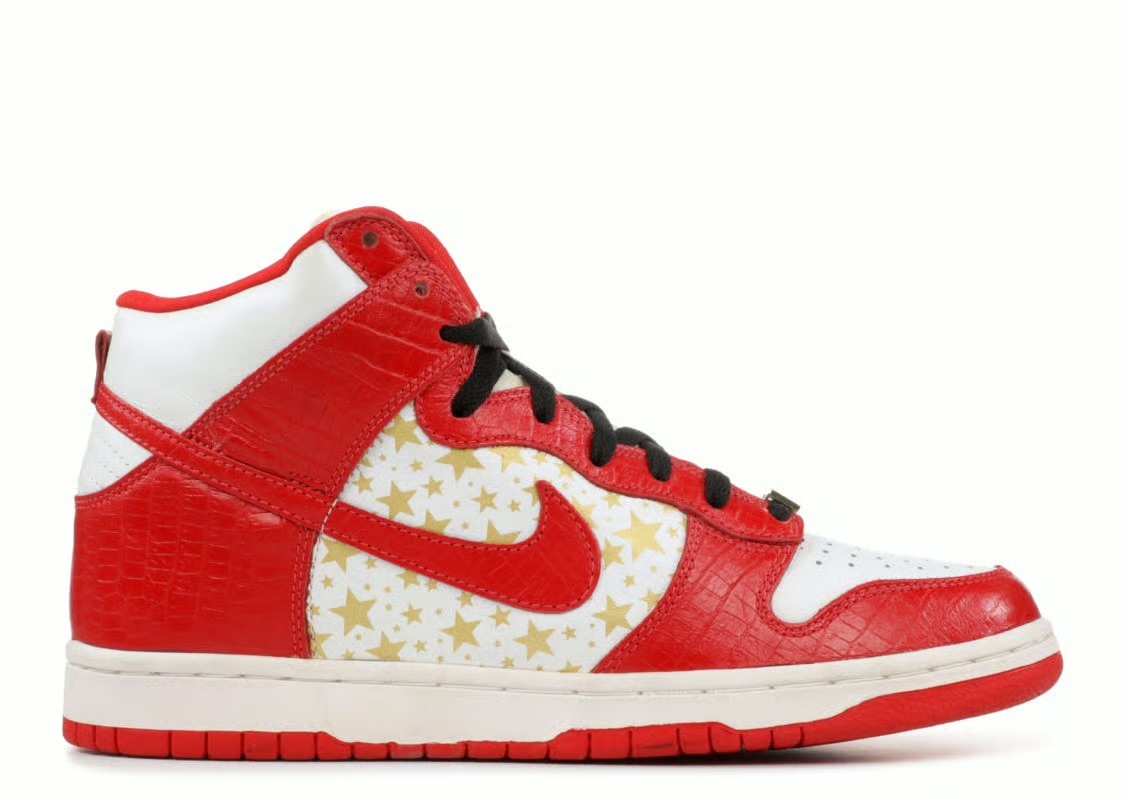
The 2002 release set a cadence that ran continuously. In 2003 Supreme returned with a Nike SB Dunk High Pro in three colourways, the panels rendered in alligator-embossed leather with gold star prints and gold Supreme lace locks. In 2006 the partnership pivoted to the Nike SB Blazer, executed in quilted leather with gold-tipped aglets and an 80s hip hop aesthetic that pulled the model out of the skate frame and into general streetwear. The 2007 release added a Nike SB Trainer with an accompanying Baseball Jacket carrying both wordmarks in bold type, the first apparel-led release. In 2012 the 10-year anniversary delivered a red-cement retread of the original Dunk Low, marked by queues stretching for blocks outside the Lafayette Street store. The 2014 Foamposite One drop in red and black baroque print became the largest single Supreme retail incident in the brand's history, with NYPD intervention shutting down the Lafayette Street release and the entire run pushed online. The 2016 Air Jordan 5 trio combined Supreme branding with Jumpman scripting across desert camo, white and black uppers, an unusual concession from Jordan Brand. The 2018 collection moved into minimalist apparel and accessories, with the Swoosh and Supreme wordmark embroidered small on overalls, jacquard polos, beanies, and a 14-carat gold earring.
The drop model becomes infrastructure
The Supreme x Nike sequence did three things for the wider category. It established the Thursday drop as a retail ritual, with stock cleared within minutes and resale pricing on the secondary market visible the same afternoon. It made footwear and apparel co-branding feel ordinary inside fashion and luxury, paving the way for Comme des Garçons SHIRT in 2012 and Louis Vuitton in 2017. It also shifted Nike's SB division from a niche skate sub-brand into a primary growth driver for Nike's lifestyle business, with the SB Dunk model becoming the most contested silhouette in sneaker culture by the early 2020s.
Editorial reading
The collaboration succeeded because the asymmetry was clean. Nike needed cultural credit, Supreme needed scale, and neither brand diluted the other. Supreme designed for the skate function and the Box Logo grammar held its meaning. Nike supplied silhouettes, materials and distribution and accepted that the Supreme overlay would dominate the visual. The economic split that followed, with secondary market values consistently outpacing retail by a factor of ten or more, was the indirect proof that the cultural exchange had been priced correctly inside the partnership. The 2002 Dunk Low was the first drop of a relationship that would generate more than fifty releases through to the end of the 2010s, and it remains the cleanest case study of how two brands can hand each other a missing capability without either one losing its position.
Written with AI assistance, edited by a human. Find out more about our Use of AI.