Founded by James Jebbia on Lafayette Street in April 1994 as a skate shop, Supreme defined the modern streetwear category through a tightly controlled…
11 Articles
Founded in 1854 by Louis Vuitton in Paris, Louis Vuitton Malletier is one of the world's most valuable luxury houses and the largest revenue contribut…
13 ArticlesA runway collaboration that opened the luxury house to a skate label
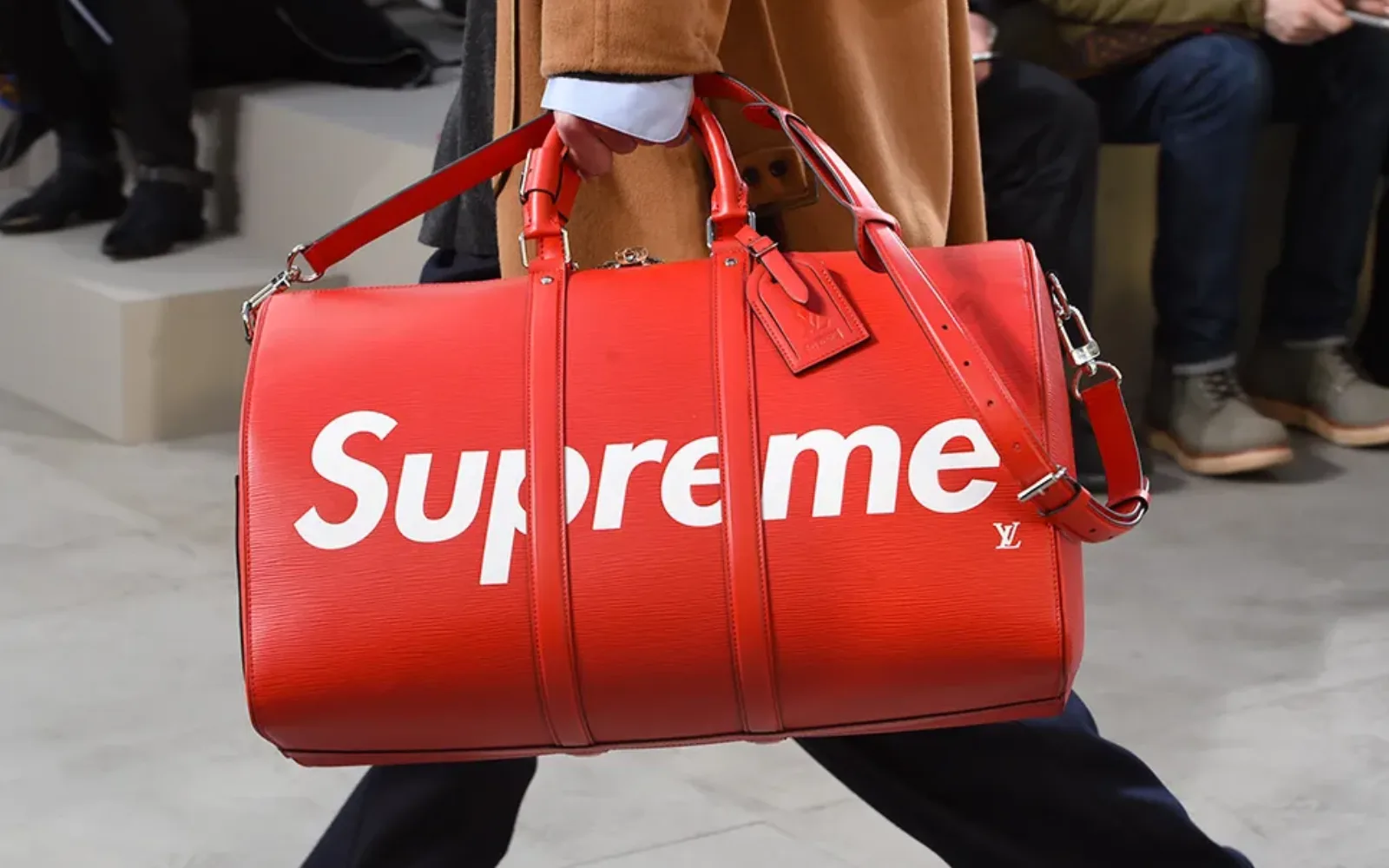
Louis Vuitton presented its Fall/Winter 2017 menswear collection in Paris on 19 January 2017. The show carried the title Friends and Heroes and was designed by Kim Jones in his role as Men's Artistic Director. The collection included a full co-branded capsule with Supreme, the first time the New York skate label had been written into the calendar of Paris Men's Fashion Week. Co-branded pieces ran across leather goods, ready-to-wear, footwear, and accessories. The Louis Vuitton monogram was rebuilt to embed the red Supreme Box Logo inside the canvas, and the run included a custom Louis Vuitton hard trunk dimensioned to carry a skateboard.
The collaboration had been initiated by Louis Vuitton CEO Michael Burke, who had proposed the partnership to Jones some months before. The brief was structural rather than tactical. Burke and Jones wanted to expand the audience for Louis Vuitton menswear into a younger generation that the house had been losing to streetwear labels through the mid-2010s, and they wanted to do so without diluting the codes that had carried Louis Vuitton men's leather goods for more than a century. Supreme was the partner that could deliver that audience and that already commanded the cultural authority on which the trade-off depended.
The strategic problem the collaboration solved
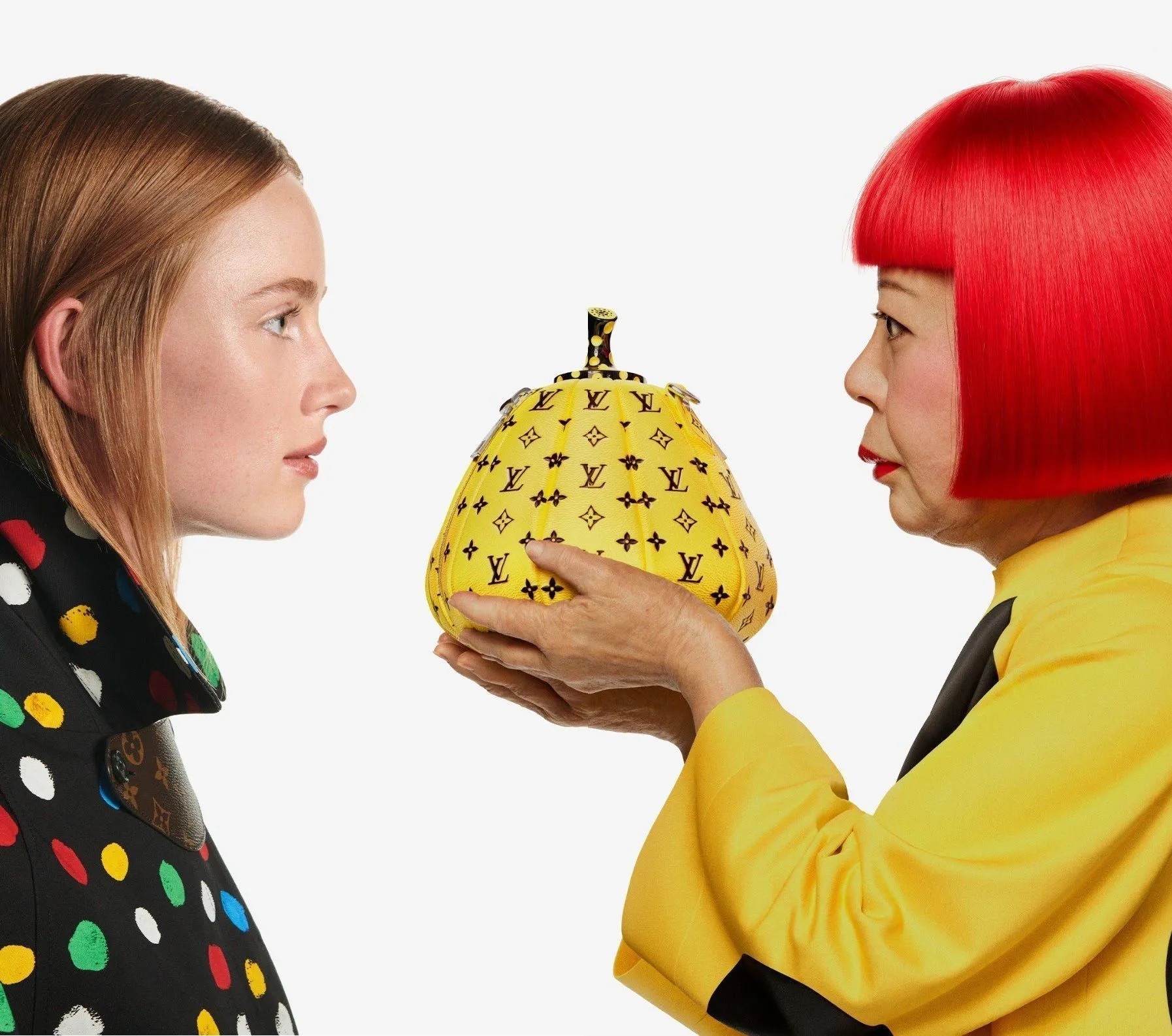
Louis Vuitton had been building a long campaign of cultural collaborations since the 1990s. The house had partnered with Stephen Sprouse on the graffiti monogram in 2001, with Takashi Murakami on the multicolour monogram in 2003 and the cherry blossom in 2003, with Richard Prince on the Jokes in 2008, with Yayoi Kusama on the polka-dot capsule in 2012, and with Christian Louboutin, Cindy Sherman, and other art and fashion figures over the same period. Each of those collaborations had positioned the house inside the contemporary art conversation. The Supreme collaboration did the same work for the contemporary streetwear conversation.
The conversation Louis Vuitton needed to enter in 2017 was being held in skate parks, sneaker stores, and Thursday-morning queues outside Lafayette Street. The houses that had previously been the gatekeepers of luxury were losing the under-thirty audience to brands that operated on a drop schedule rather than a seasonal calendar. The Supreme collaboration argued, in the most public way possible, that a luxury house could absorb a streetwear vocabulary without losing its tailoring authority. The Paris menswear runway was a deliberate venue for that argument.
The Friends and Heroes thematic frame
Kim Jones built the Friends and Heroes collection around the cultural fabric of New York between the 1970s and the 1990s. The show notes referenced Julian Schnabel, Keith Haring, Robert Mapplethorpe, Jean-Michel Basquiat, and Andy Warhol, and pieces in the collection responded to the same downtown New York context that had produced Supreme. The Friends and Heroes title therefore did three pieces of work. It positioned the Supreme collaboration as part of a wider New York reference rather than as an isolated commercial deal. It situated Jones's own design vocabulary inside a recognisable art-historical lineage. It supplied the show with a narrative that the trade press and the cultural press could each report on without losing the central reference point.
The collection delivered the theme through specific objects. A Louis Vuitton trunk built for a skateboard. A bandana that referenced 1980s Lower East Side dress. A leather hooded jacket. A baseball jersey in monogram canvas. A roll-top backpack in monogram with Supreme tape. The Supreme Box Logo sat inside the LV monogram on most leather pieces. The colourways stayed close to Supreme's red and Louis Vuitton's brown, with the consequence that any individual co-branded piece was instantly identifiable from across a room.
Source: Fashion TV Production Youtube
The release sequence
The collection sold in a sequence of pop-up stores that opened on 30 June 2017 in Sydney, Seoul, Beijing, Tokyo, Paris, London, Los Angeles, and Miami, plus a Louis Vuitton boutique in Hong Kong. The pop-ups carried only the Supreme x Louis Vuitton capsule, with each location open for a small number of days. The decision to use temporary retail rather than a permanent line release was deliberate. Louis Vuitton wanted the collaboration to function as an event rather than as a permanent product range, and Supreme wanted to preserve the drop discipline that defined its own brand. The pop-up sequence delivered both, with queues that ran longer than any standard Supreme drop and with secondary-market values multiplying within days of release.
The capsule did not appear in the regular Louis Vuitton Men's retail network after the pop-ups closed. Customers who had not bought the pieces during the small distribution window were directed to the secondary market. The decision turned a Paris runway show into a global retail event with a finite, scheduled window, and set a template for the later high-profile collaborations of the late 2010s, including the Off-White and Louis Vuitton arrangement under Virgil Abloh.
The legacy assessment
The Supreme x Louis Vuitton collaboration is now recognised as the moment streetwear was admitted into the formal vocabulary of luxury menswear. The reverberations followed quickly. Kim Jones moved to Dior Men in 2018 and continued building collaborations with streetwear and contemporary art figures. Virgil Abloh joined Louis Vuitton as Men's Artistic Director the same year, with a remit that extended the Supreme-style cultural reading further into the house's core ready-to-wear. Other luxury houses followed with their own streetwear collaborations across the next five years.
The collaboration also resolved a longer industry argument. Streetwear had been described before 2017 as a temporary trend that the luxury houses would either absorb or wait out. The Paris runway argued the opposite case. Streetwear was a permanent cultural register that the luxury houses needed to negotiate with rather than ignore. Supreme and Louis Vuitton set the terms of that negotiation, and the rest of the luxury industry has continued to work inside those terms since.
Source: Highsnobiety Youtube
Written with AI assistance, edited by a human. Find out more about our Use of AI.