
A choice made on character, not on a media plan
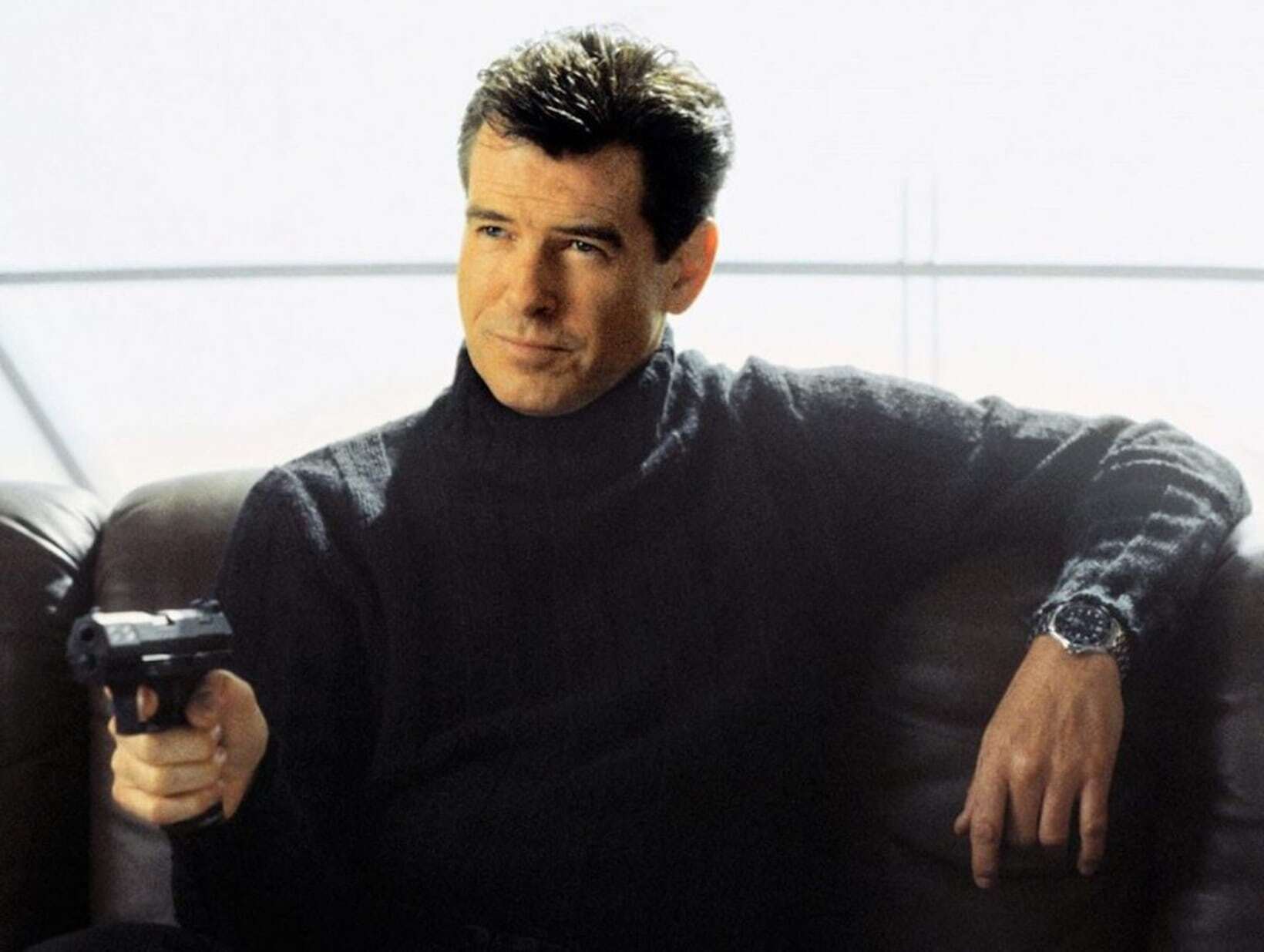
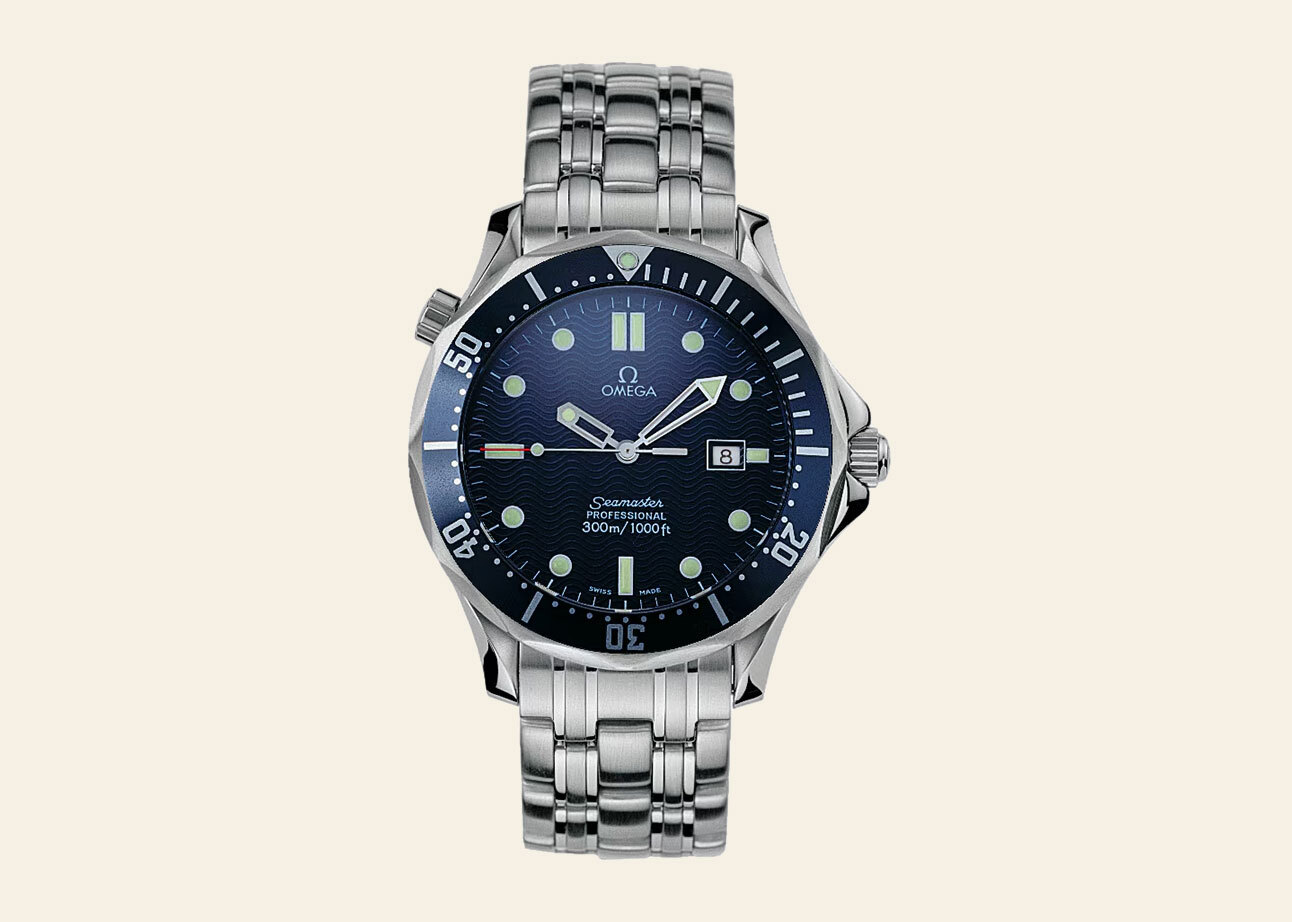
GoldenEye reached cinemas in November 1995 with Pierce Brosnan as James Bond and an Omega Seamaster 300m Professional on his wrist.1, 2 The watch had not been chosen by a marketing department. It was chosen by the film's costume designer, Lindy Hemming, on a reading of the character: "I was convinced that Commander Bond, a naval man, a diver and a discreet gentleman of the world would wear the Seamaster with the blue dial."1
That sentence is the whole foundation of a relationship that has now run for more than 30 years, and it is worth reading closely. Every clause is an argument about the character rather than about the product. Naval, so a maritime watch. A diver, so a dive rating. Discreet, so not the obvious luxury alternative. The Seamaster was not presented as the watch a hero would want. It was presented as the watch this particular man would already own.
What a placement becomes when the logic is external
Product placement usually works the other way around, and it shows. A brand pays, the object appears, and the audience registers the transaction somewhere behind the scene. The placement is legible as a placement, and the credibility it transfers is limited by that legibility.
Hemming's reasoning inverted the flow. The justification for the Seamaster came from inside the fiction, and it was published, so audiences and journalists have been repeating a costume designer's character note for three decades. Omega inherited an endorsement it did not write and could not have written, because a brand asserting that its own watch is what a discreet naval officer would choose is making a claim about itself. A costume designer making it is making a claim about the character.
Continuity through two Bonds
The relationship did not stay with one actor or one model. Brosnan wore Seamaster 300m Professionals through Tomorrow Never Dies in 1997, The World Is Not Enough in 1999 and Die Another Day in 2002. When Daniel Craig took the role, the watch stayed: a Seamaster Diver 300m and a Planet Ocean 600m in Casino Royale in 2006, a Planet Ocean in Quantum of Solace in 2008, a Planet Ocean and an Aqua Terra in Skyfall in 2012, and a Seamaster 300 Master Chronometer in Spectre in 2015.1
Surviving a recasting is the harder test, and it is where most celebrity-led brand relationships end. A brand tied to a person loses the asset when the person leaves. Omega had been tied to a role instead, and the role outlived both actors who held it during the partnership. The company's association is with Bond, which is a property, not with Brosnan or Craig, who are people.
From a credit to a product
The Seamaster was not the automatic answer in 1995. It became the answer by being argued for, and the argument stuck because it was specific.
The commercial consequence was a line of limited editions. Omega has issued Bond-related Seamasters alongside the films, among them the Seamaster 300 Spectre Edition with a 12-hour bezel and a five-stripe NATO strap.1 These are the mechanism by which a film credit is converted into a product, and they work because the association was established as characterisation rather than as sponsorship. A limited edition celebrating a paid placement is an advertisement with a serial number. A limited edition celebrating a character's own watch is a collectable.
The editions also keep the relationship productive between films. A franchise releases an instalment every few years, which is a long silence for a brand to maintain on borrowed attention. A watch issued in the same period gives the association something to do in the gap.
Omega Watch Ad. Source: Mancini TV Classics Youtube
What the arrangement costs the brand
Three decades of a single association narrows as much as it builds. A meaningful share of what the general public knows about the Seamaster arrives through a film franchise, and the brand does not control the franchise. The tone of a Bond film, the reception of a Bond actor and the gaps between instalments are all outside Biel.
Omega has spent the same period building positions that do not depend on it, in Olympic timekeeping and in spaceflight, both of which are the company's own record rather than a borrowed one. The Bond relationship sits alongside those as the most visible of the three and the least owned. It began as an outsider's opinion about a fictional man, and that is still the source of its power.
Which is the unusual part of it. Omega did not commission the argument that carries the Seamaster. Somebody else made it, about somebody who does not exist, and the company's contribution was to recognise what it had been handed and to keep it in use for more than 30 years.
OMEGA ad "No time to die". Source: OMEGA Youtube
Written with AI assistance, edited by a human. Find out more about our Use of AI.
1. Monochrome Watches, "Retrospective - The Entire Omega Seamaster x James Bond 007 History", read 24 September 2026, for the partnership beginning with GoldenEye in 1995, for the quotation from costume designer Lindy Hemming on why she chose the Seamaster with the blue dial, for the film-by-film list of watches from GoldenEye 1995 through Spectre 2015 across Pierce Brosnan and Daniel Craig, and for the Seamaster 300 Spectre Edition with a twelve-hour bezel and five-stripe NATO strap. https://monochrome-watches.com/retrospective-omega-seamaster-james-bond-007-history/
2. Wikipedia, "Omega Seamaster", read 24 September 2026, for the Seamaster's use in the James Bond films from 1995 and for the model designations of the Seamaster 300m Professional line. https://en.wikipedia.org/wiki/Omega_Seamaster