The timekeeper signs a competitor
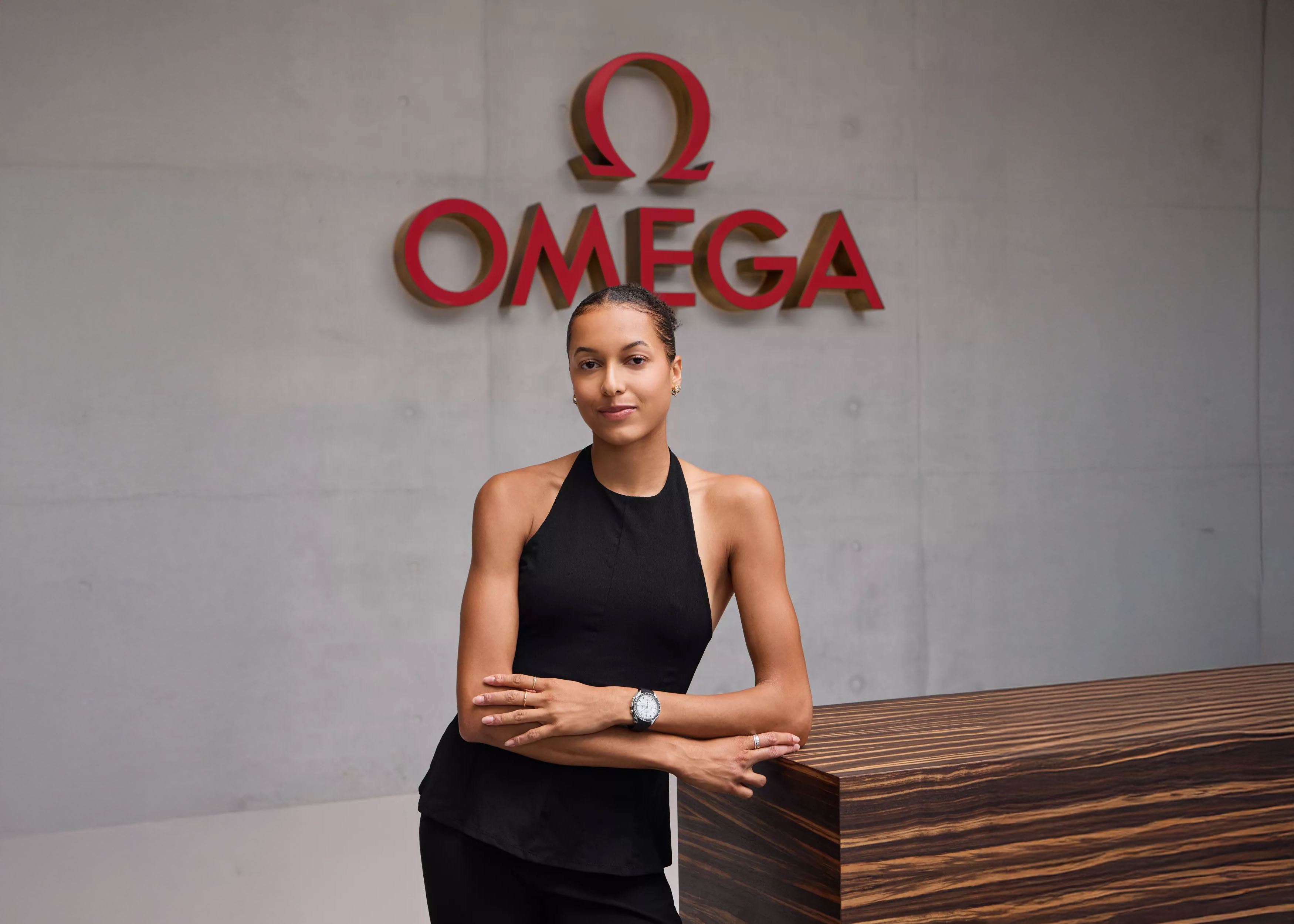
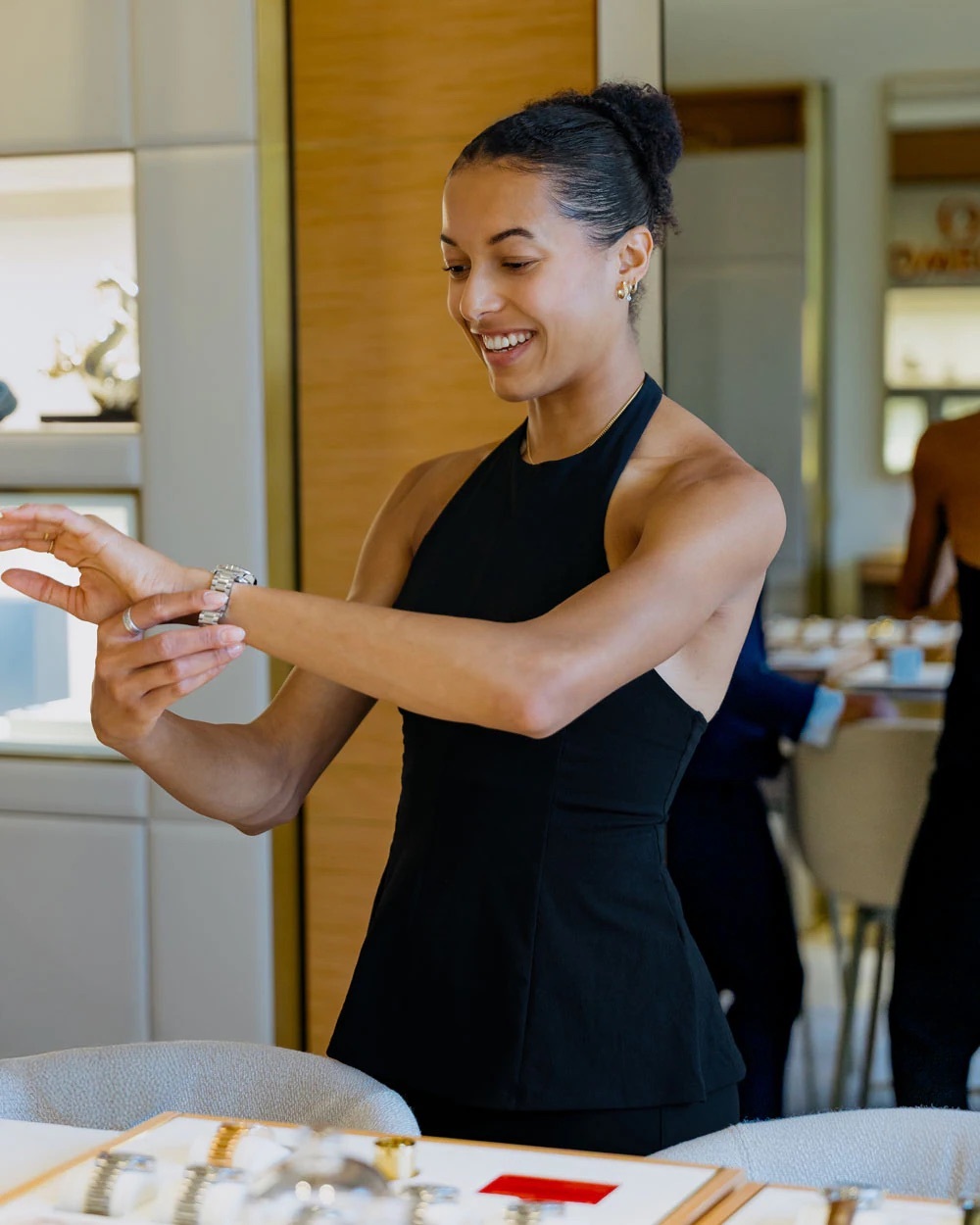
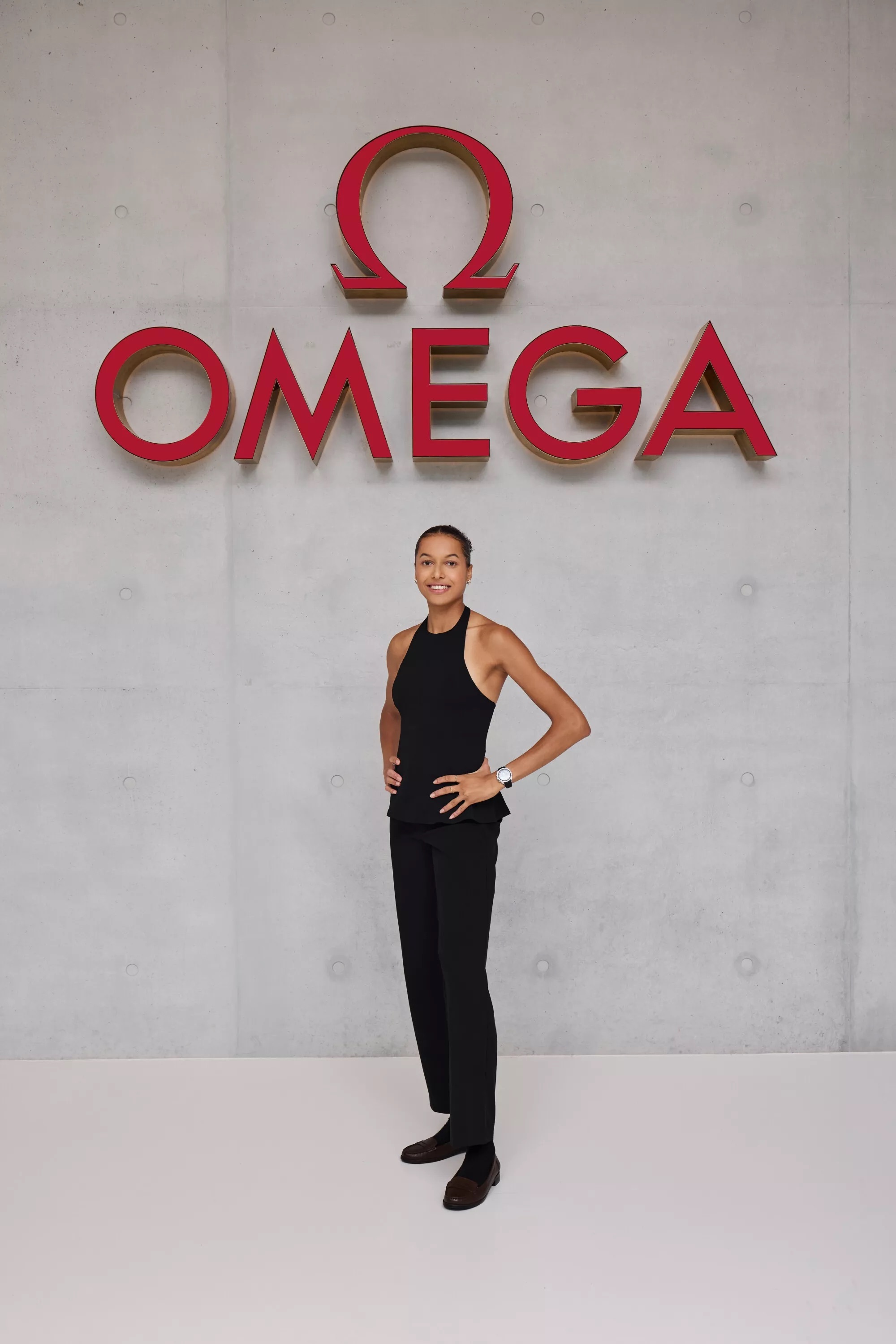
On 9 July 2026 Omega announced the Swiss middle-distance runner Audrey Werro as a brand ambassador. Werro, born in 2004, visited the company's watchmaking headquarters in Biel. She had taken silver over 800 metres at the World Indoor Championships in Torun, set a Swiss record of 1:53.98 at the Stockholm Diamond League, and lowered it to 1:53.80 in Paris. Omega's release records that the Stockholm time ranked third fastest in history and the fastest in 43 years, and that she had run for Switzerland at the Paris 2024 Olympic Games.1
What Omega acquired for that list is not a face. It is a working relationship with a competitor in the sport the company has measured for almost a century, which is a different kind of asset and a more awkward one to hold.
Two roles that do not usually sit together
Omega has been Official Timekeeper of the Olympic Games since 1932, and says so in the same release that announces the signing.1 That role is unusual for a consumer brand, because it is not a sponsorship of anybody. The timekeeper belongs to the competition rather than to a competitor, and the value of the position rests on exactly that: a measurement is only worth anything if the party making it has no stake in the result.
Signing athletes runs the other way. An ambassador is a partisan by definition. Holding both positions is the interesting part of Omega's athletics strategy, and the company does not treat them as a conflict so much as a sequence. The neutrality earns the authority; the ambassadors spend it.
Raynald Aeschlimann, President and CEO of Omega, framed the signing around the trajectory rather than the titles: "We're very excited to welcome Audrey Werro to OMEGA. Records have been falling since she began her athletics career and we can see a very bright future ahead."1
What the athlete says back is the asset
Werro's own line is the more useful one for the brand. "Amongst athletes, OMEGA is such a highly respected name. We all know the brand as a trusted timekeeper and watchmaker, so I feel very proud to be joining the ambassador family."1
A luxury brand can buy a face. It cannot buy a competitor saying that the respect comes from inside the sport. That sentence is the return on 94 years of clocks, and it is only available to a company that holds the timekeeping contract. A watchmaker without it can sign the same runner and get a photograph; it cannot get this endorsement, because the athlete would have no reason to make it.
Signing early, and what that costs
Werro was 22 at the signing and had not won a global outdoor title. Omega's release leans on records rather than championships, which is the tell: the company is buying a curve, not a palmares.1
Signing before the career peak is cheaper and it is riskier. The brand is buying the association with the ascent rather than with the medal, which is a different story and in most respects a better one: a partnership that predates the fame reads as judgement, while one that follows it reads as a transaction. The risk is the obvious one. An athlete who does not arrive leaves the brand holding a portfolio slot and a set of images that never acquire their caption.
On this occasion the bet resolved quickly. Werro took the European title in Birmingham on 14 August 2026 and won the Diamond League Final in Zurich later that month in 1:53.70, a further Swiss record.2 The signing was seven weeks old.
The watch she was given is not a running watch
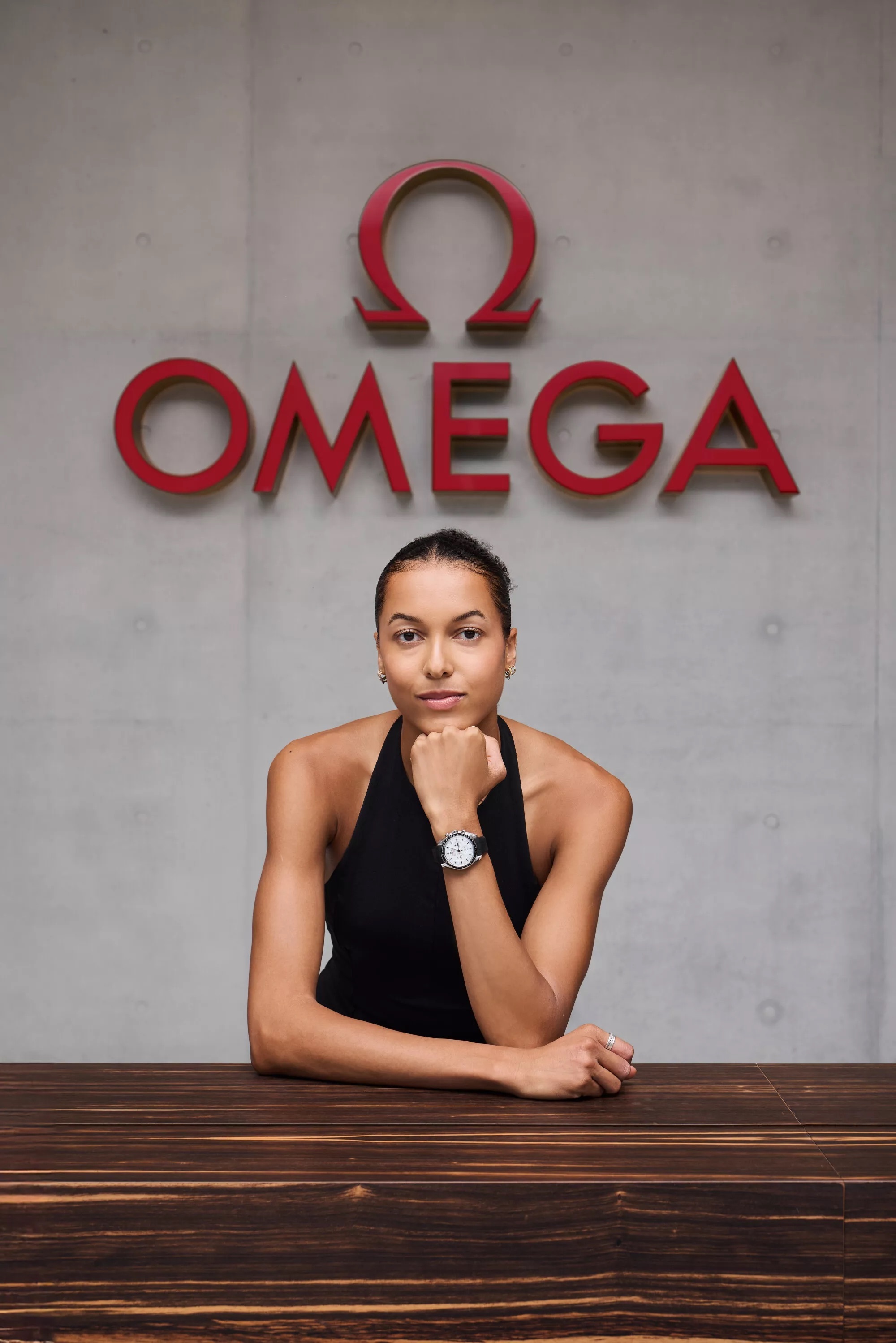
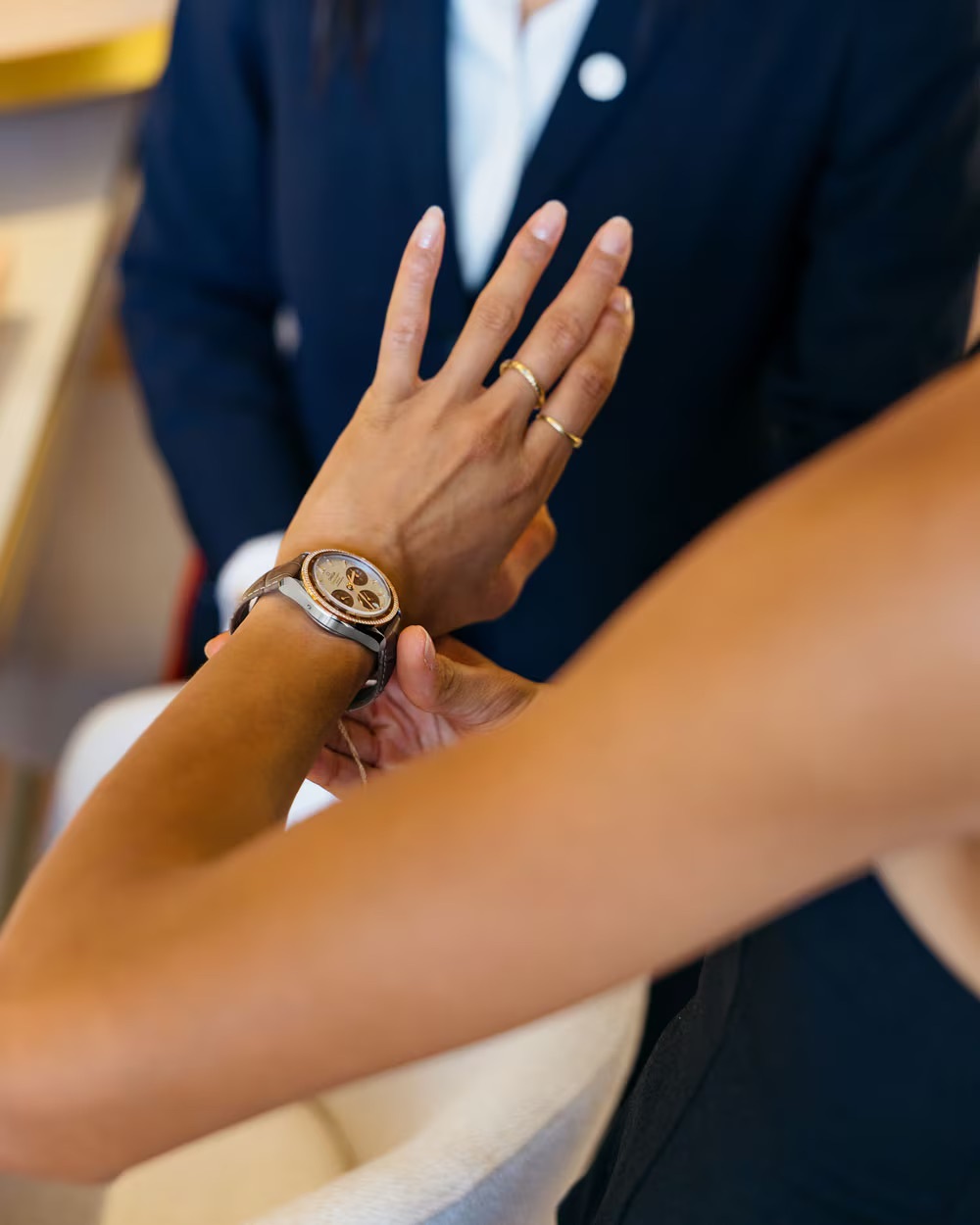
Omega's own account of the visit shows Werro with a Speedmaster Moonwatch Professional, 42mm, in steel on a rubber strap.3 It is a manually wound chronograph qualified for spaceflight, and nobody runs 800 metres in one.
The choice is consistent with how Omega uses its ambassadors. The athlete is not being sold a tool for her event; she is being placed alongside the company's most legible product, the one that carries the qualification story. Omega's athletics position and its space position are two versions of the same argument, which is that the brand is the one that was there to measure. Putting the Moonwatch on a record holder puts both arguments in one photograph.
It also keeps the relationship honest in a way a product endorsement would not. Werro is not claiming the watch makes her faster. She is confirming that the brand which times her is one she respected before it paid her, which is the only claim in this arrangement that a reader has no reason to discount.
Written with AI assistance, edited by a human. Find out more about our Use of AI.
1. OMEGA, "Audrey Werro is Welcomed as a new OMEGA Ambassador", press release, 9 July 2026, read 24 September 2026, for the announcement date, for Werro's visit to the watchmaking headquarters in Biel, for the World Indoor Championships silver in Torun, the Swiss record of 1:53.98 at the Stockholm Diamond League and 1:53.80 in Paris, for the statements that the time ranked third fastest in history and fastest in 43 years, for her appearance at the Paris 2024 Olympic Games, for OMEGA being Official Timekeeper of the Olympic Games since 1932, and for the quotations from Raynald Aeschlimann, President and CEO of OMEGA, and from Audrey Werro. The Aeschlimann sentence is given here as printed in the release. https://press.omegawatches.com/audrey-werro-is-welcomed-as-a-new-omega-ambassador/
2. Wikipedia, "Audrey Werro", read 24 September 2026, for her birth year of 2004, for the European Championships title in Birmingham, and for the Diamond League Final win in Zurich in 1:53.70 as a Swiss record. These results postdate the OMEGA release and are used only for what happened after the signing. https://en.wikipedia.org/wiki/Audrey_Werro
3. OMEGA, "Audrey Werro is Welcomed as a new Brand Ambassador", OMEGA Stories, read 24 September 2026, for the Speedmaster Moonwatch Professional, 42mm, in steel on a rubber strap shown with Werro at the Biel visit. This detail is on the story page and not in the press release cited at note 1. https://www.omegawatches.com/stories/audrey-werro-is-welcomed-as-a-new-brand-ambassador