One watchmaker, 30 chronographs, every discipline
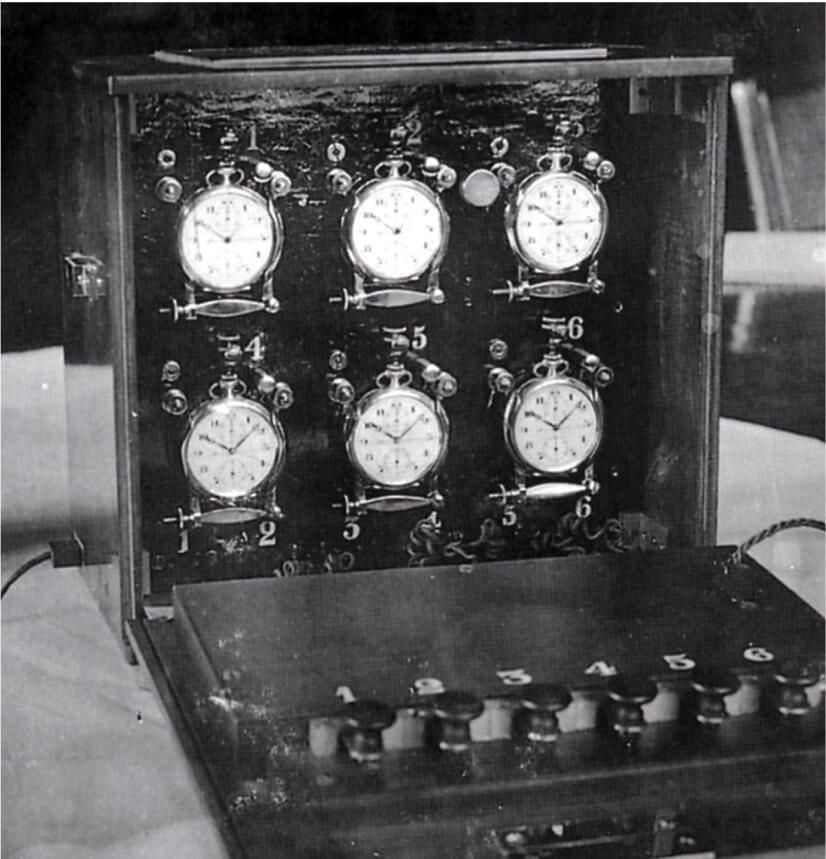
The Games of the Xth Olympiad opened in Los Angeles on 30 July 1932.3 Omega sent 30 chronographs and a single watchmaker to accompany them, and with that equipment the company was entrusted to time every discipline at the Games. It was the first time one watchmaker had timed an entire Olympics.1
The arrangement reads today like an anecdote about scale. In 1932 it was a commercial proposition of a particular kind, and the kind matters more than the size.
A brand that is paid in evidence
An advertiser buys attention. A sponsor buys association. A timekeeper buys neither. What Omega acquired in Los Angeles was the right to be the instrument by which the results were established, which is a position no amount of advertising can produce because it is not a claim about the product. It is a job the product does in front of witnesses, with the outcome published.
The difference shows in what can be said afterwards. A sponsor can say it supported the Games. A timekeeper can say the records are its readings. For a Swiss watch company selling precision to people who have no way of verifying precision, that is the only form of proof available at scale, and Omega has spent 94 years collecting it. The company has been Official Timekeeper at nearly every Olympic Games since, and the arrangement runs to 2032.
Entrusted is a different word from endorsed
Omega's own phrase for what it was given in 1932 is that it was entrusted to time all disciplines.1 That is a precise description of the transaction, and the precision is the point. A watch a customer is asked to trust is a promise. A watch an Olympic result depends on is a piece of equipment an organising committee decided to rely on, which is a judgement made by a party with no interest in the manufacturer's reputation.
This is the same structure that would later serve Omega in spaceflight, when NASA qualified the Speedmaster for crewed missions from 1965.2 In both cases the brand did not describe itself as accurate or as robust. A third party with a reason to be strict made the determination, and the brand quoted the determination. The 1932 arrangement is where the method starts.
It is worth being precise about what such a decision is not. It is not a recommendation, and no governing body was endorsing the watches or suggesting anybody buy one. It is a finding of fitness for a task, made by a party whose only interest is that the task be done correctly. That is a narrower statement than any advertisement would make and a far more durable one, because there is nobody to accuse of having overstated it.
Precision as a story with a plot
The single watchmaker is the detail that carries the narrative, and it does so because it dates. Omega's own account contrasts the tenth of a second resolved in 1932 with the thousandth resolved at modern Games.1
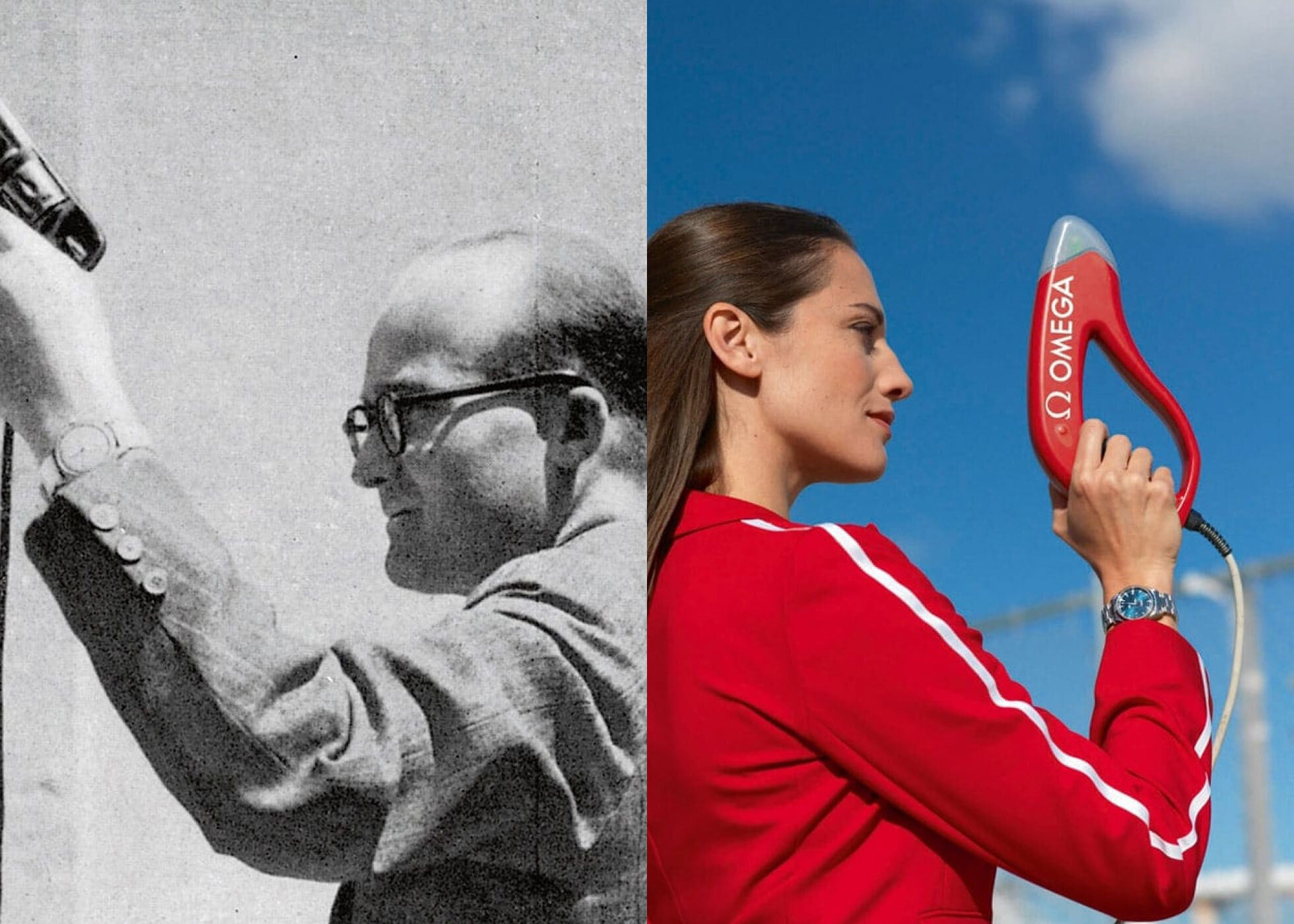
A brand built on precision has an unusual problem: precision has no ceiling and no finish, so the achievement is never final and the claim is never renewable on its own. Omega solved it by turning the measurement itself into a series. Every Games is a new instalment, the equipment is visibly different from the last, and the improvement is reported by the sport rather than announced by the manufacturer. One man with 30 chronographs is the first chapter of that series, and it works as heritage precisely because it is so plainly obsolete
What the position costs
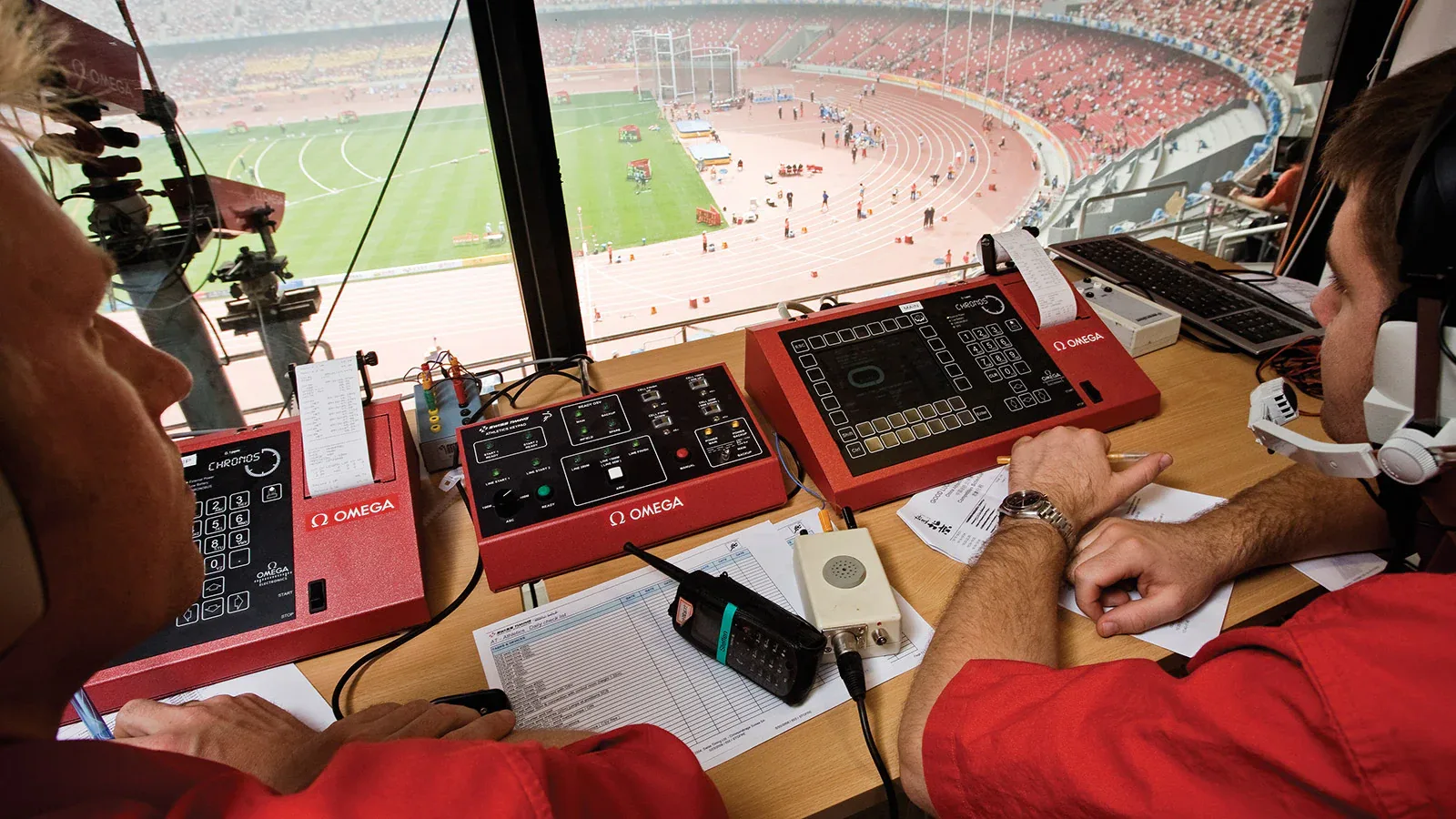
Being the timekeeper carries obligations a sponsorship does not. The equipment has to work, in public, on a schedule set by somebody else, and a failure is not a bad campaign but a disputed result. The organisation required to cover a Games has grown from one watchmaker to a permanent technical operation, and the expense is continuous whether or not any watches are sold in the same period.
It also constrains what Omega can do with athletes. A party that measures the competition cannot be seen to be invested in the outcome, and the company's ambassador roster sits alongside the timekeeping role rather than inside it. The neutrality is the asset, and it has to be visibly protected to remain one.
And it locks the brand into a calendar it does not set. The Games arrive when they arrive, the host city is chosen by somebody else, and a company whose central heritage story runs on that cycle inherits whatever the cycle brings with it, including the periods when the Olympic movement is not the thing a brand would choose to be standing next to.
The return is a claim almost no consumer brand holds. Omega does not have to argue that it understands time. For the length of a Games, it is the thing the arguing is done with, and the record books do the rest of the work for the next four years.
Source: OMEGA Youtube
Written with AI assistance, edited by a human. Find out more about our Use of AI.
1. OMEGA, "1932: OMEGA Becomes Official Timekeeper of the Olympic Games", OMEGA Chronicle, read 24 September 2026, for the 30 chronographs, for the single watchmaker sent with them, for OMEGA being entrusted to time all disciplines in Los Angeles, for OMEGA becoming the first watchmaker to time an entire Olympic Games, and for the progression from a tenth of a second in 1932 to a thousandth of a second at modern Games. https://www.omegawatches.com/chronicle/1932-the-start-of-an-olympic-legacy
2. Wikipedia, "Omega SA", read 24 September 2026, for OMEGA serving as Official Timekeeper of the Olympic Games since 1932 with the partnership extending through 2032, and for NASA selecting the OMEGA Speedmaster Professional for all crewed missions from 1965. https://en.wikipedia.org/wiki/Omega_SA
3. Wikipedia, "1932 Summer Olympics", read 24 September 2026, for the Games of the Xth Olympiad opening in Los Angeles on 30 July 1932. OMEGA's own page gives the year without a day. https://en.wikipedia.org/wiki/1932_Summer_Olympics