
A new escapement from outside the company
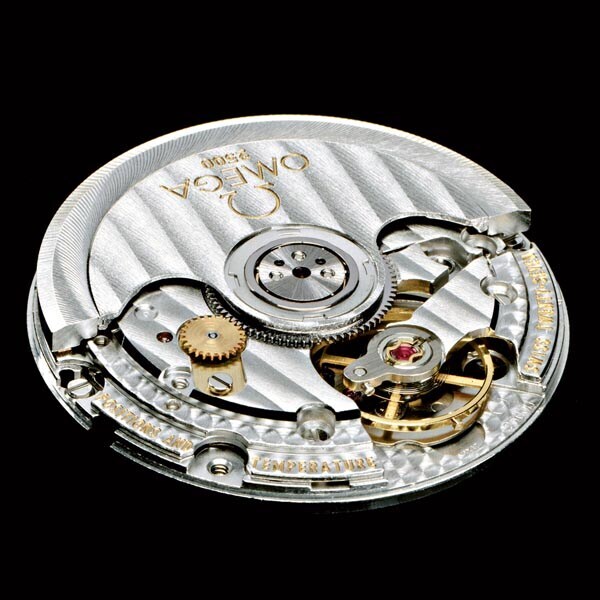
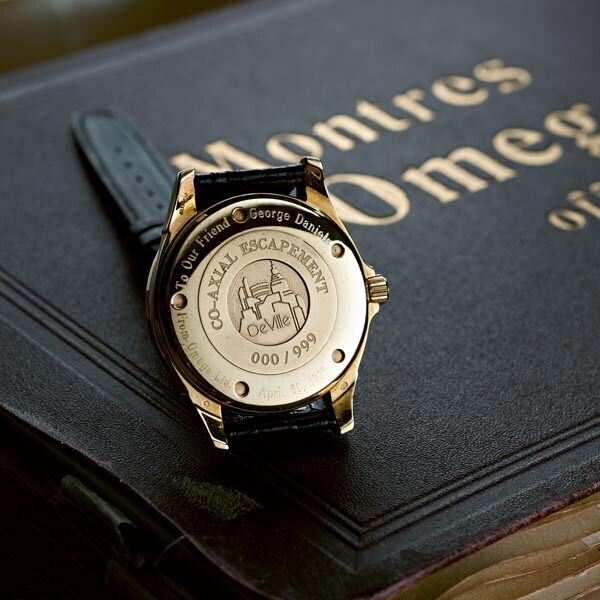
On 12 April 1999 Omega presented the Co-Axial escapement, which it describes as "the industry's first practical new watch escapement in some 250 years". The escapement is the part of a mechanical movement that releases the energy of the mainspring in regular steps. In Omega's account the new design used smaller contact surfaces, so it produced less friction, needed less lubrication and was more reliable than traditional movements.1 The first watches to carry it were limited editions in the De Ville line, fitted with Omega's Calibre 2500.2
The mechanism was not Omega's invention. The English watchmaker George Daniels had designed a new escapement by 1974 and patented its development, the co-axial escapement, in 1980. It took years of presenting the invention to various brands, Patek Philippe among them, before Nicolas Hayek introduced an Omega watch using it in 1999.3
A mechanism with a name and an author
Technical progress in mechanical watchmaking is usually incremental and invisible. It happens inside a closed case, it is described in terms most buyers cannot assess, and it rarely changes what a watch is called. The Co-Axial was different on all three counts. It came with a name that could be written on a dial or in a catalogue, a date that marked a break with centuries of practice, and an inventor whose reputation stood independently of any brand.
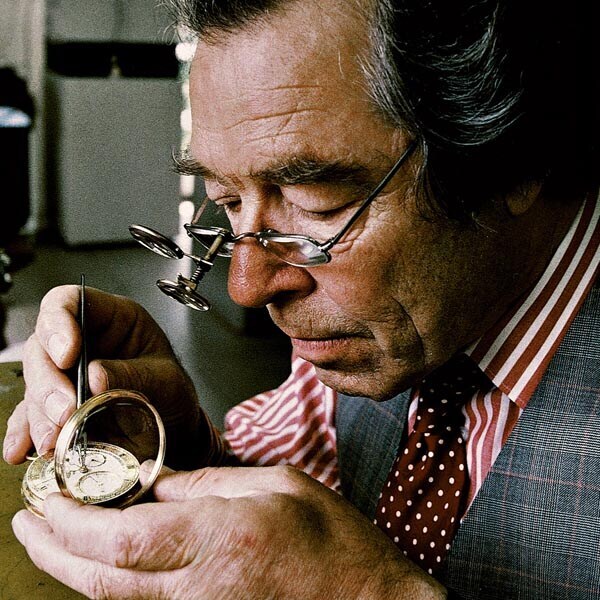
That reputation was considerable. Daniels built his watches by hand, each taking around 2,500 hours of work, wrote the book Watchmaking in 1981 and was appointed CBE in 2010.3 For Omega, a company whose history rests on series production and whose group was then led by Hayek, attaching that name to its movements brought a kind of credibility that industrial scale alone does not provide, because it answered the question every large manufacturer faces from connoisseurs: whether size comes at the expense of watchmaking. A brand built on series production was now carrying the work of a watchmaker who made each of his watches by hand
From limited edition to standard equipment
The significance of 1999 lies in what followed. In 2007 Omega released the Calibre 8500, its own movement and the first developed from the outset around the co-axial escapement. The company doubled its warranty to four years and made the co-axial standard across its range, with the Speedmaster Professional the one remaining exception.2
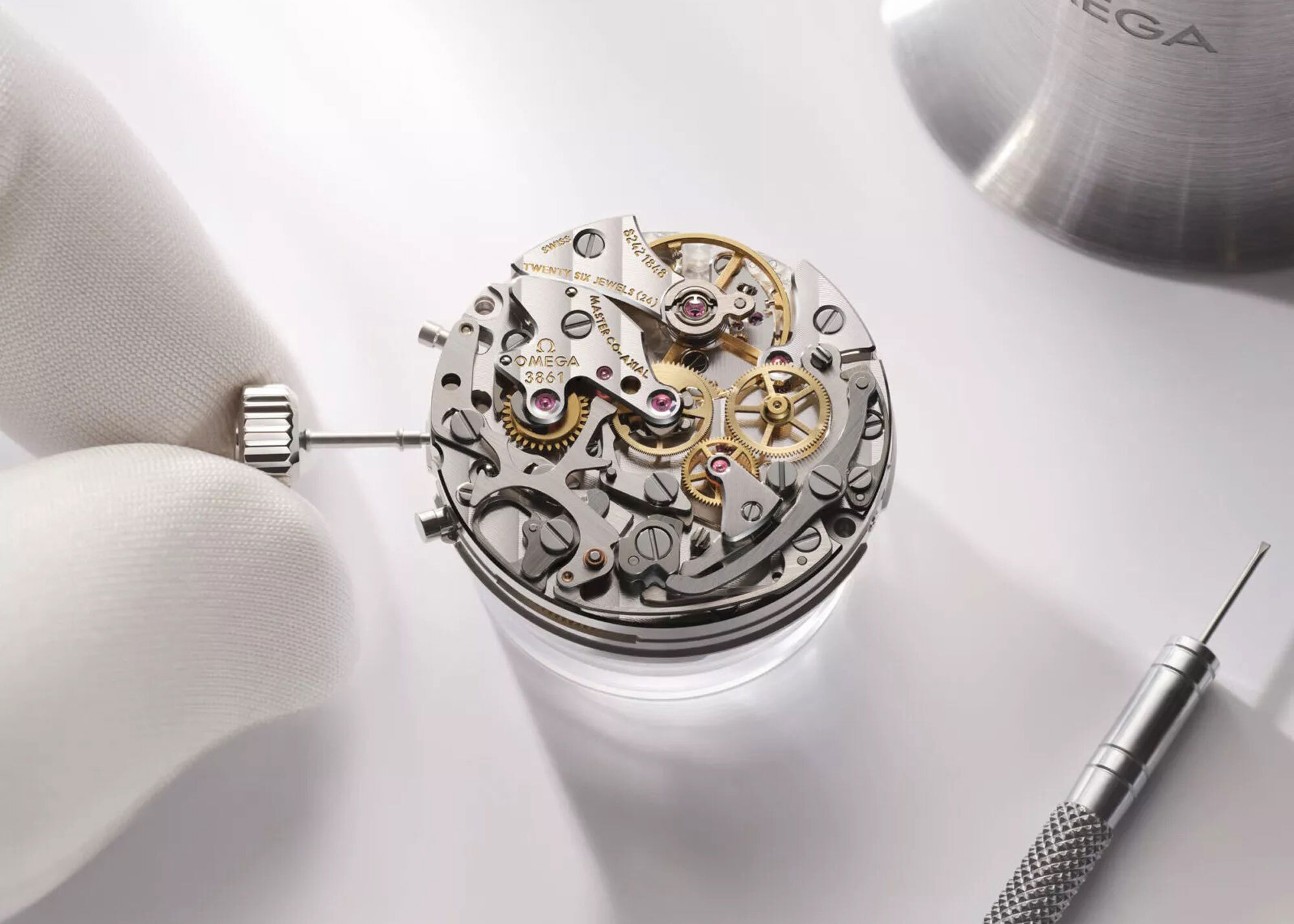
That exception closed in January 2021, when Omega replaced the Calibre 1861 in the standard production Speedmaster Professional with the Calibre 3861, which has a co-axial escapement and Master Chronometer certification.4 The Moonwatch had been the last model outside the system, and its conversion completed the move from an outside patent to the mechanism inside almost every mechanical watch Omega makes.
The pace of that rollout is itself a brand statement. The conversion of the Moonwatch came 22 years after the first limited De Ville editions. A company adopting a technology for marketing alone would not have rebuilt its range around it, and it would not have touched its most heritage-bound model. Omega did both.
Source: Monochrome Watches Youtube
How the escapement changed the brand's claim
Before 1999 Omega's technical authority came mostly from what others said about its watches: the Olympic Games that it timed, NASA that qualified the Speedmaster. The Co-Axial gave the brand a claim about the movement itself, one it could make in its own voice and repeat on every product. Omega frames the escapement both as a leap forward in watchmaking and as a symbol of its pioneering spirit.1
It also became the foundation for the next standard. In 2015 Omega introduced the Master Chronometer certification, combining COSC certification with eight tests set by METAS, the Swiss federal institute of metrology.5 A precision claim built on an outside invention in 1999 had grown within 16 years into a certification scheme the brand defines for itself.
What it means to carry another maker's name
There is a cost in building a technical signature on someone else's work. The brand's defining mechanism of the period will always carry another maker's name, and Omega cannot present it as the product of its own laboratories alone. The company has chosen not to try. Its chronicle names George Daniels as the inventor, with his dates, on the page that records the launch.1
That openness is part of what makes the claim credible. A mechanism credited to a respected independent watchmaker, adopted after other houses had declined it and then carried into series production at a scale no single workshop could reach, tells a clearer story than an anonymous in-house development would. Omega's contribution was industrialisation, and by naming the inventor it lets that contribution stand on its own.
Written with AI assistance, edited by a human. Find out more about our Use of AI.
1. OMEGA, "1999: A revolutionary new escapement", OMEGA Chronicle, dated 12 April 1999, read 29 September 2026, for the Co-Axial escapement as "the industry's first practical new watch escapement in some 250 years", for its smaller contact surfaces, lower friction, reduced lubrication and greater reliability, for George Daniels named as inventor with his dates, 1926 to 2011, and for the escapement framed as a leap forward and a symbol of OMEGA's pioneering spirit. https://www.omegawatches.com/chronicle/1999-a-revolutionary-new-escapement
2. Paul O'Neil, "Escapements: Omega, George Daniels's legacy", Europa Star, September 2013, for the first co-axial watches as limited editions in the De Ville line with Calibre 2500 in 1999, for the in-house Calibre 8500 of 2007 as the first movement developed from scratch around the co-axial escapement, for the warranty doubled to four years, and for the co-axial made standard across the range with the Speedmaster Professional as the exception. https://www.europastar.com/magazine/features/1004086525-escapements-omega-george-daniels-s-legacy.html
3. Wikipedia, "George Daniels (watchmaker)", read 29 September 2026, for the new escapement designed by 1974 and its development patented in 1980 as the co-axial escapement, for years of presenting it to brands including Patek Philippe, for Nicolas Hayek introducing an Omega watch using it in 1999, for about 2,500 hours of work per watch, for the book Watchmaking of 1981, and for the CBE in 2010. https://en.wikipedia.org/wiki/George_Daniels_(watchmaker)
4. Wikipedia, "Omega Speedmaster", read 29 September 2026, for the January 2021 update replacing Calibre 1861 in the standard production Speedmaster Professional with Calibre 3861, featuring a co-axial escapement and Master Chronometer certification. https://en.wikipedia.org/wiki/Omega_Speedmaster
5. Wikipedia, "Omega SA", read 29 September 2026, for the Master Chronometer certification introduced in 2015, combining COSC certification with a series of eight tests set by METAS. https://en.wikipedia.org/wiki/Omega_SA