
An overlay across the whole brand surface
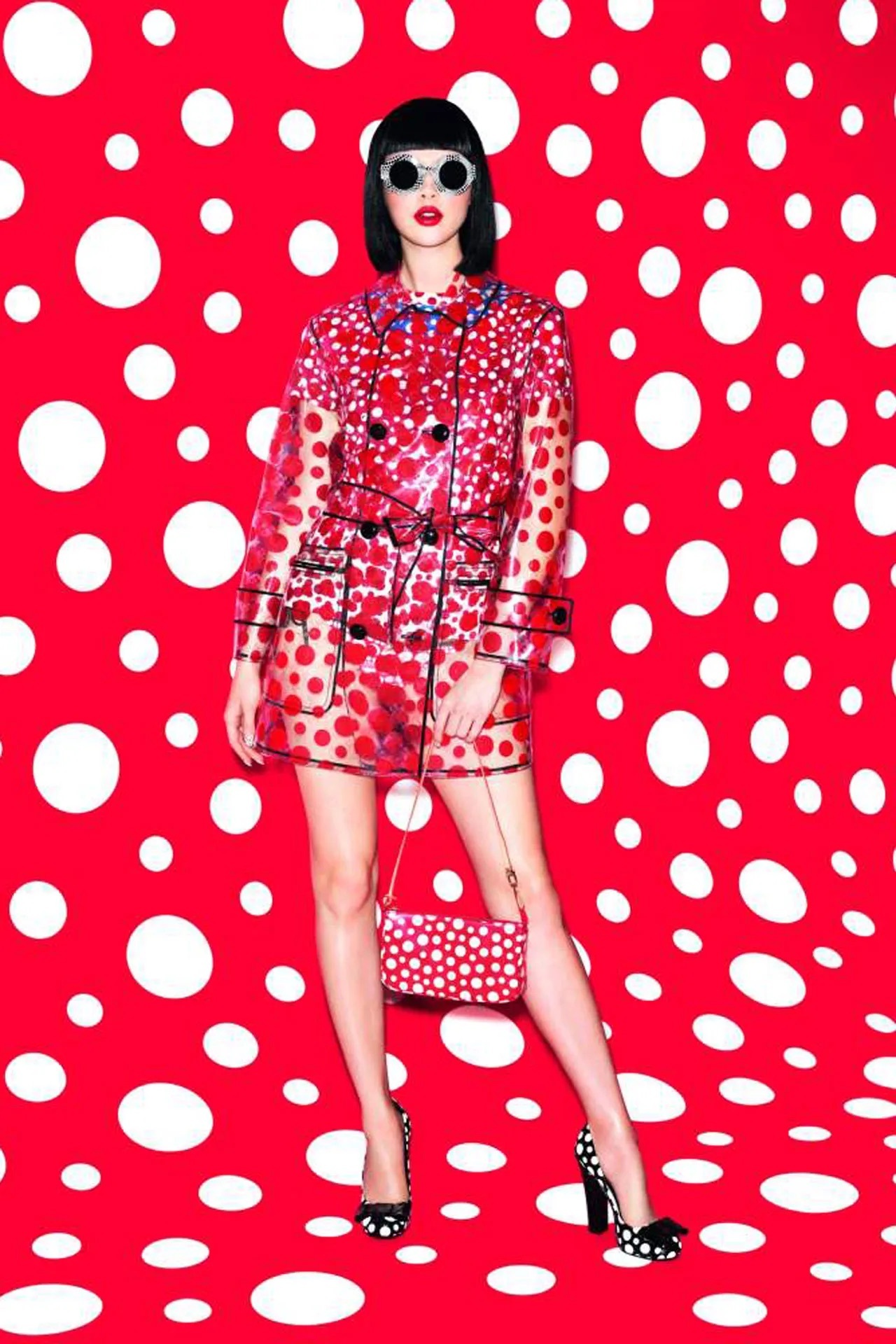
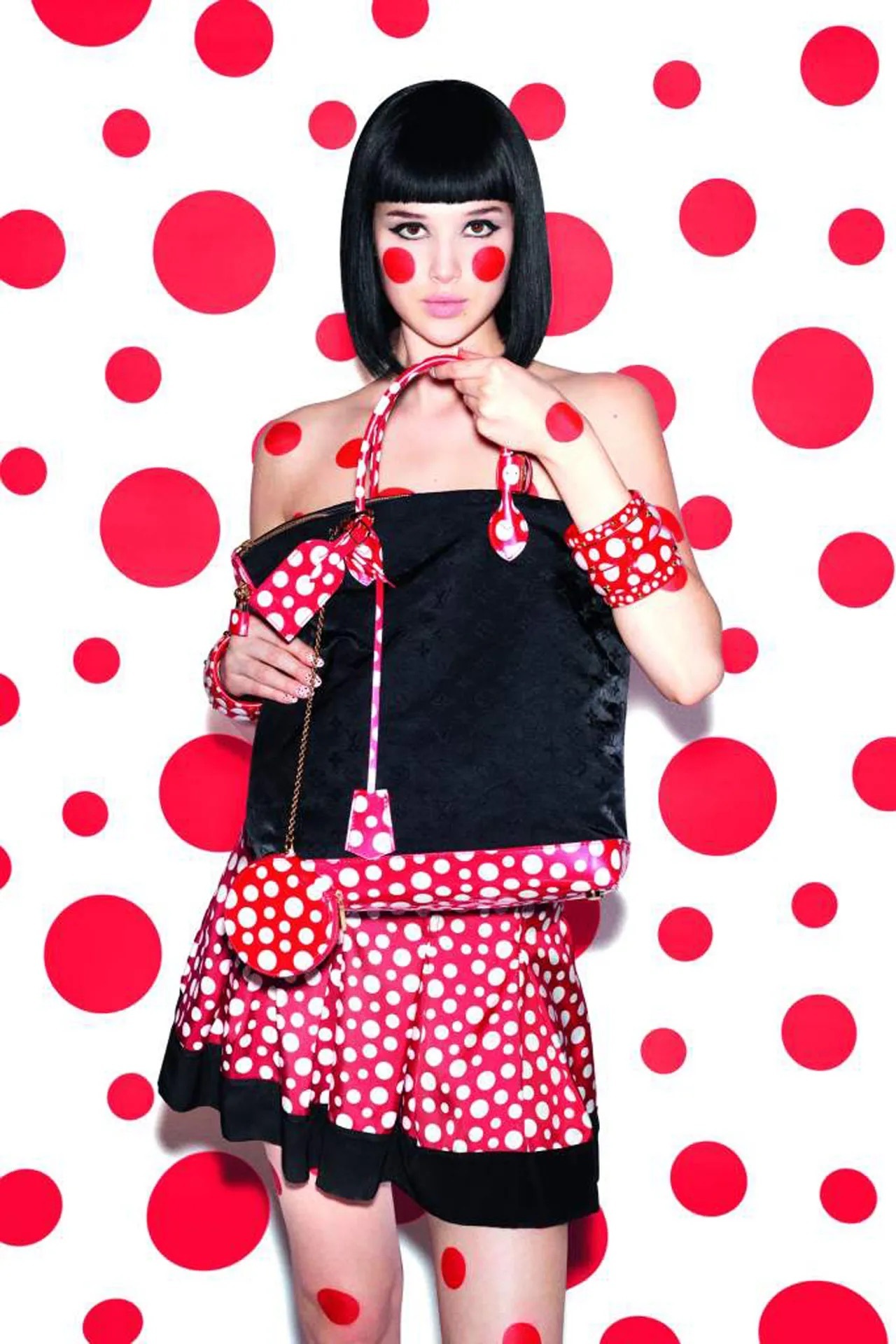
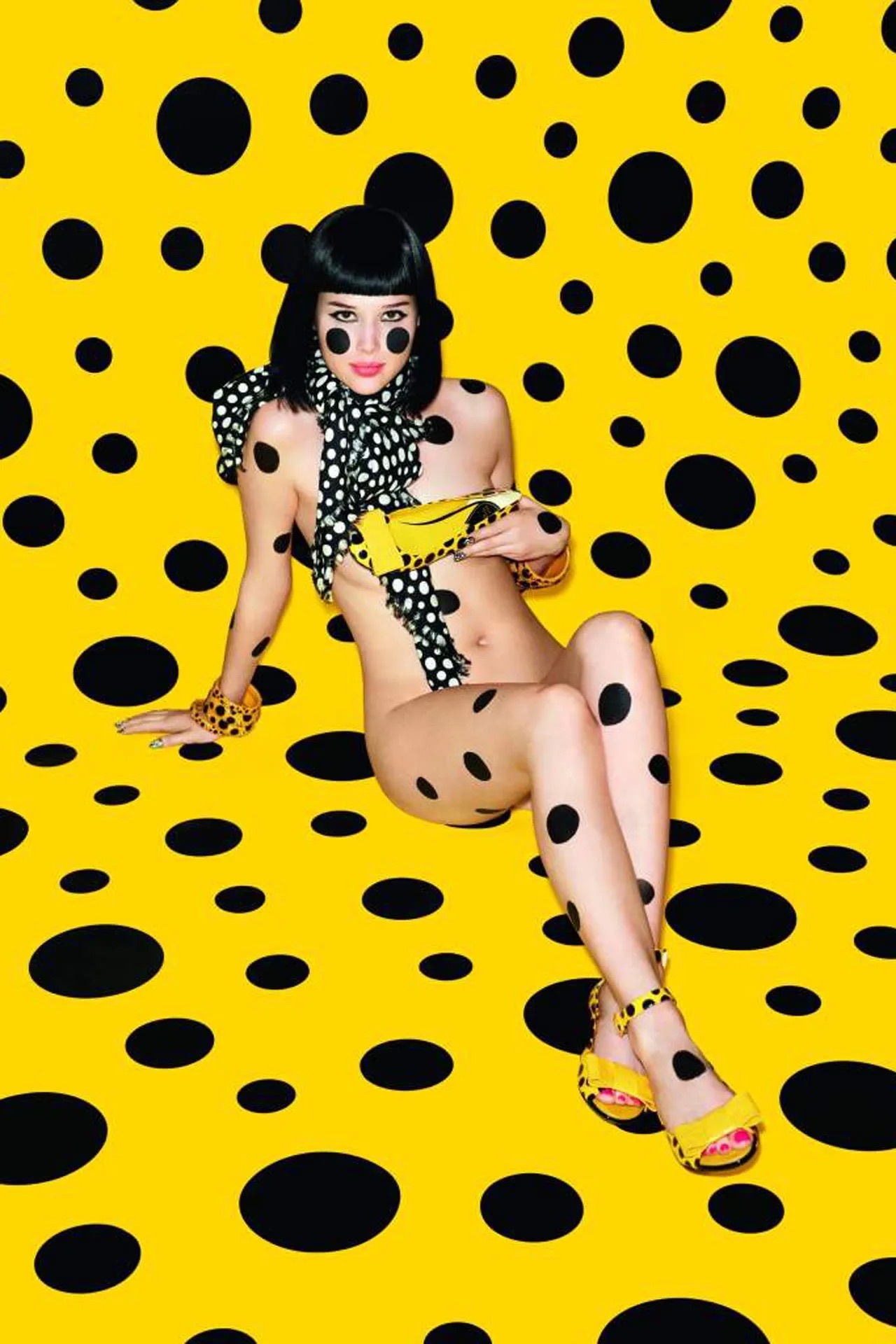
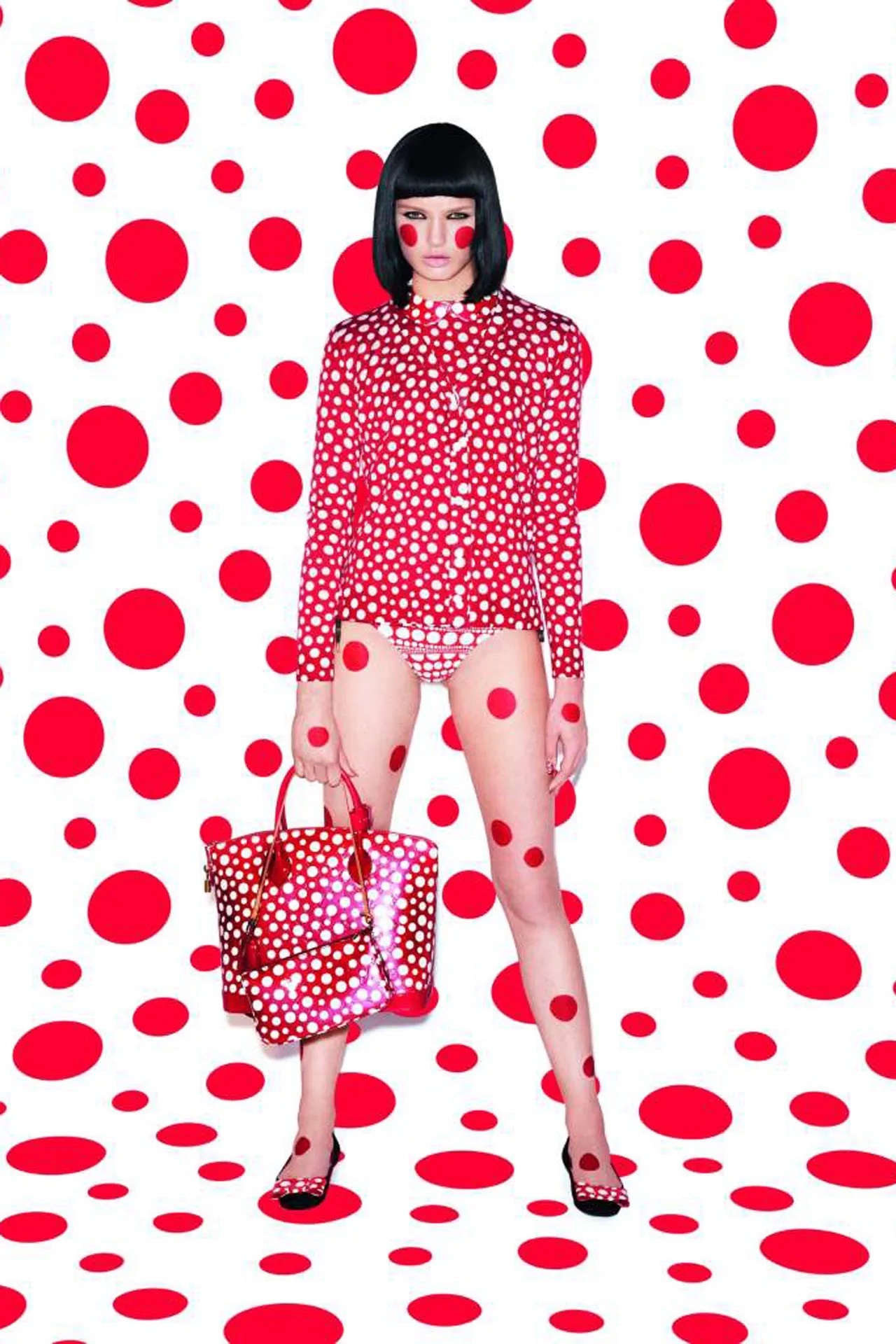
On 10 July 2012, Louis Vuitton released the Yayoi Kusama collaboration globally. The collection comprised more than 460 pieces across leather goods, ready-to-wear, footwear, accessories, fragrance, watches and writing instruments, each carrying Kusama's signature Infinity Dots over the Maison's existing surfaces. The collaboration was designed by Marc Jacobs, then in his fifteenth year as Creative Director of Louis Vuitton, and developed across roughly two years of working sessions between the Maison's leather-goods atelier and Kusama's studio in Tokyo. The release was the largest single artist collaboration in the Maison's history at that point in production count, retail surface and product category coverage.
The artist
Yayoi Kusama, born in 1929 in Matsumoto, Nagano Prefecture, had built her artistic practice across six decades around the polka dot as the principal element of an autobiographical visual vocabulary. Kusama had described in interviews from the 1960s onwards the experience of recurring visual hallucinations of dots that overlaid the world she saw. Her painting, installation, sculpture and performance practice routed the experience through what she called Infinity Nets and Infinity Dots: surfaces in which dots covered every available register at varying scales until the underlying structure was obscured.
Marc Jacobs visited Kusama's Tokyo studio in 2006. The meeting was social rather than commissioned: Jacobs had been a Kusama collector for several years and visited the studio with the intention of buying additional works. The collaboration brief developed across subsequent visits, with Jacobs proposing in 2010 that the Maison produce a product collection that would apply Kusama's hand directly to the Monogram and the broader Louis Vuitton surface. Kusama agreed on the condition that her dots would be applied without modification to fit conventional fashion product design.
The collection
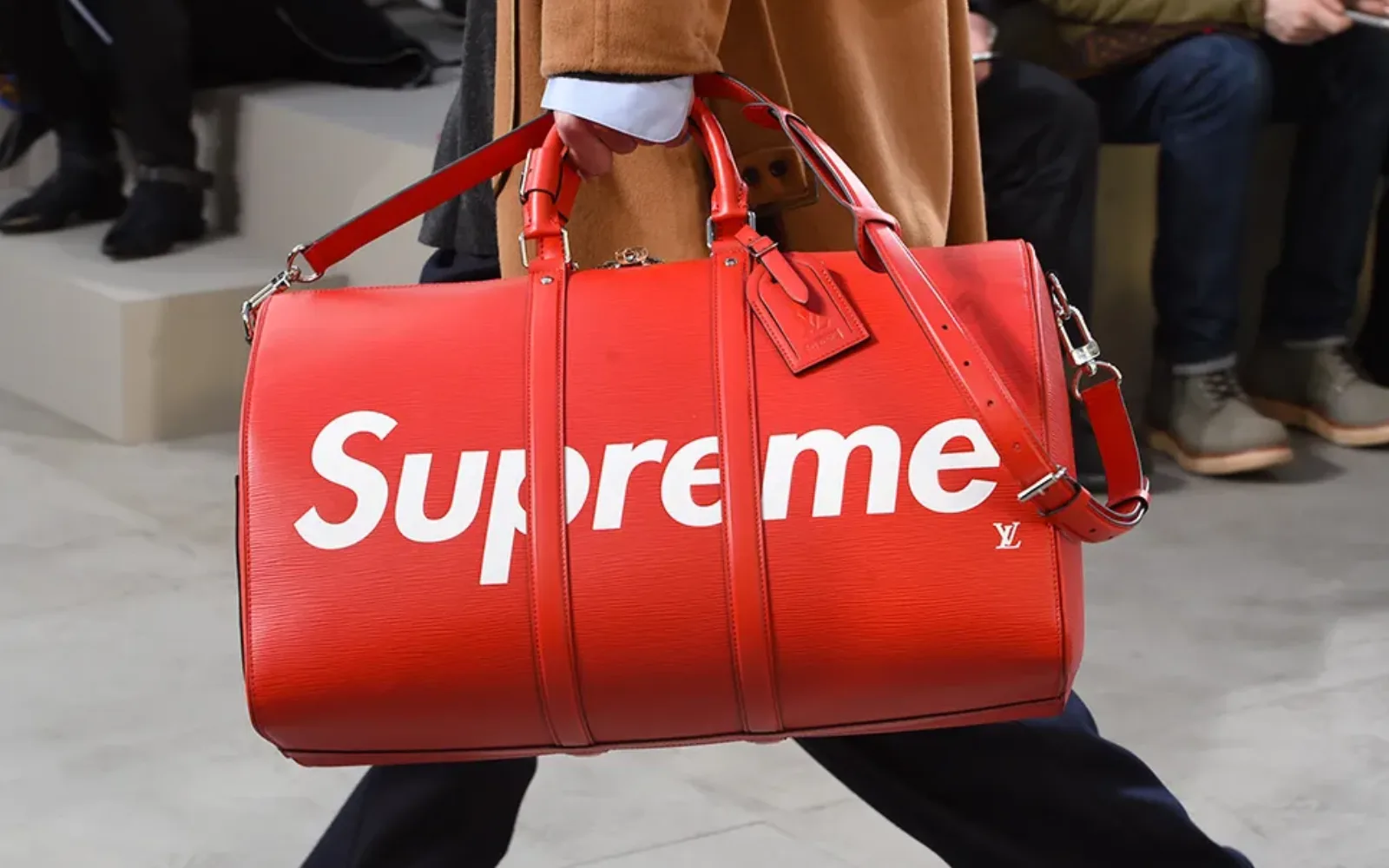
The collection was unveiled at the Louis Vuitton Fall-Winter 2012 menswear show in January 2012 in Paris, with a preview capsule that included a Speedy 30, a Keepall and a leather wallet covered in Kusama dots. The full collection presented at the Louis Vuitton Cruise 2013 show in May 2012. The global retail launch followed on 10 July 2012, with simultaneous availability across the Maison's flagship stores in Paris, London, New York, Tokyo, Hong Kong, Shanghai, Seoul and Singapore, and in graded allocations to additional store locations.
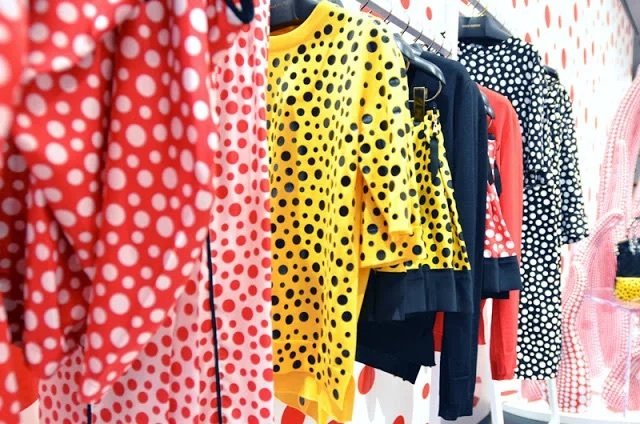
The collection's principal palette held to four colour systems: red ground with white dots, yellow ground with black dots, white ground with red dots, and black ground with white dots. The dots themselves varied in scale across pieces: smaller dots on the wallets and smaller leather goods; larger dots on the ready-to-wear and on the large-format luggage. The Monogram canvas remained visible underneath the dot overlay on most pieces, with the dot pattern silk-screened over the canvas at varying transparencies. The Kusama signature ran on the interior label of every piece in the collection.

The retail intervention
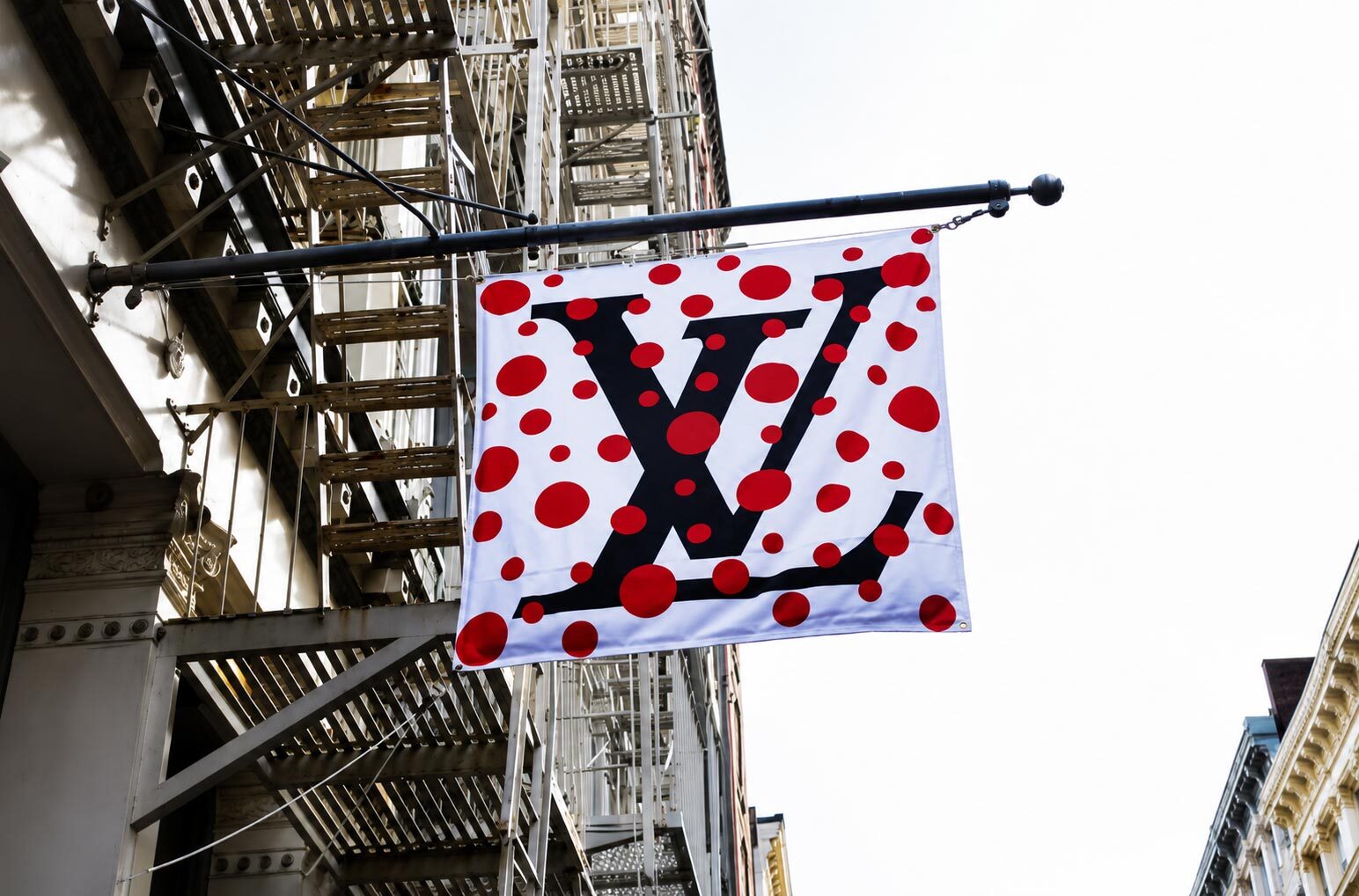
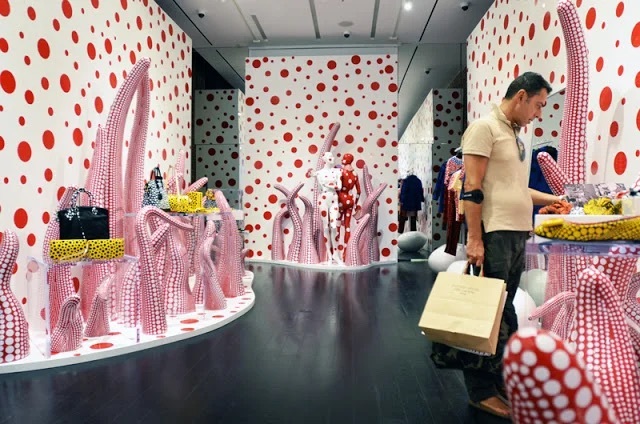
The retail rollout was the most ambitious in the Maison's history at that point. The Louis Vuitton store at Selfridges, London, transformed 24 of the department store's windows into a Kusama installation, with mannequins wearing the collection over a red-and-white polka-dot interior. The store windows at Printemps Paris carried full-height red-and-white polka-dot exteriors with the Maison's logo set against the dot field. The New York Fifth Avenue and Champs-Élysées flagships installed life-size hyperreal Kusama figures, modelled with prosthetic detail, applying dots to the store windows with handheld paintbrushes. The Hong Kong flagship at the IFC Mall carried a mirrored Infinity Room installation in which visitors could experience the dot environment as Kusama had originally constructed it.
The Maison also opened a pop-up Kusama-themed boutique on the ground floor of Selfridges and a smaller version at Le Bon Marché in Paris. The pop-up spaces sold the full collection in dedicated interiors with mirrored ceilings, dot-covered floors and Kusama soundscapes piped through the spaces. The retail intervention extended the brand surface beyond the Maison's own stores into department-store partners' real estate, with the Kusama identity carried across each implementation.
The brand reading
The Kusama collaboration extended the artist-overlay method that Stephen Sprouse had installed in 2001 and Takashi Murakami had developed in 2003. The 2012 collaboration's distinctive contribution was the surface-saturation logic. The Sprouse work had overlaid graffiti on selected pieces. The Murakami work had recoloured the Monogram across multiple seasons. The Kusama work applied a single artistic vocabulary across every product category, every store window, every flagship interior and every department-store collaboration the Maison ran in summer 2012. The dot field operated as a brand-environmental treatment rather than as a product collection.
The construction registered the Maison's commercial ambition for the artist-collaboration method as a system of brand expression rather than as a single-product gesture. By 2012, Louis Vuitton's annual revenues had reached approximately 7 billion euros, with leather goods accounting for the majority of sales. The Kusama collaboration generated approximately 600 million euros in the second half of 2012 in incremental sales above the Maison's run-rate, according to LVMH H2 2012 commentary. The retail spectacle was, in commercial terms, the most successful artist collaboration in the Maison's history at that date.
The Kusama collaboration also installed a roadmap that the Maison subsequently revisited under Pharrell Williams. In January 2023, Louis Vuitton released a second Kusama collaboration of approximately 200 pieces, with the Maison rebuilding the 2012 retail spectacle across global flagships, this time with animatronic Kusama figures applying dots to the windows in continuous motion. The 2023 collaboration anchored Pharrell's debut as Men's Creative Director and registered the Maison's commitment to the artist-overlay method as a permanent posture rather than as a Marc Jacobs era invention. Yayoi Kusama, by then 93 years old, signed the second collection from her Tokyo studio.
Written with AI assistance, edited by a human. Find out more about our Use of AI.