
A neon overlay on a sacred pattern
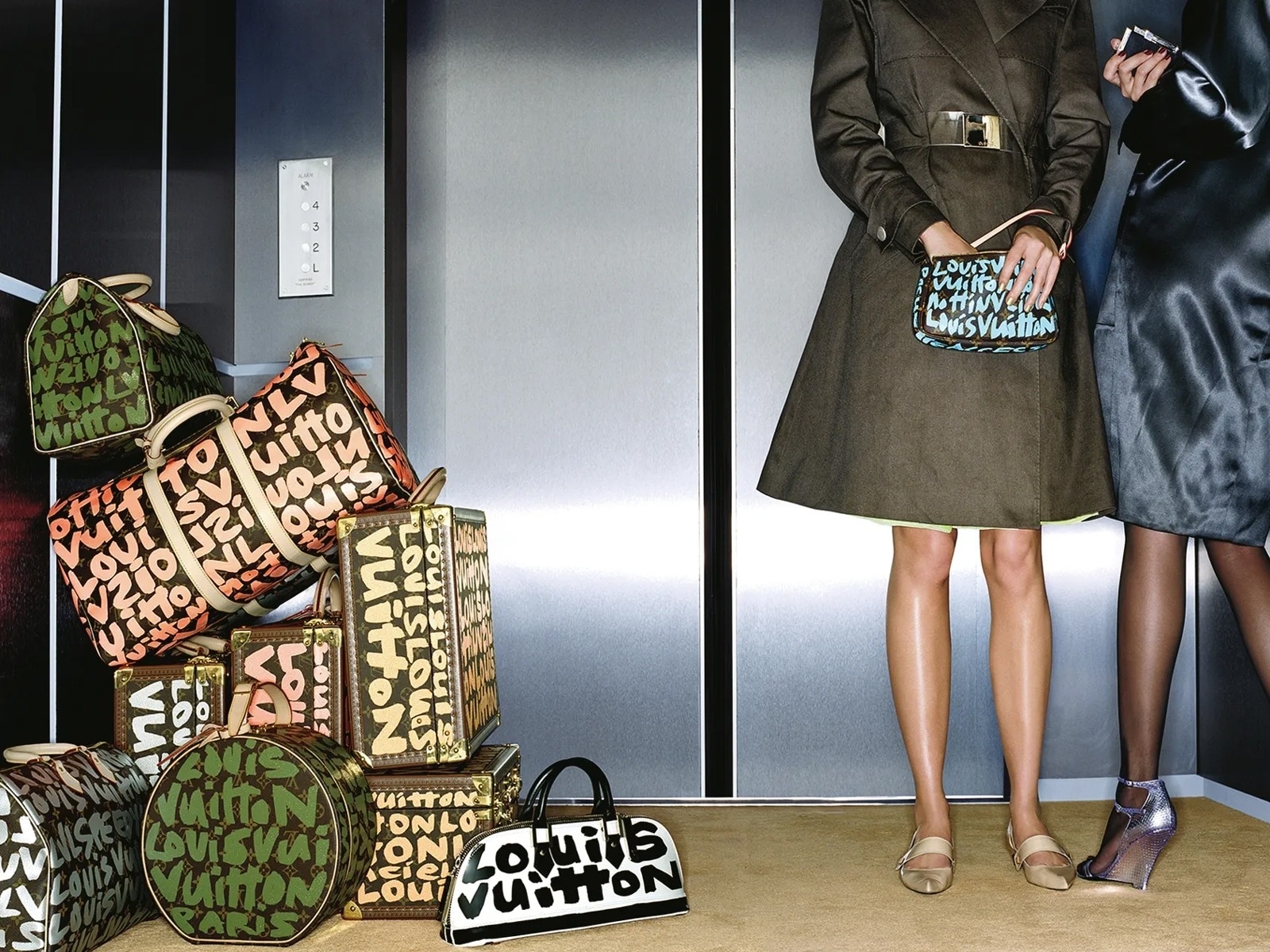
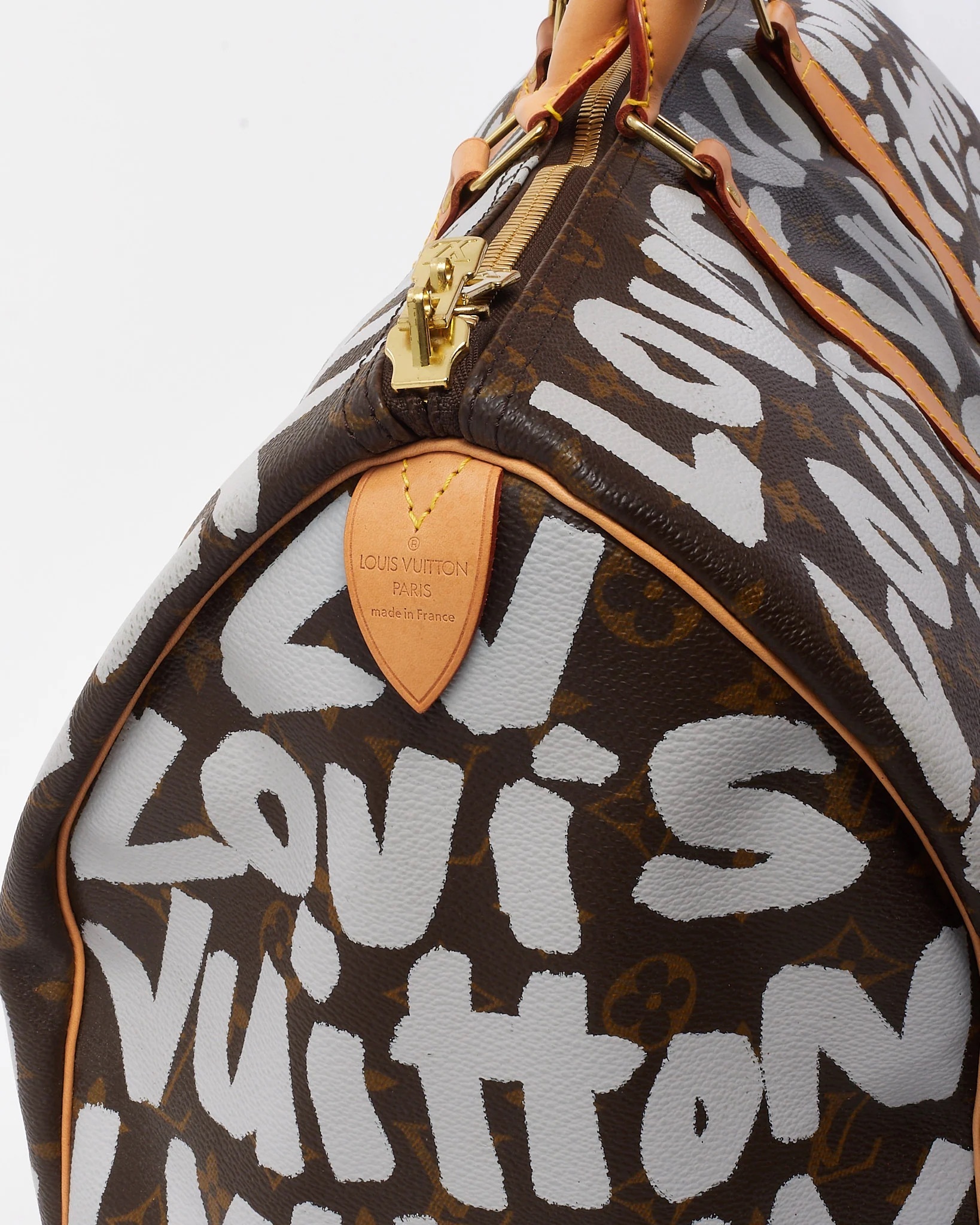
In March 2001, Louis Vuitton released the Graffiti collection, a capsule of leather goods on which the artist Stephen Sprouse had spray-painted "Louis Vuitton" in neon green, fluorescent pink and acid orange across the chestnut-on-beige Monogram canvas. The collection was the first by Marc Jacobs, then in his fourth year as Creative Director of Louis Vuitton, to overlay a contemporary artist's hand directly onto the Monogram. It anchored what became the Maison's defining strategic move of the 21st century: the systematic invitation of artists to collaborate on the brand's most protected distinctive asset.
The collaboration
Stephen Sprouse (1953-2004) had built his reputation in the early 1980s as a New York-based fashion designer who routed runway clothing through the visual vocabulary of street art and punk graphic design. He had assisted Halston in the 1970s, photographed Andy Warhol's Factory circle, and lived as Debbie Harry's neighbour in the Bowery. His 1983 and 1984 collections had introduced neon-painted clothes and graffiti-typography evening wear to American fashion week. By the late 1990s, his namesake line had closed and he was working independently as a graphic and textile artist.
Marc Jacobs joined Louis Vuitton in March 1997 with a brief from Bernard Arnault to convert the Maison from a trunk-and-leather-goods house into a fashion-led brand. His first ready-to-wear collection presented in March 1998. By 2000, with the ready-to-wear platform established and the Maison's commercial growth accelerating, Jacobs identified the Monogram canvas as the next surface to interrogate. He approached Sprouse, with whom he had a long-standing friendship, with a brief that was deliberately provocative: take the most legally protected canvas in the luxury industry and write the Maison's name across it in graffiti.
The work
Sprouse produced the artwork by hand in his Bowery studio across 2000. The graffiti was a freehand inscription of "Louis Vuitton" in his characteristic shouted typography, with the letters dripping in places and overlapping in others. The colour palette held to neon green as the principal treatment, with capsule editions in pink and orange. The Maison's leather-goods workshop transferred the artwork onto the Monogram canvas using a silk-screen process, with the spray-paint texture preserved through the print.
The collection presented at the Louis Vuitton Spring 2001 runway show in October 2000, on a runway covered in graffiti tags. Naomi Campbell carried the first Sprouse Graffiti Speedy 30 down the runway. The commercial release was in March 2001, with the capsule available at flagship stores in Paris, New York, Tokyo, London and Hong Kong, and in limited allocations to additional store locations.
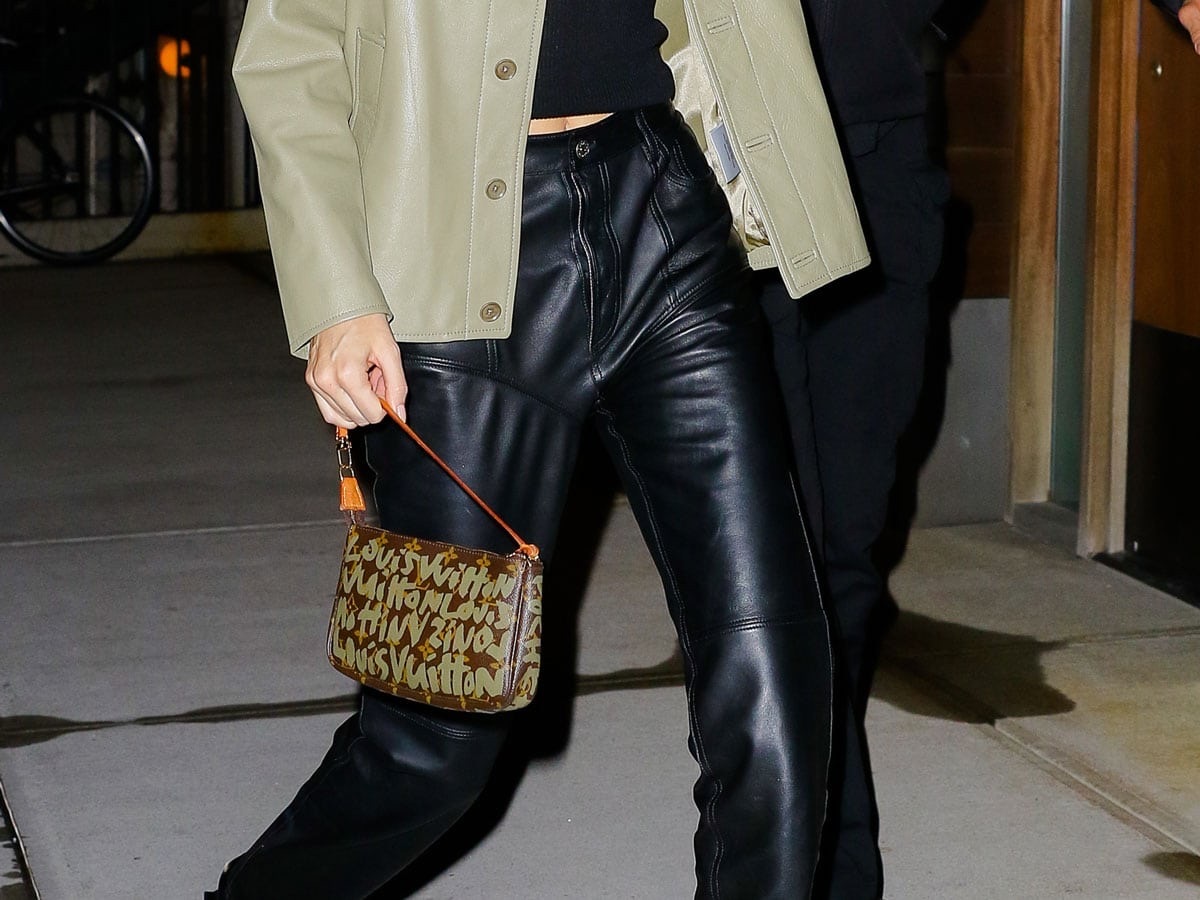
The capsule comprised the Speedy 25, Speedy 30, Keepall 50, Alma PM, Pochette Accessoires, and a small selection of ready-to-wear and accessories. Prices in the United States ranged from 195 US dollars for the Pochette Accessoires to 2,090 US dollars for the largest Keepall. The Maison did not release production quantities. Resale prices on the secondary market reached 3,000 US dollars within the first year for the Speedy 30 in green.
The controversy and the reception
The collaboration drew internal resistance at LVMH. Bernard Arnault and Henry Racamier debated the strategic risk of the Monogram being modified by an outside hand. The Maison's legal team raised concerns about whether spray-paint overlays would dilute the trademark architecture Georges Vuitton had built around the 1896 canvas. Arnault approved the project after Jacobs demonstrated that the Sprouse graffiti would be silk-screened in defined locations rather than randomly applied, and that the legal architecture of the Monogram canvas would hold underneath the overlay.
The collection's reception was immediate. The Vogue, Harper's Bazaar and Numéro coverage in March and April 2001 framed the work as the first time a luxury house had handed its most protected asset to a contemporary artist without altering the underlying brand architecture. Magazine editorial picked up the bag as a styling instrument; the New York and Tokyo flagships sold out within the first two weeks of the global release.
The brand reading
The Sprouse collaboration installed a structural method that Jacobs subsequently extended across his Louis Vuitton tenure. In 2003 Takashi Murakami delivered the Multicolore Monogram. In 2007 Richard Prince delivered the Monogram Jokes. In 2012 Yayoi Kusama delivered the Infinity Dots. The artist-overlay method, which Sprouse first authored in 2001, became the Maison's recurring posture across two decades. Each collaboration treated the Monogram as a permanent substrate that could host a temporary artist's overlay without losing its underlying legal architecture or distinctive-asset recognition.
The work also reframed the luxury industry's relationship to contemporary art. Prior to 2001, the prevailing posture was sponsorship: a luxury house funded the arts in exchange for cultural legitimacy. Louis Vuitton's Sprouse collaboration replaced sponsorship with co-authorship. The artist signed the canvas; the artist's hand appeared on the bag; the artist took a credit at the level of product rather than at the level of philanthropic association. The construction has since been adopted, in modified forms, by Dior, Gucci, Hermès, Chanel and Burberry.
Stephen Sprouse died on 4 March 2004 from heart failure related to cancer treatment. Marc Jacobs produced a posthumous Sprouse Tribute capsule in January 2009, with archive Sprouse motifs including the leopard print, the rose Monogram and additional graffiti colourways. The Sprouse name remains in active use across the Maison's archive editions, and the original 2001 Speedy 30 in neon green is among the most frequently referenced single objects in modern luxury secondary-market literature.
Written with AI assistance, edited by a human. Find out more about our Use of AI.