
A product to carry the brand
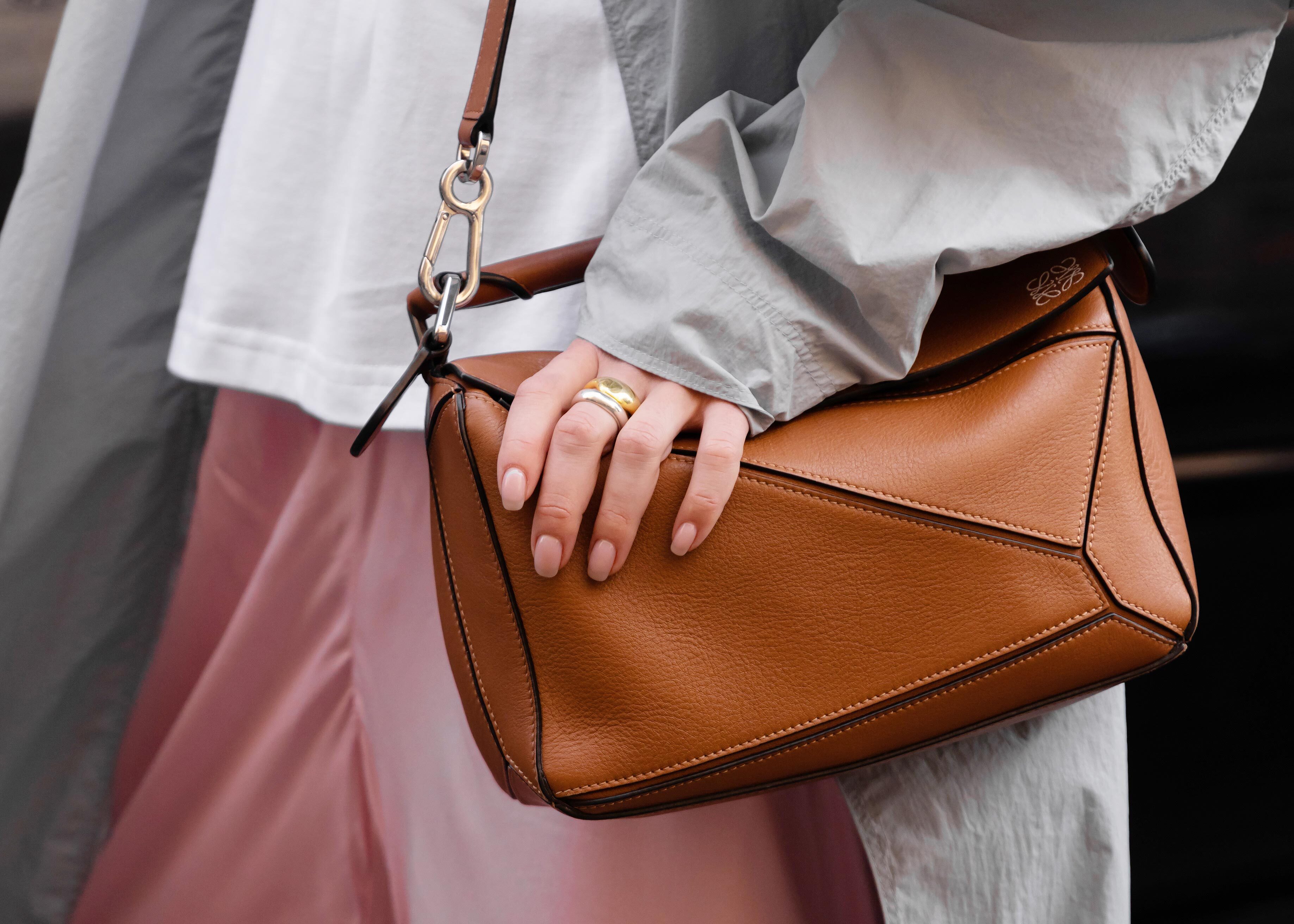
Every luxury house needs a product that concentrates its identity, and for the modern Loewe that product became the Puzzle bag. Designed under Jonathan Anderson early in his tenure and introduced in 2015, the Puzzle translated the brand's leather heritage into a distinctly contemporary object. It arrived soon after the 2014 rebrand, and together the new identity and the new bag gave the house both a face and a signature at the moment it was setting out to rebuild its reputation.
The timing was strategic. A rebrand establishes how a house looks; a signature product establishes what it sells and how it is recognised in the world. Loewe needed the second as much as the first. The Puzzle supplied a physical expression of the ideas the identity described, and it gave the brand a recognisable item that could carry its name across markets.
Craft made visible
The Puzzle's distinction lay in its construction. Built from precisely cut panels of leather assembled into a geometric, faceted form, the bag could fold flat and shift shape, revealing the engineering behind it rather than concealing it. The design made craft the point. Instead of relying on an obvious logo, the bag announced Loewe through the difficulty and precision of how it was made, which suited a house whose value rested on leather work.
This was a deliberate positioning choice. In a market where many signature bags depend on prominent branding, the Puzzle asked to be recognised by its form. That approach aligned Loewe with a quieter, craft-led idea of luxury and set it apart from more logo-driven competitors. The bag rewarded a viewer who understood construction, flattering the customer's eye rather than shouting for attention.
The design also carried practical appeal. Because the Puzzle could fold and reshape, it offered a versatility that suited modern wardrobes, and its clean geometry photographed well in an era when products increasingly lived online. Those qualities helped the bag travel across markets and social platforms, extending its reach beyond the traditional luxury customer and turning a craft object into a widely recognised image.
Building a family of signatures
The Puzzle did not remain alone. Under Anderson, Loewe developed further recognisable bags, including the Hammock and the woven Basket, each exploring a distinct structural idea. Together they formed a family of products united not by a single logo motif but by a shared interest in construction and material. This gave the house a coherent product identity with more depth than a single hero bag could provide, and it reinforced the message that Loewe's signature was craft itself.
That strategy strengthened the brand's commercial base. Signature leather goods provide the steady revenue that supports a fashion house's more experimental work, and by establishing several recognisable designs Loewe reduced its dependence on any one of them. The Puzzle led the way, proving that the brand could create desire through design intelligence rather than overt branding.
The Puzzle's success validated a broader bet on Anderson's approach. It showed that a house could build commercial momentum around ideas and construction rather than logos, and it gave Loewe the confidence to keep investing in craft-led products. In doing so it helped define a strand of contemporary luxury in which the intelligence of a design, rather than its branding, serves as the primary signal of value.
Anchoring the revival
The Puzzle bag became shorthand for the Loewe revival. It demonstrated that the ambitions set out in the rebrand could be realised in a tangible, saleable object, and it gave customers and press a clear point of entry to the reinvented house. As Loewe's cultural profile grew through the following years, the bag remained a constant, a product that connected the brand's craft heritage to its contemporary image.
Its success also carried a broader lesson about brand building in luxury. Identity and product must work together: a striking new logo needs a striking new object to make it real, and a distinctive object needs a coherent identity to give it meaning. Loewe delivered both within roughly a year, and the combination proved far more powerful than either would have been alone.
Years on, the Puzzle stands as one of the defining products of Loewe's modern era. It showed how a heritage leather house could compete in the contemporary market on its own terms, using construction rather than logos to signal luxury, and it gave the brand a signature that helped carry it from quiet revival to global recognition.
Source: LOEWE Youtube
Written with AI assistance, edited by a human. Find out more about our Use of AI.