
A flagship built to feel like a home, not a shop
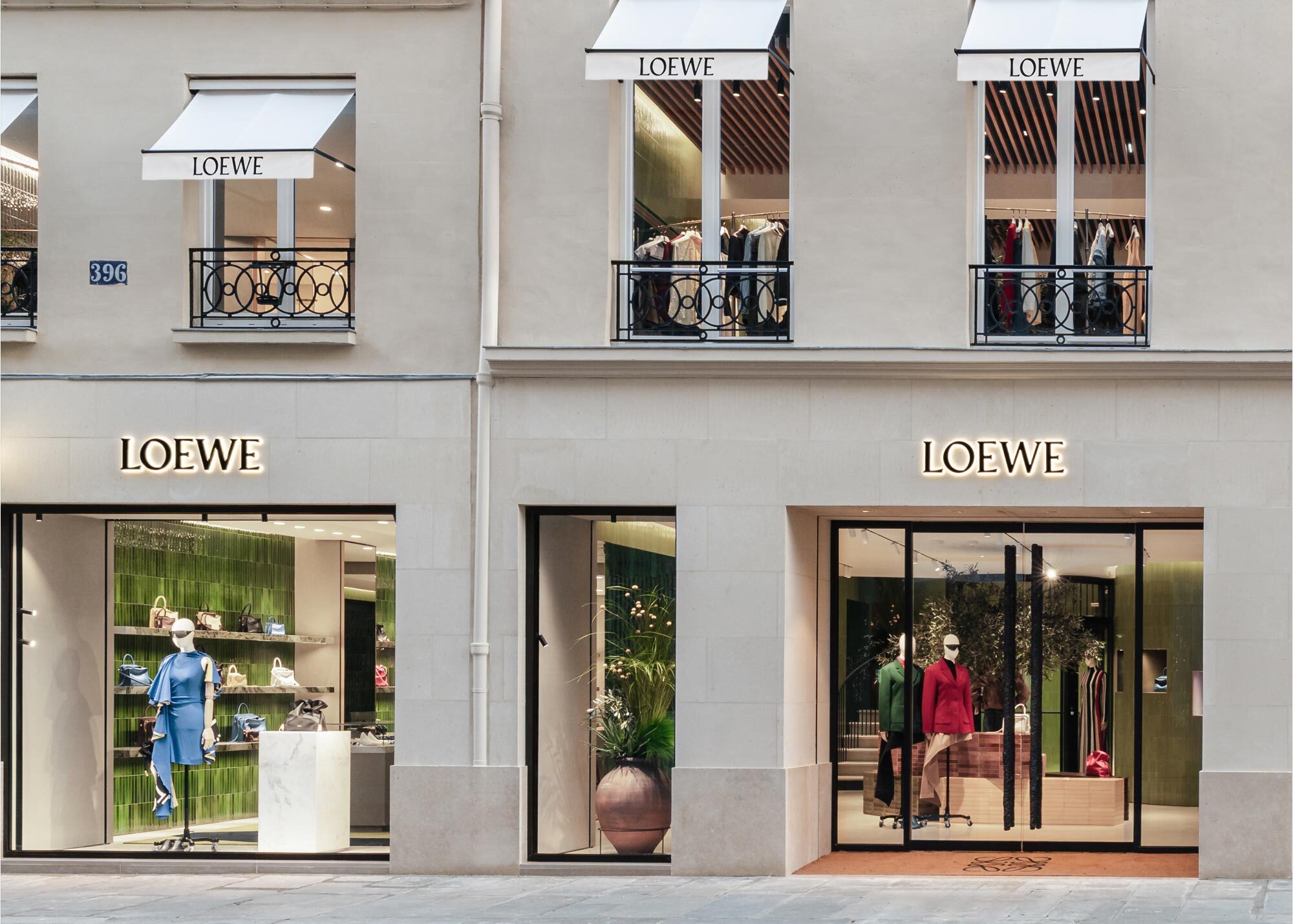
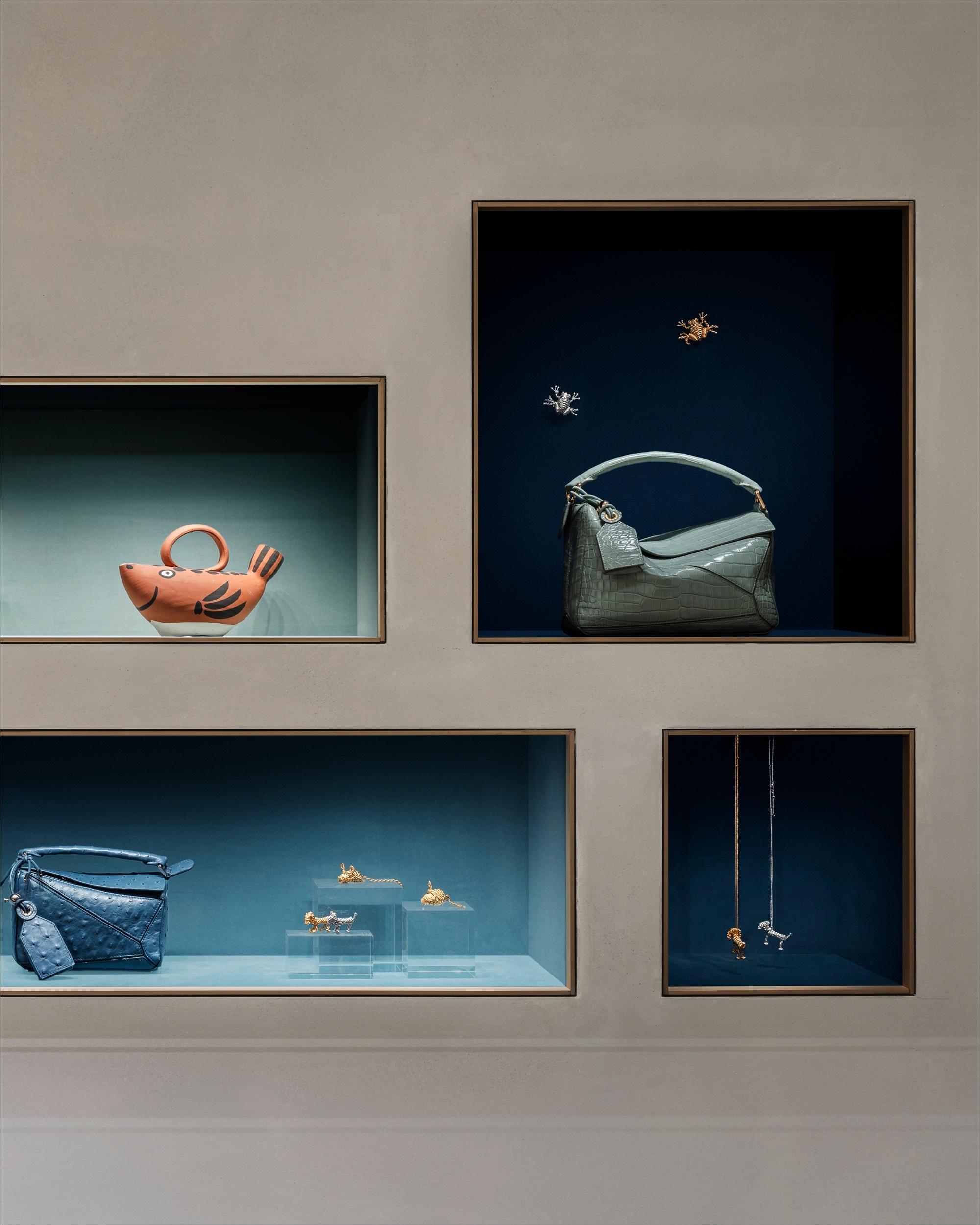
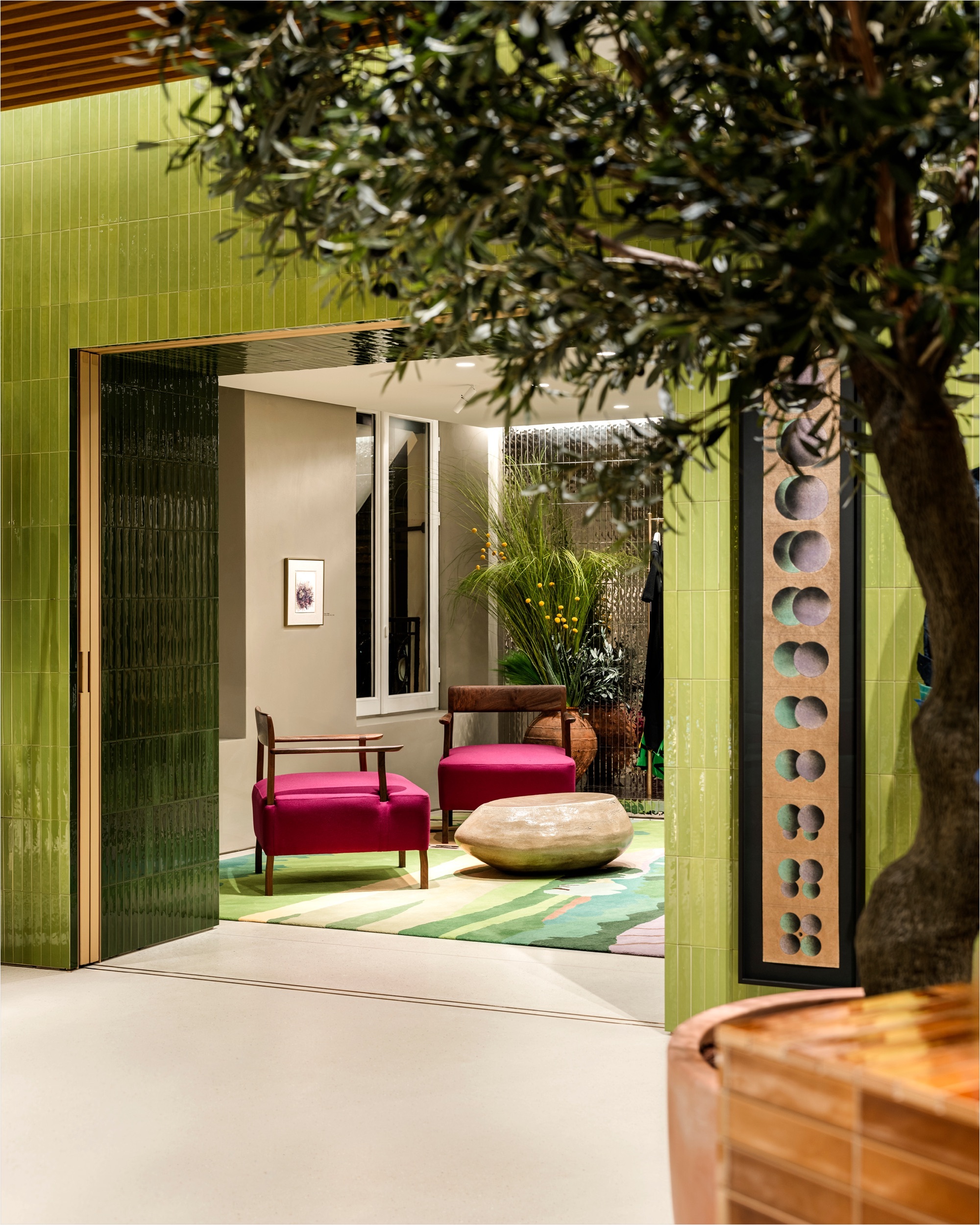
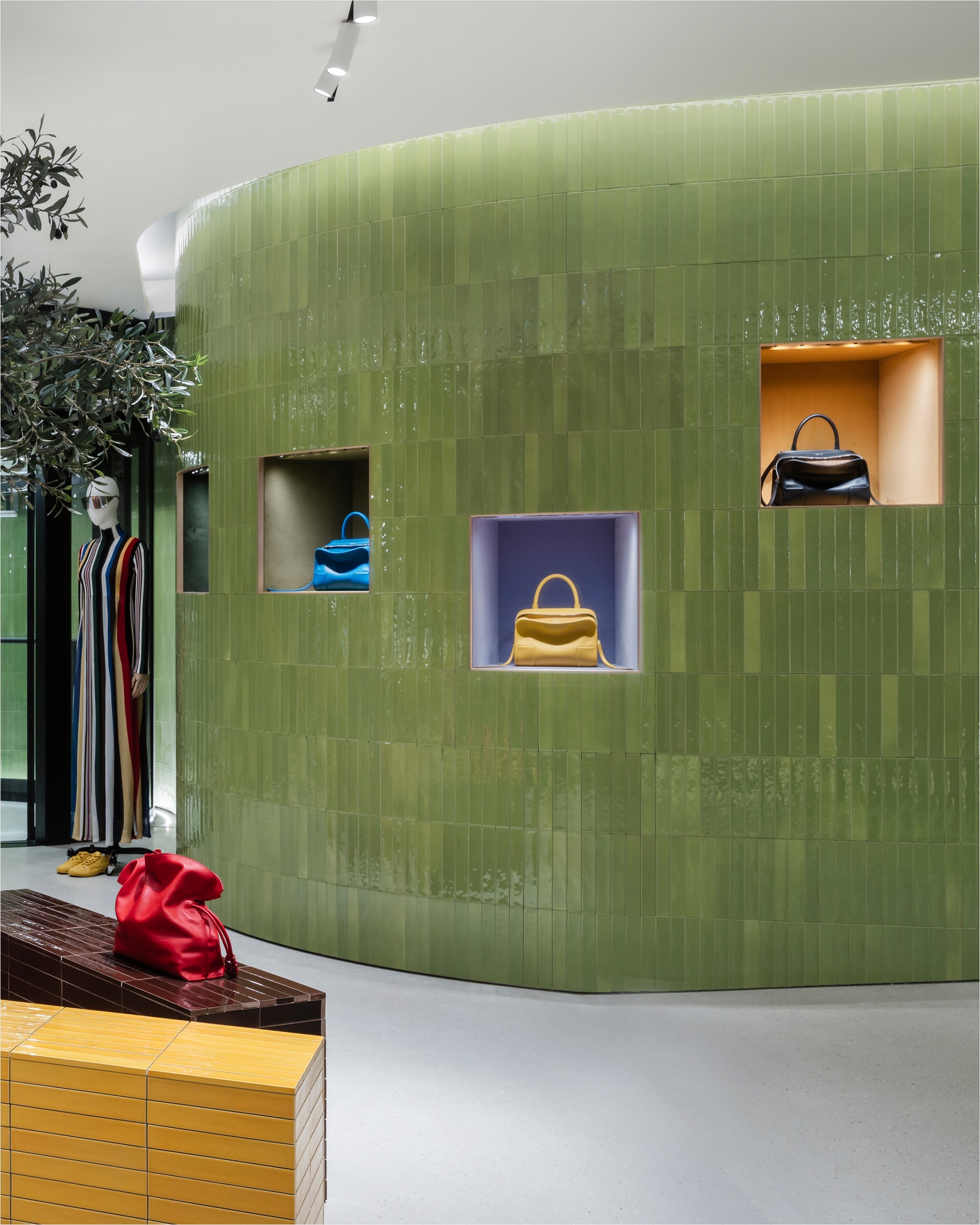
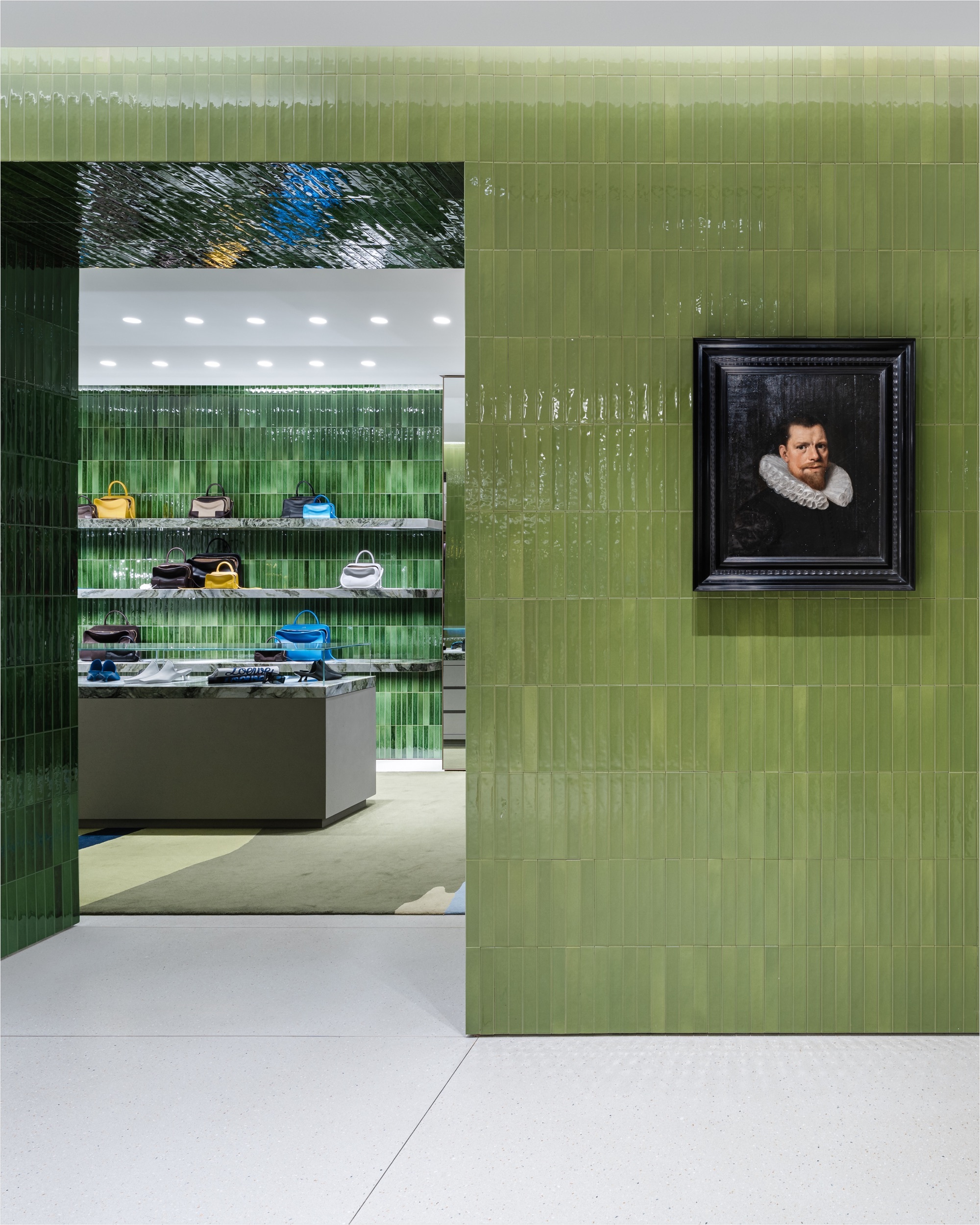
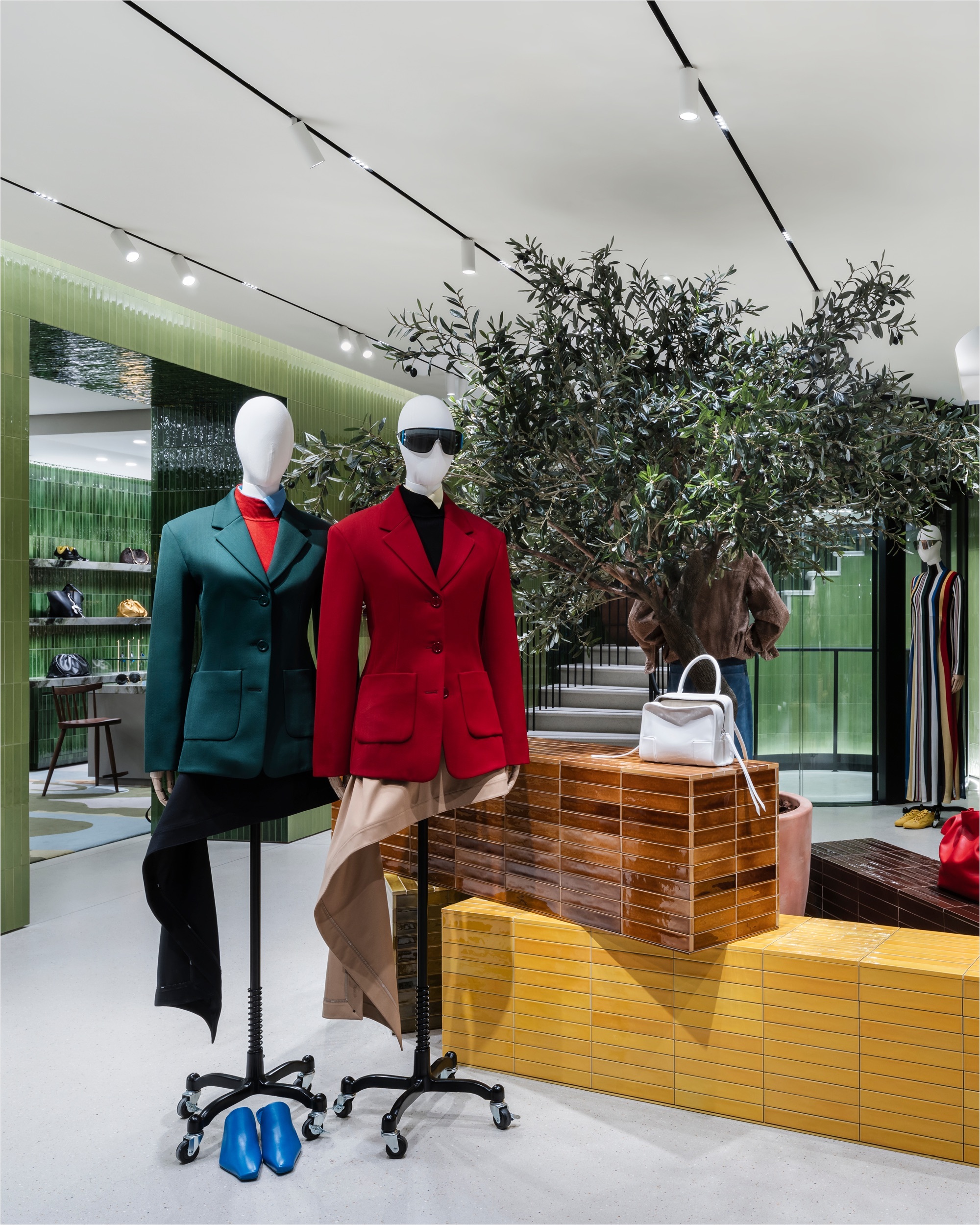
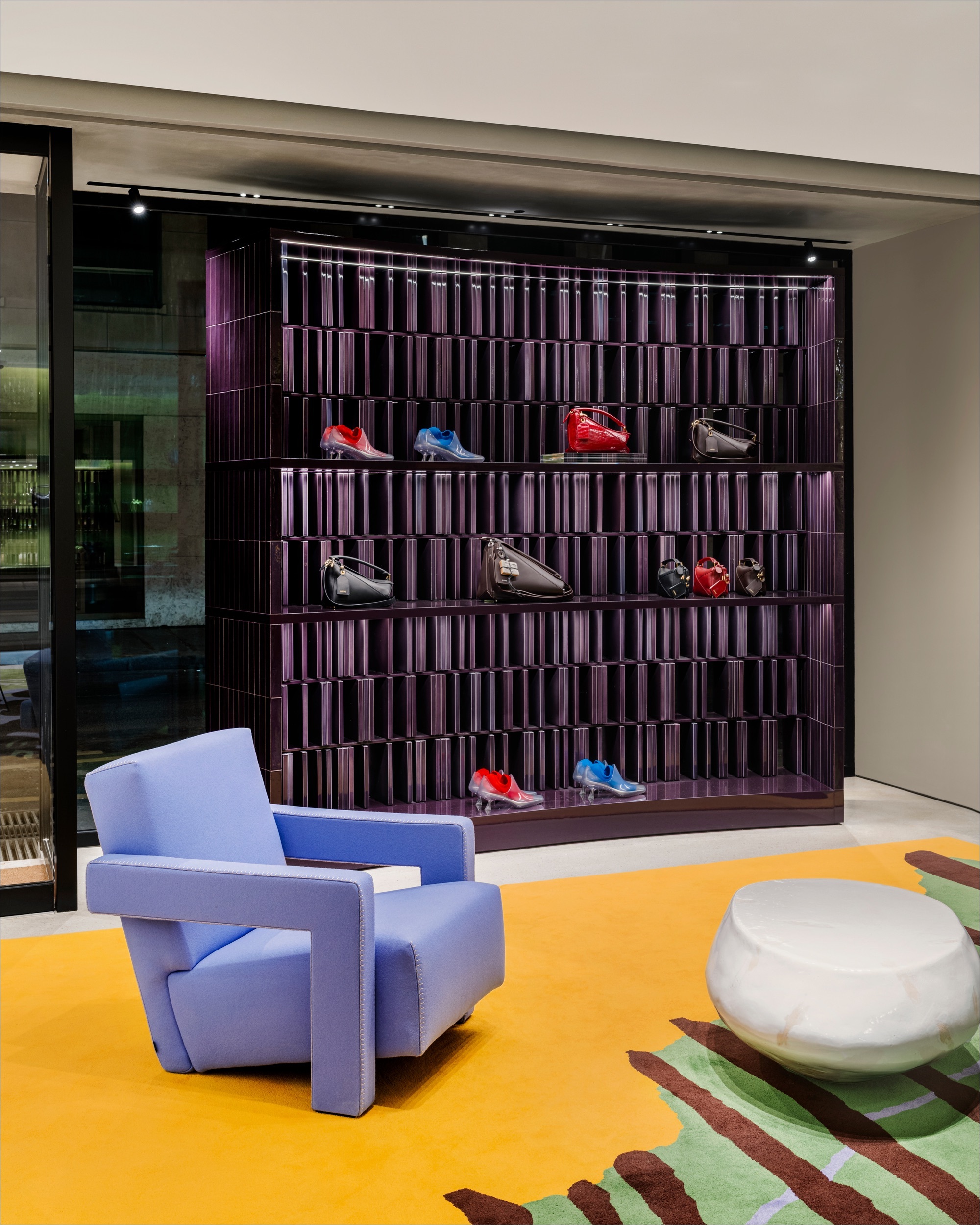
In March 2026, Loewe opened its second Casa Loewe flagship in Paris, a 405-square-metre space at 396 Rue Saint-Honoré, five months after opening its first Paris Casa on Avenue Montaigne in November 2025.1, 2, 3 The new address spans two floors around a sculptural central staircase and a transparent glass elevator, finished in concrete marmorino, hand-glazed ceramics, brass and marble, and it makes Paris the only city in Europe where Loewe operates two Casa-format stores at once.1, 3, 4
Casa, Spanish for house, is the name Loewe gives to its flagship stores once they reach a certain scale and design ambition, distinguishing them from the house's standard boutiques. Casas already operate in cities including Tokyo's Ginza district and Shanghai, and each one follows the same basic brief: rather than presenting a single, exportable store template repeated identically in every market, every Casa is designed from scratch around its own building and city.5
Local culture meets Spanish heritage in each address
Loewe describes the approach as letting its own house codes, and its Spanish heritage, converse with local culture and craft traditions in each location, rather than imposing a fixed Madrid or Paris aesthetic on every market.5 In practice, that means each Casa uses regional ceramics, structural details and finishing techniques distinctive to its own architecture, while still carrying recognisable Loewe signatures such as the Anagram mark that Jonathan Anderson introduced across the house's identity in 2014.6
The stores also function as informal exhibition spaces. Each Casa hosts a rotating curation of art and design pieces drawn from Loewe's own collection, spanning portraiture, sculpture and furniture, with works by artists including the British sculptor Henry Moore and the South African ceramicist Zizipho Poswa appearing across different locations.5 Customers browsing bags and ready-to-wear share the same rooms as museum-grade pieces, blurring the line between a shop visit and a gallery visit.
A retail strategy inherited across creative directors
The Casa format predates the house's current creative directors, Jack McCollough and Lazaro Hernandez, who joined in 2025, and its continuation under their leadership suggests Loewe treats its retail architecture as a longer-running strategic asset rather than something each new creative team redesigns from scratch.3, 7 Where the clothes, bags and campaigns change with each creative direction, the underlying idea, that a flagship should function as a curated cultural space tied to its specific city rather than a duplicated global template, has persisted across at least two creative regimes.
That continuity matters commercially as well as aesthetically. Building a bespoke architectural and curatorial concept for every flagship is considerably more expensive and slower to scale than a repeatable store kit, but it gives Loewe a retail footprint that doubles as press-worthy cultural programming in each city it enters, generating coverage and foot traffic independent of any single season's collection. The Paris expansion in 2025 and 2026, adding a second flagship-scale Casa within the same city inside five months, indicates the format is being used increasingly aggressively as Loewe's European growth strategy under LVMH, rather than reserved only for a handful of signature addresses.
The Casa network also gives Loewe a way to stage a creative-director transition gradually rather than all at once. McCollough and Hernandez's first full collections reached stores only gradually through 2025 and 2026, but the Rue Saint-Honoré opening let the house generate a fresh wave of press and footfall in one of its most important markets before the new design team's product vision had fully rolled out, using the building itself, rather than the merchandise inside it, as the news.
Loewe's own Casa in Madrid, close to where the house was founded in 1846, anchors the format in the brand's home city, and the label has since been extended to newer builds far from Spain, including the Ginza and Shanghai locations, each interpreting the same brief through entirely different architectural vocabularies.5, 7 That range, a historic Spanish city on one end, a contemporary Chinese retail tower on the other, illustrates how flexible the Casa concept is meant to be: the constant is the curatorial ambition and the site-specific design brief, not any single visual style repeated from address to address.
For a house competing against much larger LVMH stablemates such as Louis Vuitton and Dior for prime retail real estate in cities like Paris, Tokyo and Shanghai, the Casa format also functions as a way to justify flagship-scale investment without matching those larger houses on sheer store count. Loewe can open fewer, more architecturally ambitious spaces and still generate comparable press attention, provided each Casa offers something distinct enough from the last one to be worth covering on its own terms.
Written with AI assistance, edited by a human. Find out more about our Use of AI.
1. FashionNetwork.com, Rocío Alonso López, "Loewe opens its second Casa Loewe on Paris's Rue Saint-Honoré", 9 March 2026, for the March 2026 opening of Loewe's second Casa in Paris, for the 405 square metre floor area and the address at 396 Rue Saint-Honoré, and for the two levels arranged around a sculptural central staircase with a glass lift, finished in hand-glazed ceramics, brass and marble. https://us.fashionnetwork.com/news/Loewe-opens-its-second-casa-loewe-on-paris-s-rue-saint-honore,1814025.html
2. WWD, "Loewe Opened its Second Casa Flagship in Paris, on Rue Saint-Honoré", March 2026, for the Rue Saint-Honoré store being Loewe's second Casa-format flagship in the city, page not reachable on 17 September 2026. https://wwd.com/fashion-news/designer-luxury/loewe-casa-flagship-boutique-paris-1238657294/
3. Modaes Global, T. Alonso, "Loewe Expands European Presence With New Paris 'Casa' and Enhanced Flagship Strategy", 9 March 2026, for Loewe's first Paris Casa having opened on Avenue Montaigne in November 2025, for Paris being the only European city in which the house runs two Casa-format stores at the same time, and for Jack McCollough and Lazaro Hernandez having taken over the creative direction in 2025. https://www.modaes.com/global/companies/loewe-opens-second-maison-in-paris-and-strengthens-its-network-of-flagship-stores-in-europe
4. Bagaholicboy, "Pop Into Loewe's Second Casa Loewe At Rue Saint-Honoré, Paris", 13 March 2026, for the concrete marmorino finish named alongside the hand-glazed ceramics, brass and marble, and for the transparent glass lift set beside the sculptural staircase. https://bagaholicboy.com/2026/03/loewe-casa-loewe-396-rue-saint-honore-paris
5. Loewe, "Our CASAs", consulted on 17 September 2026, for the Casa being the house's flagship format and, in Loewe's own words, the fullest expression of the Loewe sensibility, for each Casa having a bespoke design scheme through which Loewe house codes and the brand's Spanish heritage converse with local culture and expression, for the rotating curation of works from the Loewe collection spanning portraiture, sculpture and furniture design, for Henry Moore and Zizipho Poswa being among the artists shown, and for the Casas in Tokyo's Ginza district and in Shanghai. https://www.loewe.com/eur/en/pd/stores-ourcasas/our-casas.html
6. Wallpaper*, Rosa Bertoli, "Anatomy of a rebrand: we dissect Loewe's new identity, designed by M/M (Paris)", 4 June 2014, for the 2014 identity redesign carried out with M/M (Paris) under Jonathan Anderson, in which the Anagram was remodelled and carried across the house's identity. https://www.wallpaper.com/design/anatomy-of-a-rebrand-we-dissect-loewes-new-identity-designed-by-mm-paris
7. Wikipedia, "Loewe (fashion brand)", consulted on 17 September 2026, for the house having been founded in Madrid in 1846, for the Madrid Casa standing at the company's Madrid headquarters, and for Jack McCollough and Lazaro Hernandez having been appointed creative directors in 2025. https://en.wikipedia.org/wiki/Loewe_(fashion_brand)