
A succession that matters
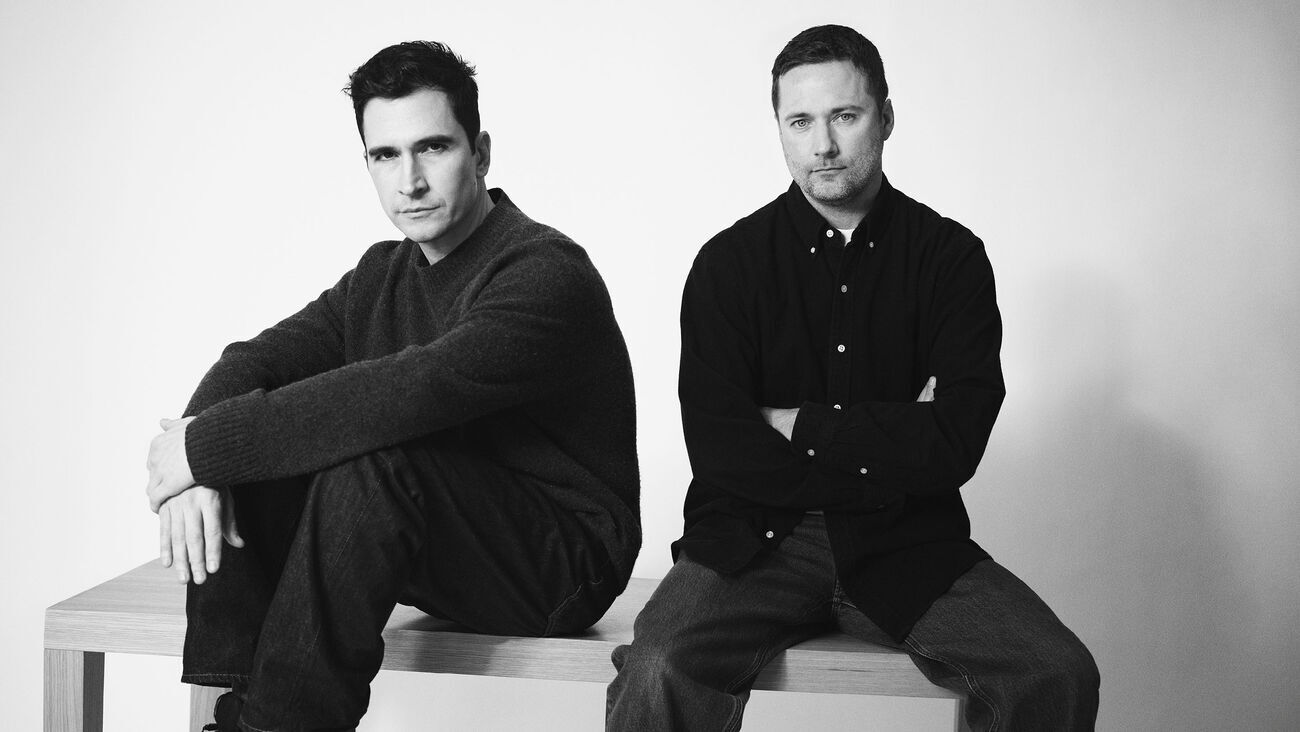
Loewe names Jack McCollough and Lazaro Hernandez, the American founders of Proenza Schouler, as its creative directors.1, 2, 3 The appointment, made public in March 2025, resolves one of the most closely watched questions in luxury fashion: who would follow Jonathan Anderson, whose long tenure had transformed the Spanish house into one of the industry's most talked-about brands.2 Anderson departs after more than a decade to take up creative direction at Dior, leaving a role defined largely by his own influence.4
For Loewe, the choice sets the terms of its next chapter. The house is owned by LVMH and has spent the past decade being read almost entirely through Anderson's sensibility.5 Handing the studio to an outside duo, rather than promoting from within or continuing a single-designer model, signals both continuity and change: continuity in the ambition to be led by strong creative voices, change in the identity of those voices and in the shift to a shared directorship.
Who the new directors are
McCollough and Hernandez founded Proenza Schouler in New York in 2002, building it into one of the most respected American labels of its generation.2, 6 Their work there was known for a rigorous, considered approach to ready-to-wear and for a strong sense of construction, qualities that map onto Loewe's identity as a house rooted in craft. Their move to Madrid marks their first appointment at a heritage European maison and their first at a brand of Loewe's scale within a group like LVMH.
The transition was not without cost to their previous venture. The pair stepped down from Proenza Schouler, where Rachel Scott was subsequently named creative director, closing a chapter of more than two decades at the label they created.7 Taking on Loewe meant leaving the brand most associated with their names, a measure of the opportunity the Spanish house represented.
Following a defining tenure
The scale of the challenge lies in what preceded it. When Anderson arrived in 2013, Loewe was a respected but quiet leather goods house.5 Over the following decade he rebuilt its identity, reworked its Anagram mark, introduced products that became modern signatures, and gave the brand a cultural presence through art, craft and film that few of its peers matched. By 2025 Loewe was, in perception terms, closely bound to a single designer, which made the handover both an opportunity and a risk.
Succeeding a founder-scale figure is among the hardest tasks in fashion. The incoming directors must honour the equity built under Anderson while establishing enough of their own point of view to justify the change. The appointment of an established duo with their own strong identity suggests LVMH judged that Loewe needed authorship rather than caretaking, and that the house was secure enough to absorb a new creative voice.
What the appointment signals
The decision reflects a wider pattern in luxury, where houses increasingly move designers between maisons in high-profile transfers, and where creative leadership is treated as a primary driver of brand value. Loewe's willingness to place its identity in the hands of newcomers, at the moment its most associated designer left for a larger role elsewhere, underlines how central the creative director has become to a modern fashion brand's positioning.
The directors made their debut with the spring/summer 2026 collection, presented in October 2025, offering the first public reading of their intentions.8 Early responses noted a continuity of language with the house they inherited, suggesting an evolution rather than a rupture.8 That approach carries its own logic: the equity Loewe accumulated over the previous decade is considerable, and preserving it while gradually introducing a new sensibility is a defensible way to manage a transition of this weight.
For a brand whose recent success has rested so heavily on creative direction, the appointment is the most consequential branding decision Loewe has made since 2013. It sets the identity, tone and ambition of the house for the years ahead, and the industry will read every collection and campaign that follows as evidence of how the transition is being handled.
The stakes extend beyond a single house. Loewe's revival over the previous decade had made it a reference point for how a heritage brand could be modernised, and its handling of this succession would be watched as a test case for the wider sector. A smooth transition would show that the value built under a defining designer can survive his departure; a stumble would suggest that such value is harder to transfer than luxury groups tend to assume.
Written with AI assistance, edited by a human. Find out more about our Use of AI.
1. WWD, "Loewe Confirms Proenza Schouler Duo as New Creative Directors", listed in this verse's sources as the trade confirmation of the appointment and its background. The page returned HTTP 402 behind a paywall and was not reachable on 18 September 2026; the appointment facts it was cited for are carried by notes 2 and 3. https://wwd.com/fashion-news/designer-luxury/loewe-proenza-schouler-new-creative-director-1237045580/
2. Wallpaper, Jack Moss, "Proenza Schouler's Jack McCollough and Lazaro Hernandez are the new creative directors of Loewe", 24 March 2025, for the appointment of Jack McCollough and Lazaro Hernandez as creative directors of Loewe, confirmed on the morning of 24 March 2025 and taking effect on 7 April 2025 across womenswear, menswear, leather goods and accessories, for Jonathan Anderson having left the house earlier in March 2025, and for the two designers having founded Proenza Schouler in New York in 2002. https://www.wallpaper.com/fashion-beauty/loewe-proenza-schouler-jack-mccollough-lazaro-hernandez
3. LOEWE, "Welcome our new creative directors", the house's own announcement page, consulted 18 September 2026, for Loewe itself naming Jack McCollough and Lazaro Hernandez as its creative directors and for their Proenza Schouler background, together with the newsroom root listed in this verse's sources, which on the same date served a shop front carrying no statement on the appointment. https://www.loewe.com/usa/en/pd/stories/new-creative-directors.html and https://www.loewe.com/
4. Hypebeast, Joyce Li, "Dior Confirms Jonathan Anderson as Womenswear and Couture Creative Director", 2 June 2025, off whitelist, added during the footnote retrofit because no listed source names where Anderson went, for Anderson taking up creative direction at Dior, having been named creative director of Dior menswear on 17 April 2025 and confirmed for womenswear and haute couture on 2 June 2025, and for his Loewe tenure of eleven years ending with his departure in March 2025. https://hypebeast.com/2025/6/dior-jonathan-anderson-womenswear-couture-creative-director-confirmed-announcement
5. Wikipedia, "Loewe (fashion brand)", consulted 18 September 2026, for LVMH having been the sole owner of Loewe since February 1996, and for Jonathan Anderson having become creative director in 2013 and held the role until March 2025 at a house founded in Madrid in 1846 by leather goods artisans. https://en.wikipedia.org/wiki/Loewe_(fashion_brand)
6. Numero, Camille Bois-Martin, "Who are Loewe's new creative directors?", 24 March 2025, updated 14 April 2025, for McCollough and Hernandez having founded Proenza Schouler in 2002 as Parsons students, naming it after their mothers' maiden names, for the label's standing as shown by three CFDA Designer of the Year awards in 2007, 2011 and 2013, and for Jonathan Anderson having left Loewe on 17 March 2025. https://numero.com/en/fashion/who-are-loewes-new-creative-directors/
7. W Magazine, Carolyn Twersky Winkler, "Rachel Scott Is the New Creative Director of Proenza Schouler", 2 September 2025, off whitelist, added during the footnote retrofit because no listed source covers the succession at Proenza Schouler, for Rachel Scott, founder of Diotima, being named creative director of the label after McCollough and Hernandez left it for Loewe, with a remit over all product categories and a first collection scheduled for February 2026. https://www.wmagazine.com/fashion/rachel-scott-proenza-schouler-new-designer
8. FashionUnited, Jaime Martinez, "McCollough and Hernandez embrace Anderson's legacy in their debut for Loewe", 3 October 2025, off whitelist, added during the footnote retrofit because no listed source covers the debut, for the duo's first collection being the spring/summer 2026 womenswear show presented in Paris on 3 October 2025, and for that collection having been read at the time as continuity rather than rupture, the piece finding "it would be difficult to find a piece that Anderson himself might not have designed for Loewe, despite the subtle touches of the American creatives". https://fashionunited.uk/news/fashion/mccollough-and-hernandez-embrace-andersons-legacy-in-their-debut-for-loewe/2025100384273