KFC turns its bucket into the centre of a global identity
KFC presents a sweeping global rebrand, developed with the branding agency JKR, that the company frames as its "next chapter".1, 2 The work reaches well beyond a new logo. It spans visual identity, packaging, restaurant design, digital experiences and menu innovation, and it is held together by a single familiar object: the bucket.1 Rather than a radical reinvention, the system reads as a deliberate doubling down on the asset that has carried the brand for most of its history.
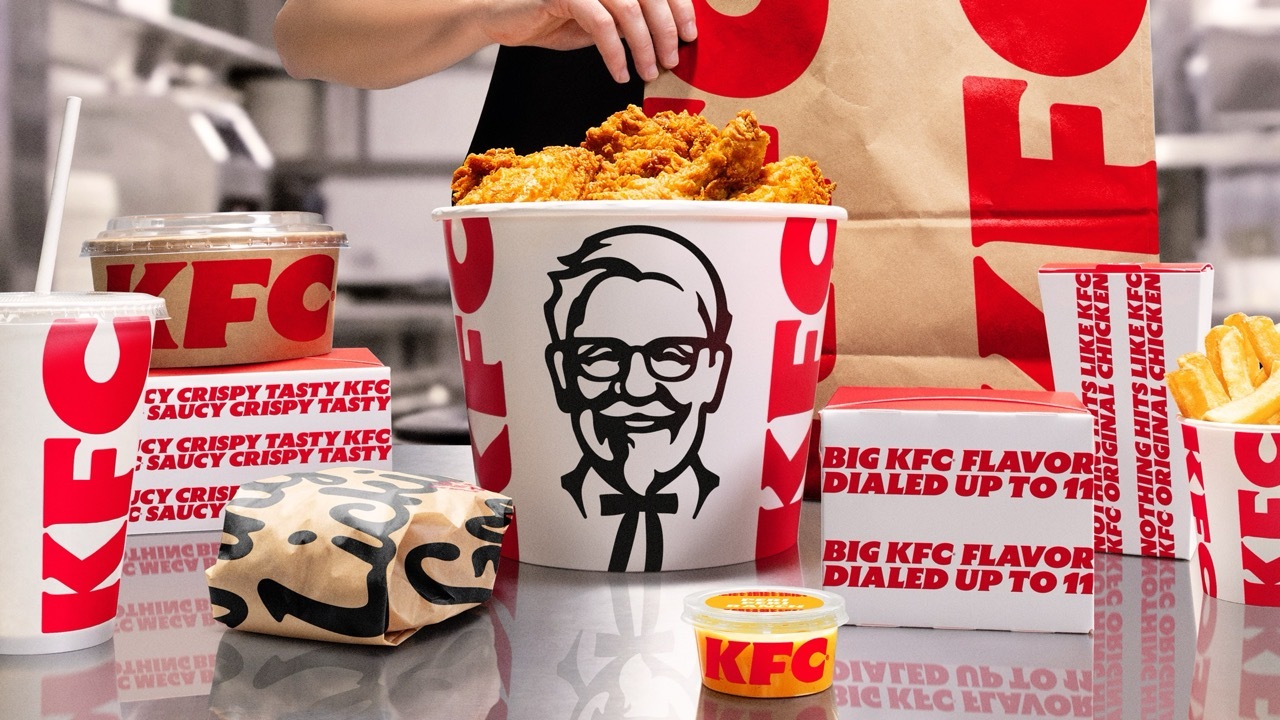
JKR gives the idea a name. The agency calls the expanded world the "Bucketverse", a framework that treats the bucket not as one piece of packaging among many but as the organising device of the entire identity.1 Sean Thomas, global executive creative director at JKR, describes a "360 evolution" that runs from the design system and brand assets to restaurant environments, packaging, digital platforms and tone of voice.1 The stated ambition is a brand that is "more expressive, more connected, more KFC".1
What actually changes
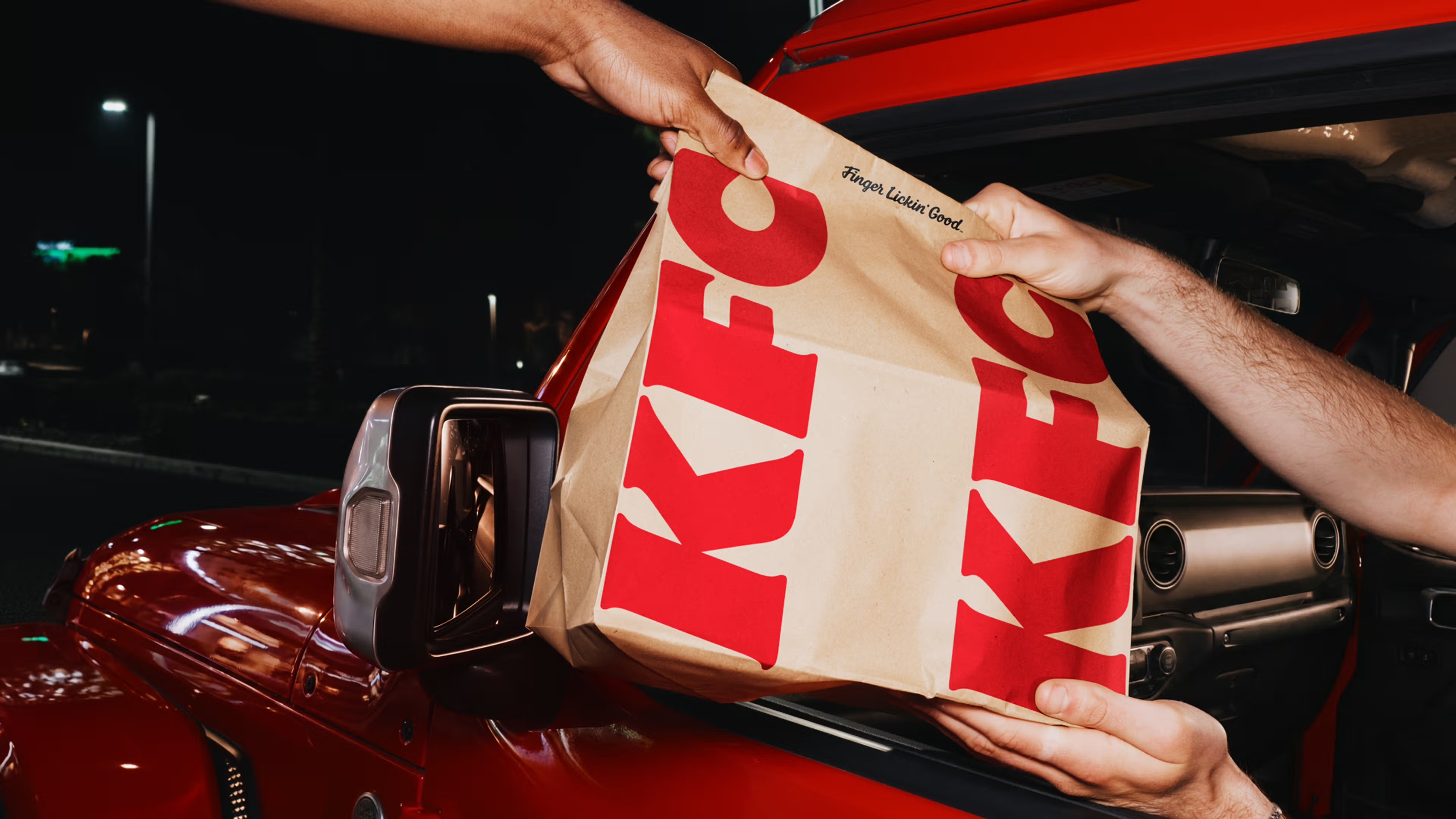
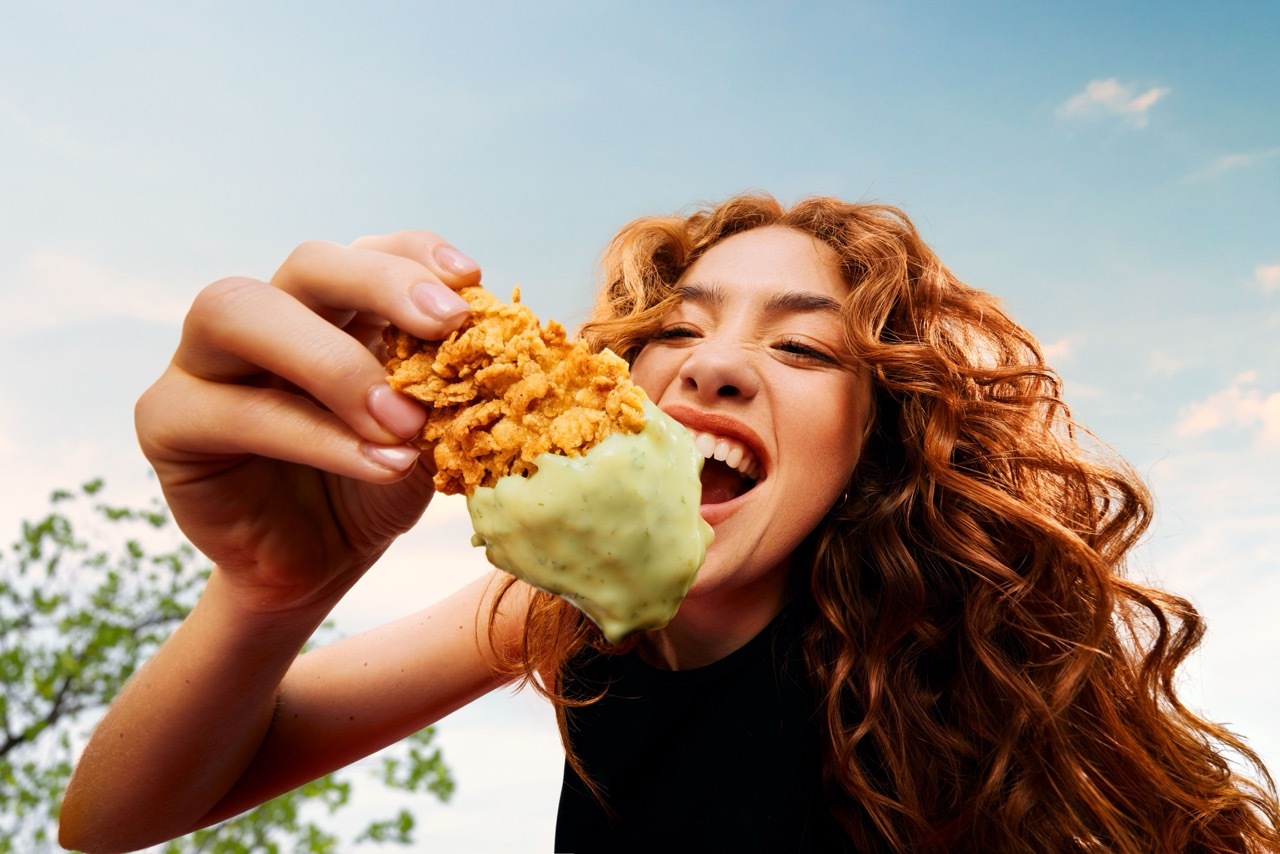
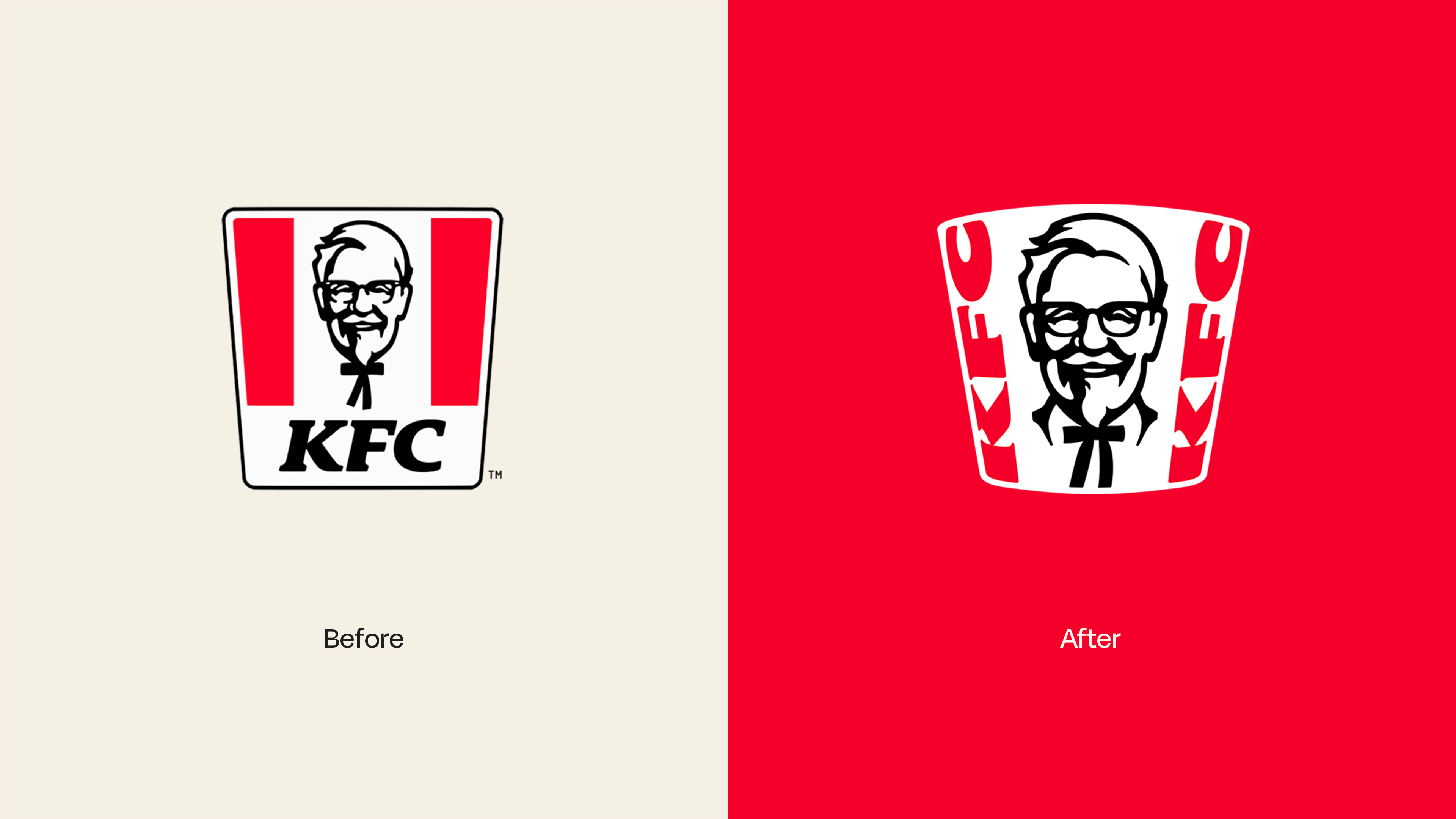
The graphic system is refreshed rather than rebuilt. The logo becomes noticeably less flat and less squared-off than the previous version, and the Colonel Sanders illustration is redrawn.1 There are bespoke typefaces, new photography and illustration approaches, and an expanded colour palette.1 The familiar red, white and black remain intact, joined now by a secondary "Herbs and Spices" palette intended to add flexibility and vibrancy across a wider range of applications.1
The brand's long-running slogan, Finger Lickin' Good, is also repositioned. Instead of working primarily as a tagline, it is now treated as a behavioural principle meant to guide the customer experience across every channel.1 The shift is small in wording but significant in intent, because it moves a line of copy into the territory of operating philosophy.
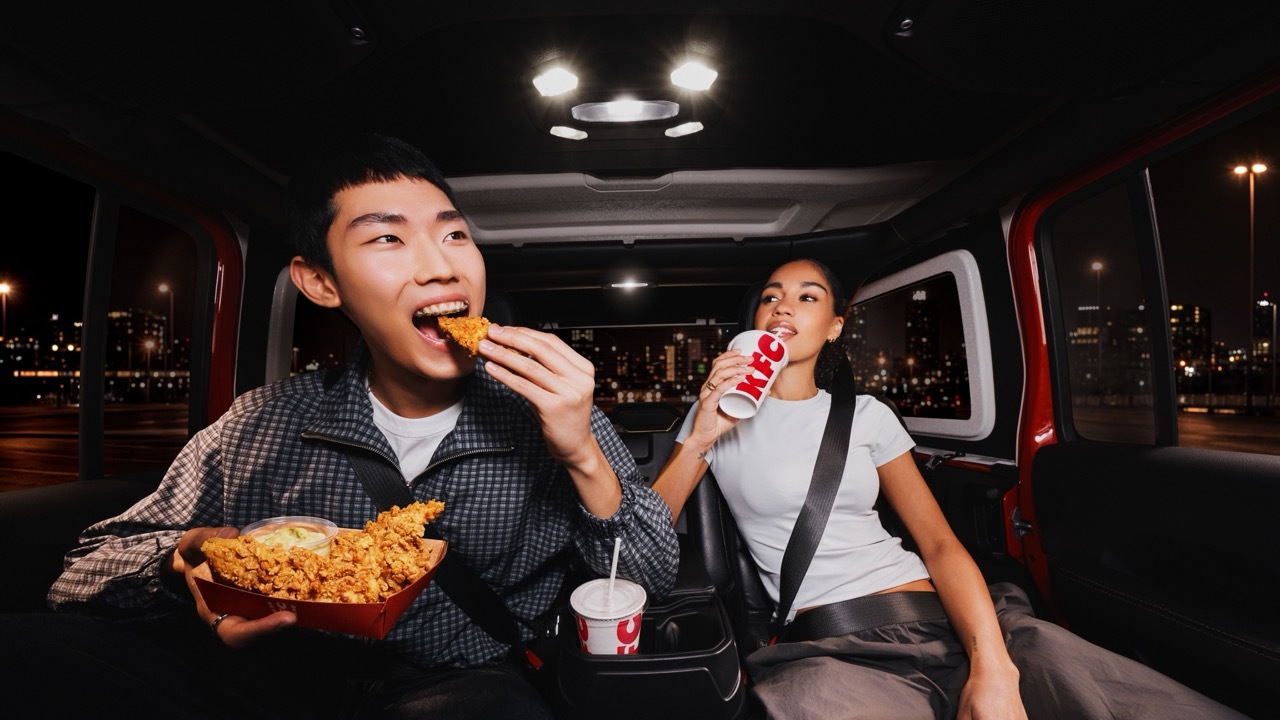
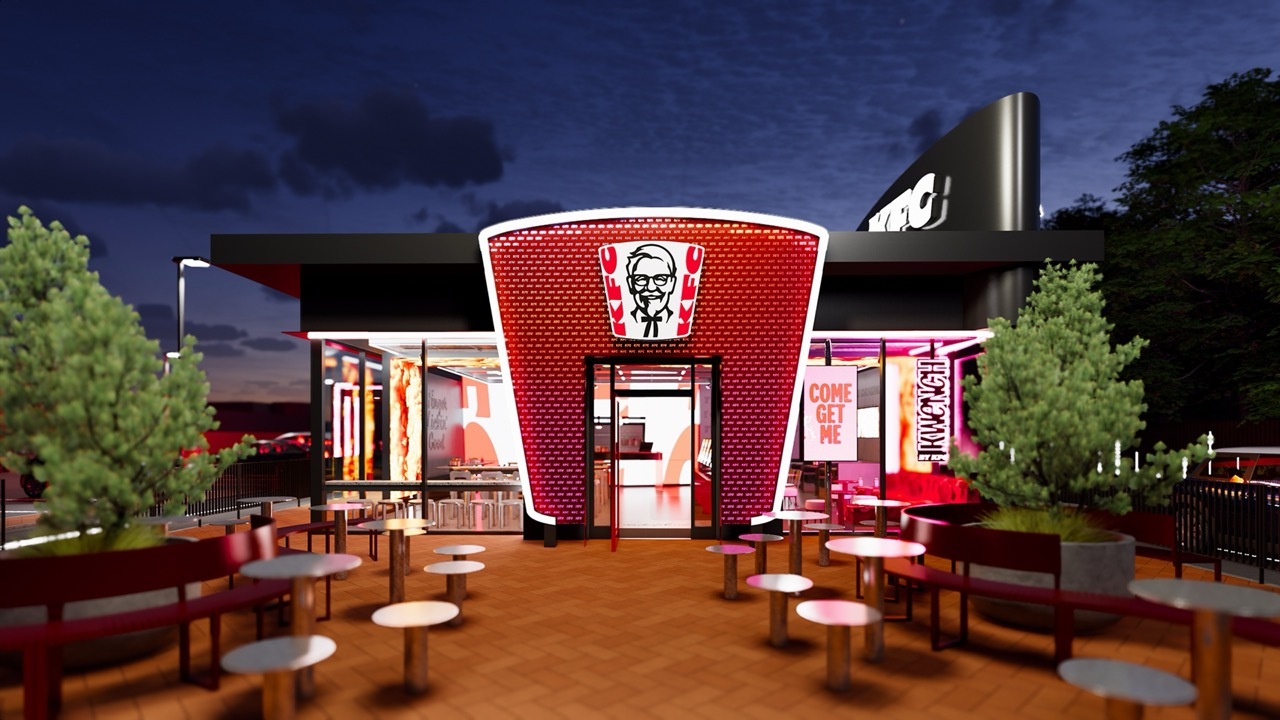
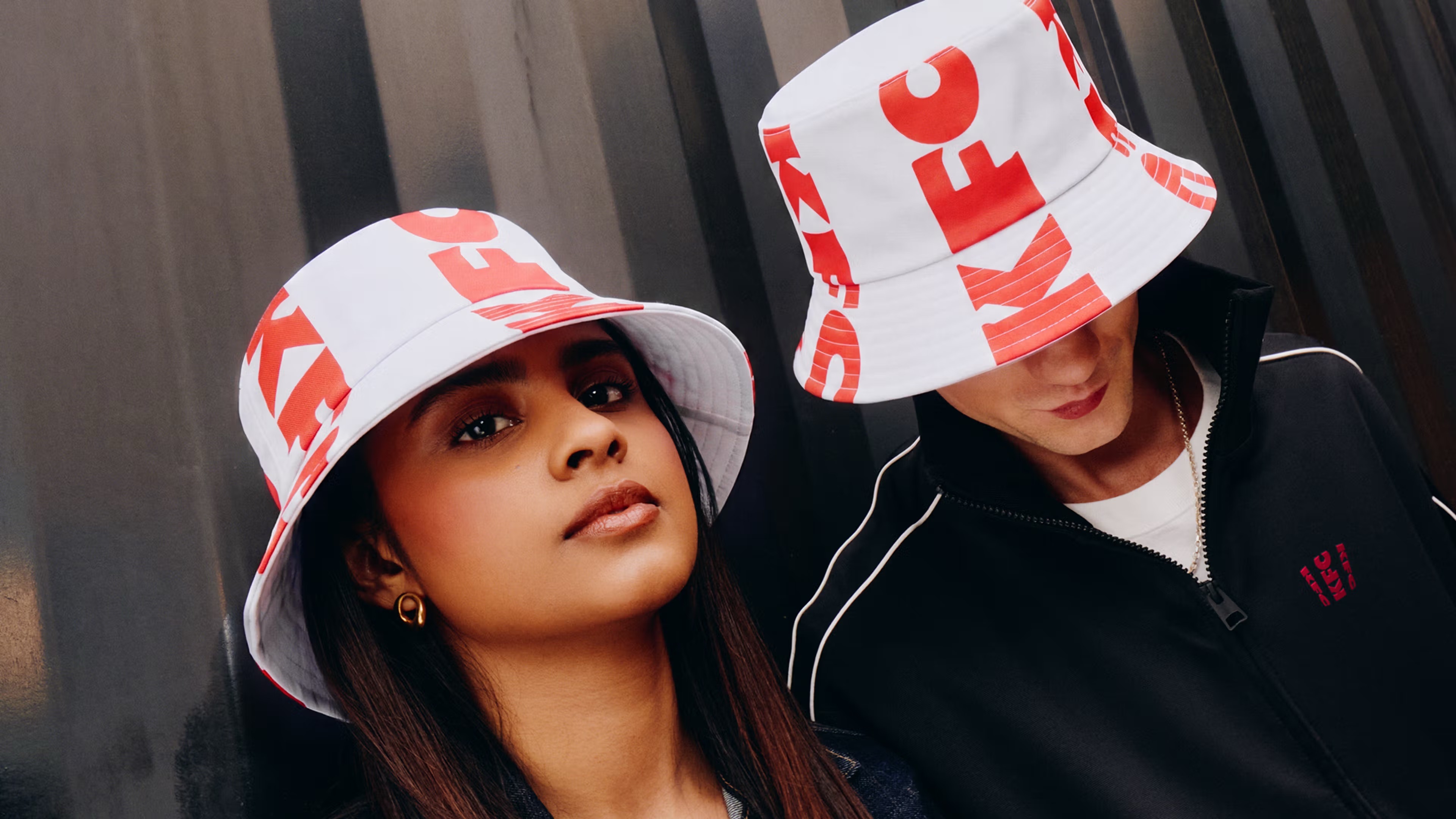
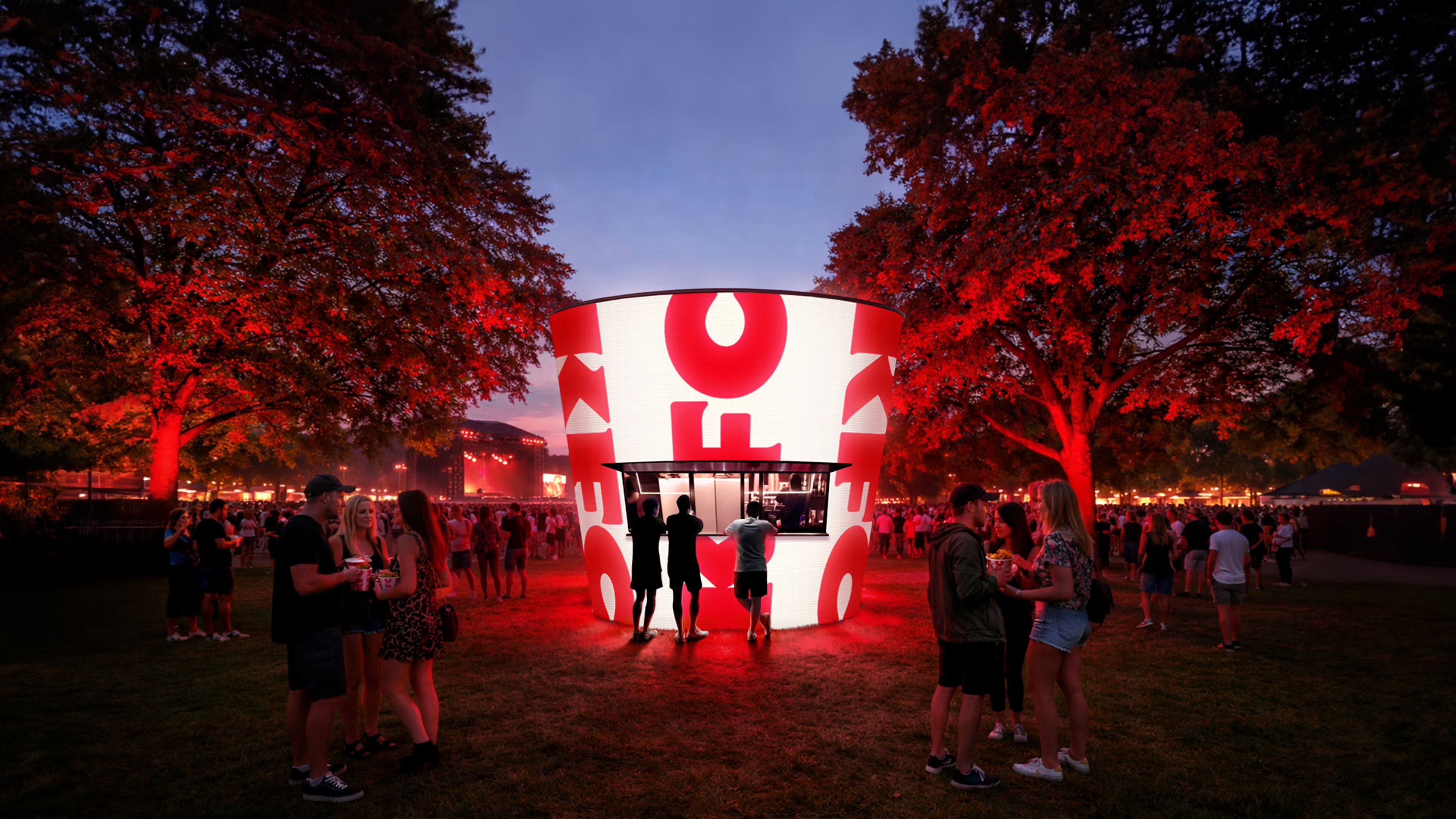
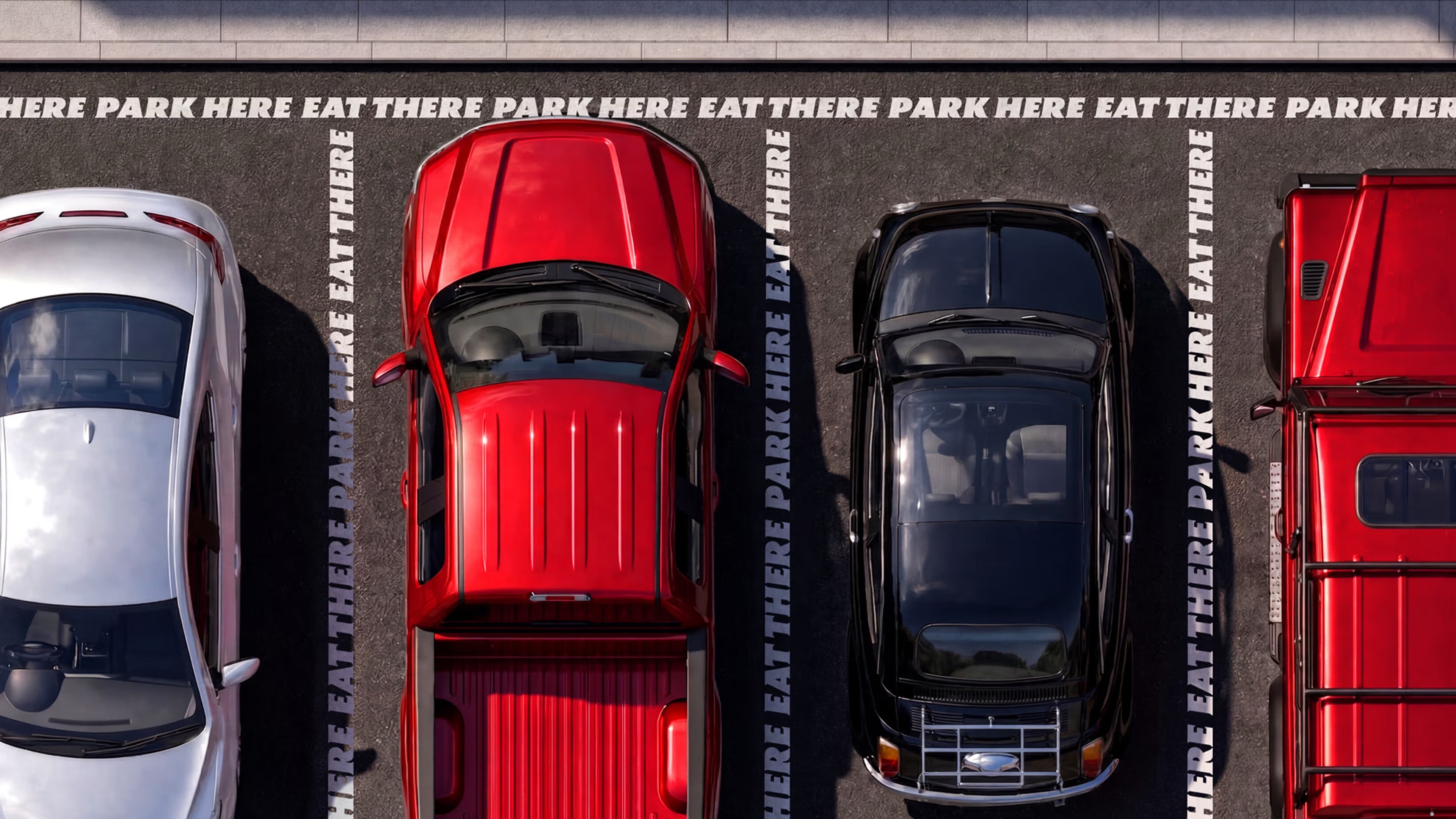
The identity extends into physical and digital space. KFC introduces next-generation restaurant concepts in markets including Texas and Dubai, aiming for more cohesive and immersive dining environments.1 Digital menu boards and screens are reframed as brand canvases rather than purely transactional tools.1 Fans are also offered customised apparel, including, predictably, a bucket hat.1 Alongside the design work, the company introduces new boneless chicken products, a global range of sauces and an expanded drinks platform called Kwench by KFC.1, 2
The bucket as a system
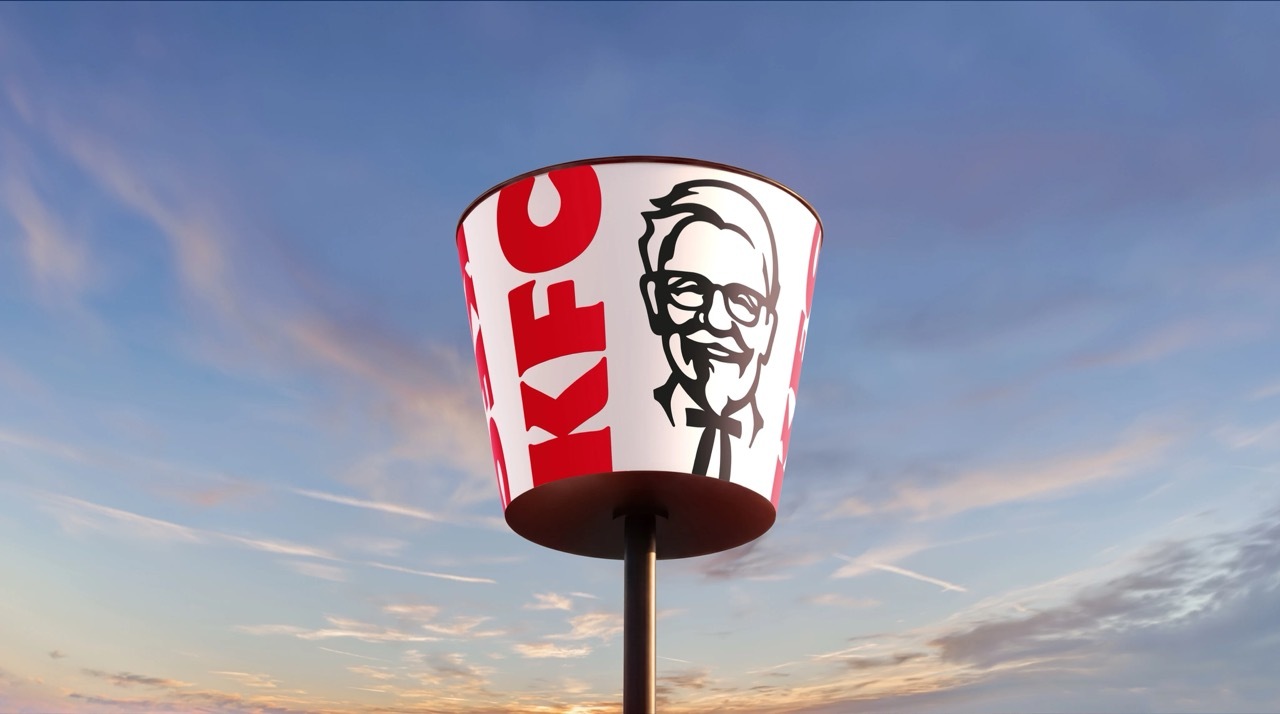
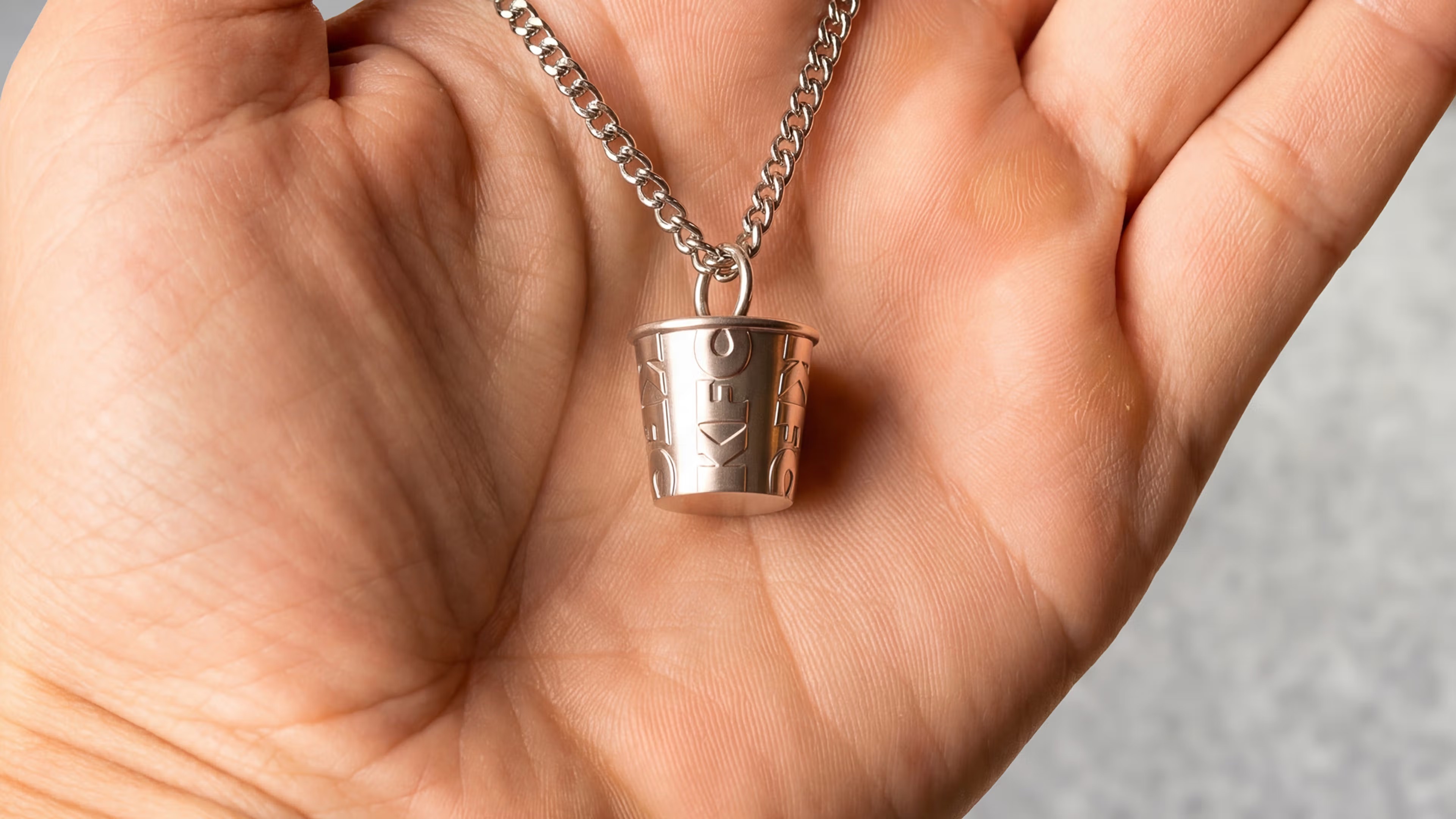
The strategic core of the project is the decision to promote the bucket from packaging to platform. Across nearly seven decades, the bucket evolves from a way to carry fried chicken into a central visual device used in communications, physical environments and digital touchpoints.1, 3 KFC and JKR now position it as both a framing system and a storytelling tool, a container that can hold an image, a message or an entire restaurant facade and still signal the brand instantly.1
This is recognisable distinctive-brand-asset thinking. The most defensible identities tend to be built on a small number of assets that an audience can recognise without the name attached, and the bucket qualifies cleanly. It is proprietary, it is decades old, and it already carries strong associations. By making it the spine of the system rather than one element within it, KFC reduces its dependence on the logo alone and gives every market a shared device to build on.
Reading the move
The rebrand reflects a wider pattern among heritage fast-food brands, which increasingly favour experience-led design systems that extend beyond logos and packaging into environments, products and tone of voice. The logic is consistency at global scale, and the method is to amplify the assets that made the brand famous rather than to replace them. For a chain operating in an increasingly crowded chicken market, where competitors press hard on both value and craft, leaning on an icon that rivals cannot use is a rational bet.
It is worth noting what the work does not do. There is no attempt to discard the Colonel, abandon the red, or chase a generic minimalism of the kind that has made many recent rebrands interchangeable. The palette grows rather than shrinks, the illustration becomes warmer rather than flatter, and the heritage signals are retained. The challenge JKR sets itself is modernisation without erasure, evolving one of the world's most recognisable fast-food brands while protecting the distinctiveness that made it recognisable in the first place.
The refreshed identity begins rolling out in the UK and Ireland this month, before expanding to Australia, the United States and other markets through 2026.1, 2 Whether the Bucketverse succeeds in setting KFC apart remains to be seen, but the direction is clear. The company is betting that its future lies in making the bucket impossible to ignore.
Written with AI assistance, edited by a human. Find out more about our Use of AI.
1. Creative Review, Adam Woodward, "KFC unveils global rebrand centred on its iconic bucket", 15 June 2026, for JKR's authorship of the rebrand and its reach across visual identity, packaging, restaurant design, digital experiences and menu innovation, for the "Bucketverse" as the name JKR gives the expanded world and for the bucket being treated as the organising device of the identity, for the job title and quoted words of Sean Thomas, global executive creative director at JKR, including the "360 evolution" spanning design system, brand assets, restaurant environments, packaging, digital platforms and tone of voice and the ambition of a brand that is "more expressive, more connected, more KFC", for the logo being less flat and less squared-off than the previous version and the updated Colonel Sanders illustration, for the bespoke typefaces, the new photography and illustration approaches and the expanded palette, for the secondary "Herbs and Spices" palette added to the retained red, white and black, for Finger Lickin' Good being repositioned from tagline to behavioural principle guiding the customer experience, for the next-generation restaurant concepts in Texas and Dubai, the digital menu boards and screens treated as brand canvases and the customised apparel including the bucket hat, for the new boneless chicken, the global sauces range and the Kwench by KFC drinks platform, for the bucket having evolved from packaging into a central visual device and now acting as both a framing system and a storytelling tool, and for the rollout beginning in the UK and Ireland this month before Australia, the United States and other markets through 2026. https://www.creativereview.co.uk/kfc-global-rebrand-jkr-bucket/
2. KFC, "KFC Launches Its Next Chapter Globally, Complete With New Menu Innovation, Modern Restaurant Design and Fresh Branding", 15 June 2026, for KFC's own framing of the launch as its next chapter, for the new boneless tenders, the global sauce range of more than twenty recipes and the KWENCH by KFC drinks platform of Boba Refreshers, Krunch Shakes, Sparkling Lemonades and Iced Coffees, and for the rollout beginning in the UK and Ireland and continuing across markets through 2026. Added during the footnote retrofit of 17 September 2026. https://global.kfc.com/press-releases/kfc-launches-its-next-chapter-globally-complete-with-new-menu-innovation-modern-restaurant-design-and-fresh-branding
3. KFC, "Our History", for the original KFC bucket having been introduced in 1957, the date that places the bucket at nearly seven decades rather than nearly a century and that settles the correction made to that sentence. Added during the footnote retrofit of 17 September 2026. https://global.kfc.com/our-history