A bag born on a flight, kept scarce by design
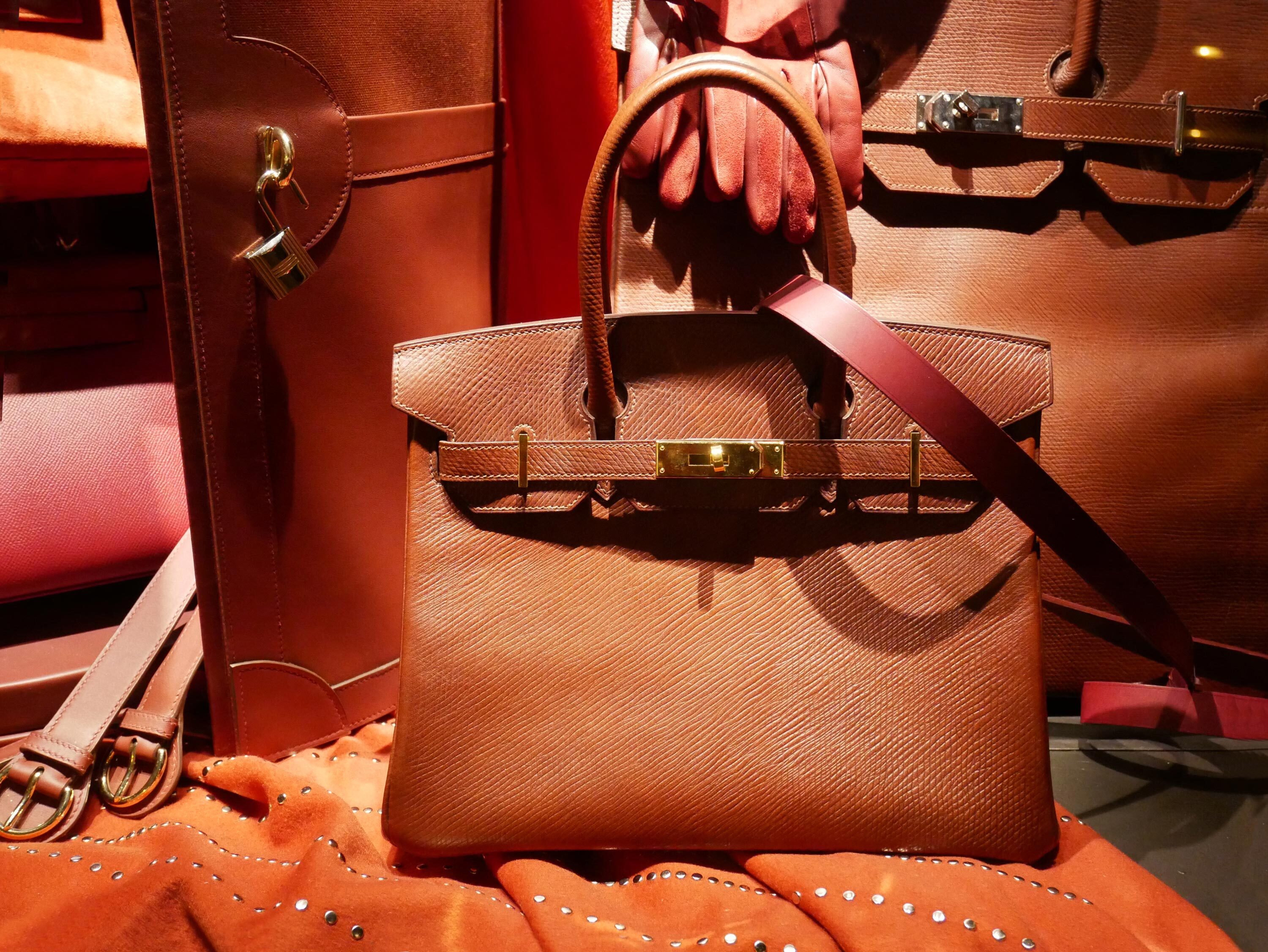
In 1984, the British actress and singer Jane Birkin found herself seated next to Jean-Louis Dumas, then the head of Hermès, on an Air France flight from Paris to London. As she stowed her belongings, her open straw bag tipped over and its contents spilled into the aisle. Birkin remarked that she could never find a leather bag large enough for daily life yet more refined than a weekend holdall. Over the course of the flight, Dumas sketched a supple, rectangular bag with a flap closure and the saddle-stitching Hermès had used since its origins as a saddlery, and the house later produced it under her name.
The story is now told openly by Hermès as part of its own history, and its plainness is part of the point. The bag that would become the most sought-after object in modern luxury did not come from a design brief or a marketing plan. It came from a conversation about a practical problem, solved by a leather house applying craft it already possessed. The first Birkin reached the market in 1984, a close relative of the Kelly bag that Hermès had renamed after Grace Kelly in 1977, and it entered a product line the house treated less as fashion than as durable, made-to-last leather goods.
Scarcity as strategy, not accident
What turned the Birkin into a brand asset was not visibility but restraint. Hermès never supported the bag with a formal advertising campaign, never discounted it and never expanded supply to meet demand. Each bag is assembled largely by a single artisan, hand-stitched over many hours, and the house has consistently produced fewer than the market would absorb. The result is a waiting system that has itself become part of the product's meaning: for years, obtaining a Birkin was understood to require an existing relationship with the house rather than simply the ability to pay.
This is a deliberate inversion of the usual luxury growth logic. Most brands that reach high demand increase output, extend the line and raise visibility. Hermès held the Birkin steady, allowing scarcity to do the work that advertising does for other houses. The bag communicates status precisely because it cannot be acquired on demand, and the house has protected that quality for four decades rather than trading it for short-term volume.
A resale market the house never built
One measure of the strategy is the secondary market that formed around the bag without any involvement from Hermès. Birkins routinely resell for more than their retail price, and specific examples in rare leathers or with unusual hardware have become auction lots in their own right. Analyses of the resale market have repeatedly described the Birkin as one of the few consumer goods to hold or increase value over time, a reputation that reinforces the primary product even though Hermès neither operates nor endorses the resale trade.
The house has generally stayed out of that conversation, declining to comment on prices or waiting lists, which leaves the mythology to circulate on its own. In branding terms, the Birkin works as a distinctive brand asset, a single product so tightly identified with one house that it carries the brand's meaning without a logo, a slogan or a campaign attached to it.
The prototype that set the record
The clearest evidence of the bag's status came in July 2025, when Jane Birkin's own original prototype was offered at Sotheby's in Paris. The bag was visibly used, marked with her initials, fitted with a shoulder strap she had requested and still carrying traces of the stickers and objects she had attached to it over years of daily wear. After a bidding contest of about ten minutes among nine collectors, it sold for 8.6 million euros hammer, roughly 10.1 million dollars including fees, to a private collector from Japan.
The price made it the most valuable handbag ever sold at auction, more than doubling the previous record, which had also been held by an Hermès bag. For a product the house has never advertised and never made freely available, the sale was a striking confirmation of a forty-year strategy: that a single, consistently scarce object, kept close to the craft that created it, can become both a commercial engine and the most recognisable expression of a brand. The Birkin remains in production, still made in limited numbers, still without a campaign, and still sold on the house's own terms rather than the market's.
Source: Vogue Youtube
Written with AI assistance, edited by a human. Find out more about our Use of AI.