
A thousand songs and a piece of software
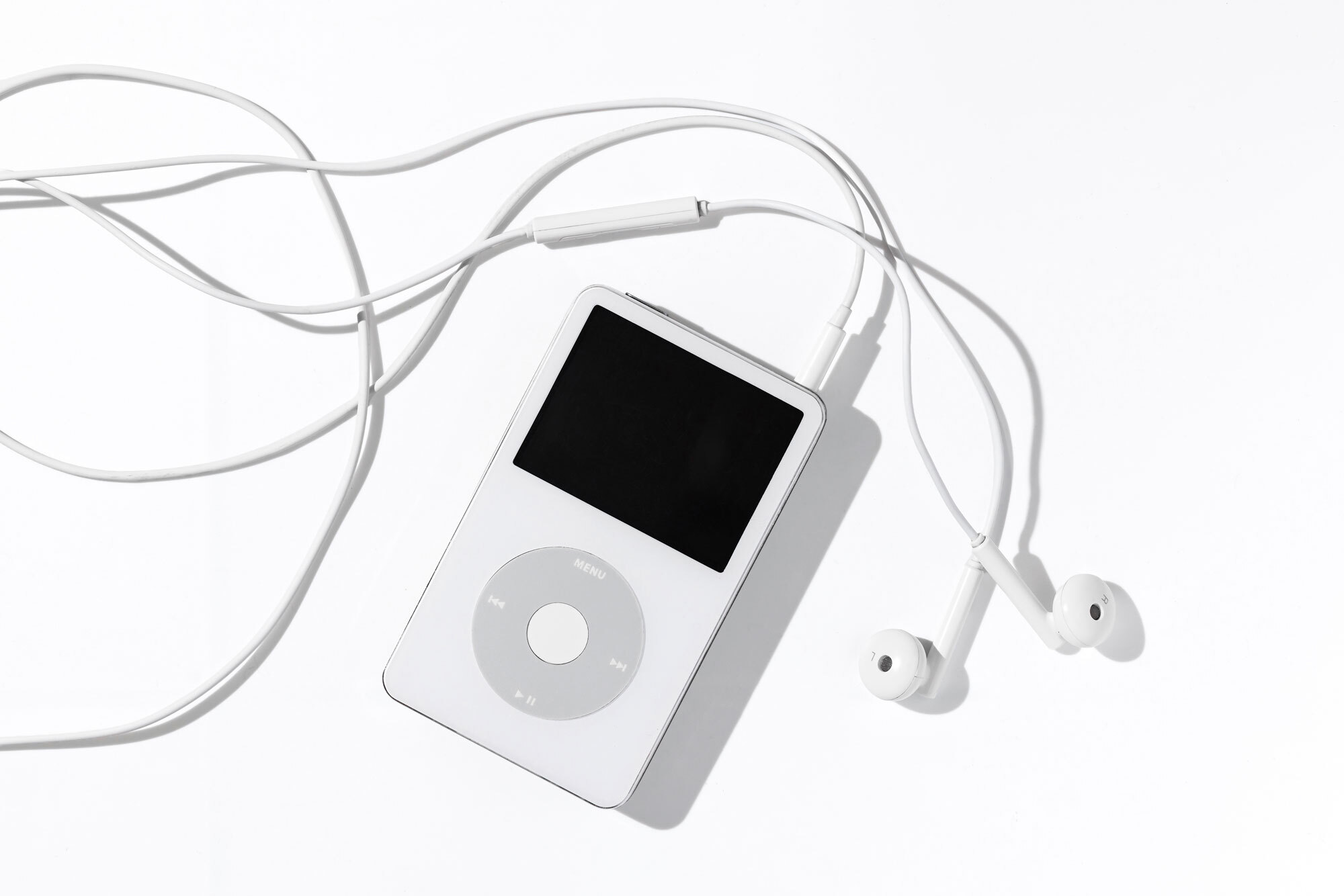
On 23 October 2001, Apple introduced the iPod at a small event in Cupertino. It held five gigabytes, cost 399 US dollars, worked only with a Mac, and was described by Steve Jobs in a phrase that has outlasted the product: a thousand songs in your pocket. It shipped on 10 November 2001.
The reception at the time was sceptical. Digital music players already existed, the price was high, and Apple was a computer company with roughly three per cent of the personal computer market recovering from near collapse. What the sceptics missed was that Apple was not selling a player. It was selling a pair.
The system was the product
Apple had released iTunes in January 2001, nine months before the iPod, built from software it had acquired rather than written. On its own it was a music library for the Mac. Combined with a device that synchronised to it automatically, it became something the category had not previously offered: a way of moving music from a computer to a pocket that required no decisions.
Competing players of the period asked the user to manage files, formats and folders. The iPod asked the user to plug in a cable. That difference was not a technical achievement so much as an editorial one, a decision about what to leave out, and it became the template for how Apple would present every product that followed.
The system closed on 28 April 2003, when Apple opened the iTunes Music Store with roughly 200,000 tracks at 99 cents each. Apple had persuaded the major labels to license individual songs at a fixed price at a moment when the industry's response to file sharing had been litigation. The store gave the hardware a reason to exist and gave the brand a position on one of the most contested cultural questions of the decade.
The naming carried the same logic. Apple gave the device a name with no reference to music, capacity or technology, built on a prefix it would reuse for two decades. The lower-case i had first appeared on the iMac in 1998, and by 2001 it was doing work no descriptive name could: it marked a product as belonging to a family without saying anything about what the product did.
Source: GatesandJobs Youtube
Advertising that sold a silhouette
The campaign that carried the product arrived in autumn 2003. TBWA/Chiat/Day, with Lee Clow leading and Susan Alinsangan as art director, built the work around black silhouetted dancers on saturated single-colour backgrounds, with the iPod and its earbuds picked out in white.
The construction was unusually disciplined. The figures had no faces, no age and no visible demographic, which allowed any viewer to occupy the frame. The product was reduced to two white shapes and a cord. The music, drawn from acts including Jet, the Black Eyed Peas and N.E.R.D., carried the energy that the visuals deliberately withheld. Nothing was explained, and no feature was named.
Its most consequential effect was outside the advertising itself. By making white earbuds the visual signature, Apple turned every customer into a walking piece of media. Headphones at the time were black by default; a white cord in public identified the wearer as an iPod owner at a distance, and the campaign had taught everyone else what that meant. Reported sales rose sharply in the months after the work began running.
What it did to the company
The commercial results were substantial. Apple opened the iPod to Windows users during 2002 and 2003, a reversal of its historical instinct to keep products inside its own platform, and volume followed. The company passed 100 million units sold by April 2007, and in the quarter to January 2007 the iPod accounted for close to half of Apple's revenue.
The brand consequences were larger than the numbers. Apple entered 2001 as a computer manufacturer with a devoted minority audience and left the decade as a consumer brand with mass reach, sold in shopping centres rather than specialist dealers, and understood by people who had never used a Mac. The company dropped Computer from its legal name in 2007, three weeks before showing the first iPhone.
It changed the retail relationship too. The first Apple Store had opened in May 2001, five months before the iPod, and the two arrived together as a single proposition: a product that needed demonstrating and a room built to demonstrate it. Before the iPod the stores were a risky experiment in selling computers; after it they became the highest-grossing retail space per square foot in the industry.
The iPod itself was eventually consumed by that phone and was discontinued in May 2022. The structure it established, hardware and software and a store designed as one thing, remained the model for everything Apple built afterwards.
Source: Gorillaz Feel Good Inc. Apple iPod + iTunes - mai 2005
Written with AI assistance, edited by a human. Find out more about our Use of AI.