A policy against the "assault" of chain retail
By the early 2010s, Aesop had grown from a single Melbourne haircare line into an international retailer with dozens of stores, and founder Dennis Paphitis used a December 2012 interview with the design publication Dezeen to spell out the retail philosophy behind that growth. Paphitis said he commissioned a different architect or designer for nearly every store specifically to avoid what he called "the kind of assault on the streetscape that retailers inflict through the ordinary course of mindless business." He added that he had "always imagined what we do as the equivalent of a weighty, gold charm bracelet on the tanned wrist of a glamorous, well-read European woman who has travelled and collected interesting experiences," treating each store as a single charm rather than a repeated link.
No shared template, no house architect
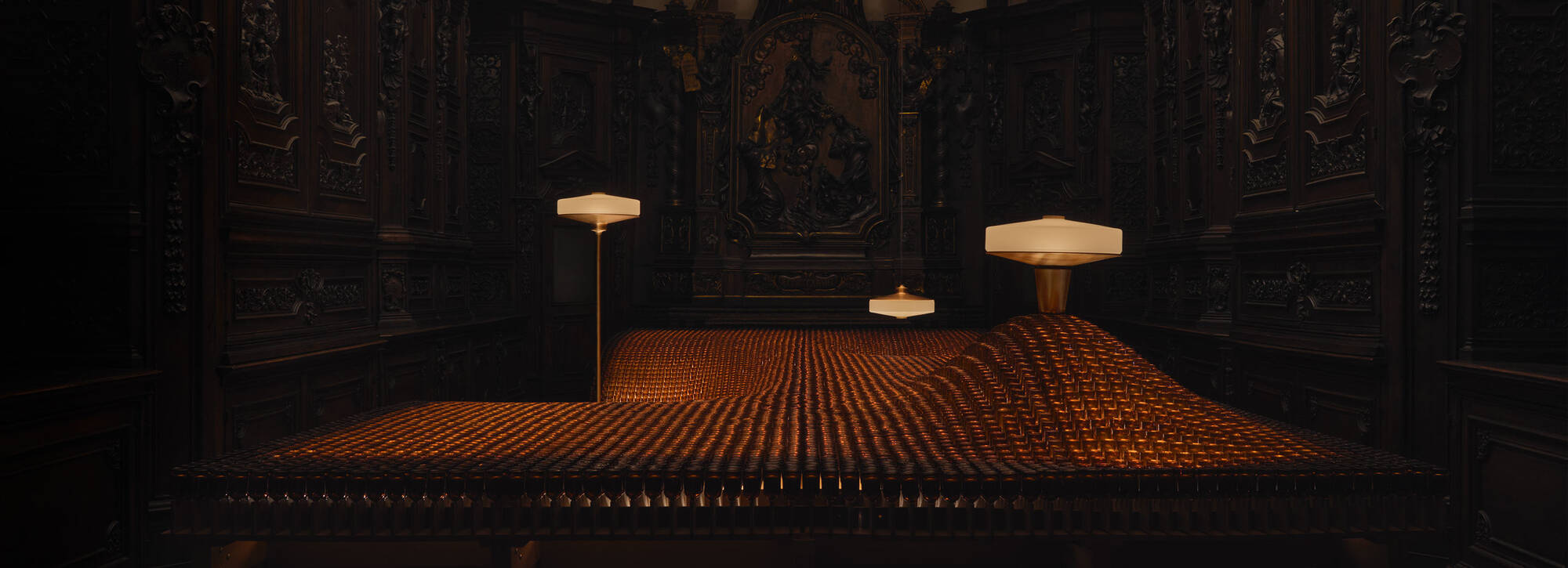
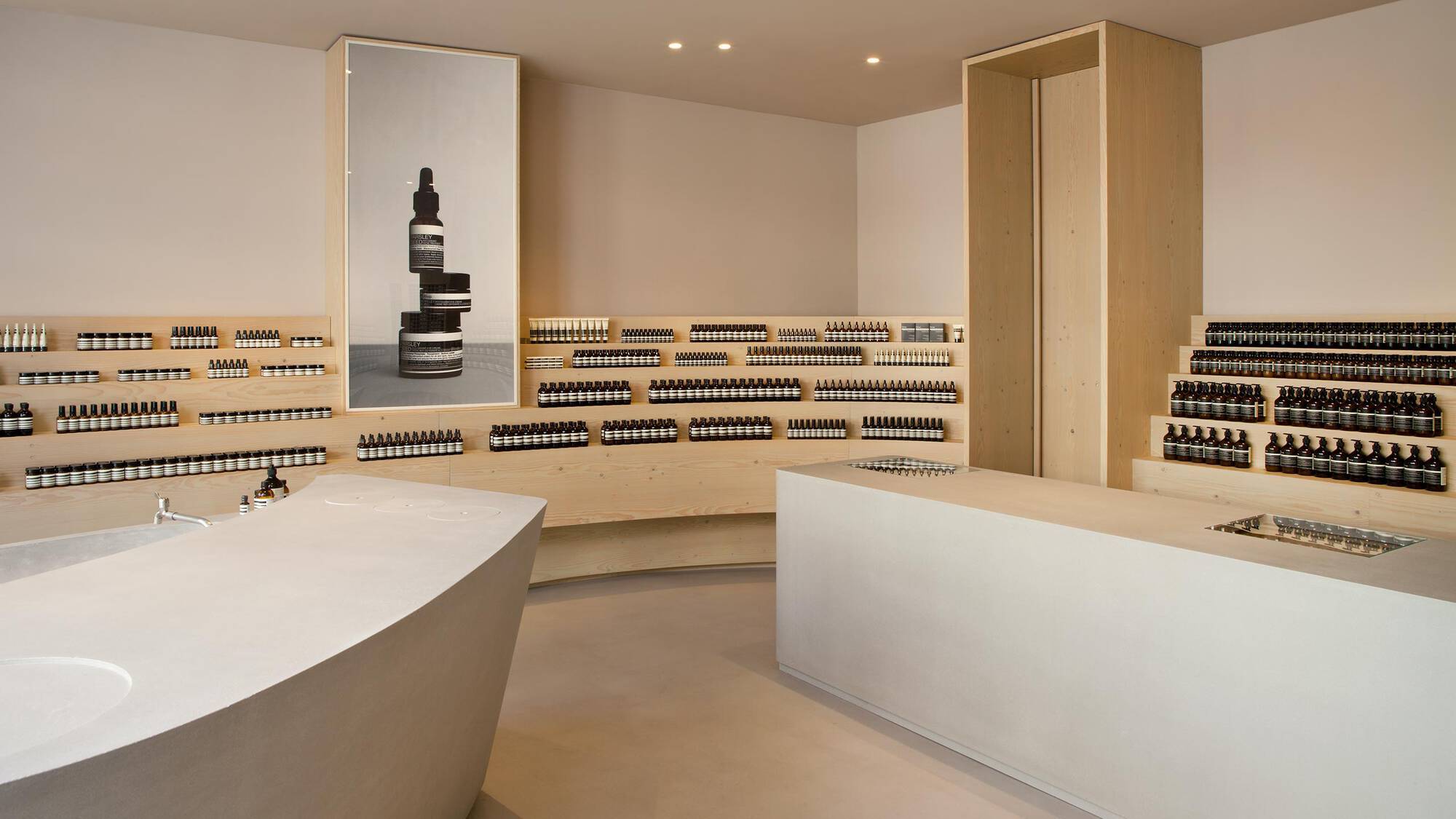
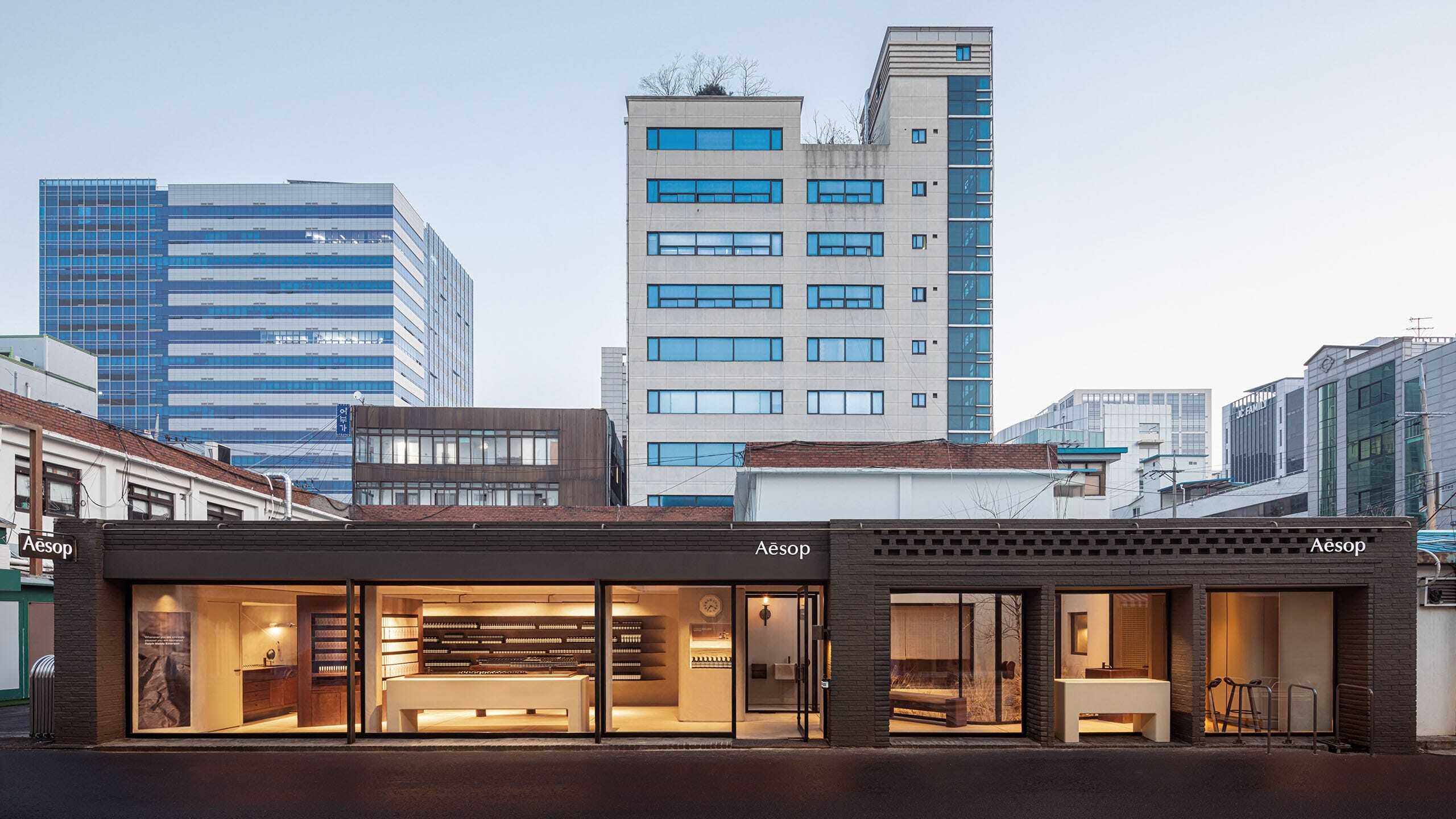
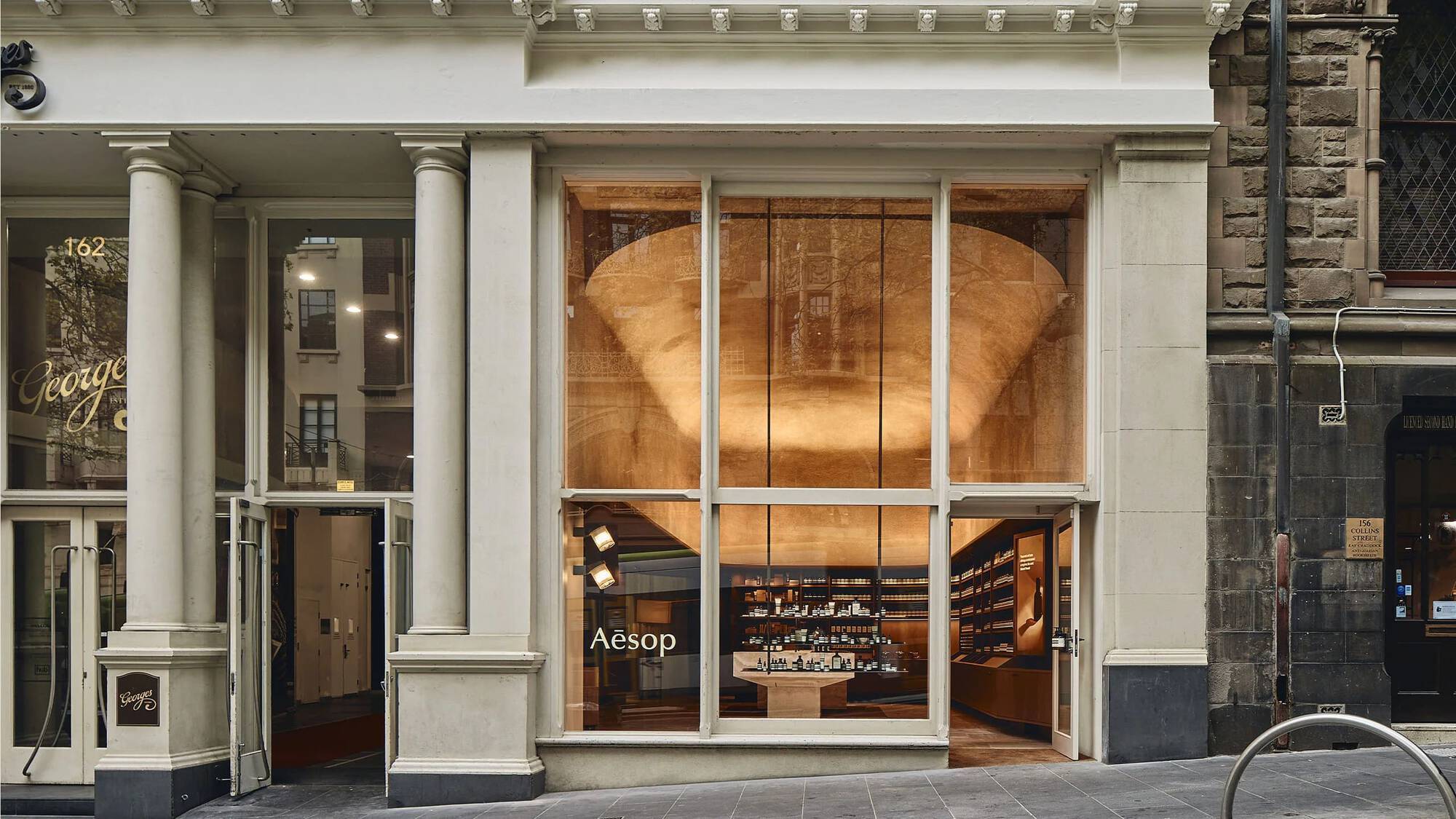
The policy is unusual in retail, where a recognizable, repeatable store format is normally treated as a core brand asset. Most global retailers standardize fixtures, signage and layout so that a customer entering a store in Seoul recognizes the same brand entering a store in Chicago. Aesop inverted that logic. Instead of a single design language applied everywhere, the company built a rotating roster of independent architecture and design studios, each commissioned to respond to the specific site, city and material history of a single location.
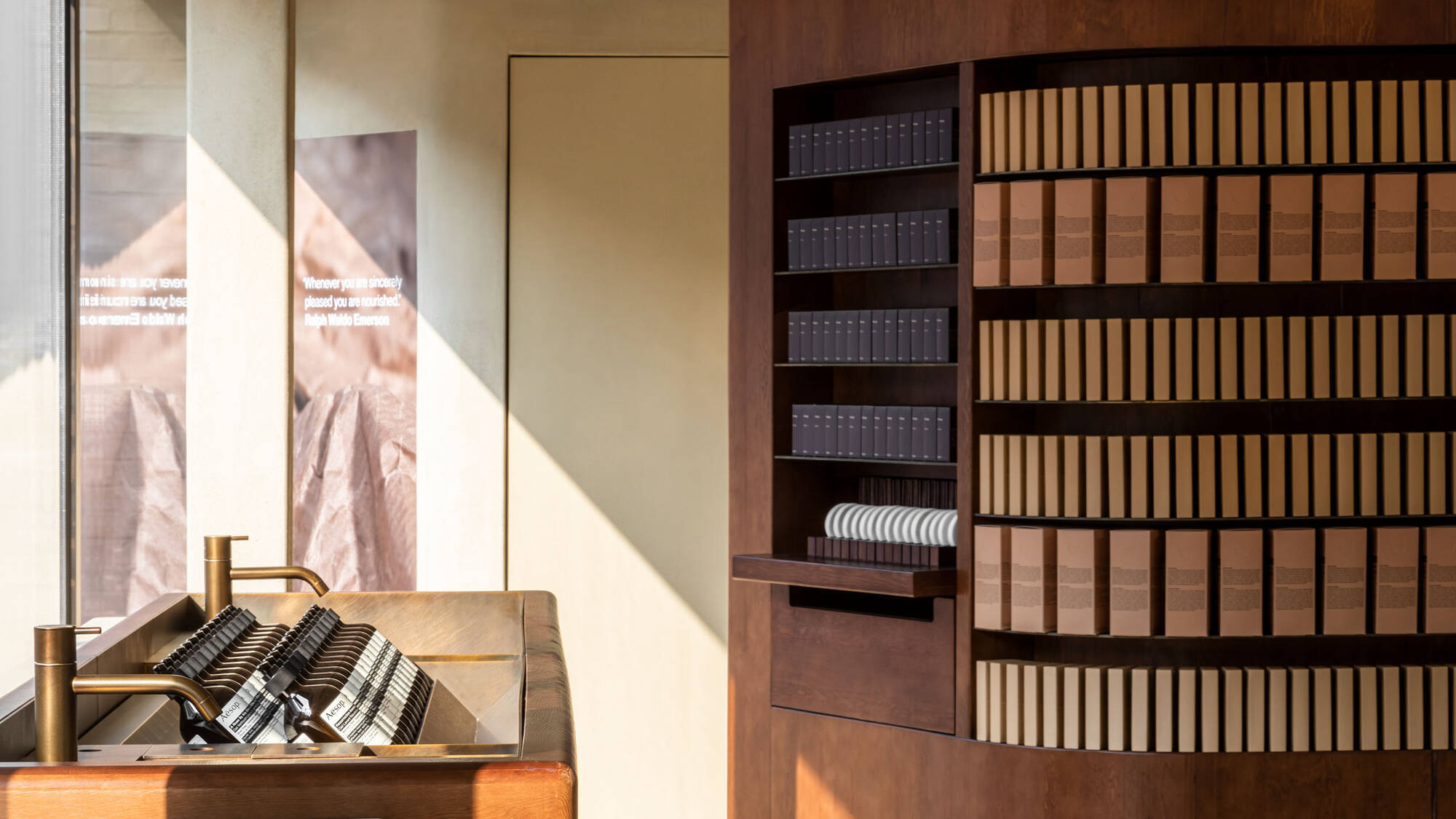
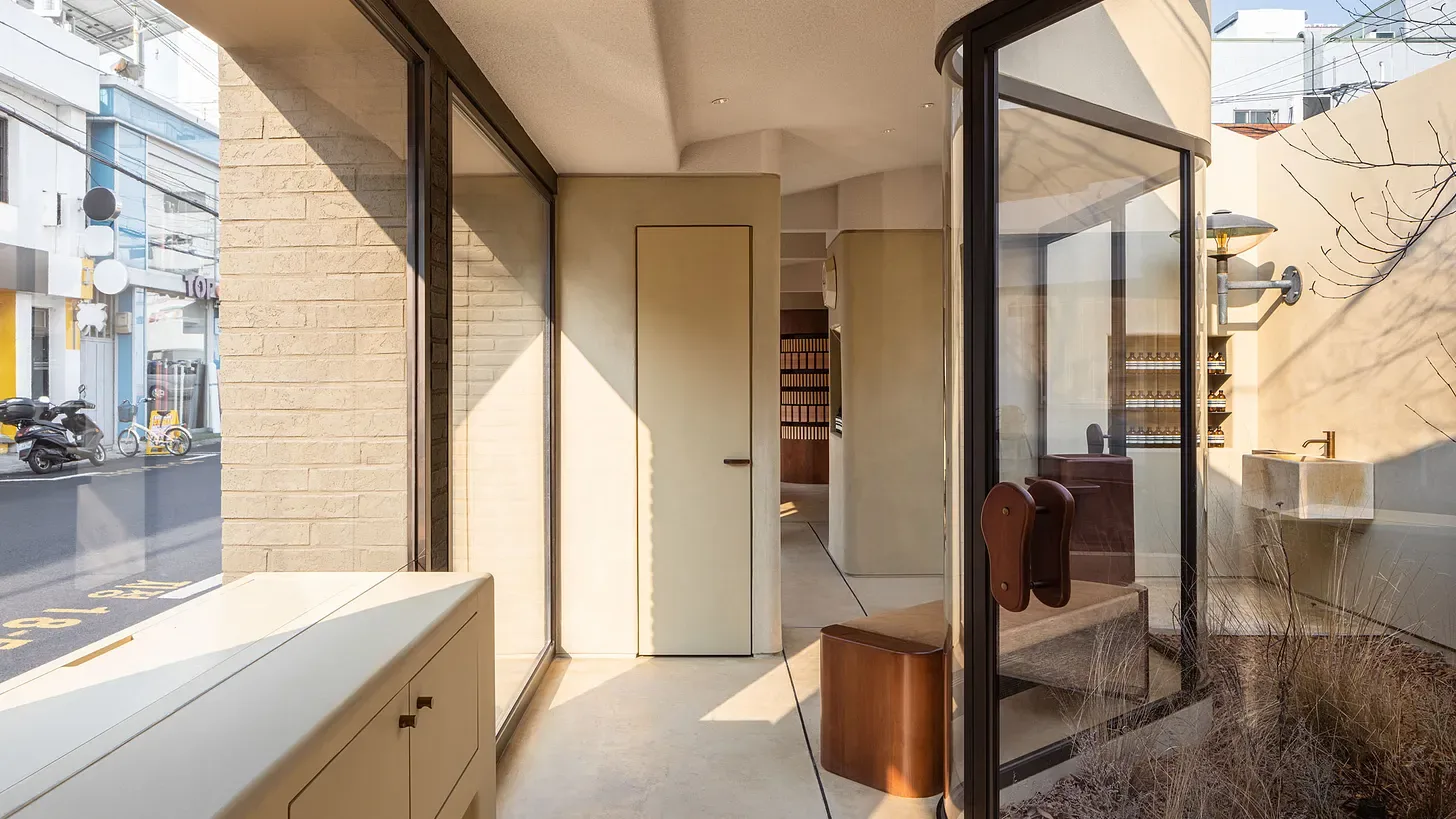
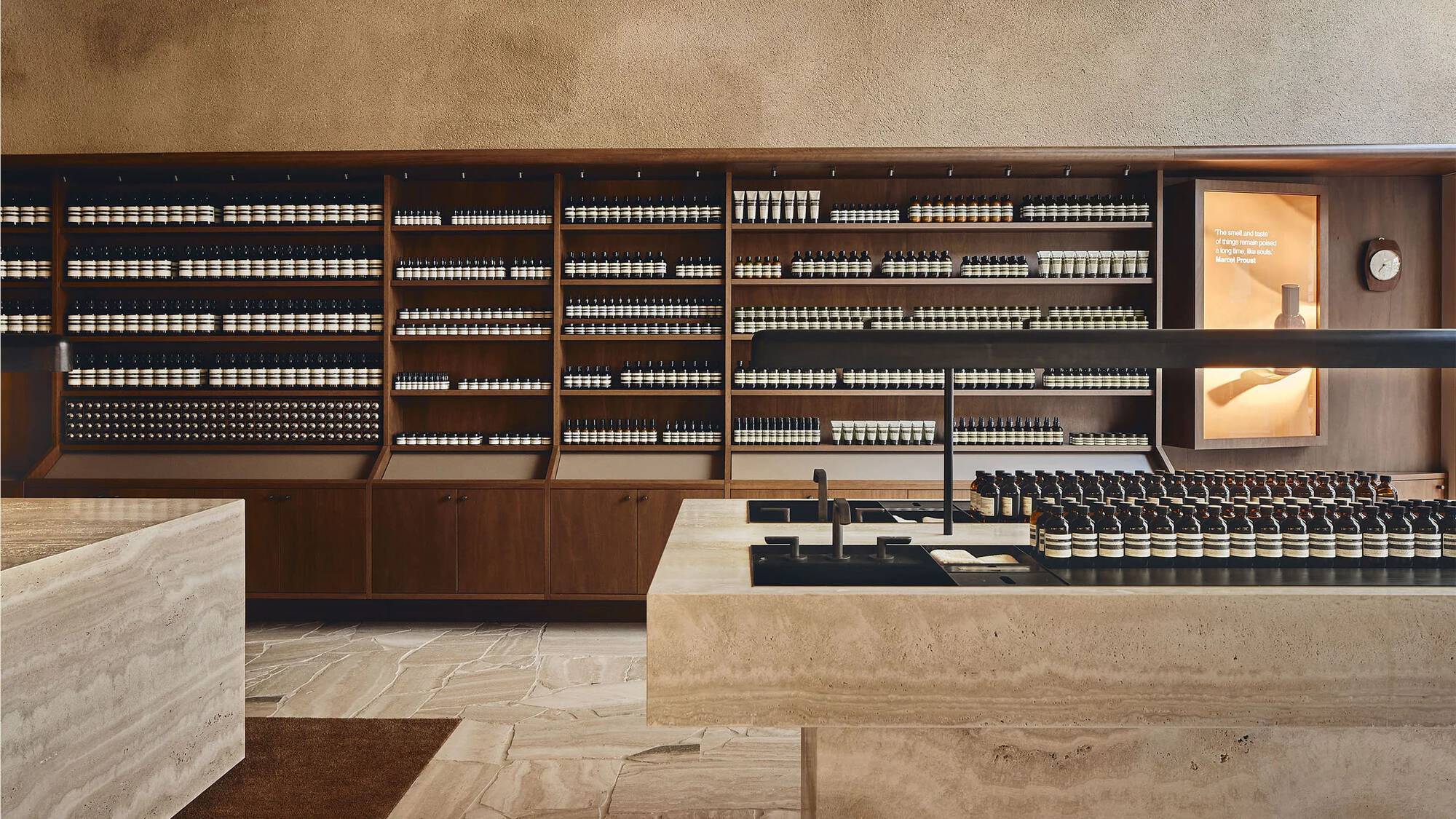
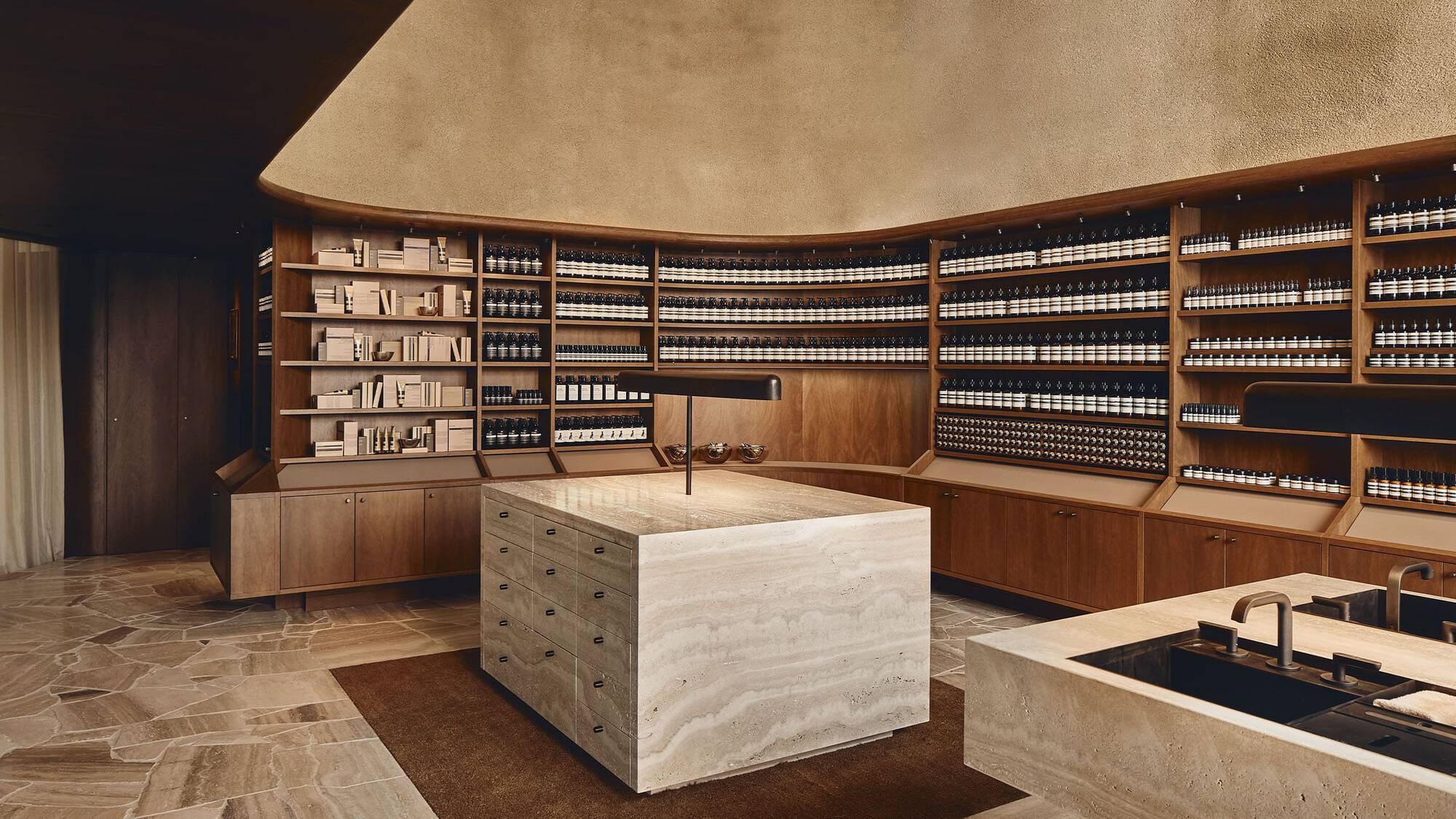
The approach produced markedly different results from store to store. A 2008 London store restored the original Victorian features of a listed Mayfair mansion block. A 2017 Los Angeles store, discussed separately in Brandvelle's coverage of that project, built its interior walls from cardboard tubing reclaimed from the neighboring Fashion District. A 2022 Toronto store echoed the Victorian balustrade details of its Yorkville neighborhood. Despite the variation, a consistent internal logic held every project together: local materials, a restrained palette, and Aesop's own amber-glass product range displayed with minimal additional branding.

From a newspaper kiosk to a former vegetable shop
Two earlier projects illustrate how far the policy could be pushed. In 2010, the Tokyo studio Schemata Architecture Office built an Aesop store in Aoyama inside a demolished former vegetable shop, preserving the site's original plumbing and drain covers and coating them in resin, while sourcing new fittings from salvaged timber taken from a separate abandoned house. A year later, the New York designer Jeremy Barbour and his studio Tacklebox built a small Aesop kiosk inside Grand Central Terminal from more than a thousand copies of The New York Times, torn, stacked and bound into a wooden frame. Neither project resembled a conventional shopfitting exercise, and neither resembled the other.
Minimal signage as a deliberate choice
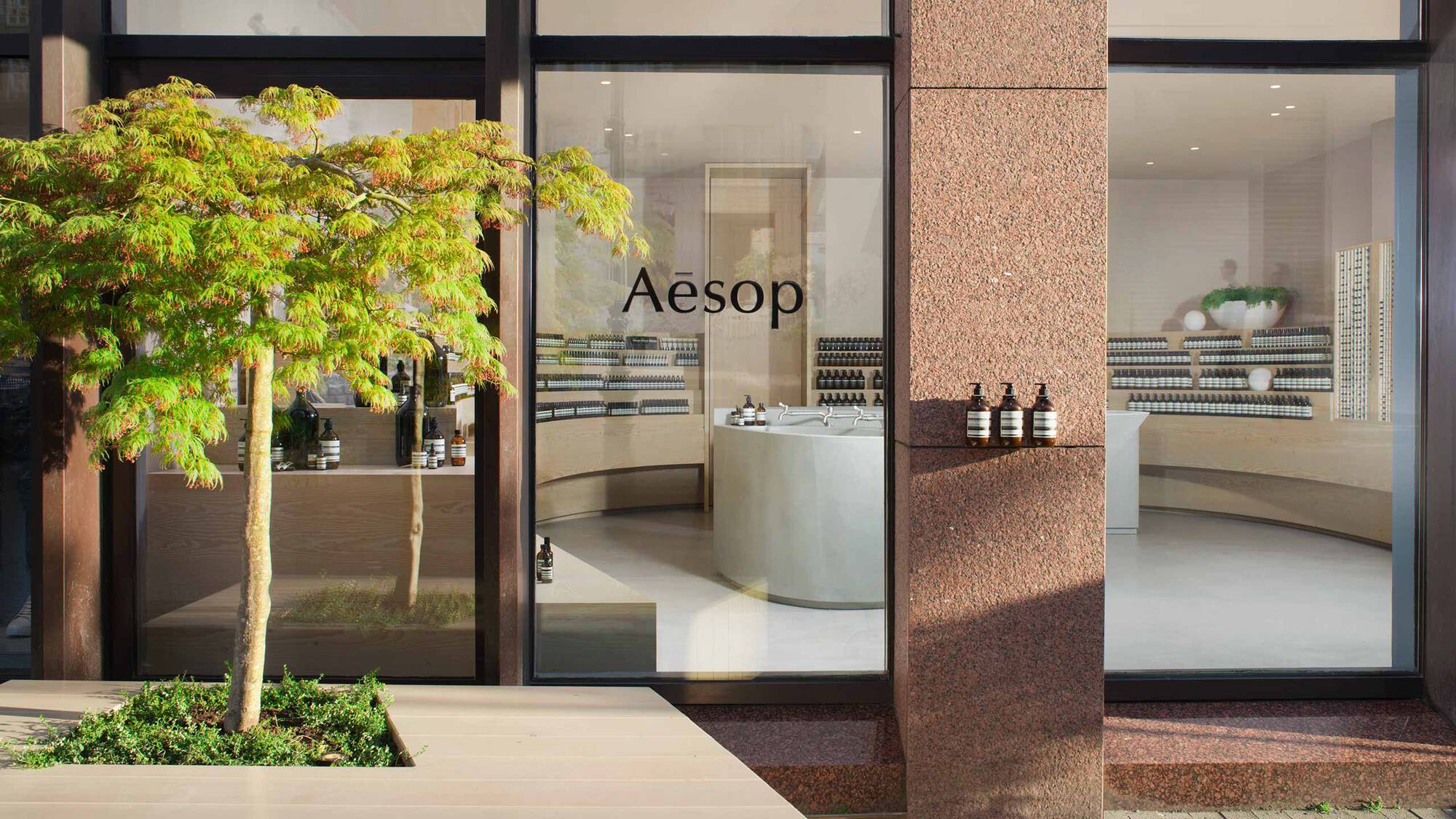
Alongside architectural variation, Aesop stores have historically avoided the large, illuminated exterior signage typical of beauty retail. Many locations carry only a small nameplate, if any exterior branding at all, allowing the building itself, rather than a logo, to announce the store. Design commentary on the company's stores has described the effect as one where an Aesop environment does not announce itself to passers-by, instead sitting quietly within its surroundings.
Retail design as the primary marketing channel
The strategy matters for a company that has also avoided conventional advertising. Where a mass-market beauty brand builds recognition through television campaigns, celebrity endorsement or paid media, Aesop redirected that spending into individually commissioned retail architecture, turning each store opening into a design story that architecture and design publications would cover on its own merits. Dezeen alone has documented dozens of individual Aesop store projects over more than a decade, effectively functioning as ongoing press coverage the company did not need to buy.
By the time Paphitis gave his 2012 interview, the no-two-stores-alike approach had already become one of Aesop's most recognizable traits, ahead of even its product range for many design-industry observers. The policy has persisted through two changes of ownership, first under Natura Cosméticos and later under L'Oréal, with new stores in cities from Toronto to Austin continuing to commission local architects rather than replicate a previous design.
A philosophy that resists easy imitation
Competitors have occasionally experimented with commissioning notable architects for individual flagship projects, but few have applied the practice across an entire global store network as a default rather than an exception. The difficulty lies less in finding capable designers than in accepting the operational cost of forgoing a repeatable format: every new Aesop store requires a fresh design process, a new set of fabricators, and a longer lead time than ordering a standard shopfitting package, a trade-off Paphitis's 2012 remarks suggest the company has always treated as worth making.
Written with AI assistance, edited by a human. Find out more about our Use of AI.