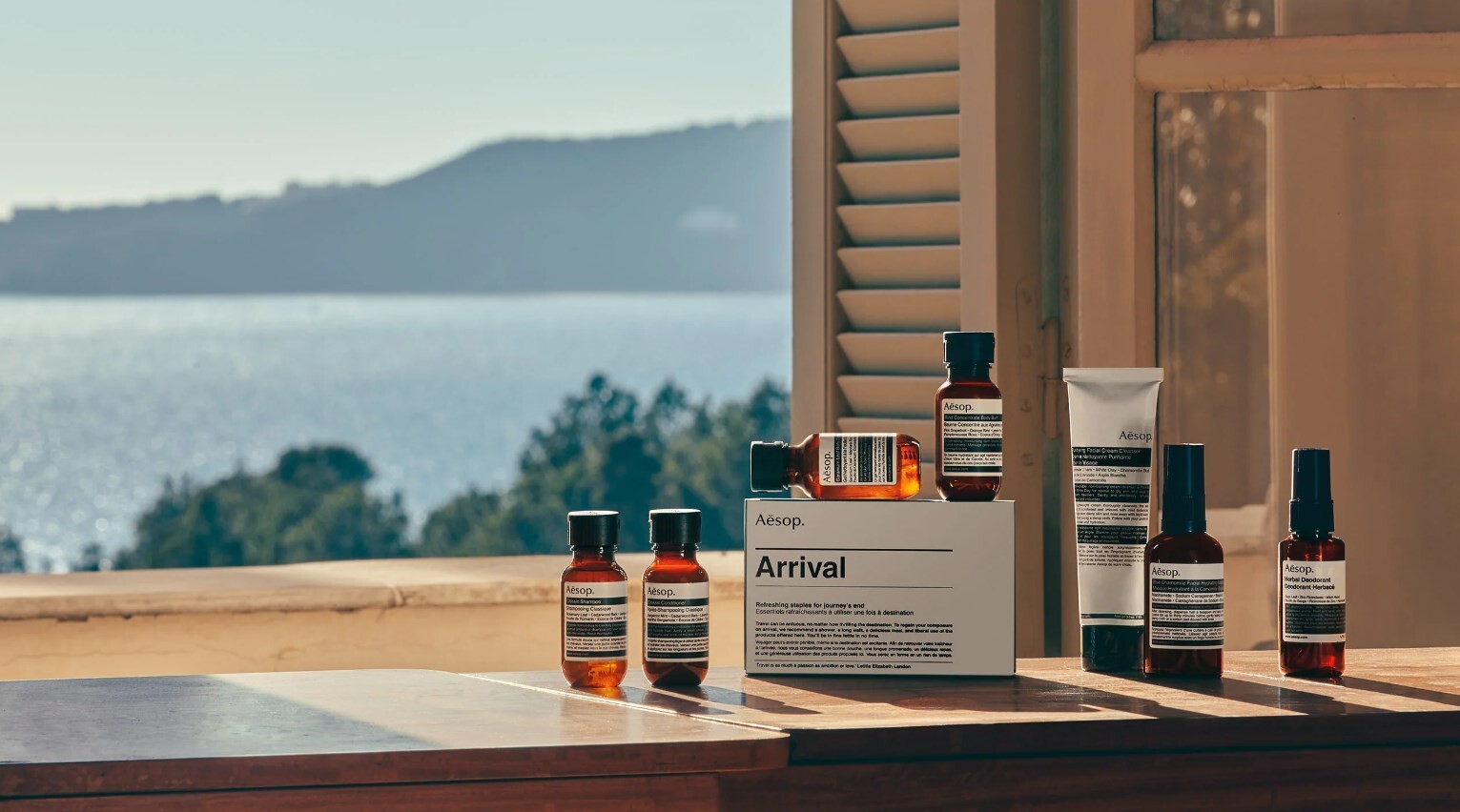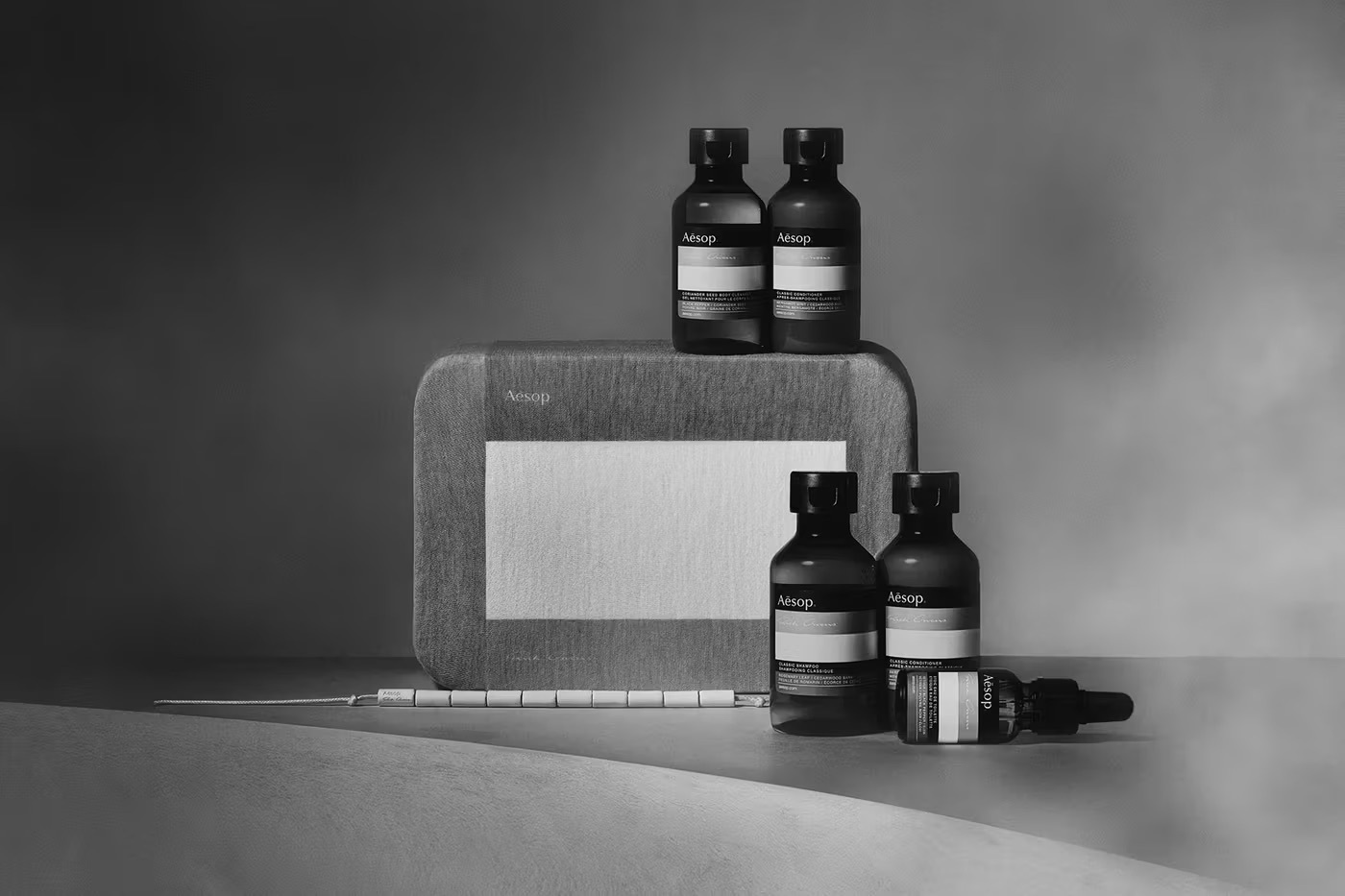

A hand wash that became a hospitality signal
Aesop's Resurrection Aromatique Hand Wash has become one of the more unusual status symbols in contemporary hospitality design: a bathroom amenity that signals a restaurant, hotel, or boutique's design credentials as clearly as its furniture or lighting does. The product sits at basins in venues ranging from the Waldorf Astoria Beverly Hills to the New York restaurant Le Coucou, where its presence functions as a quiet marker of a certain design literacy among operators, according to reporting by the beauty trade publication Glossy.1
Two different anniversaries, easy to confuse
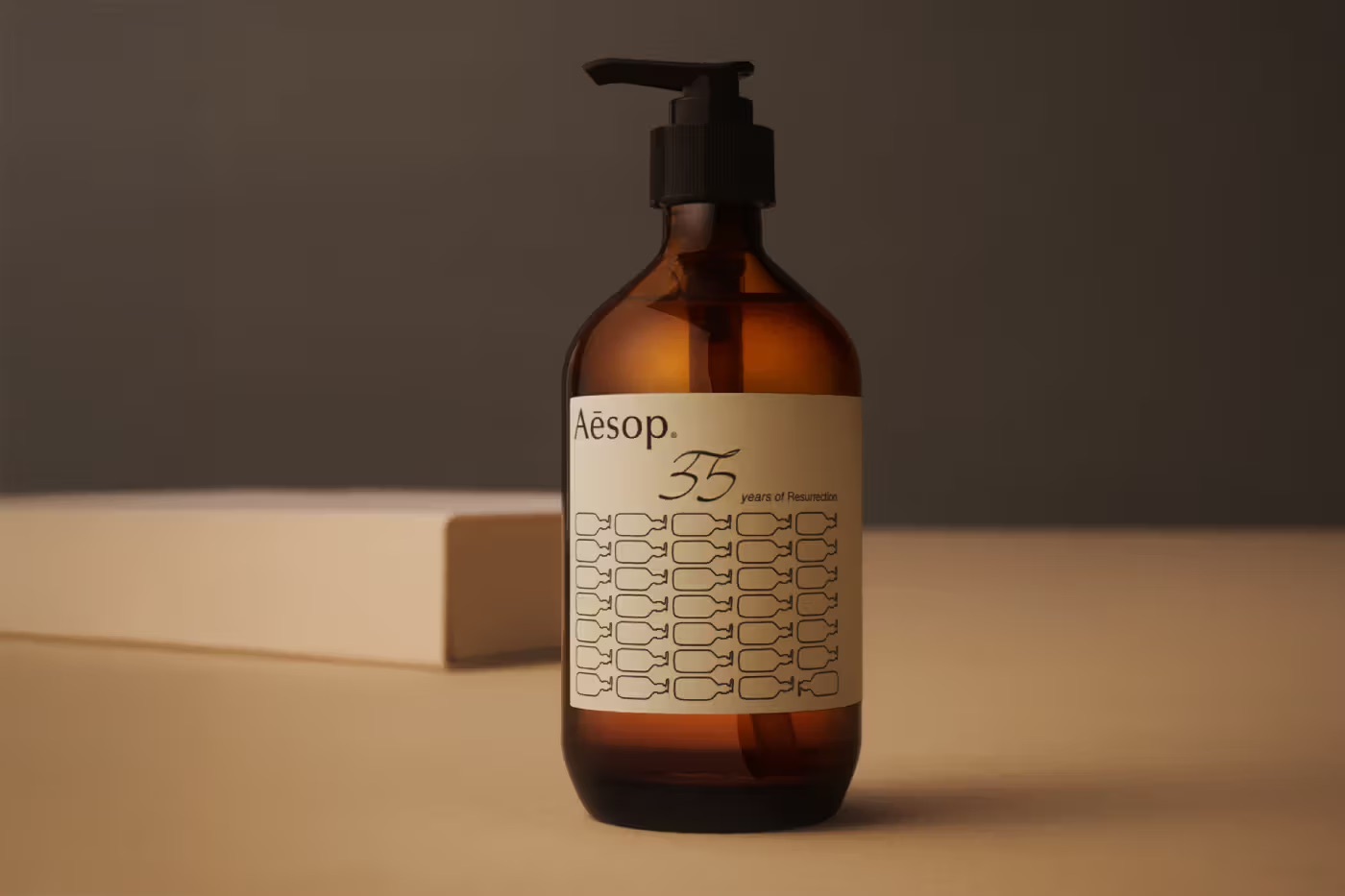
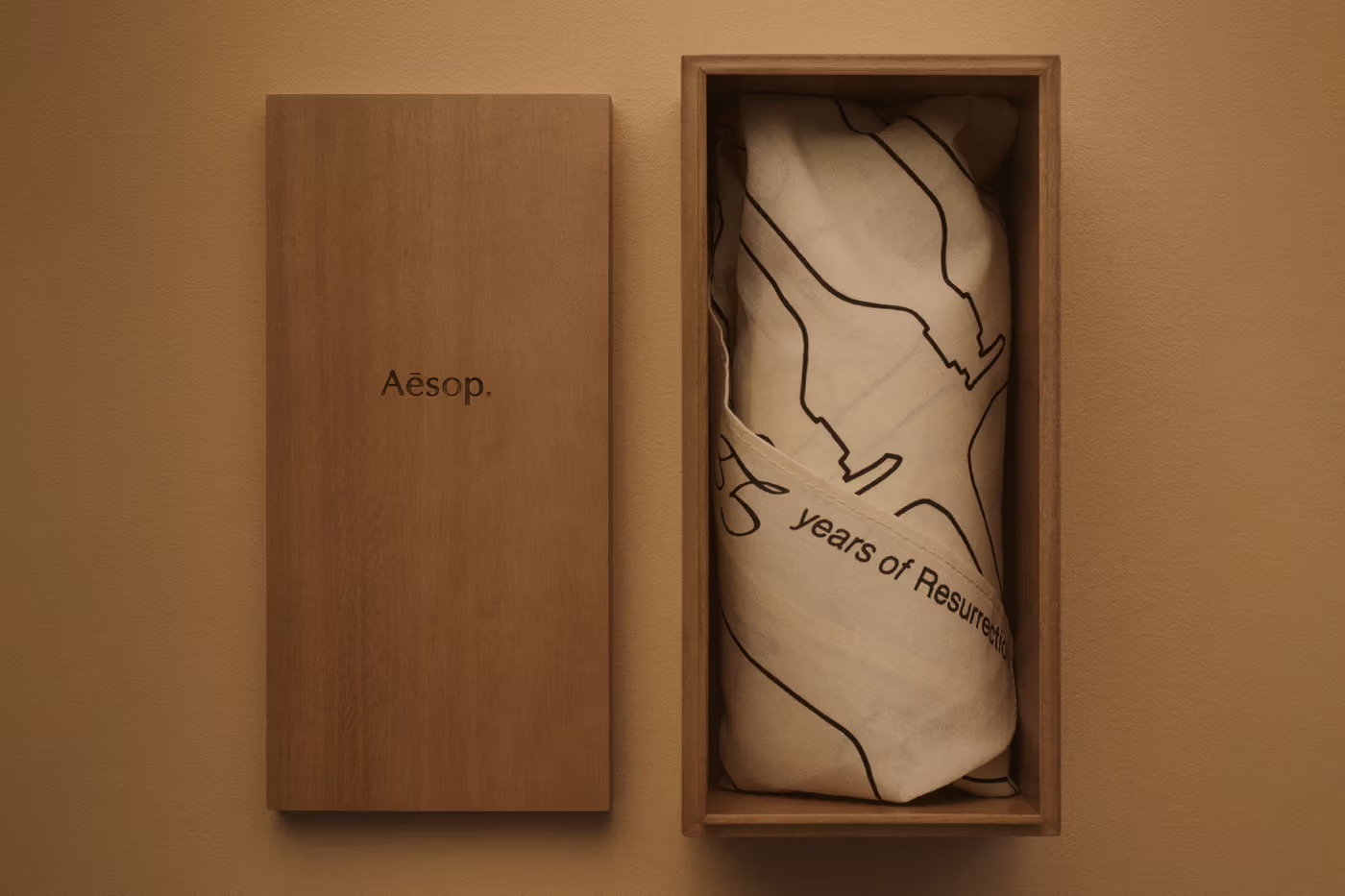
Aesop's Resurrection range, which now spans hand balm, hand wash, and related formulations, traces back to 1990, when the company introduced Resurrection Aromatique Hand Balm as one of its earliest dedicated hand-care formulations.2, 3 The specific Resurrection Aromatique Hand Wash, the bottle most commonly found in commercial bathrooms today, followed later, launching in 2006, with a companion Reverence Aromatique hand range introduced in 2012.1 Aesop marked the wider Resurrection line's 35th anniversary in November 2025 with a limited run of 1,990 individually numbered bottles, a nod to the year of the original 1990 formulation, each presented in a commemorative wooden box and sold exclusively in stores.2, 3
Growth without an advertising campaign
Sylvie Kilduff, a regional general manager at Aesop, told Glossy that the company's hand and body category has grown at a compound annual rate of 21 percent since 2008, a trajectory achieved without the product benefiting from a conventional advertising push.1 Instead, placement inside design-conscious hospitality venues functions as the product's primary distribution channel for reputation, reaching design-attentive customers through direct physical encounter rather than through paid media.
Why a hand wash, specifically
The specific appeal of a hand wash, as opposed to other Aesop products, lies in its position at the exact point where a guest already pauses: a restaurant or hotel bathroom is one of the few private, unhurried moments in an otherwise public dining or lodging experience, and a distinctive amber bottle at the basin becomes something a guest notices, picks up, and often photographs. Coverage in outlets including Business of Fashion and Elite Traveler has framed the resulting cultural pattern explicitly around status signaling, describing how a recognisable amenity bottle has come to function similarly to a designer handbag or a well-chosen restaurant reservation, a marker legible to anyone who already recognizes the brand.4, 5
The packaging does the marketing
The phenomenon depends directly on Aesop's packaging discipline, discussed separately in Brandvelle's coverage of the brand's amber-bottle system. Because every Aesop product uses the same consistent amber glass and pharmacy-style label regardless of category or price point, a hand wash bottle at a restaurant basin communicates the same brand signal as a bottle of skincare bought directly from an Aesop store. The product does not need a logo sized for visibility from across a room; a customer close enough to wash their hands is close enough to read the label.
For a company that has built almost its entire brand on avoiding conventional marketing, the hand wash's status became a case study in unpaid distribution: a single, relatively low-cost product placed in the right physical location, repeated across enough venues, generated more sustained cultural visibility than most beauty brands achieve through paid advertising over the same period.
A signal that outgrew its original category
What began as a specialist hand-care formulation has, through repeated placement rather than any single campaign, come to represent Aesop's entire brand inside spaces the company itself does not operate. A hotel or restaurant choosing to stock the Resurrection Aromatique Hand Wash is, in effect, borrowing Aesop's design credibility for its own bathroom, a transaction neither party needs to formalise through a partnership agreement or a press release.
A phenomenon Aesop did not have to manufacture
Aesop has not needed to run a dedicated hospitality placement campaign to achieve the Resurrection Aromatique Hand Wash's current status, since operators seek the product out on their own, often specifically because its presence has already become a recognized signal among their own customers. That self-reinforcing pattern, where a product's existing reputation drives further adoption without additional marketing spend, is difficult for a beauty brand to engineer deliberately, and Aesop's experience with the hand wash suggests it emerged organically from the underlying consistency of the brand's packaging and retail identity rather than from any specific placement strategy.
Written with AI assistance, edited by a human. Find out more about our Use of AI.
1. Glossy, Emma Sandler, "The secret sauce behind Aesop's cult status hand wash", 26 April 2024, for the hand wash sitting at basins in venues including the Waldorf Astoria Beverly Hills and the New York restaurant Le Coucou, for Aesop having first launched a hand wash in 2006 with Resurrection Aromatique followed by Reverence Aromatique in 2012, and for Sylvie Kilduff, Regional GM at Aesop, and the 21 percent annual compound growth rate of the hand and body category since 2008. https://www.glossy.co/beauty/the-secret-sauce-behind-aesops-cult-status-hand-wash/
2. Aesop, "35 Years of Resurrection Aromatique Hand Care", undated, for the Resurrection formulations dating from 1990, and for the anniversary release of precisely 1,990 amber-glass bottles of Resurrection Aromatique Hand Wash, each placed in a commemorative wooden box and offered as an in-store exclusive at select Aesop stores. https://www.aesop.com/library/35-years-of-resurrection-aromatique-hand-care.html
3. Hypebeast, Sophie Caraan, "Aesop Celebrates 35 Years of 'Resurrection' Hand Care with Limited Anniversary Bottle", 24 November 2025, for the range's inception in 1990 with the Hand Balm blended from Mandarin Rind, Rosemary Leaf and Cedar Atlas oils, for the 1,990 anniversary bottles nodding to the range's year of creation, each housed in its own wooden box and sold at select stores worldwide, and for the anniversary falling in November 2025. https://hypebeast.com/2025/11/aesop-resurrection-aromatique-hand-wash-35th-anniversary-release-info
4. The Business of Fashion, "What Will Be the Next Aesop?", for the framing of Aesop's hand soap as a status symbol. The title was confirmed by search; the article itself is paywalled and returned a 403, page not reachable on 18 September 2026. https://www.businessoffashion.com/articles/beauty/aesop-next-status-hand-soap/
5. Elite Traveler, Carmen Bellot, "The Underrated Status Clue? It's Sitting by Your Sink", 4 April 2026, for the framing of premium hand soap as a status marker that has displaced conventional luxury signals such as a designer handbag, and for Aesop being described there as the most coveted hand soap in the world. https://elitetraveler.com/design-culture/how-taste-moved-into-the-home