
Fashion district scraps become a shopfront
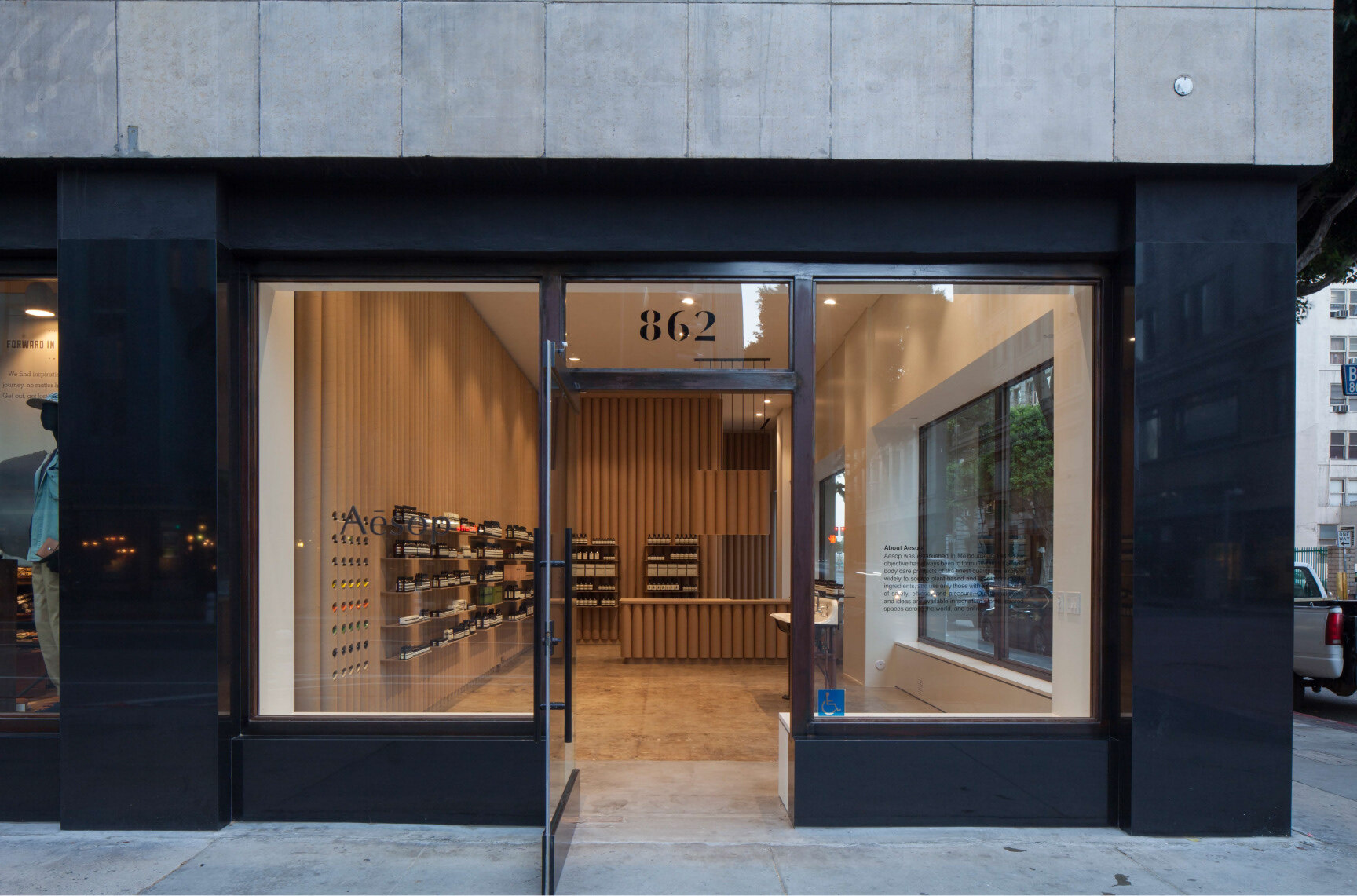
Aesop opened a store on Broadway in downtown Los Angeles' Theater District in 2017, commissioning the architecture firm Brooks + Scarpa to design an interior built substantially from waste material sourced from the surrounding neighborhood. The Broadway corridor sits at the edge of the city's Fashion District, a garment manufacturing and wholesale hub that produces large volumes of packaging waste as a byproduct of the textile trade.
Cardboard tubes as a wall system
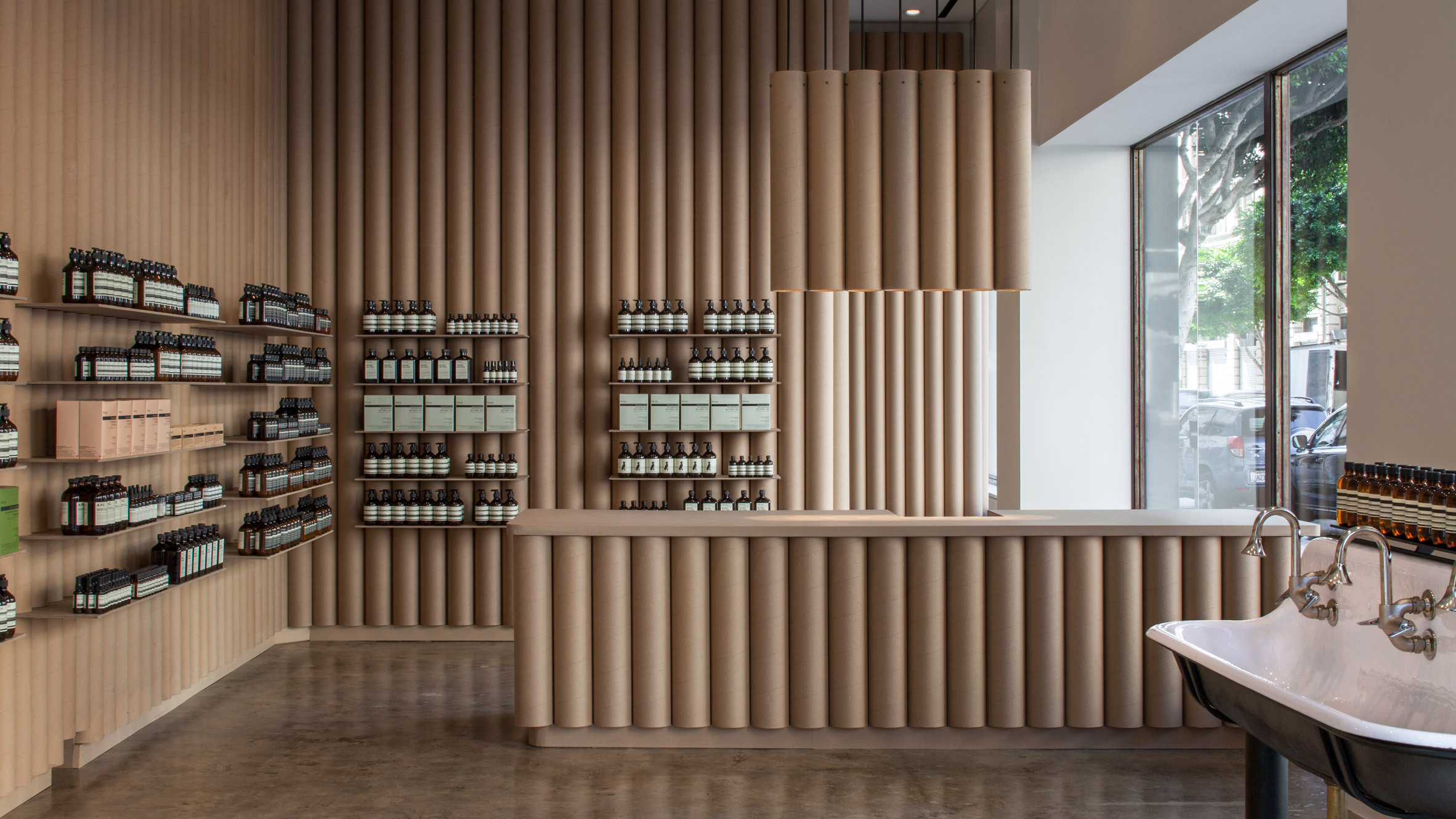
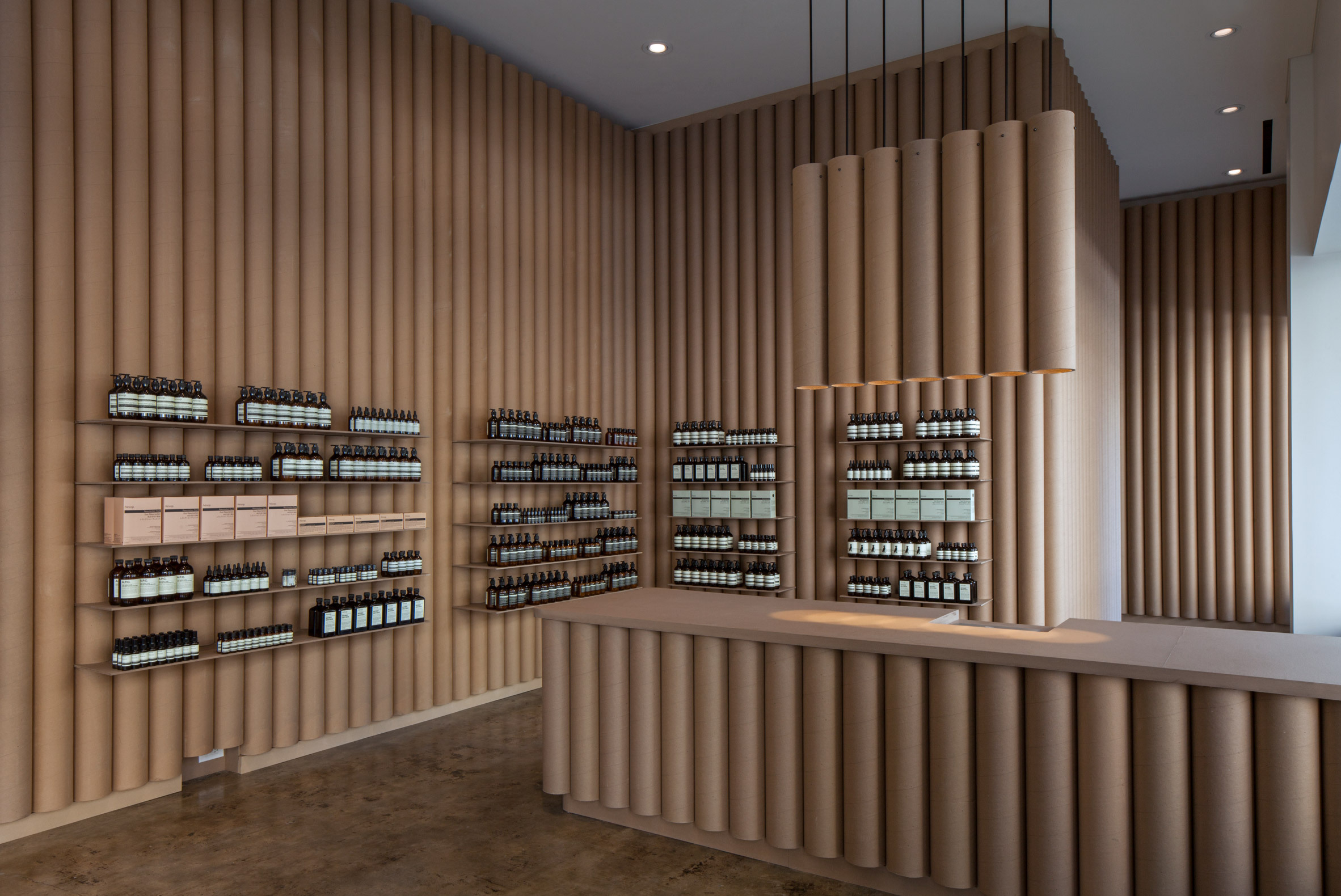
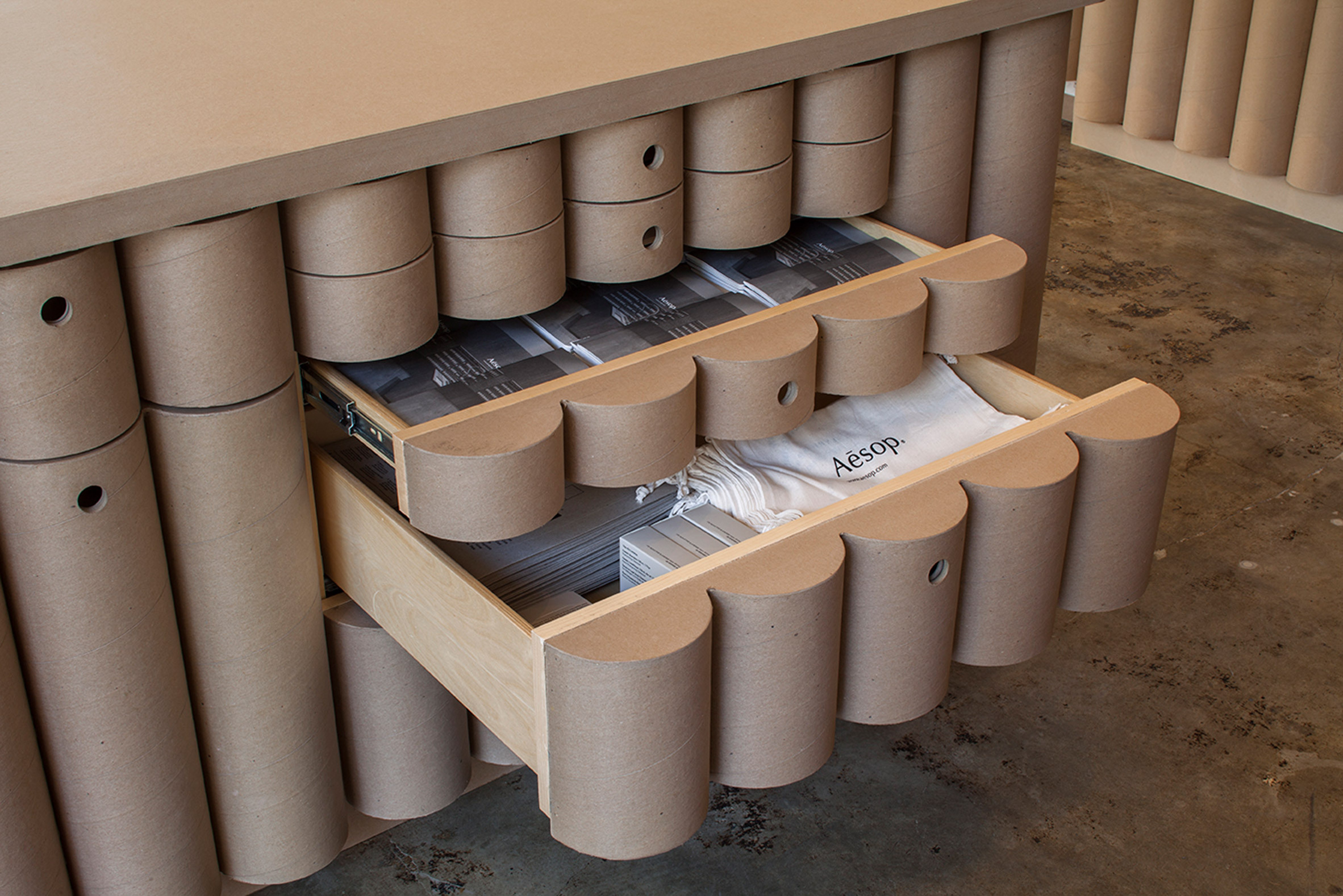
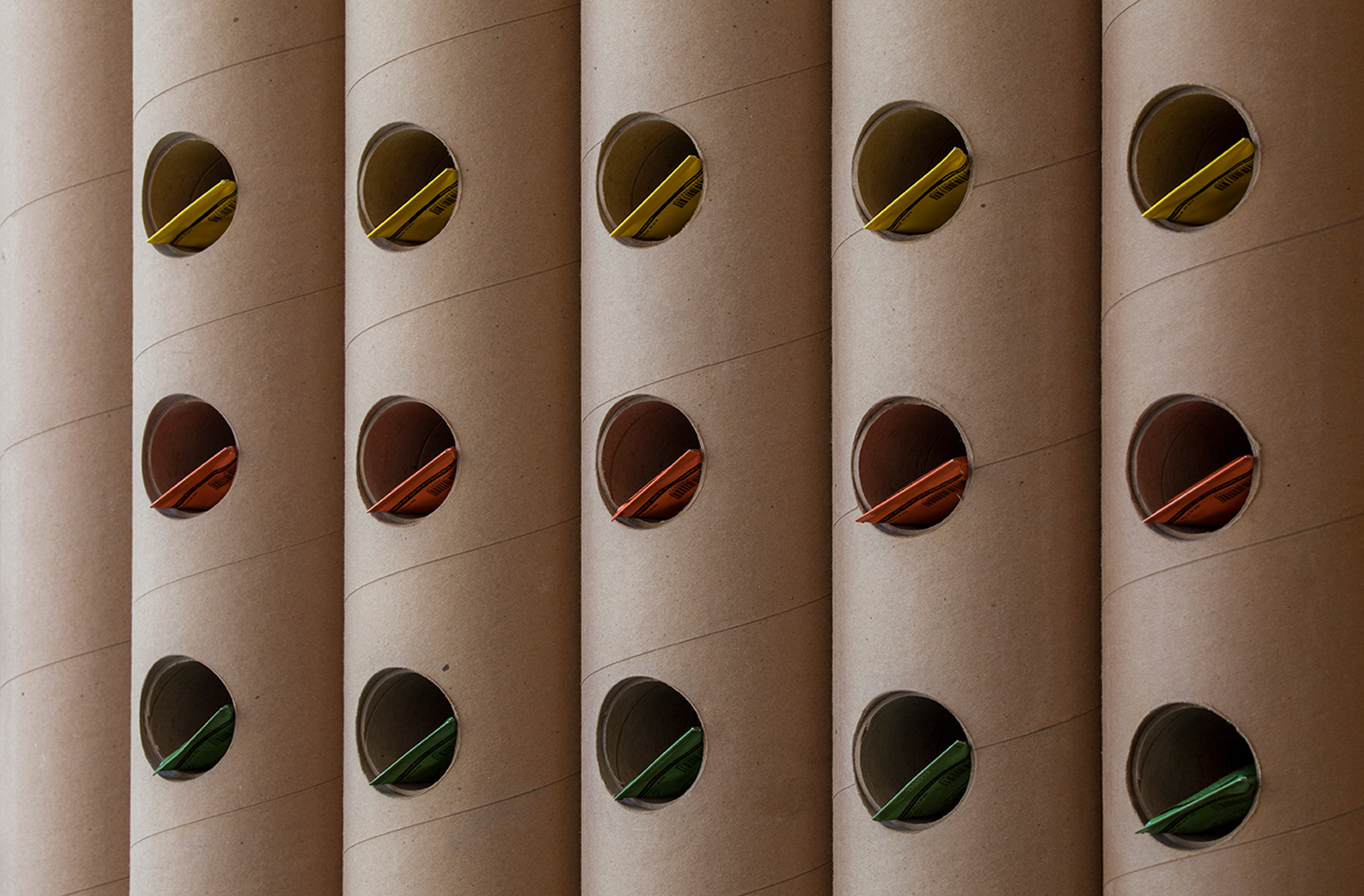
Brooks + Scarpa's design lined the store's walls with cardboard tubing reclaimed from fabric rolls discarded by nearby textile wholesalers, the same tubes manufacturers use to ship bolts of cloth before the fabric is cut and sold. Rather than treating the tubes as raw material to be reshaped beyond recognition, the design left their circular cross-section visible, stacking and arranging them into a dense, honeycomb-like wall surface that doubled as product display and acoustic treatment. Other elements throughout the store incorporated recycled paper, extending the material logic beyond the walls.
A material argument, not a slogan
The Los Angeles store made its sustainability case through material choice rather than through signage or marketing language, a term that in this context refers to a company's practices around minimizing environmental impact. Aesop has historically avoided overt environmental messaging in its retail spaces, and the Broadway store followed that pattern: there was no wall text explaining the tubes' origin, no plaque describing the store's environmental credentials. The material itself, visibly reused rather than disguised as something new, carried the argument. A customer did not need signage to recognize that a wall built from hundreds of identical cardboard tubes was not a standard shopfitting product.
A neighborhood's waste stream as design material
The choice to source waste specifically from the immediate neighborhood, rather than from a generic recycled-material supplier, tied the store directly to its physical location in a way consistent with Aesop's broader retail philosophy. Where the company's 2008 Mayfair store in London restored an existing Victorian building's fabric, the Los Angeles store instead metabolized the waste output of its immediate commercial context, treating the Fashion District's byproduct as a legitimate design material rather than something to be hidden.
The approach also reflected a practical constraint common to Aesop's international growth during the 2010s: each new market required a design response calibrated to genuinely local conditions, rather than importing a signature material or fixture from a previous project. The Los Angeles team instead looked at what was immediately available within blocks of the site, a discipline that limited the project's material sourcing while giving the finished interior an unmistakably specific origin story.
Part of a broader recycled-materials pattern
The Broadway store's reclaimed cardboard walls sit within a wider pattern across Aesop's retail history of building from salvaged or waste material specific to a store's location, a category that also includes a Tokyo store built inside a demolished former vegetable shop using preserved plumbing fixtures, and a Grand Central Terminal kiosk in New York constructed from more than a thousand stacked and bound copies of The New York Times. Each project treated a form of local waste, whether newsprint, salvaged timber, or garment-district cardboard, as the primary design material rather than a decorative accent, reinforcing the broader retail principle that no Aesop store should look as though it could exist anywhere else.
The Los Angeles project also predates the wider adoption of circular-design language across the beauty industry, arriving several years before recycled and reclaimed materials became a standard talking point in retail design coverage. Brooks + Scarpa's design did not need that later vocabulary to make its point; the visible cardboard tubing did the explaining on its own.
A store that aged into a broader industry conversation
When the Broadway store opened in 2017, the beauty and retail industries had not yet widely adopted the vocabulary of circularity and reclaimed materials that would become common in design coverage several years later. Aesop's Los Angeles project arrived ahead of that broader conversation, using waste-stream materials as a practical design solution rather than as a response to an emerging sustainability trend, a distinction that separates the store from many later projects that borrow similar materials explicitly to signal environmental credentials.
A method that does not repeat itself
As with Aesop's other individually commissioned stores, the Broadway project was not repeated elsewhere. No other Aesop location has since reused the cardboard-tube wall system, consistent with the brand's broader refusal to treat any single store design, however well received, as a template for future openings.
Written with AI assistance, edited by a human. Find out more about our Use of AI.